

10 Best T-bar Row With Handle Alternatives for Home and Gym
The T-bar Row With Handle is done standing with a barbell. Ranked closest by our scoring: the Bent Over Two-arm Long Bar Row, the Two-arm Kettlebell Row and Straight Bar Bench Mid Rows.
Updated Ranked by our 12-factor similarity model How it works
Original Exercise: T-bar Row With Handle
- Primary muscle
- Middle Back
- Equipment
- Barbell
- Difficulty
- Intermediate
- Type
- Compound
Secondary muscles: Biceps, Lats
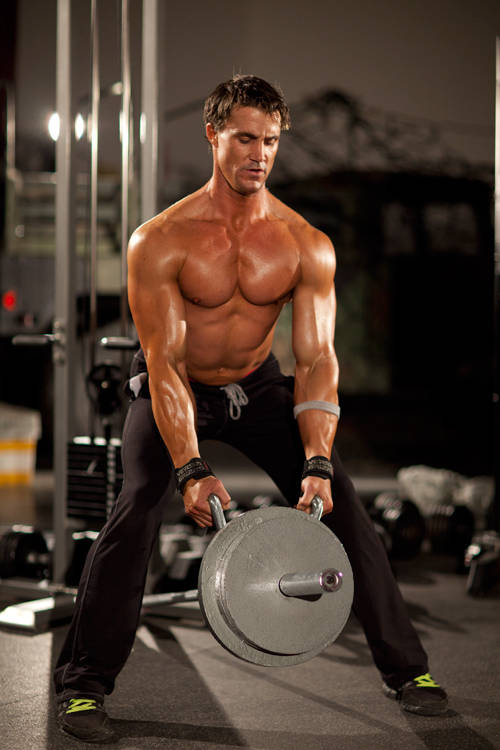
How to perform T-bar Row With Handle
- Position a bar into a landmine or in a corner to keep it from moving. Load an appropriate weight onto your end.
- Stand over the bar, and position a Double D row handle around the bar next to the collar. Using your hips and legs, rise to a standing position.
- Assume a wide stance with your hips back and your chest up. Your arms should be extended. This will be your starting position.
- Pull the weight to your upper abdomen by retracting the shoulder blades and flexing the elbows. Do not jerk the weight or cheat during the movement.
- After a brief pause, return to the starting position.
Ranked T-bar Row With Handle Alternatives
10 substitutes, ranked by how closely each one matches the T-bar Row With Handle on movement pattern, muscles worked, equipment and body position. The higher the score, the less you change. Open "How to perform this exercise" on a card for the steps; every card title links to that exercise's own alternatives page.
Best match 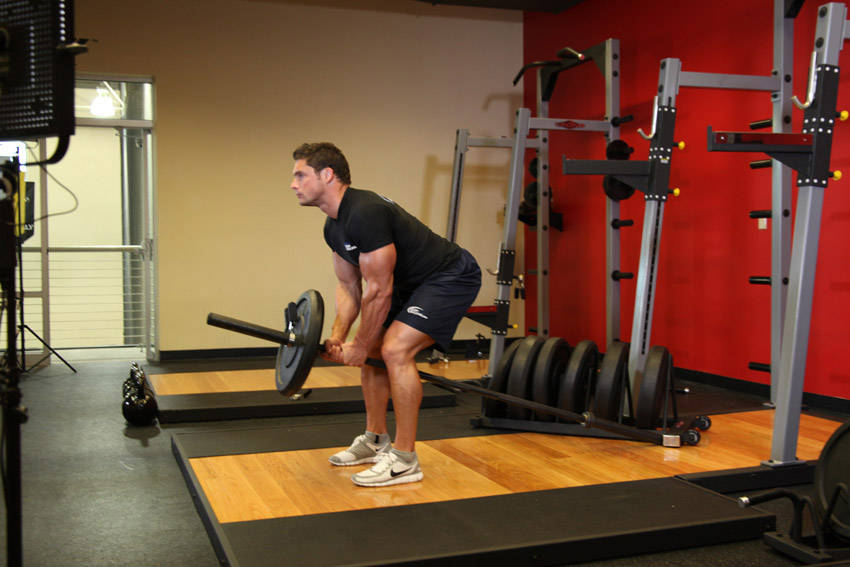
1. Bent Over Two-arm Long Bar Row
99% match- Middle Back
- Barbell
- Intermediate
- Compound
It uses the same equipment and still works the middle back.
How to perform this exercise
- Put weight on one of the ends of an Olympic barbell. Make sure that you either place the other end of the barbell in the corner of two walls; or put a heavy object on the ground so the barbell cannot slide backward.
- Bend forward until your torso is as close to parallel with the floor as you can and keep your knees slightly bent.
- Now grab the bar with both arms just behind the plates on the side where the weight was placed and put your other hand on your knee. This will be your starting position.
- Pull the bar straight up with your elbows in (to maximize back stimulation) until the plates touch your lower chest. Squeeze the back muscles as you lift the weight up and hold for a second at the top of the movement. Breathe out as you lift the weight. Tip: Use a stirrup or double handle cable attachment by hooking it under the end of the bar.
- Slowly lower the bar to the starting position getting a nice stretch on the lats. Tip: Do not let the plates touch the floor. To ensure the best range of motion, I recommend using small plates (25-lb ones) as opposed to larger plates (like 35-45lb ones).
- Repeat for the recommended amount of repetitions.
Sets and reps: 3 or 4 sets of 6 to 10 reps.
Why this matches
- Primary muscle: middle back, the same as the T-bar Row With Handle
- Equipment: free weights, the same as the T-bar Row With Handle
- Body position: standing, the same as the T-bar Row With Handle
2. Two-arm Kettlebell Row
99% match- Middle Back
- Kettlebell
- Intermediate
- Compound
A good swap when you have a kettlebell to work with, and it still works the middle back.
How to perform this exercise
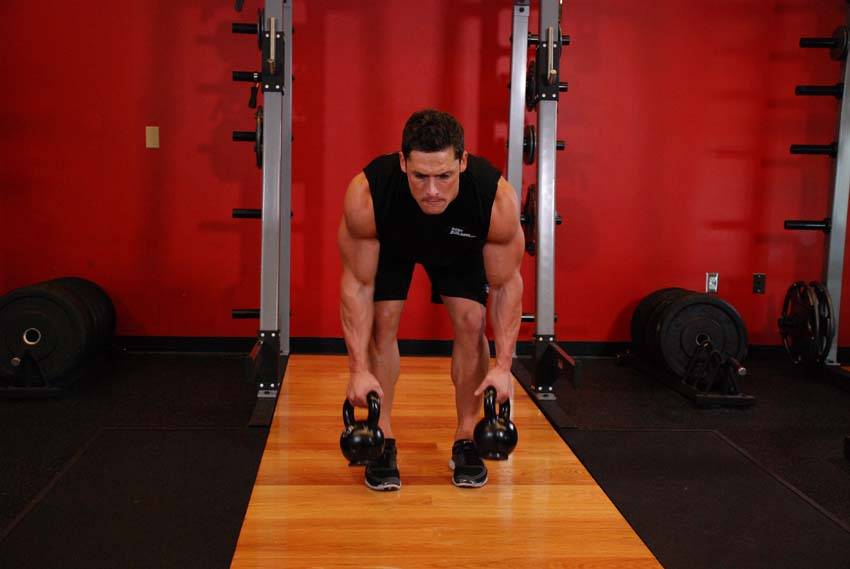
- Place two kettlebells in front of your feet. Bend your knees slightly and then push your butt out as much as possible as you bend over to get in the starting position.
- Grab both kettlebells and pull them to your stomach, retracting your shoulder blades and flexing the elbows. Keep your back straight. Lower and repeat.
Sets and reps: 3 or 4 sets of 6 to 10 reps.
Why this matches
- Primary muscle: middle back, the same as the T-bar Row With Handle
- Equipment: free weights, the same as the T-bar Row With Handle
- Body position: standing, the same as the T-bar Row With Handle
3. Straight Bar Bench Mid Rows
96% match- Middle Back
- Barbell
- Intermediate
- Compound
The same equipment, taken with an overhand grip.
How to perform this exercise
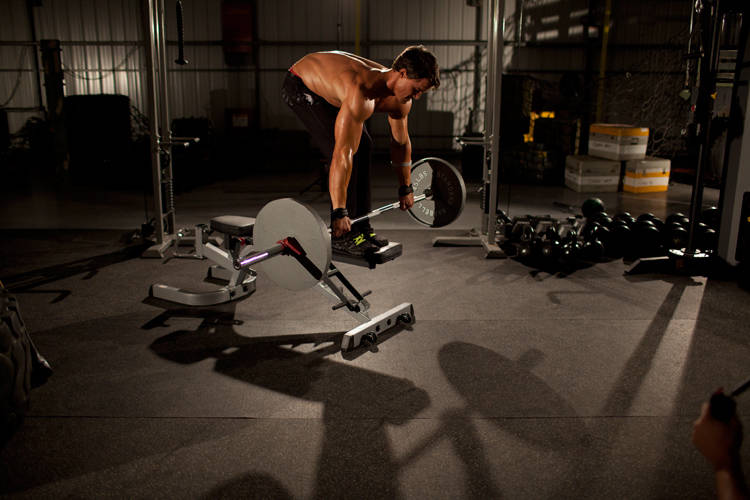
- Place a loaded barbell on the end of a bench. Standing on the bench behind the bar, take a medium, pronated grip. Stand with your hips back and chest up, maintaining a neutral spine. This will be your starting position.
- Row the bar to your torso by retracting the shoulder blades and flexing the elbows. Use a controlled movement with no jerking.
- After a brief pause, slowly return the bar to the starting position, ensuring to go all the way down.
Sets and reps: 3 or 4 sets of 6 to 10 reps.
Why this matches
- Primary muscle: middle back, the same as the T-bar Row With Handle
- Equipment: free weights, the same as the T-bar Row With Handle
- Body position: standing, the same as the T-bar Row With Handle
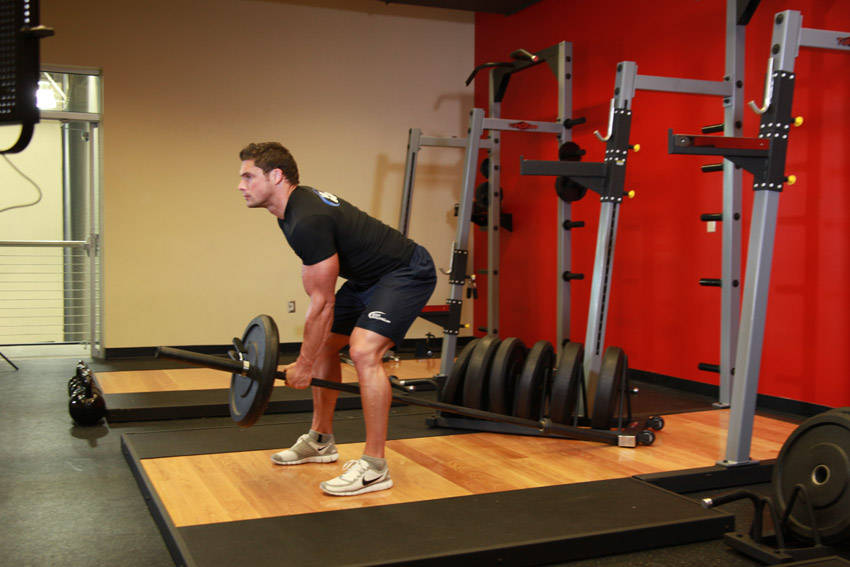
4. Bent Over One-arm Long Bar Row
92% match- Middle Back
- Barbell
- Intermediate
- Compound
Pick this when you want to work the middle back one side at a time.
How to perform this exercise
- Put weight on one of the ends of an Olympic barbell. Make sure that you either place the other end of the barbell in the corner of two walls; or put a heavy object on the ground so the barbell cannot slide backward.
- Bend forward until your torso is as close to parallel with the floor as you can and keep your knees slightly bent.
- Now grab the bar with one arm just behind the plates on the side where the weight was placed and put your other hand on your knee. This will be your starting position.
- Pull the bar straight up with your elbow in (to maximize back stimulation) until the plates touch your lower chest. Squeeze the back muscles as you lift the weight up and hold for a second at the top of the movement. Breathe out as you lift the weight. Tip: Do not allow for any swinging of the torso. Only the arm should move.
- Slowly lower the bar to the starting position getting a nice stretch on the lats. Tip: Do not let the plates touch the floor. To ensure the best range of motion, I recommend using small plates (25-lb ones) as opposed to larger plates (like 35-45lb ones).
- Repeat for the recommended amount of repetitions and switch arms.
Sets and reps: 3 or 4 sets of 6 to 10 reps on each side.
Why this matches
- Primary muscle: middle back, the same as the T-bar Row With Handle
- Equipment: free weights, the same as the T-bar Row With Handle
- Body position: standing, the same as the T-bar Row With Handle
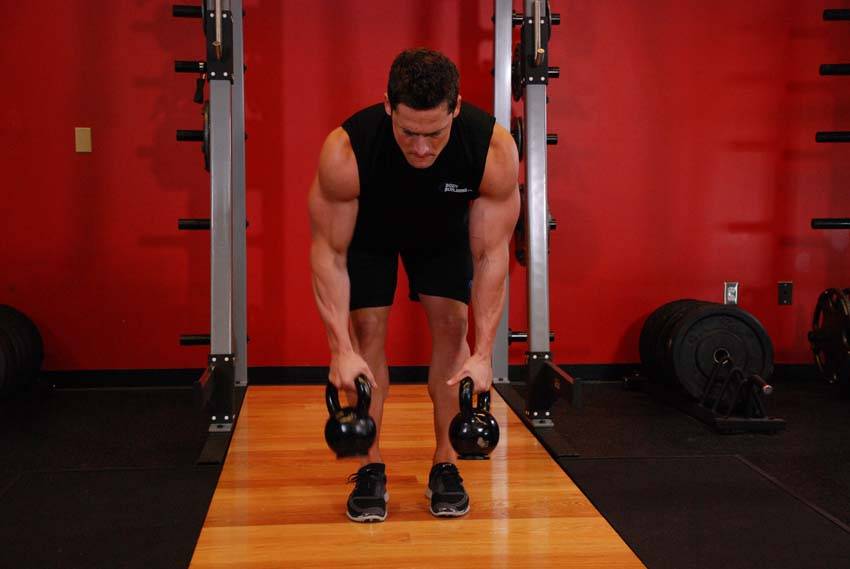
5. Alternating Kettlebell Row
92% match- Middle Back
- Kettlebell
- Intermediate
- Compound
How to perform this exercise
- Place two kettlebells in front of your feet. Bend your knees slightly and push your butt out as much as possible. As you bend over to get into the starting position grab both kettlebells by the handles.
- Pull one kettlebell off of the floor while holding on to the other kettlebell. Retract the shoulder blade of the working side, as you flex the elbow, drawing the kettlebell towards your stomach or rib cage.
- Lower the kettlebell in the working arm and repeat with your other arm.
Sets and reps: 3 or 4 sets of 6 to 10 reps on each side.
Why this matches
- Primary muscle: middle back, the same as the T-bar Row With Handle
- Equipment: free weights, the same as the T-bar Row With Handle
- Body position: standing, the same as the T-bar Row With Handle
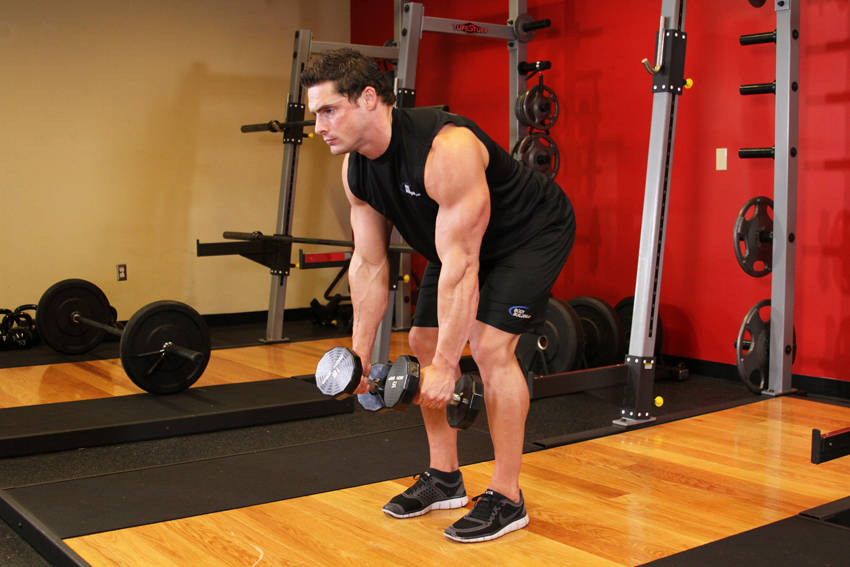
6. Bent Over Two-dumbbell Row
90% match- Middle Back
- Dumbbell
- Intermediate
- Compound
A good swap when you have dumbbells to work with, and it still works the middle back.
How to perform this exercise
- With a dumbbell in each hand (palms facing your torso), bend your knees slightly and bring your torso forward by bending at the waist; as you bend make sure to keep your back straight until it is almost parallel to the floor. Tip: Make sure that you keep the head up. The weights should hang directly in front of you as your arms hang perpendicular to the floor and your torso. This is your starting position.
- While keeping the torso stationary, lift the dumbbells to your side (as you breathe out), keeping the elbows close to the body (do not exert any force with the forearm other than holding the weights). On the top contracted position, squeeze the back muscles and hold for a second.
- Slowly lower the weight again to the starting position as you inhale.
- Repeat for the recommended amount of repetitions.
Sets and reps: 3 or 4 sets of 6 to 10 reps.
Why this matches
- Primary muscle: middle back, the same as the T-bar Row With Handle
- Equipment: free weights, the same as the T-bar Row With Handle
- Body position: standing, the same as the T-bar Row With Handle
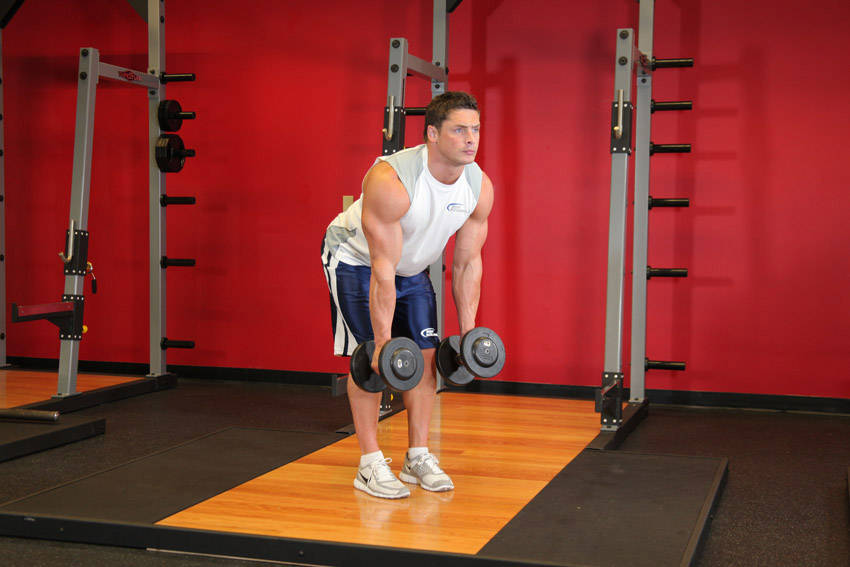
- Middle Back
- Dumbbell
- Intermediate
- Compound
How to perform this exercise
- With a dumbbell in each hand (palms facing each other), bend your knees slightly and bring your torso forward, by bending at the waist, while keeping the back straight until it is almost parallel to the floor. Tip: Make sure that you keep the head up. The weights should hang directly in front of you as your arms hang perpendicular to the floor and your torso. This is your starting position.
- While keeping the torso stationary, lift the dumbbells to your side as you breathe out, squeezing your shoulder blades together. On the top contracted position, squeeze the back muscles and hold for a second.
- Slowly lower the weight again to the starting position as you inhale.
- Repeat for the recommended amount of repetitions.
Sets and reps: 3 or 4 sets of 6 to 10 reps.
Why this matches
- Primary muscle: middle back, the same as the T-bar Row With Handle
- Equipment: free weights, the same as the T-bar Row With Handle
- Body position: standing, the same as the T-bar Row With Handle
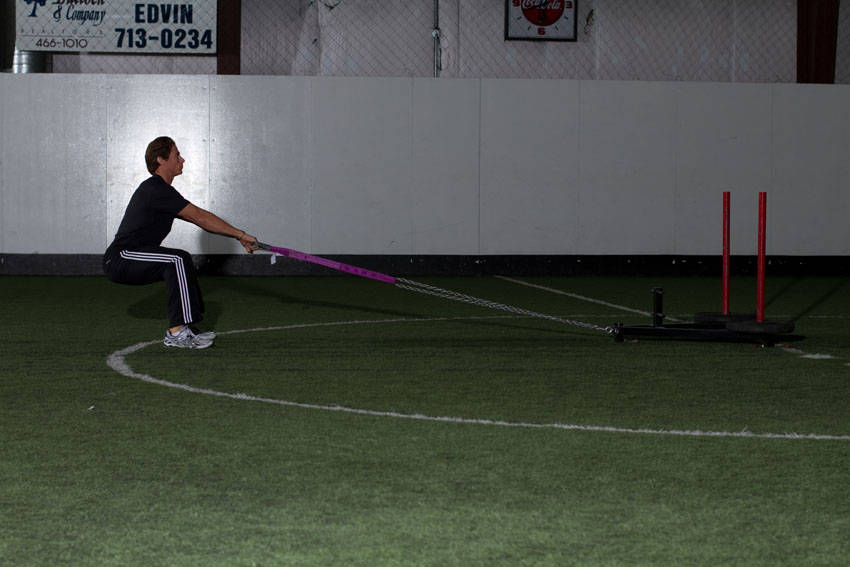
8. Sled Row
87% match- Middle Back
- Other
- Intermediate
- Compound
How to perform this exercise
- Attach dual handles to a sled connected by a rope or chain. Load the sled to an appropriate weight. Face the sled, backing up until there is some tension in the line.
- With a handle in each hand, bend the knees slightly, keep your head and chest up, and begin with your arms extended.
- To initiate the movement, flex the elbow as you retract your shoulder blades, pulling the sled towards you.
- Take a step or two back to get tension in the line and repeat.
Sets and reps: 3 or 4 sets of 6 to 10 reps.
Why this matches
- Primary muscle: middle back, the same as the T-bar Row With Handle
- Equipment: a machine, not free weights
- Body position: standing, the same as the T-bar Row With Handle
- Balance: easier to stay steady on than the T-bar Row With Handle
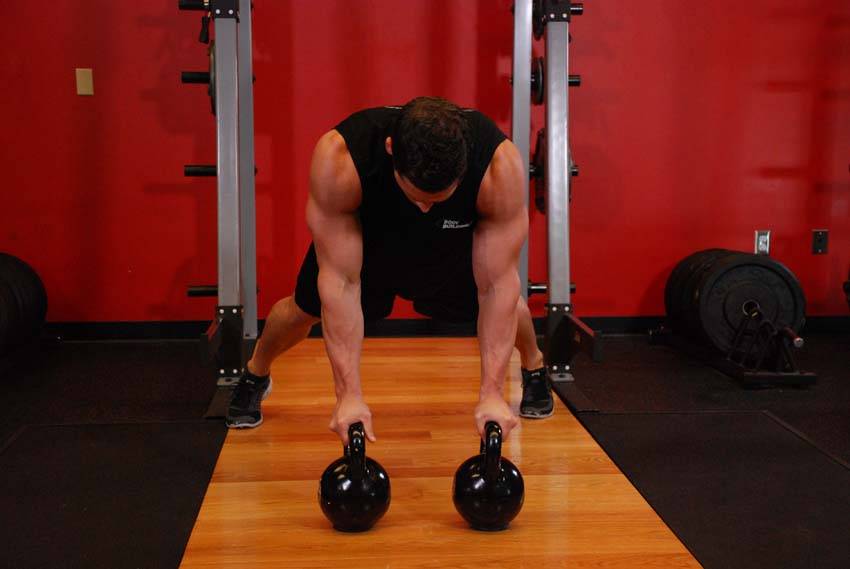
9. Alternating Renegade Row
82% match- Middle Back
- Kettlebell
- Advanced
- Compound
How to perform this exercise
- Place two kettlebells on the floor about shoulder width apart. Position yourself on your toes and your hands as though you were doing a pushup, with the body straight and extended. Use the handles of the kettlebells to support your upper body. You may need to position your feet wide for support.
- Push one kettlebell into the floor and row the other kettlebell, retracting the shoulder blade of the working side as you flex the elbow, pulling it to your side.
- Then lower the kettlebell to the floor and begin the kettlebell in the opposite hand. Repeat for several reps.
Sets and reps: 3 to 5 sets of 5 to 8 reps on each side.
Why this matches
- Primary muscle: middle back, the same as the T-bar Row With Handle
- Equipment: free weights, the same as the T-bar Row With Handle
- Body position: lying face down, not standing
- Balance: harder to stay steady on than the T-bar Row With Handle
10. Barbell Bent Over Row
81% match- Upper Back
- Barbell
- Intermediate
- Compound
How to perform this exercise
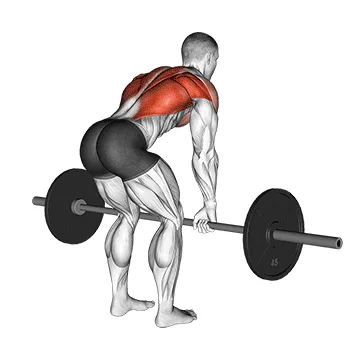
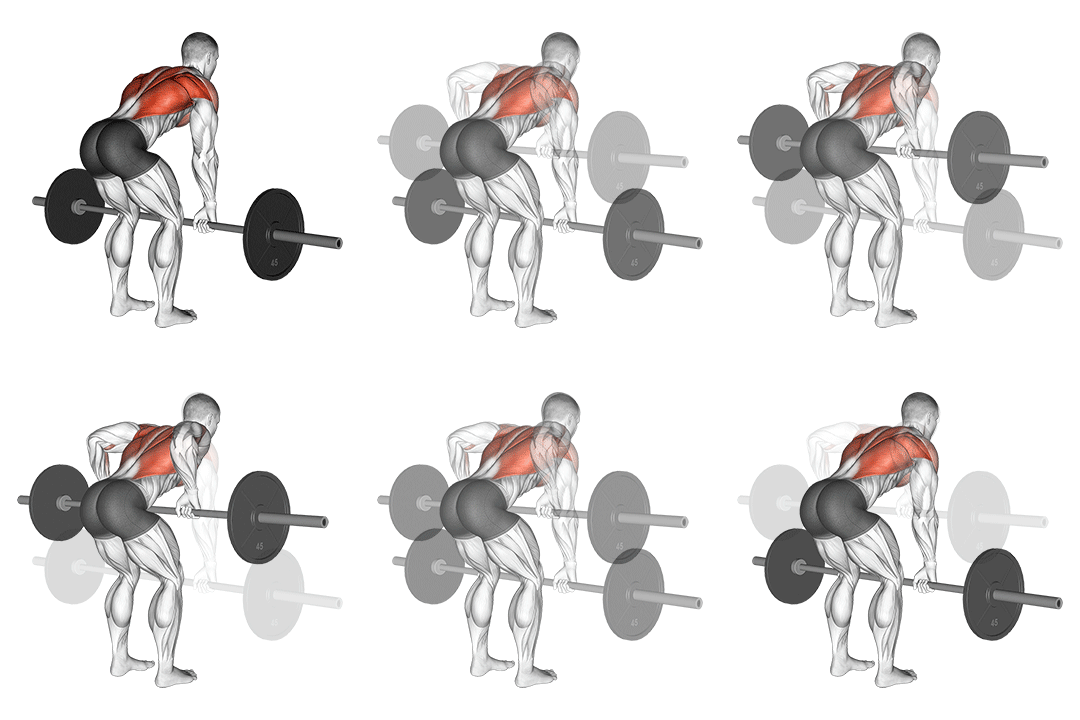
- Stand with your feet shoulder-width apart and knees slightly bent.
- Bend forward at the hips while keeping your back straight and chest up.
- Grasp the barbell with an overhand grip, hands slightly wider than shoulder-width apart.
- Pull the barbell towards your lower chest by retracting your shoulder blades and squeezing your back muscles.
- Pause for a moment at the top, then slowly lower the barbell back to the starting position.
- Repeat for the desired number of repetitions.
Sets and reps: 3 to 5 sets of 5 to 8 reps.
Why this matches
- Primary muscle: upper back, not middle back
- Equipment: free weights, the same as the T-bar Row With Handle
- Body position: standing, the same as the T-bar Row With Handle
Find Alternatives for Any Exercise
Search the exercise database and filter the ranked substitutes by the equipment you own.
Similarity scores compare exercise metadata such as movement pattern, muscles, equipment and body position. They are not a safety rating or a check that you own the equipment. Learn about our methodology