
Eleven foods have human research behind them for a longer life, younger-looking skin or both. Extra virgin olive oil and nuts come out on top, backed by a large randomized trial and studies that followed more than 90,000 people for decades. Tomato paste and cocoa have the best skin trials. Several popular “anti-aging” foods didn’t make the cut, and one of them made wrinkles worse at a bigger dose.
The research splits along a clear line. Longevity evidence for whole foods is strong but mostly observational: large groups of people followed for decades, which shows a link rather than proof. Skin evidence is thinner. Most skin trials are small, run for 8 to 24 weeks, measure sunburn redness or wrinkles, and a few were paid for by the industry body that sells the food.
The evidence scoreboar
Each food gets two grades, one for skin and one for a longer life. Most longevity evidence comes from studies that followed large groups of people for years and counted who died.
- Strong: a large randomized trial, or very large groups in more than one country with a clear drop in deaths.
- Moderate: smaller trials, a small effect, a single country, or heart disease counted instead of death.
- Early: a pilot trial, a single survey, a correlation, a result from one slice of a bigger study, or a big trial that missed its main goal.
- None yet: no human study has tested it.
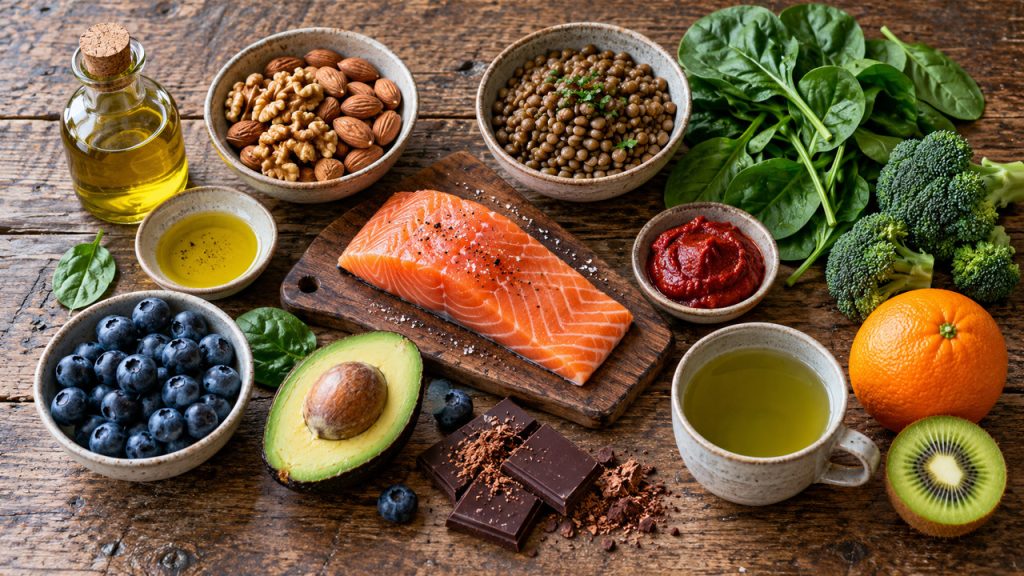
The top three are the only foods with Strong longevity evidence. Everything below them is Moderate or weaker on both counts, and tomato paste and cocoa are here for their skin trials, not for any longevity data.
| Food | Skin evidence | Longevity evidence |
|---|---|---|
| 1. Extra virgin olive oil | Early | Strong |
| 2. Nuts | Early | Strong |
| 3. Leafy and cruciferous vegetables | Early | Strong |
| 4. Fatty fish | None yet | Moderate (one US study) |
| 5. Legumes | Early | Moderate |
| 6. Green tea | Moderate (one trial worked, one did not) | Moderate |
| 7. Tomato paste | Moderate | None yet |
| 8. Berries | None yet | Moderate |
| 9. Cocoa | Moderate | Early |
| 10. Avocado | Early | Moderate (heart disease, not death) |
| 11. Citrus and kiwi | Early | Early |
1. Extra virgin olive oil
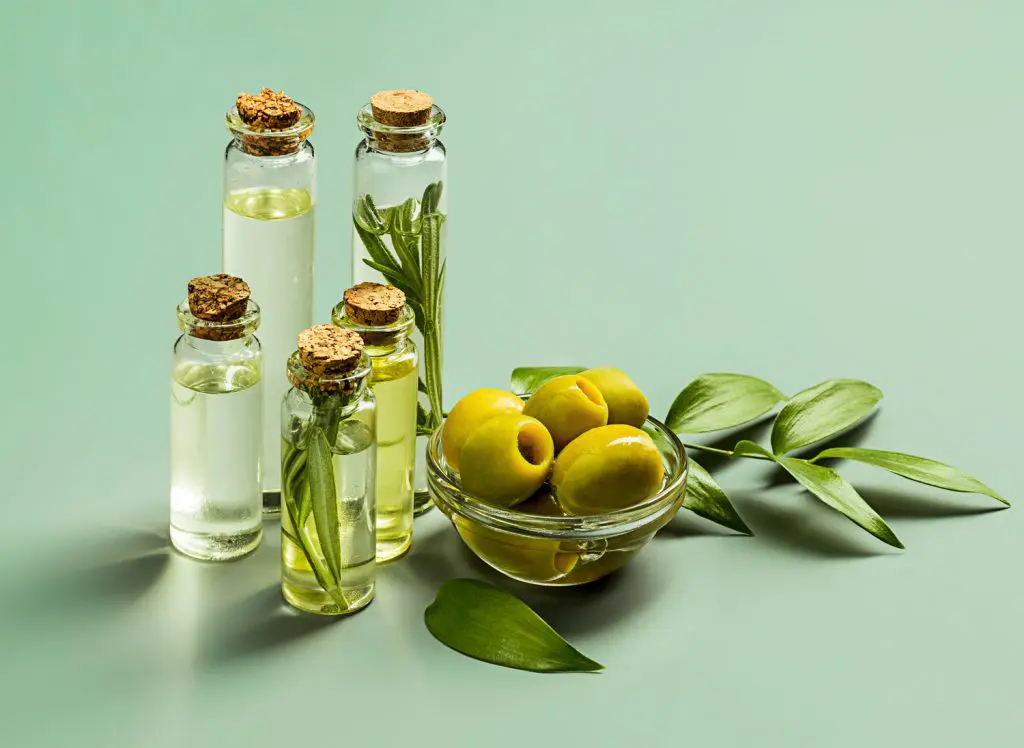
Olive oil has the best evidence of any food on this list. In the PREDIMED trial, reanalyzed in 2018 after problems with how some participants were randomized, 7,447 Spanish adults aged 55 to 80 at high risk of heart disease were randomly assigned to a Mediterranean diet supplemented with extra virgin olive oil, the same diet with mixed nuts, or a control group advised to cut fat. Over a median of 4.8 years, the olive oil group had a 31% lower risk of major cardiovascular events. The trial tested a whole diet, and it measured heart events rather than lifespan.
A 2022 study that followed 92,383 American adults for 28 years found that people who used more than 7 grams of olive oil a day, about half a tablespoon, had a 19% lower risk of dying during the study than people who rarely or never used it. Olive oil didn’t beat other vegetable oils in that analysis. The lower risk showed up when olive oil replaced margarine, butter, mayonnaise or dairy fat.
For skin, a French survey of 2,919 adults aged 45 to 60 found that more monounsaturated fat from olive oil went with a lower risk of severe sun-related skin aging. Monounsaturated fat from animal foods showed no such link. That’s an association, and the authors noted it may reflect the wider eating habits of olive oil users. Our Mediterranean diet guide covers the eating pattern around it.
Serving: 1 tablespoon (13.5 g): 119 calories, 0 g protein, 0 g carbs, 13.5 g fat.
2. Nuts

Nuts share the PREDIMED evidence. The group that got a daily allowance of mixed nuts had a 28% lower risk of major cardiovascular events than the control group. In a 2013 cohort of 118,962 American men and women, people who ate nuts seven or more times a week were 20% less likely to die during follow-up than people who ate none. An analysis of 18 studies found a similar 19% lower risk of death for high versus low nut intake, with most of the benefit reached by about three servings a week, around 12 grams a day. The 2013 study was partly funded by a tree nut industry foundation, along with the National Institutes of Health.
The skin evidence is one small trial. In 2019, 28 postmenopausal women completed 16 weeks of eating either almonds, making up 20% of their daily calories, or a snack with the same calories. Wrinkle severity and width fell in the almond group compared with the snack group, while skin barrier function didn’t change. The Almond Board of California helped fund it, and 20% of daily calories is far more almonds than a normal handful.
Serving: 1 oz walnuts (28 g): 183 calories, 4.3 g protein, 3.8 g carbs, 18.3 g fat. 1 oz almonds: 162 calories, 5.9 g protein, 6.0 g carbs, 14.0 g fat.
3. Leafy and cruciferous vegetables

Vegetables have the largest body of evidence on this list, and the benefit tops out at about five servings of fruit and vegetables a day. A 2017 analysis of 95 studies found that every extra 200 grams of fruit and vegetables a day went with a 10% lower risk of death from any cause. Green leafy vegetables and cruciferous vegetables such as broccoli were among the foods linked to lower heart disease and death. A 2021 analysis that combined two large US cohorts with 24 other studies, 26 cohorts in all, found the benefit leveled off at that five-servings mark, and that fruit juice and potatoes didn’t count toward it.
For skin, a study of about 450 older adults in Greece, Australia and Sweden found that vegetable intake had the strongest link to less skin wrinkling of any food group. It was a correlation, and no trial has tested greens on skin.
Serving: 1 cup cooked spinach (180 g): 41 calories, 5.3 g protein, 6.8 g carbs, 0.5 g fat. 1 cup cooked broccoli (156 g): 55 calories, 3.7 g protein, 11.2 g carbs, 0.6 g fat.
4. Fatty fish
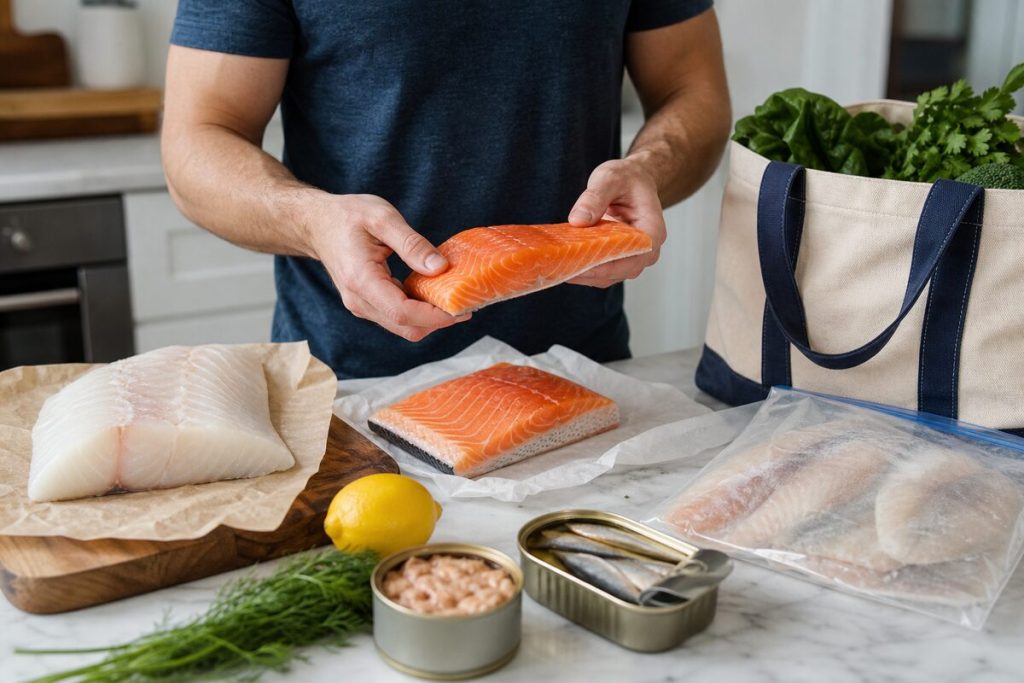
Fish is here for the mortality data and because it’s the densest protein on this list: a can of sardines carries 23 grams. In a study of 421,309 American adults followed for 16 years, people who ate the most fish of any kind were 9% (men) and 8% (women) less likely to die than those who ate the least, while fried fish did nothing for men and went with a higher risk of death in women. The people who got the most long-chain omega-3s, the fats that salmon and sardines are rich in, had a 15% (men) and 18% (women) lower risk of dying from cardiovascular disease.
No good human trial has tested eating fish for skin. Our ranking of the best fish for protein compares the options.
Serving: 3 oz cooked farmed salmon (85 g): 175 calories, 18.8 g protein, 0 g carbs, 10.5 g fat. One can of sardines in oil, drained (92 g): 191 calories, 22.7 g protein, 0 g carbs, 10.5 g fat.
5. Legumes
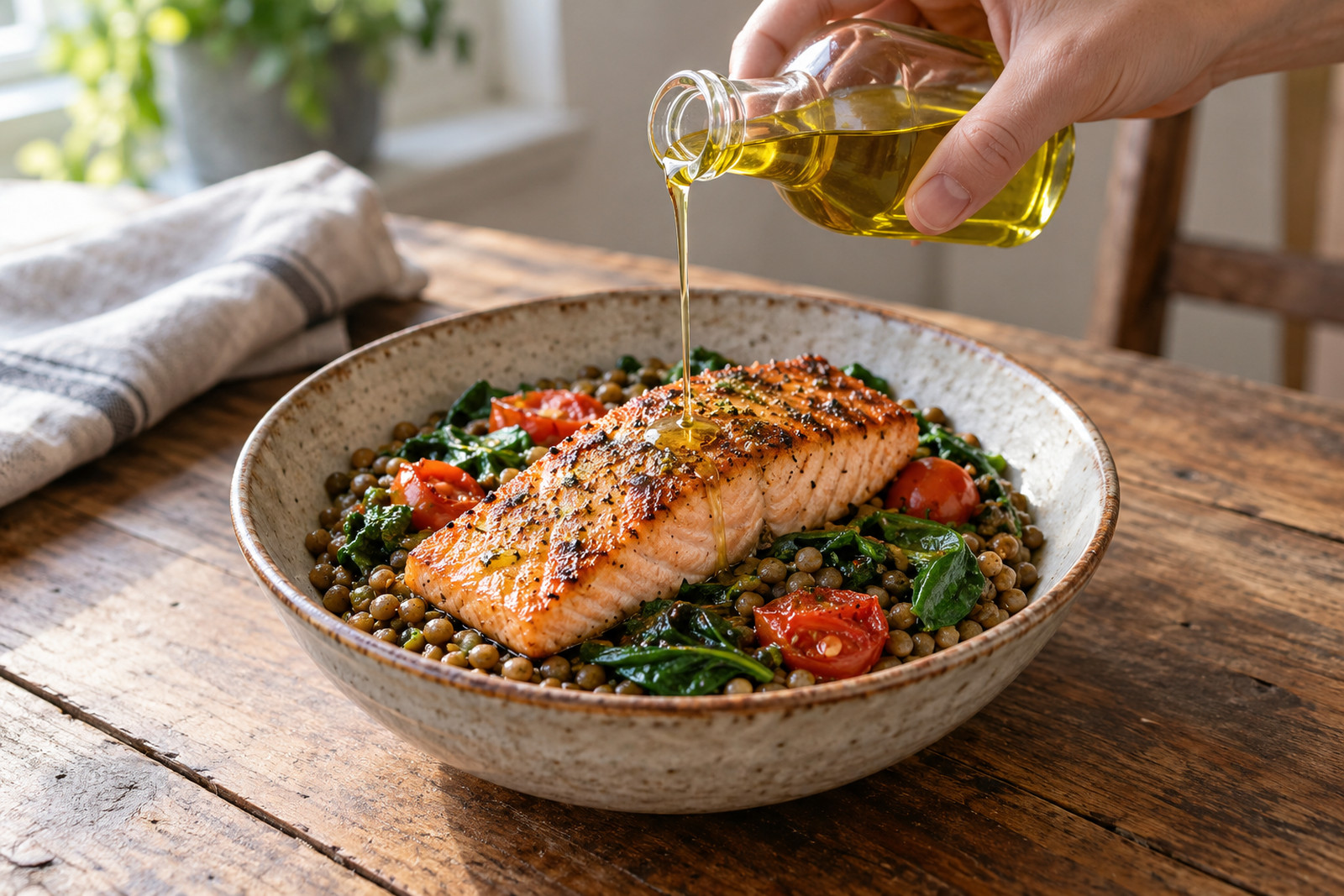
Lentils carry almost 18 grams of protein per cooked cup, the most of any plant food here, and legumes have mortality data behind them too, if modest. A 2023 analysis of 32 cohort studies covering more than 1.1 million people found that people who ate more legumes had a 6% lower risk of death from any cause and a 9% lower risk of stroke. An older study of 785 people aged 70 and over in Japan, Sweden, Greece and Australia found a 7% to 8% lower risk of death for every 20 grams of daily legume intake, though the sample was small.
The same wrinkle study that flagged vegetables found a weaker link between legumes and less wrinkling.
Serving: 1 cup cooked lentils (198 g): 230 calories, 17.9 g protein, 39.9 g carbs, 0.8 g fat. 1 cup cooked black beans (172 g): 227 calories, 15.2 g protein, 40.8 g carbs, 0.9 g fat.
6. Green tea

Five or more cups a day is the amount tied to fewer deaths, and that figure comes from Japan. A pooled analysis of eight Japanese cohorts with 313,381 people, followed for an average of 17 years, found that drinking five or more cups of green tea a day went with a 10% lower risk of death in men and 18% in women, compared with less than one cup.
The skin trials disagree. In a 2011 trial, 60 women drank a green tea beverage delivering 1,402 mg of catechins a day for 12 weeks. Their skin reddened 25% less under UV light, and elasticity and roughness improved. In a 2009 trial, 56 women took 250 mg of green tea polyphenols twice a day for two years, and their sun damage was no better than placebo at the end. Early improvements at six and 12 months didn’t last.
Serving: 1 cup brewed green tea (245 g): 2 calories, 0.5 g protein, 0 g carbs, 0 g fat.
7. Tomato paste
Two trials have fed people tomato paste and measured their skin. In a 2001 study, 19 volunteers ate 40 grams of tomato paste with 10 grams of olive oil a day, or olive oil alone. After 10 weeks, the tomato group’s skin reddened 40% less after UV exposure. There was no difference at four weeks. In a 2011 trial, 20 women aged 21 to 47 ate 55 grams of tomato paste in olive oil daily for 12 weeks. They needed a higher UV dose before their skin reddened, and their skin showed less of an enzyme that breaks down collagen. Another standard measure of sunburn threshold didn’t change.
Both trials were small, measured protection against a lamp in a lab, and neither tracked wrinkles over years. No study has tied tomatoes themselves to a longer life.
Serving: 40 g tomato paste, no salt added (the 2001 study dose): 33 calories, 1.7 g protein, 7.6 g carbs, 0.2 g fat.
8. Berries
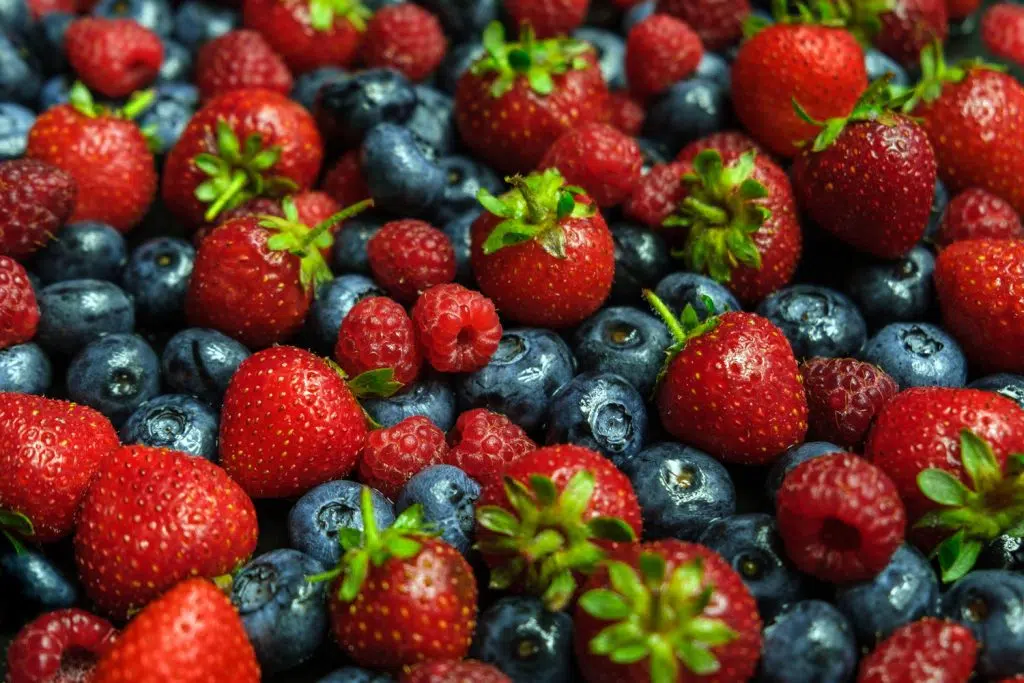
No human study has tested berries for skin, so this entry rests on heart and mortality data. A 2024 analysis of 37,232 American adults followed for eight years found that people who ate any berries had a 21% lower risk of death than people who ate none. Blueberries showed the same 21% lower risk, and strawberries 14%. A separate study of 93,600 women aged 25 to 42 found that those with the highest intake of anthocyanins, the pigments that make berries blue and red, had a 32% lower risk of heart attack over 18 years.
Serving: 1 cup blueberries (148 g): 84 calories, 1.1 g protein, 21.4 g carbs, 0.5 g fat.
9. Cocoa
Cocoa has two skin trials, both controlled. In a 2006 study, women who drank cocoa with 326 mg of flavanols a day had 25% less UV redness after 12 weeks, plus better skin density and hydration, while a low-flavanol cocoa did nothing. In a double-blind 2016 trial of Korean women aged 43 to 86, a drink with 320 mg of cocoa flavanols a day for 24 weeks left wrinkle roughness 8.7 percentage points better than placebo and improved elasticity, with no change in hydration.
The longevity evidence is one large null trial. The COSMOS trial gave 21,442 older Americans a cocoa extract with 500 mg of flavanols a day or a placebo for a median of 3.6 years. Total cardiovascular events didn’t fall significantly. Deaths from cardiovascular disease were 27% lower, but that was a secondary outcome, which can’t prove a benefit on its own. The trial was funded by the National Institutes of Health and by Mars Edge. Every one of these studies used specially made high-flavanol cocoa drinks or extracts, not chocolate bars.
Serving: 1 tablespoon unsweetened cocoa powder (5.4 g): 12 calories, 1.1 g protein, 3.1 g carbs, 0.7 g fat. 1 oz dark chocolate, 70% to 85% cacao: 167 calories, 2.2 g protein, 12.9 g carbs, 11.9 g fat.
10. Avocado
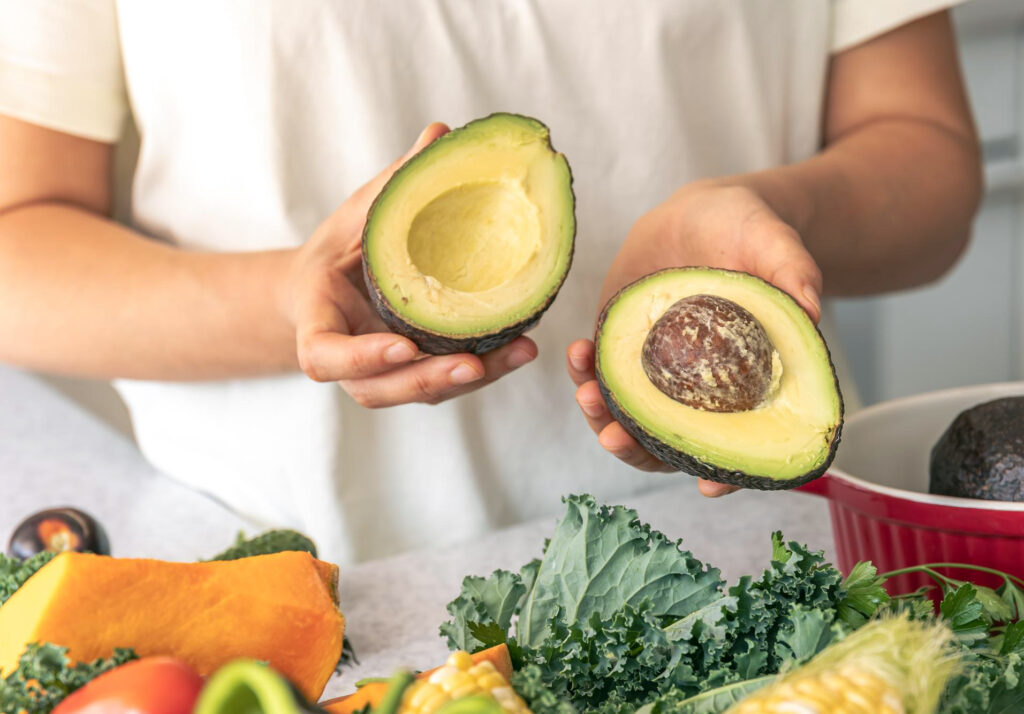
Two servings a week is the amount tied to less heart disease, and the only skin trial used a whole avocado a day. In a 2022 study that followed 110,487 American adults for 30 years, people who ate at least two servings of avocado a week had a 16% lower risk of cardiovascular disease and a 21% lower risk of coronary heart disease than people who ate none. There was no link with stroke.
The skin evidence is a pilot trial of 39 overweight women aged 27 to 73 who ate one avocado a day for eight weeks, more than most people manage. Forehead skin firmness improved compared with women who kept their usual diet, while hydration, pigmentation and sunburn resistance didn’t change. The Hass Avocado Board funded it.
Serving: half a medium avocado (100 g): 160 calories, 2.0 g protein, 8.5 g carbs, 14.7 g fat.
11. Citrus and kiwi
Citrus and kiwi make the list on the thinnest evidence here: one survey and one subgroup of a larger analysis. A study of 4,025 American women aged 40 to 74 found that a higher vitamin C intake went with a lower likelihood of wrinkled skin and of age-related skin dryness. The same study linked higher fat and carbohydrate intakes to more wrinkling. It rested on a single day of food records from the 1970s, which makes it weak evidence. Citrus fruits also appear among the foods tied to lower heart disease and death in the 2017 analysis of 95 studies. No trial has fed people oranges or kiwi and measured their skin.
Serving: 1 medium orange (131 g): 62 calories, 1.2 g protein, 15.4 g carbs, 0.2 g fat. 1 medium kiwi (69 g): 42 calories, 0.8 g protein, 10.1 g carbs, 0.4 g fat.
Popular “anti-aging” foods that didn’t make the list
Four foods that usually make these lists didn’t survive the same test.
- Mango. In a 2020 pilot study of postmenopausal women, 85 grams a day reduced deep wrinkles over 16 weeks, but 250 grams a day made several wrinkle measures worse. The smaller dose also increased cheek redness. The National Mango Board paid for it.
- Eggs. Large US cohorts disagree. A 2019 pooled analysis of 29,615 adults linked higher egg intake to more cardiovascular disease, while a 2020 analysis of more than 215,000 people found no link for one egg a day. There’s no skin evidence either way.
- Soy. In a Japanese study of 92,915 adults followed for almost 15 years, total soy intake wasn’t linked to a lower risk of death. Only fermented soy, such as natto and miso, was, at about 10% lower.
- Yogurt. An analysis of cohort studies covering nearly 900,000 people linked yogurt to a 7% lower risk of death, but the benefit stopped at about half a serving a day.
One day of eating from the 11, and the protein gap
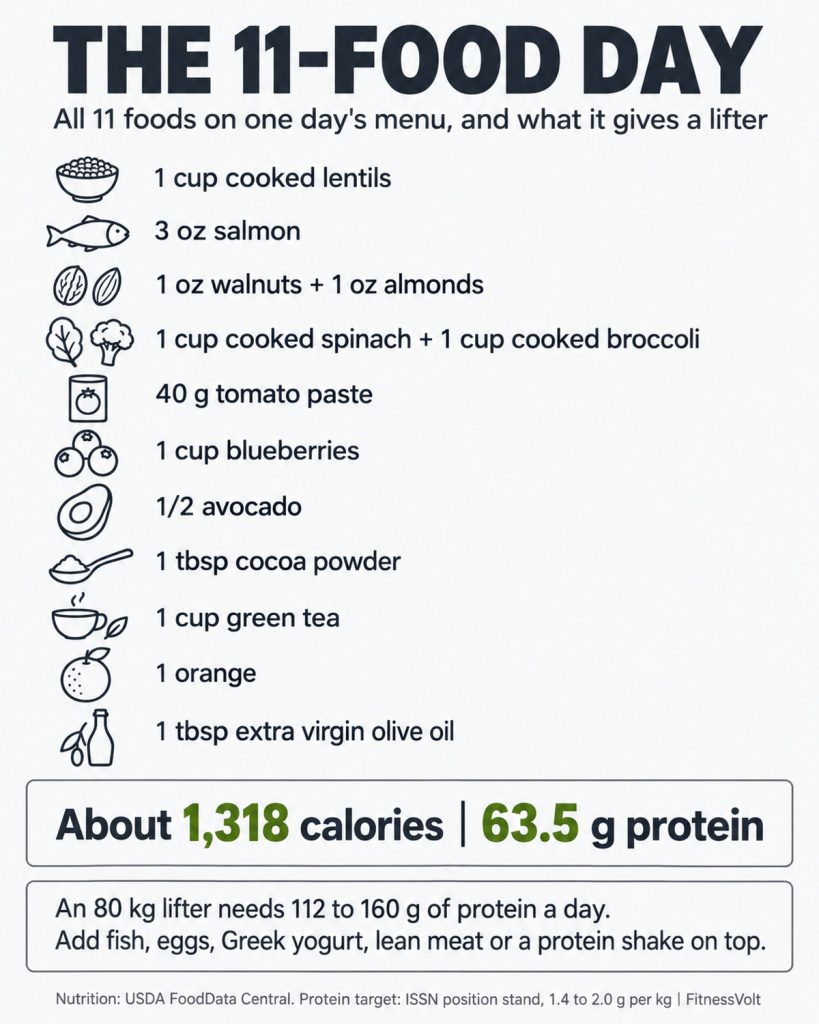
Put all 11 on one day’s menu: a cup of lentils, 3 ounces of salmon, an ounce each of walnuts and almonds, a cup each of cooked spinach and broccoli, 40 grams of tomato paste, a cup of blueberries, half an avocado, a tablespoon of cocoa, a cup of green tea, an orange and a tablespoon of olive oil. That adds up to about 1,318 calories and 63.5 grams of protein.
That covers the base and leaves a lifter 50 to 100 grams of protein short. The International Society of Sports Nutrition recommends 1.4 to 2.0 grams of protein per kilogram of body weight a day for people building or keeping muscle, which is 112 to 160 grams for an 80 kg lifter. Treat the 11 foods as the base layer and add your protein anchors on top: more fish, lean meat, a protein shake, eggs or Greek yogurt. Eggs and yogurt missed the list above on longevity and skin evidence, and as protein sources for a lifter they still earn a place. Our protein calculator gives you a daily target, and our high-protein anti-inflammatory breakfast shows one way to build the first meal.
The bottom line
If you add only a few foods from this list, start with extra virgin olive oil in place of butter, a daily handful of nuts and daily leafy greens. Those three have the strongest longevity evidence, and fatty fish is the protein that belongs beside them. For skin, tomato paste with olive oil and high-flavanol cocoa have the best trials, though both are small. None of these foods replaces sunscreen or a high-protein diet, and no single food has more than a small trial behind its skin claims. For a broader look at diet and wrinkles, our piece on Arnold Schwarzenegger’s anti-wrinkle diet covers a large study of women over 50.
Common questions
Can food replace sunscreen?
No study has shown that. The tomato paste and cocoa trials measured modest reductions in UV redness under a lab lamp, and none compared the foods with sunscreen.
Do collagen supplements work better than these foods for skin?
Collagen supplements are a separate question with their own trials, and this list covers whole foods only. Our review of the best collagen peptides for athletes covers the supplement side.
How much of the research was paid for by the food industry?
The trials here that disclose industry money are the almond trial (Almond Board of California), the avocado trial (Hass Avocado Board) and the mango trial (National Mango Board). The 2013 nut cohort was co-funded by a tree nut industry foundation, and the COSMOS cocoa trial by Mars Edge. Funding doesn’t make a result wrong, but small industry-funded pilots need repeating before they count as settled.
Sources
- Estruch, R., Ros, E., Salas-Salvadó, J., et al. (2018). Primary prevention of cardiovascular disease with a Mediterranean diet supplemented with extra-virgin olive oil or nuts. New England Journal of Medicine, 378(25), e34. DOI: 10.1056/NEJMoa1800389. PMID: 29897866.
- Guasch-Ferré, M., Li, Y., Willett, W. C., et al. (2022). Consumption of olive oil and risk of total and cause-specific mortality among U.S. adults. Journal of the American College of Cardiology, 79(2), 101-112. DOI: 10.1016/j.jacc.2021.10.041. PMID: 35027106.
- Latreille, J., Kesse-Guyot, E., Malvy, D., et al. (2012). Dietary monounsaturated fatty acids intake and risk of skin photoaging. PLoS One, 7(9), e44490. DOI: 10.1371/journal.pone.0044490. PMID: 22970231.
- Bao, Y., Han, J., Hu, F. B., et al. (2013). Association of nut consumption with total and cause-specific mortality. New England Journal of Medicine, 369(21), 2001-2011. DOI: 10.1056/NEJMoa1307352. PMID: 24256379.
- Chen, G. C., Zhang, R., Martínez-González, M. A., et al. (2017). Nut consumption in relation to all-cause and cause-specific mortality: a meta-analysis of 18 prospective studies. Food & Function, 8(11), 3893-3905. DOI: 10.1039/c7fo00915a. PMID: 28875220.
- Foolad, N., Vaughn, A. R., Rybak, I., et al. (2019). Prospective randomized controlled pilot study on the effects of almond consumption on skin lipids and wrinkles. Phytotherapy Research, 33(12), 3212-3217. DOI: 10.1002/ptr.6495. PMID: 31576607.
- Zhang, Y., Zhuang, P., He, W., et al. (2018). Association of fish and long-chain omega-3 fatty acids intakes with total and cause-specific mortality: prospective analysis of 421 309 individuals. Journal of Internal Medicine, 284(4), 399-417. DOI: 10.1111/joim.12786. PMID: 30019399.
- Aune, D., Giovannucci, E., Boffetta, P., et al. (2017). Fruit and vegetable intake and the risk of cardiovascular disease, total cancer and all-cause mortality: a systematic review and dose-response meta-analysis of prospective studies. International Journal of Epidemiology, 46(3), 1029-1056. DOI: 10.1093/ije/dyw319. PMID: 28338764.
- Wang, D. D., Li, Y., Bhupathiraju, S. N., et al. (2021). Fruit and vegetable intake and mortality: results from 2 prospective cohort studies of US men and women and a meta-analysis of 26 cohort studies. Circulation, 143(17), 1642-1654. DOI: 10.1161/CIRCULATIONAHA.120.048996. PMID: 33641343.
- Purba, M. B., Kouris-Blazos, A., Wattanapenpaiboon, N., et al. (2001). Skin wrinkling: can food make a difference? Journal of the American College of Nutrition, 20(1), 71-80. DOI: 10.1080/07315724.2001.10719017. PMID: 11293471.
- Zargarzadeh, N., Mousavi, S. M., Santos, H. O., et al. (2023). Legume consumption and risk of all-cause and cause-specific mortality: a systematic review and dose-response meta-analysis of prospective studies. Advances in Nutrition, 14(1), 64-76. DOI: 10.1016/j.advnut.2022.10.009. PMID: 36811595.
- Darmadi-Blackberry, I., Wahlqvist, M. L., Kouris-Blazos, A., et al. (2004). Legumes: the most important dietary predictor of survival in older people of different ethnicities. Asia Pacific Journal of Clinical Nutrition, 13(2), 217-220. PMID: 15228991.
- Abe, S. K., Saito, E., Sawada, N., et al. (2019). Green tea consumption and mortality in Japanese men and women: a pooled analysis of eight population-based cohort studies in Japan. European Journal of Epidemiology, 34(10), 917-926. DOI: 10.1007/s10654-019-00545-y. PMID: 31392470.
- Heinrich, U., Moore, C. E., De Spirt, S., Tronnier, H., & Stahl, W. (2011). Green tea polyphenols provide photoprotection, increase microcirculation, and modulate skin properties of women. Journal of Nutrition, 141(6), 1202-1208. DOI: 10.3945/jn.110.136465. PMID: 21525260.
- Janjua, R., Munoz, C., Gorell, E., et al. (2009). A two-year, double-blind, randomized placebo-controlled trial of oral green tea polyphenols on the long-term clinical and histologic appearance of photoaging skin. Dermatologic Surgery, 35(7), 1057-1065. DOI: 10.1111/j.1524-4725.2009.01183.x. PMID: 19469799.
- Stahl, W., Heinrich, U., Wiseman, S., et al. (2001). Dietary tomato paste protects against ultraviolet light-induced erythema in humans. Journal of Nutrition, 131(5), 1449-1451. DOI: 10.1093/jn/131.5.1449. PMID: 11340098.
- Rizwan, M., Rodriguez-Blanco, I., Harbottle, A., Birch-Machin, M. A., Watson, R. E. B., & Rhodes, L. E. (2011). Tomato paste rich in lycopene protects against cutaneous photodamage in humans in vivo: a randomized controlled trial. British Journal of Dermatology, 164(1), 154-162. DOI: 10.1111/j.1365-2133.2010.10057.x. PMID: 20854436.
- Zhang, L., Muscat, J. E., Chinchilli, V. M., et al. (2024). Consumption of berries and flavonoids in relation to mortality in NHANES, 1999-2014. Journal of Nutrition, 154(2), 734-743. DOI: 10.1016/j.tjnut.2024.01.002. PMID: 38184200.
- Cassidy, A., Mukamal, K. J., Liu, L., et al. (2013). High anthocyanin intake is associated with a reduced risk of myocardial infarction in young and middle-aged women. Circulation, 127(2), 188-196. DOI: 10.1161/CIRCULATIONAHA.112.122408. PMID: 23319811.
- Heinrich, U., Neukam, K., Tronnier, H., Sies, H., & Stahl, W. (2006). Long-term ingestion of high flavanol cocoa provides photoprotection against UV-induced erythema and improves skin condition in women. Journal of Nutrition, 136(6), 1565-1569. DOI: 10.1093/jn/136.6.1565. PMID: 16702322.
- Yoon, H. S., Kim, J. R., Park, G. Y., et al. (2016). Cocoa flavanol supplementation influences skin conditions of photo-aged women: a 24-week double-blind, randomized, controlled trial. Journal of Nutrition, 146(1), 46-50. DOI: 10.3945/jn.115.217711. PMID: 26581682.
- Sesso, H. D., Manson, J. E., Aragaki, A. K., et al. (2022). Effect of cocoa flavanol supplementation for the prevention of cardiovascular disease events: the COcoa Supplement and Multivitamin Outcomes Study (COSMOS) randomized clinical trial. American Journal of Clinical Nutrition, 115(6), 1490-1500. DOI: 10.1093/ajcn/nqac055. PMID: 35294962.
- Henning, S. M., Guzman, J. B., Thames, G., et al. (2022). Avocado consumption increased skin elasticity and firmness in women: a pilot study. Journal of Cosmetic Dermatology, 21(9), 4028-4034. DOI: 10.1111/jocd.14717. PMID: 35037373.
- Pacheco, L. S., Li, Y., Rimm, E. B., et al. (2022). Avocado consumption and risk of cardiovascular disease in US adults. Journal of the American Heart Association, 11(7), e024014. DOI: 10.1161/JAHA.121.024014. PMID: 35352568.
- Cosgrove, M. C., Franco, O. H., Granger, S. P., Murray, P. G., & Mayes, A. E. (2007). Dietary nutrient intakes and skin-aging appearance among middle-aged American women. American Journal of Clinical Nutrition, 86(4), 1225-1231. DOI: 10.1093/ajcn/86.4.1225. PMID: 17921406.
- Fam, V. W., Holt, R. R., Keen, C. L., Sivamani, R. K., & Hackman, R. M. (2020). Prospective evaluation of mango fruit intake on facial wrinkles and erythema in postmenopausal women: a randomized clinical pilot study. Nutrients, 12(11), 3381. DOI: 10.3390/nu12113381. PMID: 33158079.
- Zhong, V. W., Van Horn, L., Cornelis, M. C., et al. (2019). Associations of dietary cholesterol or egg consumption with incident cardiovascular disease and mortality. JAMA, 321(11), 1081-1095. DOI: 10.1001/jama.2019.1572. PMID: 30874756.
- Drouin-Chartier, J. P., Chen, S., Li, Y., et al. (2020). Egg consumption and risk of cardiovascular disease: three large prospective US cohort studies, systematic review, and updated meta-analysis. BMJ, 368, m513. DOI: 10.1136/bmj.m513. PMID: 32132002.
- Katagiri, R., Sawada, N., Goto, A., et al. (2020). Association of soy and fermented soy product intake with total and cause specific mortality: prospective cohort study. BMJ, 368, m34. DOI: 10.1136/bmj.m34. PMID: 31996350.
- Tutunchi, H., Naghshi, S., Naemi, M., Naeini, F., & Esmaillzadeh, A. (2023). Yogurt consumption and risk of mortality from all causes, CVD and cancer: a comprehensive systematic review and dose-response meta-analysis of cohort studies. Public Health Nutrition, 26(6), 1196-1209. DOI: 10.1017/S1368980022002385. PMID: 36349966.
- Jäger, R., Kerksick, C. M., Campbell, B. I., et al. (2017). International Society of Sports Nutrition position stand: protein and exercise. Journal of the International Society of Sports Nutrition, 14, 20. DOI: 10.1186/s12970-017-0177-8. PMID: 28642676.
- U.S. Department of Agriculture, Agricultural Research Service. FoodData Central (SR Legacy). Accessed November 1, 2026.