




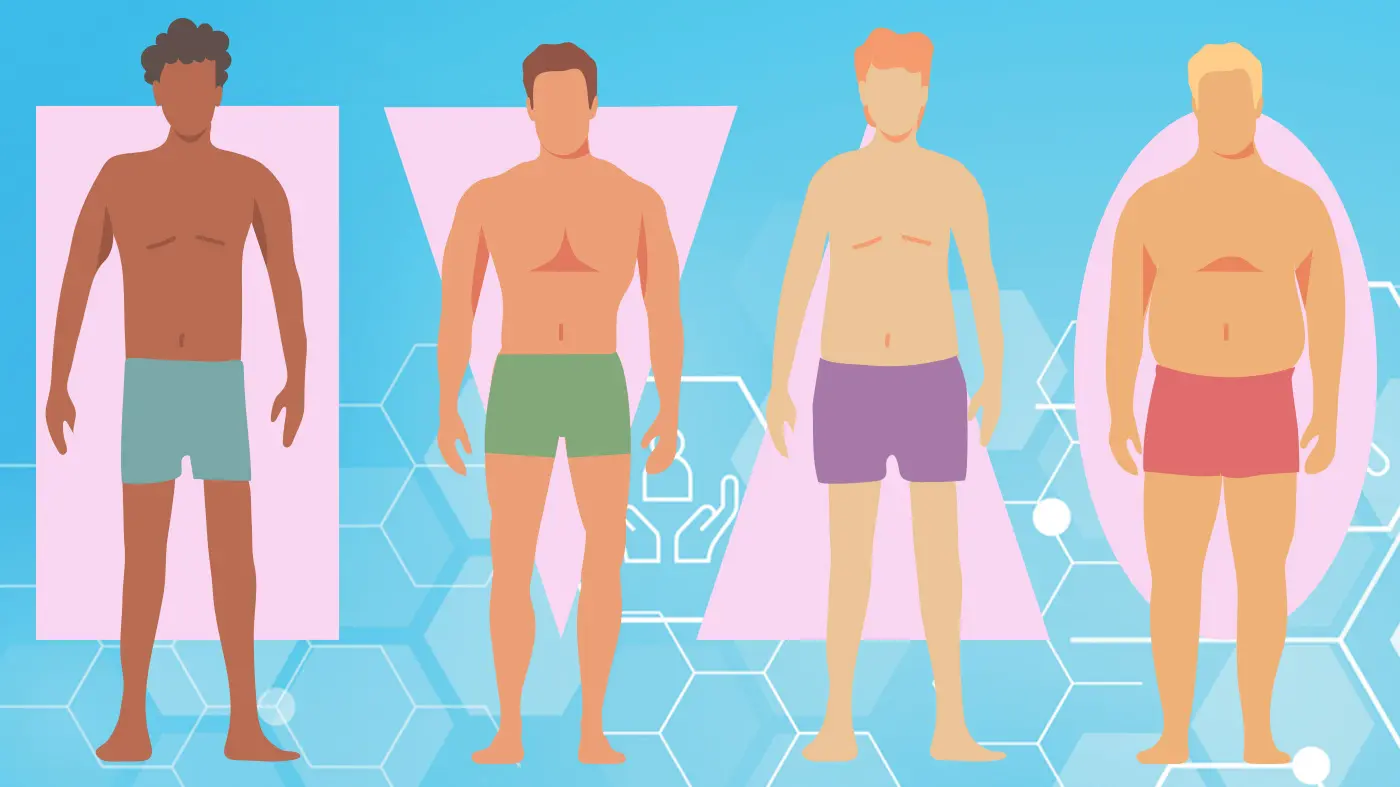
BODY TYPES QUIZ
1 of 9
Unlock the secrets of your physique with our comprehensive body type quiz. Determine if you’re an endomorph, mesomorph, ectomorph, or a unique combination of body types.
Understanding your somatotype is crucial for tailoring your fitness journey and achieving optimal results. Many struggle with progress due to a misalignment between their workout routines and their body’s natural tendencies. This article provides essential insights to help you maximize your fitness potential.
Somatotype Theory: A Modern Perspective
From Sheldon’s Typology to Modern Analysis
In the 1940s, psychologist William Herbert Sheldon introduced somatotypes: ectomorph, mesomorph, and endomorph. Sheldon categorized individuals into these body types, aiming to understand human physiology. In general terms, endomorphs tend to have larger frames with higher body fat, mesomorphs are typically athletic and muscular, and ectomorphs are usually lean with smaller bone structures. While groundbreaking, Sheldon’s theory has evolved significantly.
Sheldon’s original theory included some controversial elements, such as:
- Associating body types with personality traits
- Using questionable methods for data collection
- Making inaccurate assumptions about physical characteristics
Modern somatotype analysis focuses solely on physical attributes and genetic predispositions, discarding outdated stereotypes and embracing a more nuanced approach to body composition.
Understanding the Three Primary Somatotypes
Endomorph: The Natural Powerhouse
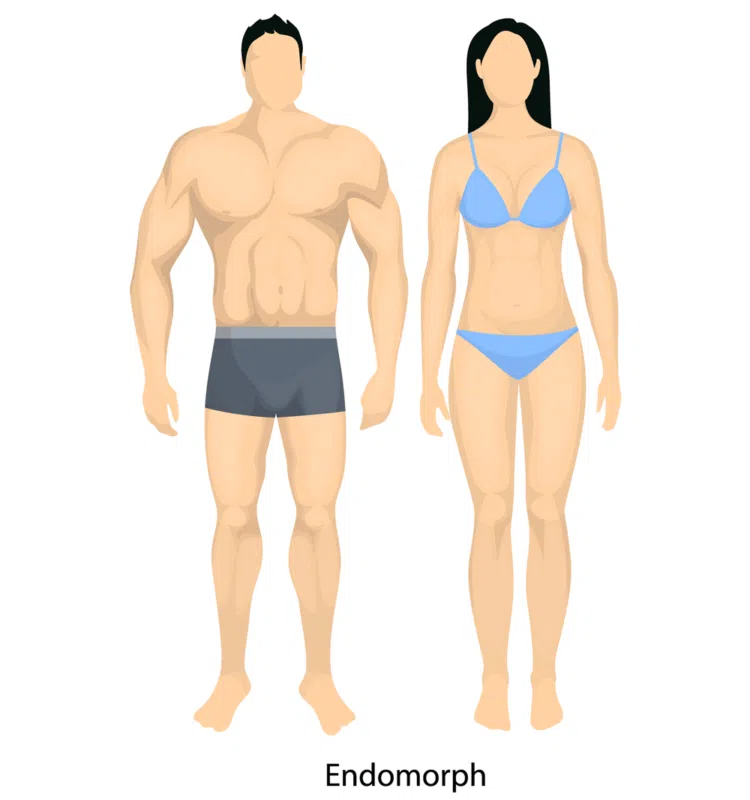
Key Characteristics:
- Larger frame
- Higher body fat percentage
- Significant muscle-building potential
Advantages:
- Superior ability to gain and maintain muscle mass
- Excels in strength-based activities
- Well-suited for powerlifting and strongman competitions
Challenges:
- May require extra effort for weight management
- Cardiovascular health may need specific attention
Mesomorph: The Balanced Athlete
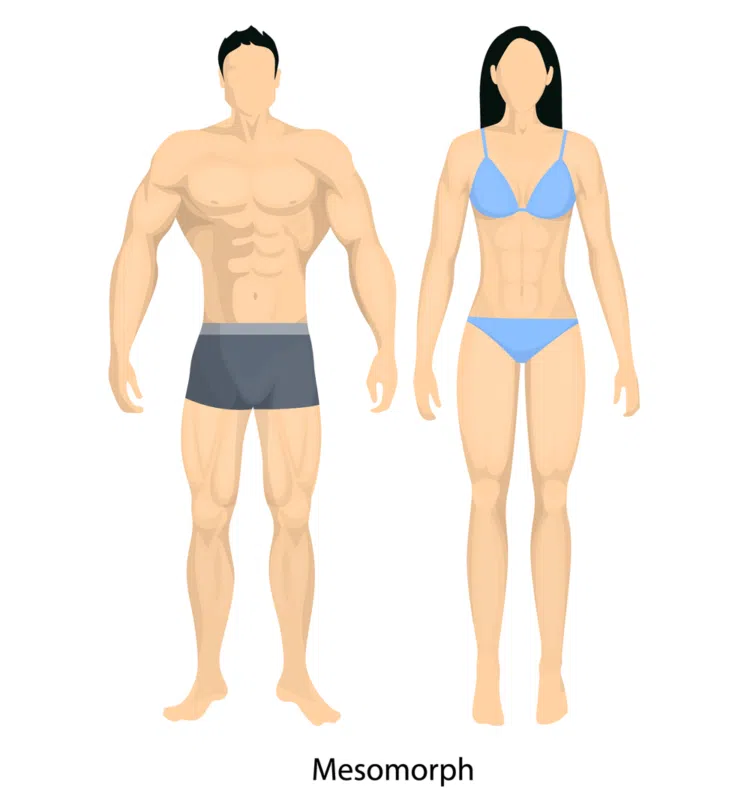
Key Characteristics:
- Athletic build
- Moderate frame size
- Balanced muscle-to-fat ratio
Advantages:
- Responds quickly to resistance training
- Maintains a lean physique with less effort
- Versatile for various sports and fitness goals
Challenges:
- May plateau without varied training stimuli
- Risk of overreliance on genetic advantages
Ectomorph: The Lean Machine
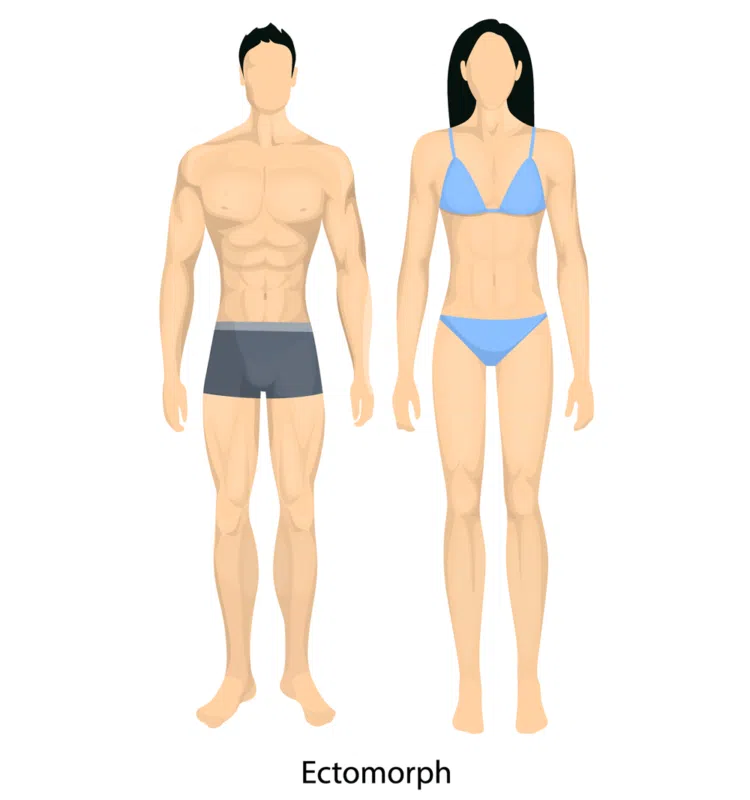
Key Characteristics:
- Slender build
- Low body fat percentage
- Smaller joints and bone structure
Advantages:
- Naturally lean physique
- Excellent definition when muscle is gained
- Potential for impressive relative strength
Challenges:
- Difficulty gaining muscle mass
- May require higher caloric intake for growth
- Targeted resistance training is crucial for results
Beyond the Basics: Understanding Mixed Somatotypes
It’s crucial to understand that pure somatotypes are rare. Most individuals exhibit a blend of characteristics from multiple body types. Our body type quiz accounts for this complexity, providing percentage breakdowns of your unique composition (e.g., 70% ectomorph, 30% mesomorph).
Understanding your unique blend of body types can help you tailor your fitness approach more effectively. For example, an ecto-mesomorph might focus on combining strength training with high-calorie nutrition to maximize muscle gains while maintaining a lean physique.
Several factors contribute to your body type combination:
- Genetic predisposition
- Dietary habits
- Training history
- Lifestyle factors
Recognizing your specific blend is key to optimizing your fitness approach and setting realistic goals.
Scientific Evidence: How Somatotypes Influence Performance and Health
Understanding the scientific basis of somatotypes is crucial for optimizing fitness strategies and health outcomes. Recent research has provided valuable insights into how different body types can impact athletic performance and health risks, helping individuals tailor their approaches more effectively.
Somatotypes and Athletic Performance
Recent research has shed light on how somatotypes influence physical performance:
- Strength and Power: Mesomorphic traits show a strong correlation with superior anaerobic performance, excelling in strength-based activities (1).
- Lower Body Strength: A combination of ectomorphic and mesomorphic characteristics indicates enhanced lower body strength, suggesting an advantage for certain power movements.
Somatotypes and Health Considerations
Understanding your body type can also provide insights into potential health risks:
- Disease Predisposition: Individuals with dominant mesomorphic or endomorphic traits may have an increased susceptibility to specific diseases, potentially linked to higher average body weight (2).
- Metabolic Variations: Each somatotype may exhibit unique responses to dietary changes and exercise, highlighting the need for personalized health plans.
Optimizing Your Fitness Journey Based on Your Somatotype
Endomorph-Focused Strategies
- Prioritize high-intensity interval training (HIIT) for effective fat loss.
- Focus on compound movements for optimal resistance training results.
- Choose nutrient-dense, lower-calorie foods to manage weight effectively.
Training Strategies for Mesomorphs
- Implement periodized training to overcome plateaus and ensure continuous progress.
- Balance strength training with cardiovascular exercise for a well-rounded fitness approach.
- Maintain a balanced macronutrient intake to achieve and sustain an ideal body composition.
Maximizing Results for Ectomorphs
- Emphasize progressive overload for effective resistance training and muscle growth.
- Increase caloric intake with nutrient-rich foods to support muscle development.
- Prioritize recovery to facilitate muscle growth and prevent overtraining.
Fitness Strategies for Mixed Somatotypes
- Combine strategies based on your dominant body types for a tailored approach.
- Regularly assess and modify your strategy to adapt to changes in your body composition.
- Focus on leveraging the strengths and addressing the challenges of each body type in your blend.
Beyond Body Types: Unlocking Your True Potential
While understanding your somatotype is valuable, it’s essential to recognize that genetics is just one piece of the puzzle. Factors such as nutrition, training consistency, sleep quality, and overall lifestyle play crucial roles in achieving your fitness goals.
Remember:
- Body type is a starting point, not a defining limit.
- Consistent effort and strategic training can overcome genetic predispositions.
- Regular self-assessment and adaptation are essential for sustained success.
Take Action: Discover Your Unique Body Type
Ready to optimize your fitness journey? Take our comprehensive body type quiz above to uncover your unique somatotype profile. Armed with this knowledge, you’ll be better equipped to tailor your training, nutrition, and lifestyle choices for maximum results.
Helpful Fitness Tools: Resources to Enhance Your Journey
Explore these valuable tools to support your fitness goals:
- TDEE Calculator
- Carb Cycling Calculator
- Intermittent Fasting Calculator
- Protein Intake Calculator
- Macronutrient Calculator
- Weight Gain Calculator
- Weight Loss Calculator
- Calorie Deficit Calculator
- Shoulder to Waist Ratio Calculator
Dive Deeper into Body Type Science
Expand your understanding with these in-depth articles:
- Comprehensive Guide to Male Body Types (Ectomorphs, Mesomorphs, and Endomorphs)
- Understanding and Addressing the Skinny Fat Physique
- The Science of Getting Shredded: Timelines and Strategies
References
Fitness Volt is committed to providing our readers with science-based information. We use only credible and peer-reviewed sources to support the information we share in our articles.
- Ryan-Stewart H, Faulkner J, Jobson S. The influence of somatotype on anaerobic performance. PLoS One. 2018 May 22;13(5):e0197761. doi: 10.1371/journal.pone.0197761. PMID: 29787610; PMCID: PMC5963773.
- Koleva M, Nacheva A, Boev M. Somatotype and disease prevalence in adults. Rev Environ Health. 2002 Jan-Mar;17(1):65-84. doi: 10.1515/reveh.2002.17.1.65. PMID: 12088094.
 You can also follow us on Twitter, Facebook, Instagram, and
YouTube for even more content.
You can also follow us on Twitter, Facebook, Instagram, and
YouTube for even more content.Tip: If you're signed in to Google, tap Follow.





My type of is Ectomorph because all the characteristics of ectomorph in the list are also like my body.
Endomorph
Excellent thank you for this.. its simple calculator and get the job done 100% everytime.
Good
good