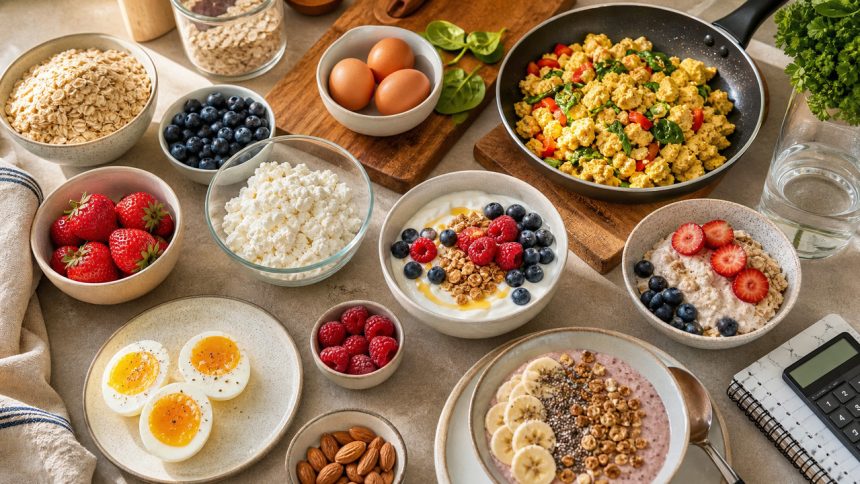
Most diet plans do not fall apart at dinner. They start wobbling at breakfast, when the first meal is either too small, too random, or dressed up as healthy while barely containing any protein.
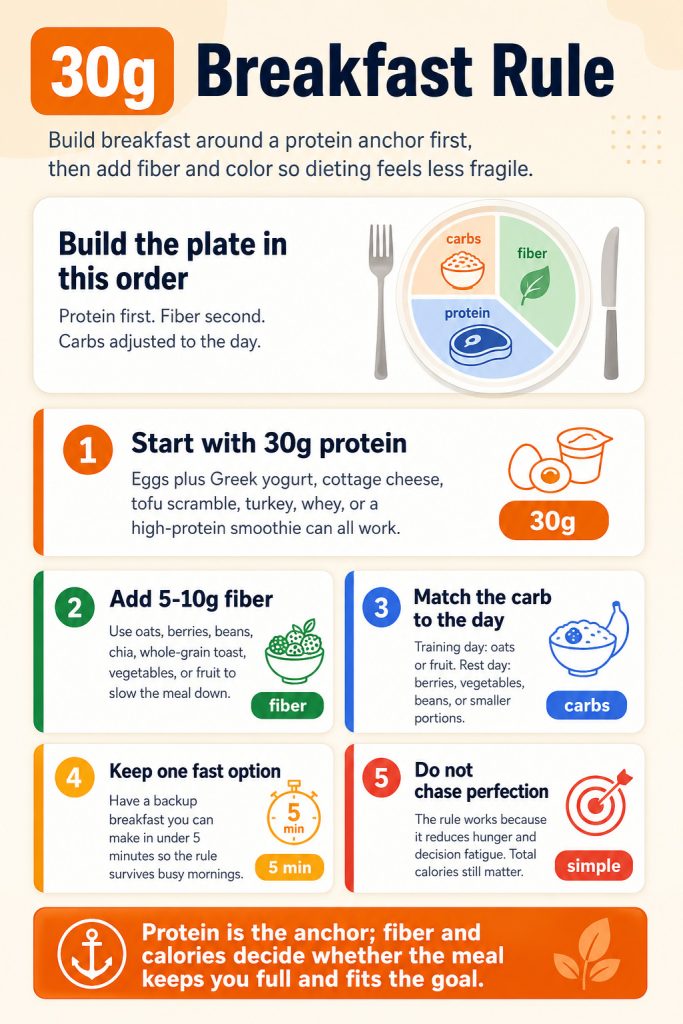
The 30-gram breakfast rule fixes the first decision of the day. Build breakfast around roughly 30 grams of protein, add fiber, then adjust carbs based on training and appetite. It is not flashy, but it changes the way the rest of the day feels.
This is not a claim that breakfast is mandatory for everyone. It is a rule for people whose dieting gets harder when the first real meal is low-protein, low-fiber, and forgettable.
The Rule
Start breakfast with about 30 grams of protein. Then add 5 to 10 grams of fiber. After that, decide whether the meal needs more carbs based on training, steps, and hunger.
The rule works because it removes the breakfast guessing game. Protein supports muscle and fullness. Fiber adds volume and slows the meal down. Carbs become a tool instead of a reflex.
Why 30 Grams Is a Useful Target
The International Society of Sports Nutrition position stand supports higher protein intakes for active people, especially when training and body composition are priorities. Research on protein distribution also suggests that spreading protein across meals can support muscle protein synthesis better than saving most protein for one giant dinner.
Thirty grams is not a sacred number. It is a practical anchor. For many readers, it is enough to make breakfast feel like a real meal without requiring bodybuilder-level prep.
If you want plug-and-play examples, FitnessVolt already has a strong list of 30-gram protein breakfasts.
The Breakfast Builder
| Step | Choose | Examples | Purpose |
|---|---|---|---|
| 1 | Protein anchor | Greek yogurt, eggs, tofu, cottage cheese, whey, turkey | Muscle and fullness |
| 2 | Fiber base | Berries, oats, beans, chia, vegetables, whole-grain toast | Volume and appetite control |
| 3 | Carb level | Fruit, oats, potatoes, toast, rice | Training fuel or calorie control |
| 4 | Flavor | Salsa, cinnamon, herbs, hot sauce, fruit | Repeatability |
Five Breakfasts That Actually Hit the Rule
| Breakfast | Rough protein | Fiber move | Best use |
|---|---|---|---|
| Greek yogurt, whey, berries, chia | 35-45g | Berries and chia | Fast prep |
| Eggs plus cottage cheese and vegetables | 30-40g | Vegetables or beans | Low-carb appetite control |
| Tofu scramble with black beans | 30-38g | Beans and vegetables | Vegetarian breakfast |
| Protein smoothie with oats and berries | 30-45g | Oats, berries, flax | Low appetite mornings |
| Turkey breakfast wrap | 30-40g | High-fiber wrap and salsa | Portable meal |
Use USDA FoodData Central or labels to check your actual brands. Protein and fiber numbers can swing more than people think.
How to Use It for Fat Loss

For fat loss, keep the protein and fiber steady while controlling toppings and fats. Granola, nut butter, oil, cheese, avocado, and dried fruit can all fit, but they are calorie dense enough to erase the structure if poured freely.
On training mornings, use oats, fruit, potatoes, toast, or rice when performance needs fuel. On rest days, use berries, beans, vegetables, or smaller starch portions. The goal is not carb fear. The goal is matching the meal to the day.
This connects cleanly with FitnessVolt’s 30/10 Plate: protein and fiber first, then calories adjusted to the goal.
The 5-Minute Emergency Versions
The breakfast that saves your diet is often the one you can make when you are busy, annoyed, and halfway out the door. Keep one fast version ready.
| Emergency meal | Build | Upgrade |
|---|---|---|
| Yogurt bowl | Greek yogurt, whey, berries | Add chia or oats |
| Shake meal | Protein powder, milk, banana | Add flax or oats |
| Cottage cheese plate | Cottage cheese, fruit, toast | Add berries for fiber |
| Egg wrap | Pre-cooked eggs, wrap, salsa | Add beans or vegetables |
Common Mistakes
The first mistake is calling a meal high-protein when it has 12 grams of protein and a lot of marketing. The second is adding a protein shake to a low-fiber breakfast and wondering why hunger returns fast. The third is copying a 250-pound bodybuilder breakfast when your calorie target is much smaller.
For more building blocks, use FitnessVolt’s high-protein foods guide and the protein pacing framework.
Who Should Modify It?
Smaller readers, people with low calorie targets, or those with low morning appetite may do better with 20 to 25 grams. Larger lifters and aggressive dieters may prefer 35 to 45 grams. People with kidney disease, eating disorder history, diabetes medication considerations, or clinician-directed nutrition plans should individualize the rule.
Vegetarian, Budget, and Low-Calorie Builds
The 30-gram rule should not depend on expensive foods. It can work with cheap staples, vegetarian meals, and lower-calorie breakfasts if the protein anchor is chosen first.
| Need | Build | Why it works |
|---|---|---|
| Vegetarian | Greek yogurt bowl, tofu scramble, cottage cheese plate | Easy protein without meat |
| Budget | Eggs, oats, cottage cheese, beans, frozen berries | Low cost per serving |
| Low calorie | Egg whites plus vegetables, Greek yogurt plus berries | High volume with fewer calorie-dense add-ons |
| High calorie | Protein oats with nut butter and fruit | Better for muscle-gain phases |
The meal should fit the phase. A breakfast that is perfect for muscle gain may be too calorie dense for fat loss. A breakfast that is perfect for dieting may be too small before a hard leg workout.
Meal Prep Without Making Breakfast Miserable
Breakfast meal prep does not need to mean eating the same rubbery eggs all week. Prep components instead. Cook a protein, wash fruit, portion yogurt, boil eggs, pre-chop vegetables, or make two jars of overnight oats. Then assemble based on the morning.
The best prep rule is simple: remove one annoying step. If chopping vegetables makes you skip breakfast, buy frozen peppers. If cooking eggs is the blocker, boil them ahead. If tracking protein is the blocker, create two default breakfasts and stop reinventing the meal every day.

When the Rule Backfires
The rule backfires when people add protein but ignore total calories. A 30-gram breakfast with heavy granola, nut butter, oil, cheese, and a large smoothie can be a great muscle-gain meal, but it may not fit a deficit.
It also backfires when the meal becomes too rigid. If you miss 30 grams once, nothing is ruined. The value is the weekly pattern. Hit the structure most mornings and keep the rest of the day easier to manage.
How to Use the Rule if You Train Early
Early training changes the breakfast decision. Some readers train better with a small carb first and a full protein breakfast after. Others can handle the whole meal before training. The right answer is the one that improves performance without upsetting your stomach.
| Training time | Before training | After training |
|---|---|---|
| Immediately after waking | Banana, toast, or nothing if easy session | Full 30g protein breakfast |
| 60-90 minutes after waking | Smaller protein breakfast | Normal lunch with protein |
| Later morning | Full breakfast | Post-workout meal as usual |
This is where rigid breakfast advice fails. The rule is meant to make training and dieting easier, not force a giant meal ten minutes before squats.
How to Know It Is Working
The rule is working if mid-morning hunger drops, lunch choices get calmer, training feels normal, and total calories become easier to manage. It is not working if breakfast becomes so large that the rest of the day has no room, or if you feel stuffed and sluggish every morning.
Track three things for a week: protein at breakfast, hunger before lunch, and whether you raided snacks later. That tells you more than arguing online about whether breakfast is “necessary.”
A Simple 7-Day Breakfast Rotation
You do not need seven different recipes, but a rotation helps prevent boredom. Repeat ingredients in different formats so shopping stays simple.
| Day | Breakfast | Why it fits |
|---|---|---|
| Monday | Greek yogurt, whey, berries, chia | Fast high-protein start |
| Tuesday | Eggs, cottage cheese, vegetables | Savory and filling |
| Wednesday | Protein oats with berries | Better for training mornings |
| Thursday | Tofu scramble with beans | Vegetarian protein and fiber |
| Friday | Turkey wrap with salsa | Portable and meal-prep friendly |
| Saturday | Smoothie with protein, fruit, flax | Low appetite option |
| Sunday | Leftover protein bowl | Uses food already cooked |
The rotation is not the point. The structure is. Once you understand the structure, almost any cuisine can fit it.
FAQ
Do I need exactly 30 grams?
No. Treat 30 grams as a useful anchor, not a law. A range of 25 to 40 grams works for many active adults.
Can I skip breakfast?
Yes, if skipping works for your appetite and performance. Use the rule for your first meal instead.
Can a shake count?
Yes, but add fiber if you need it to behave like a meal.
Is this for muscle gain too?
Yes. Keep protein steady and raise total calories with carbs or fats when gaining is the goal.
Sources
- Jäger, R., Kerksick, C. M., Campbell, B. I., et al. (2017). International Society of Sports Nutrition Position Stand: protein and exercise. Journal of the International Society of Sports Nutrition, 14, 20.
- Mamerow, M. M., Mettler, J. A., English, K. L., et al. (2014). Dietary protein distribution positively influences 24-h muscle protein synthesis in healthy adults. The Journal of Nutrition, 144(6), 876-880.
- Leidy, H. J., Ortinau, L. C., Douglas, S. M., & Hoertel, H. A. (2013). Beneficial effects of a higher-protein breakfast on appetite-related signals. The American Journal of Clinical Nutrition, 97(4), 677-688.
- U.S. Department of Agriculture. (n.d.). FoodData Central. Accessed May 19, 2026.