Dietary fat has been blamed for everything and sold as the secret to everything. Neither version helps lifters. Testosterone production does need enough energy, cholesterol availability, sleep, and overall health, but that does not mean adding butter to every meal turns a normal hormone profile into an anabolic shortcut.
This update rebuilds the old fats-and-testosterone article around the question that matters in 2026: how do you eat enough fat to support health and training without using hormones as an excuse for a sloppy diet? The answer is more practical than the internet argument. Avoid crash dieting, do not run ultra-low-fat macros for long periods, prioritize unsaturated fats, keep saturated fat in context, and treat testosterone symptoms as a medical issue, not a grocery-store hack.
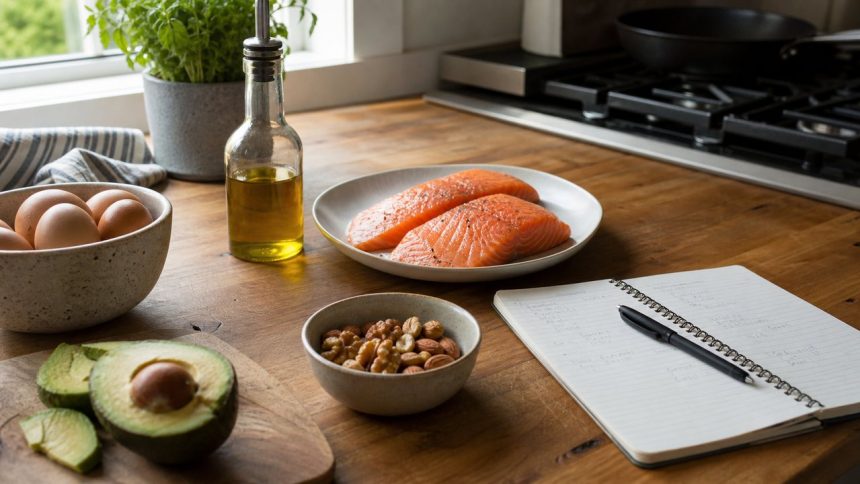
For most lifters, dietary fat supports testosterone best when it keeps the whole diet sustainable. A very low-fat diet can reduce testosterone in some men, but loading saturated fat is not a smart hormone strategy. Aim for a moderate fat intake, emphasize olive oil, nuts, eggs, avocado, fatty fish, and whole-food meals, then solve sleep, calories, alcohol, and training stress first.
Does eating more fat increase testosterone?
Eating more fat does not automatically increase testosterone in a useful way. The better evidence-supported statement is narrower: diets that are too low in fat may reduce testosterone in some men, especially when total calories are also low. That does not make high-fat eating a guaranteed hormone booster.
A 2021 systematic review and meta-analysis by Whittaker and Wu reported that low-fat diets were associated with lower testosterone compared with higher-fat diets in men. The practical takeaway is not to chase the highest fat intake possible. It is to avoid living on ultra-low-fat macros while also training hard, dieting aggressively, and sleeping poorly.
How much fat should lifters eat?
Most lifters should keep dietary fat around 20 to 35 percent of total calories, then adjust based on calories, digestion, food preference, blood lipids, and body-composition goals. Very lean contest-prep phases may temporarily go lower, but that should be deliberate, monitored, and short term.
For a 2,600-calorie diet, 20 to 35 percent equals roughly 58 to 101 grams of fat per day. If you are dieting hard at 1,900 calories, the same percentage is about 42 to 74 grams. Those numbers are not magic. They are guardrails that keep fat from being accidentally squeezed out by protein and carbs.
The Fat Intake Math
- Lower practical floor: about 20 percent of calories for most non-contest lifters.
- Common working range: 20-35 percent of calories, adjusted by goal and health markers.
- When to be cautious: long cuts, low sleep, low libido, poor recovery, or consistently poor mood.
- Bottom line: do not let fat intake fall by accident while chasing high protein and low calories.
Which fats are best for testosterone and health?
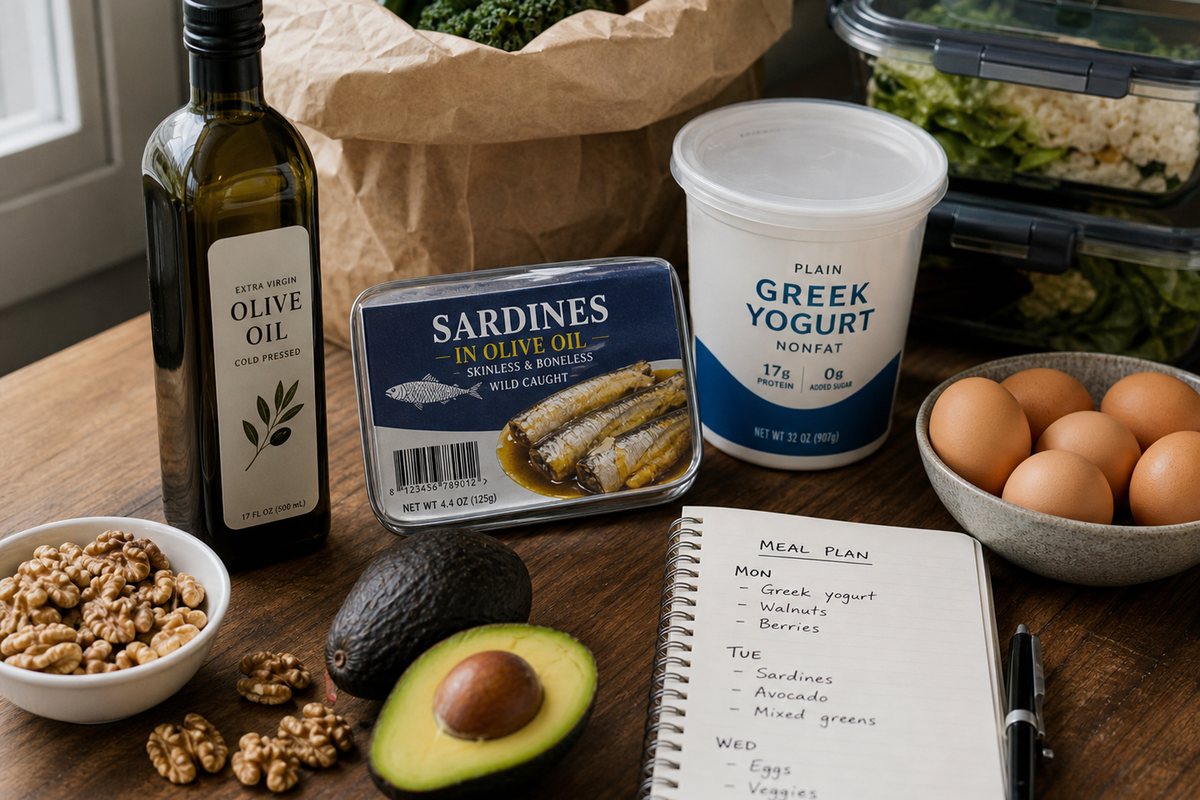
The best fat sources for lifters are foods that also improve diet quality: extra-virgin olive oil, avocado, nuts, seeds, eggs, salmon, sardines, trout, Greek yogurt, and leaner meats used in sensible portions. These foods make it easier to cover essential fats and calories without turning the diet into processed snack math.
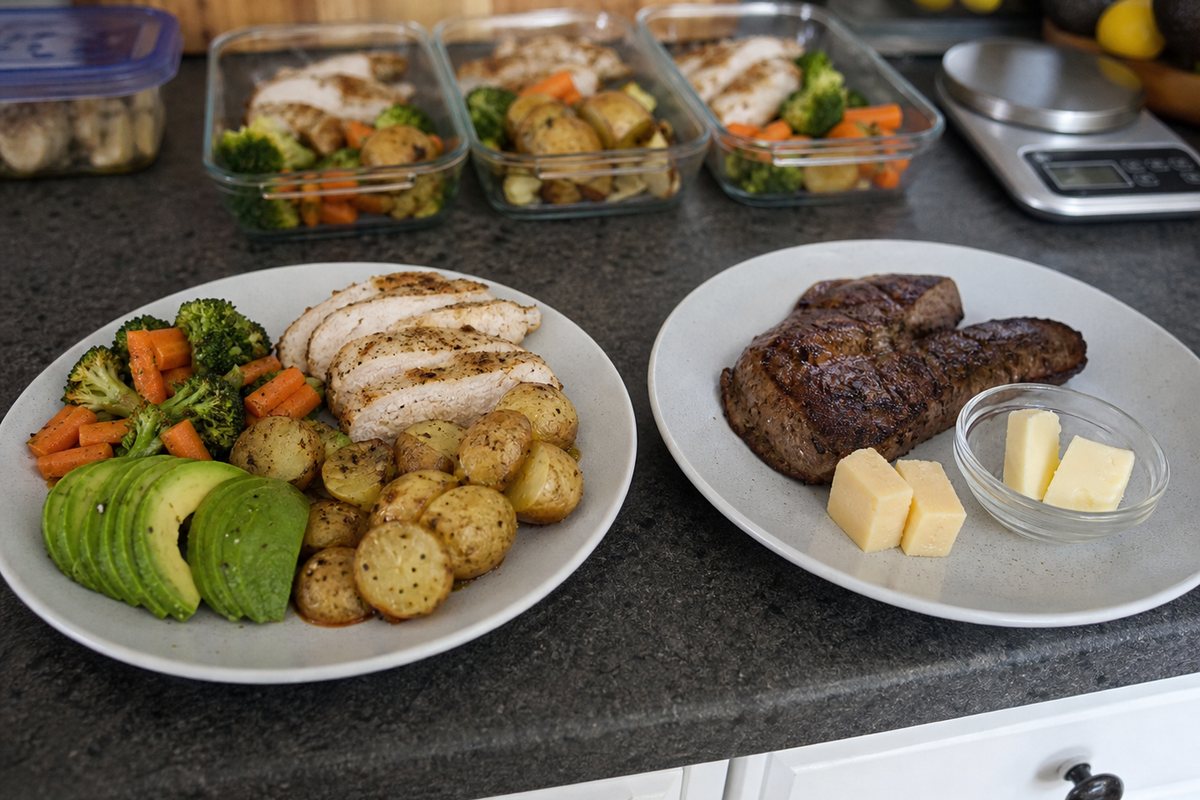
Monounsaturated and polyunsaturated fats are usually the safer default for cardiovascular health. Saturated fat does not need to be treated like poison, but it should not dominate the diet. A steak dinner can fit. A diet built around butter, bacon, and low-fiber processed food is a different discussion.
| Fat Source | Best Use | Main Benefit | Watch Out For |
|---|---|---|---|
| Olive oil | Vegetables, rice bowls, salads | Easy monounsaturated fat | Calories add fast |
| Eggs | Breakfast or quick meals | Protein plus fat and micronutrients | Track blood lipids if intake is high |
| Salmon and sardines | 2 meals per week | Protein plus omega-3 fats | Mercury varies by fish choice |
| Nuts | Snacks or oatmeal topping | Convenient calories and minerals | Easy to overeat |
| Butter and cheese | Flavor, not macro foundation | Useful in controlled portions | Saturated fat can climb quickly |
Is saturated fat good or bad for testosterone?
Saturated fat is not a testosterone supplement. Some observational and controlled-feeding research suggests fat type and total fat can influence hormones, but the health tradeoff matters. A lifter with high LDL cholesterol does not win by forcing saturated fat higher because a podcast said testosterone likes steak.
Use saturated fat as part of normal food, not as the centerpiece of a hormone plan. Eggs, dairy, beef, and dark chocolate can fit a healthy diet. The problem is when saturated fat displaces fiber, fruits, vegetables, fish, legumes, and unsaturated fats. Testosterone is one marker. Long-term cardiovascular health is not optional.
Do low-fat diets lower testosterone?
Low-fat diets can lower testosterone in some men, especially when fat intake is very low and calories are restricted. This matters for physique athletes because hard cuts already push recovery, libido, mood, and sleep in the wrong direction. A low-fat diet stacked on top of that can become one more stressor.
That does not mean every low-fat diet is dangerous. It means the diet must be judged by outcomes. If strength, sleep, libido, mood, and adherence are all worsening, the plan is too expensive. Use our TDEE calculator and macronutrient calculator to set a less aggressive target before blaming one food.
What matters more than dietary fat?
Total energy availability, sleep, body fat level, alcohol intake, medications, overtraining, illness, and age can matter more than the exact fat percentage. Testosterone is sensitive to the whole environment. A lifter who sleeps 5 hours, drinks heavily, crash diets, and trains to failure daily will not fix the problem with olive oil.
If symptoms are real, get lab work and medical guidance. Low libido, erectile dysfunction, depression, fatigue, infertility concerns, or major performance drops deserve more than a macro adjustment. The Endocrine Society guideline treats testosterone diagnosis as a clinical process with symptoms plus consistently low measured levels.
How should cutting lifters handle dietary fat?
Cutting lifters should protect protein first, set enough carbs to train, and keep fat high enough to make the diet livable. The mistake is letting fat collapse because every meal becomes chicken breast, rice cakes, and low-calorie sauces. That may work briefly, but it often makes hunger, mood, and adherence worse.
A practical cut might use lean proteins, potatoes or rice around training, olive oil or avocado in one meal, eggs or Greek yogurt at breakfast, and fatty fish twice per week. If fat loss stalls, adjust calories with a small change. Do not strip fat to zero before checking steps, tracking accuracy, and weekend intake. Our fat-loss troubleshooting guide walks through that order.
How should bulking lifters handle dietary fat?
Bulking lifters can use fat to make calories easier, but appetite convenience can become sloppy fast. Nuts, olive oil, whole eggs, salmon, avocado, and dairy can help you reach a modest surplus without forcing huge carb portions. The target is a controlled surplus, not a license to eat calorie-dense foods without a plan.
If scale weight is rising faster than performance, the surplus is probably too high. Use our lean bulking guide to keep the gain rate honest. More dietary fat can help a bulk, but it cannot tell muscle and fat where to go.
What does a good fat day look like?
A useful fat day is boring in the best way. Breakfast might be eggs with fruit and Greek yogurt. Lunch could be a chicken bowl with olive oil dressing and avocado. Dinner might be salmon, potatoes, and vegetables. A snack could be walnuts or cottage cheese. That pattern supplies fat without turning the whole diet into a hormone experiment.
The key is repeatability. If you can build 4 to 6 meals that hit protein, fiber, carbs, and fat without much thought, hormones get a better environment than they do from a single heroic food choice.
What if your blood lipids get worse?
If LDL cholesterol or triglycerides move in the wrong direction, adjust the diet before defending the macro split. Keep protein steady, replace some saturated fat with olive oil, nuts, seeds, beans, oats, fruit, vegetables, and fatty fish, then recheck with a clinician. A testosterone-supportive diet still has to be a heart-supportive diet.
This is where many hormone-focused articles fail readers. They treat testosterone as the only score. Lifters need enough fat, but they also need arteries, conditioning, blood pressure, sleep quality, and decades of training ahead. If a dietary change improves one number while making the rest of the health picture worse, it is not a win.
Can women use the same fat-intake advice?
Women should not copy male testosterone advice directly, but the broader nutrition lesson still applies. Very low energy availability and overly restrictive diets can disrupt menstrual function, recovery, bone health, and performance. Female lifters need enough calories and dietary fat for normal physiology, not a diet built around male hormone hacks.
The same practical foods still work: olive oil, avocado, nuts, seeds, eggs, dairy if tolerated, and fatty fish. The difference is the evaluation lens. Track training, cycle regularity, hunger, sleep, mood, and lab work where appropriate instead of chasing a testosterone narrative that was written for men.
FAQ
Can olive oil increase testosterone?
Olive oil can be part of a testosterone-supportive diet because it helps you include enough dietary fat and monounsaturated fat. It should not be treated as a testosterone treatment. Calories, sleep, training stress, and medical status still matter.
Should lifters avoid low-fat diets?
Most lifters should avoid chronically ultra-low-fat diets unless there is a specific reason and the plan is monitored. Moderate fat intake is usually more sustainable and easier to reconcile with training, mood, libido, and overall health.
Is cholesterol needed for testosterone?
Cholesterol is a precursor for steroid hormones, but eating more cholesterol does not automatically raise testosterone in a meaningful or safe way. The body regulates cholesterol tightly, and cardiovascular risk still matters.
What foods should I eat for healthy testosterone?
Start with enough calories, protein, sleep, and whole foods. Good fat sources include eggs, olive oil, avocado, nuts, seeds, salmon, sardines, and Greek yogurt. The pattern matters more than one food.
Bottom line
Dietary fat matters for testosterone, but it is not a cheat code. Avoid chronically ultra-low-fat dieting, keep fat intake moderate, emphasize unsaturated and nutrient-rich whole foods, and do not use saturated fat as a hormone hack.
If you suspect clinically low testosterone, stop trying to diagnose it from macros. Get labs, review symptoms with a qualified clinician, and fix the basics that lifters control every day: sleep, calories, body fat, alcohol, stress, and training load.
Sources
- Whittaker, J., & Wu, K. (2021). Low-fat diets and testosterone in men: systematic review and meta-analysis. Journal of Steroid Biochemistry and Molecular Biology. PMID: 33741447.
- Bhasin, S., Brito, J. P., Cunningham, G. R., et al. (2018). Testosterone therapy in men with hypogonadism: an Endocrine Society clinical practice guideline. Journal of Clinical Endocrinology & Metabolism.
- American Heart Association. (2024). Dietary fats. Accessed June 25, 2026.
- U.S. Food and Drug Administration. (2024). How to understand and use the Nutrition Facts label. Accessed June 25, 2026.