


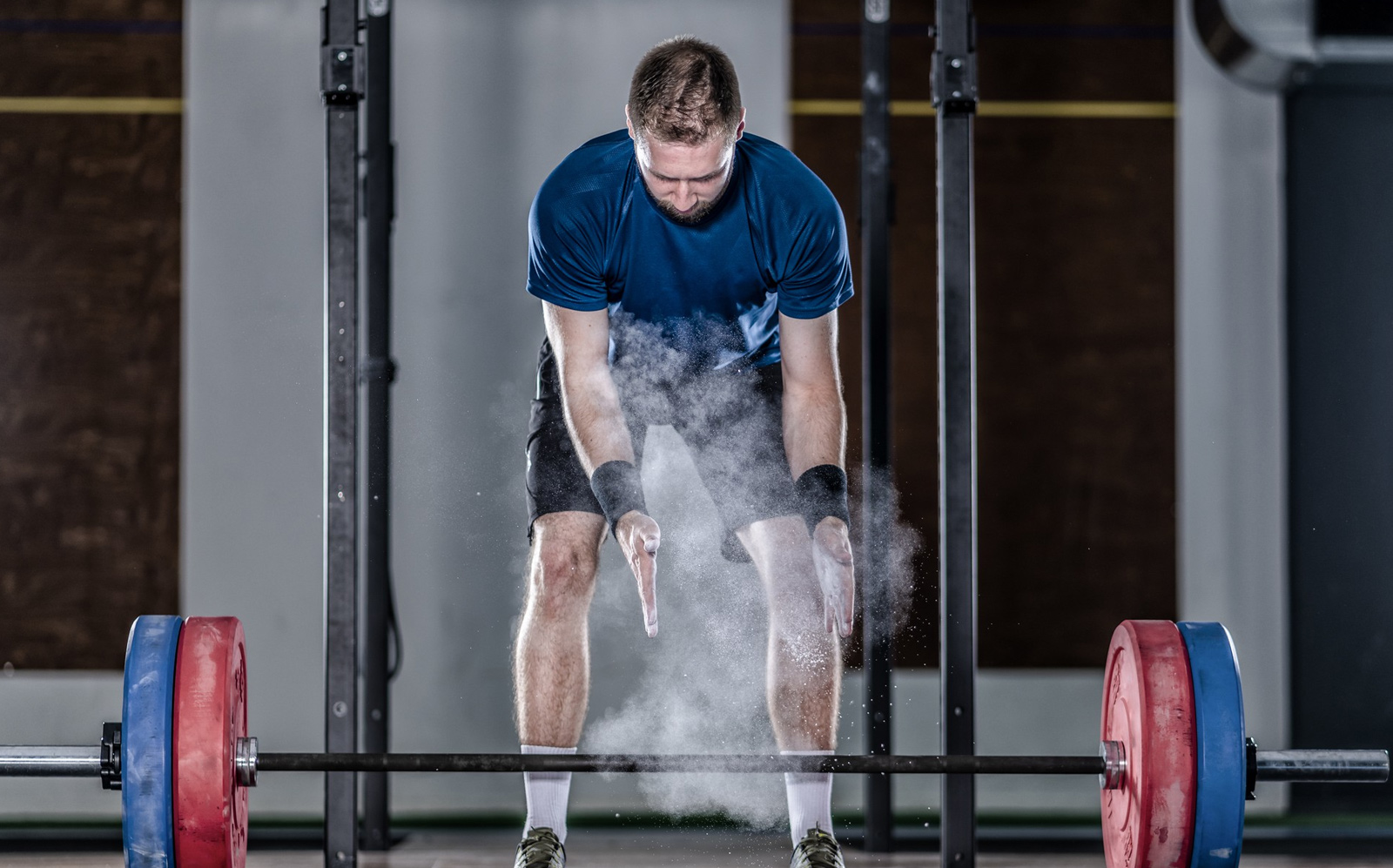
The term “functional training” is used and abused a lot in the fitness industry. Nowadays, any exercise done standing on one leg, while balancing on a wobble board, with a resistance band or cable machine, or that mimics a movement from sports is deemed functional.
However, after more than 30 years of working as a personal trainer, I’ve learned that real functional exercises have nothing to do with flashy movements that come dangerously close to resembling circus tricks.
Instead, they’re exercises that make everyday tasks safer, easier, and less tiring.
And there’s one task that shows up more than any other: picking things up and putting them down.
That’s why there is one exercise that I teach all my personal training clients and insist they do it during their rest days, too.
I’m talking about the deadlift.
This classic barbell lift builds serious full-body muscle and might, but it’s more than just a great gym exercise: it prepares you for the demands of daily life.
Yes, it’s a staple in powerlifting and strength training, but it’s just as important for regular folk. The deadlift is more than just an exercise—it’s a life skill. And if you train and master it, you’ll feel the benefits both in and out of the gym.
In this article, I reveal why the deadlift is a non-negotiable exercise that I insist my clients do even on rest days.
The Deadlift: More Than Just a Gym Exercise
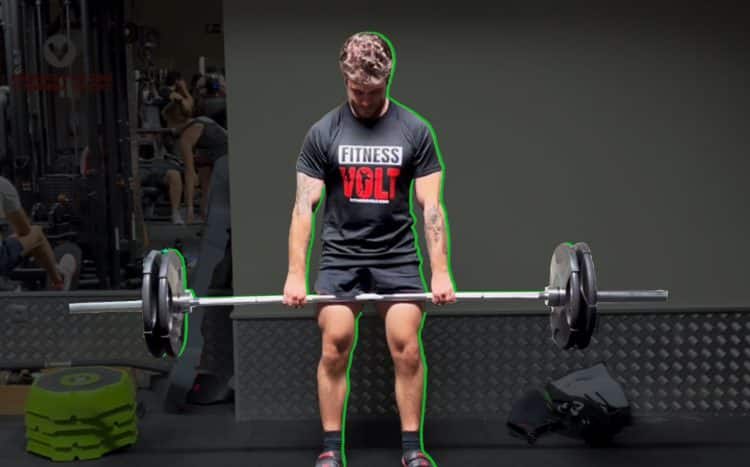
Ask most people to think about deadlifts, and they’ll probably conjure up images of massive, red-faced guys trying to hoist unfathomable weights off the ground. While spectacular to watch, this is only one aspect of deadlifting, and one that doesn’t accurately reflect the true power of this classic exercise.
The reality is that deadlifts are much more than an exercise. Like squats, they’re also a fundamental movement pattern that most people perform pretty regularly. From a functional perspective, anytime you bend down to lift something off the floor, you are doing a deadlift—or you should be.
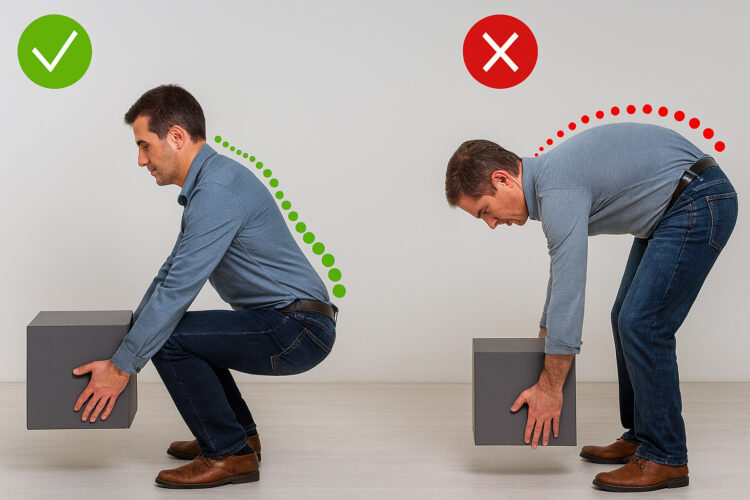
Deadlifts are a hip-hinge exercise. Hip hinging involves leaning forward without rounding your spine. As such, deadlifts teach you how to safely lift objects off the floor while protecting your lower back from undue stress and strain.
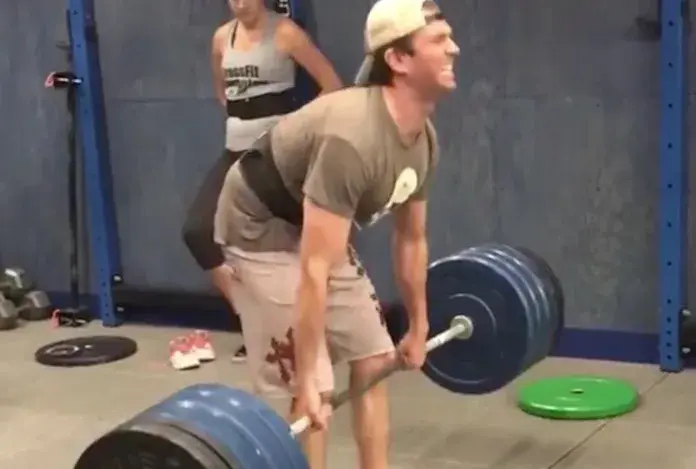
Low back pain is very common and often caused by improper lifting technique. And yet, powerlifters routinely pull massive weights with very low rates of lower back injury.
Coincidence? I think not!
I’m a former powerlifter myself and have been lifting heavy weights for decades. My back is about as bulletproof as it can be, and I credit the deadlift for my lack of lower back pain.
Not convinced that deadlifts should be a staple of your workouts and rest days? Check out the next section to discover the power of this incredible exercise.
Why Everyone Should Deadlift (Yes, Even You!)
I recently read an article in which a well-known trainer described deadlifts as an advanced exercise. And while I agree that heavy deadlifts are best left to experienced gym-goers, I believe it’s one of the first exercises that novice lifters should learn and master.
Here’s why:
Safer Lifting
Bending over to pick a heavy object off the floor is one of the most common causes of back injury. That’s because, rather than hinging from the hips, the average person leans forward by rounding their lower back.
This puts tremendous strain on the ligaments and disks of the lumbar spine, all of which are easy to injure and slow to heal (1).
In contrast, deadlifts teach you how to lift using your legs and not your lower back.
Mastering the deadlift in the gym means you are much more likely to use a similar technique when you’re out in the real world, leading to fewer (and hopefully no) lifting-related back injuries.
Many Exercises Start With a Deadlift
If your workouts involve kettlebells, dumbbells, barbells, medicine balls, or sandbags, many of your exercises start with the weight/s on the floor or in a low rack. Consequently, you’ll have to bend over and pick it up to start your set.
As per the previous point, deadlifts teach you how to pick up your weights safely. After all, it would be a shame to hurt your back before your set of curls, presses, etc., even starts.
Deadlifts Are a Pre-Requisite To Many Other Exercises
What do power cleans, kettlebell swings, overhead medicine ball throws, good mornings, and 45-degree back extensions have in common?
Answer: each one is a deadlift in disguise!
If you want to expand your exercise library to include these popular movements, you must first master the deadlift. After all, what is a power clean or kettlebell swing, but a deadlift performed explosively?
A Truly Functional Core Exercise
Crunches, sit-ups, and leg lifts do not train your core. Rather, they focus on the muscle at the front of your abdomen—the rectus abdominis. In contrast, deadlifts teach you how to recruit and brace all your core muscles together, from front to back and side to side.
During deadlifts, these muscles contract inward to create intra-abdominal pressure, which stabilizes your spine.
Learning to “switch on” your core muscles during deadlifts will ensure you use your core in much the same way outside of the gym, which will help protect you from lower back injury when lifting, lowering, pushing, or twisting. They’ll also help develop that firm, toned midsection you’ve always dreamed of.
A Full-Body Workout
Deadlifts work virtually your entire body, from your hands and forearms to your calves and feet, via everything in between. In fact, the only muscles not directly involved in deadlifts are your pectoralis major or chest muscles, but that’s easily remedied with a few sets of push-ups or bench presses.
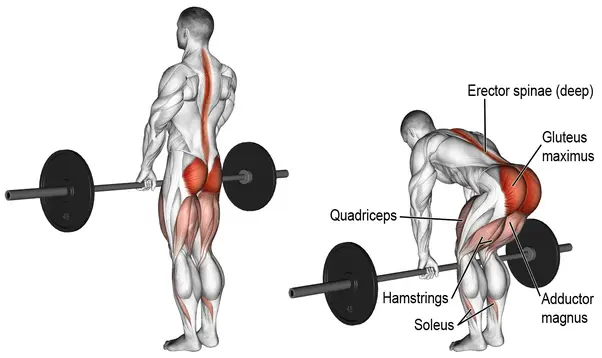
Consequently, deadlifts build real-world, full-body strength. This will make virtually every physically demanding task easier, safer, and less tiring. They’ll also add muscle where most people want it—the posterior chain, which is another name for the glutes, hamstrings, and lower back.
In short, deadlifting will make you look and feel like a superhero!
Related: Deadlift Muscles Worked: Your Guide to the REAL King of Exercises!
Summary: Whether you are lifting a barbell in the gym or a bag of groceries at home, your technique should be almost identical. As such, deadlifts are a daily essential, both in terms of training and the safest way to lift and move heavy objects.
How to Deadlift Correctly
Whether you are lifting a barbell, your groceries, a family pet, or your child, your lifting technique should be very similar. Follow these steps to maximize your deadlift performance while minimizing your risk of injury.
Related: Deadlift Form 101: How to Lift More Weight Safely
- Stand behind your barbell/heavy object with your feet about shoulder to hip-width apart. Ideally, your shins should be almost touching whatever you’re going to lift.
- Squat down and grip the weight firmly. Straighten your arms, pull your shoulders down and back, drop your hips, lift your chest, and brace your core.
- Drive your feet into the floor and stand up. Make sure your hips do not rise faster than your shoulders.
- Extend your knees and hips and stand up straight, keeping your core engaged throughout.
- To return the weight to the floor, push your hips back, bend your knees, and lower the load down the front of your legs. Do not allow your back to round.
- Reset your core and grip and repeat as necessary.
Pro Trainer Tips:
- Keep your arms straight; think of them as rigid cables. Bending your arms could lead to a biceps injury.
- Do not allow your weight to shift forward onto your toes. Doing so increases the risk of rounding your lower back.
- Experiment with the width of your feet—taller lifters often find a wider stance more comfortable.
- Use the same technique whenever and whatever you are lifting, both in and out of the gym.
- Stop your set/lift if you feel your lower back starting to round. Losing your neutral (slightly arched) spine significantly increases the risk of injury.
Not Just One Way: Deadlift Variations for Every Situation
At the outset of this article, I said that deadlifts are more than an exercise. Rather, they’re a movement pattern that most people should do every single day. So, while the barbell deadlift is an excellent exercise, there are many other ways you can perform this movement, both in and out of the gym.
A few of my favorite deadlift variations include:
1. Dumbbell Deadlift
I think of this exercise as the grocery bag deadlift, as it closely replicates the challenge of picking up your provisions at the store. Ideally, both weights should be the same to make balancing easier, but for a more functional exercise, try using two slightly different loads to more closely replicate unevenly-packed grocery bags.
2. Suitcase Deadlift
While most people use suitcases with wheels, you’ll still probably have to lift and carry your heavy bag a short distance. This usually involves standing sideways-on to your baggage and lifting it with one hand. Such a maneuver puts a lot of stress on your core. You can replicate this challenge with the aptly named suitcase deadlift.
3. Rack Pull/Deadlift from Blocks
Conventional deadlifts start with the weight level with your shins. However, in real life, you’ll probably find yourself lifting weights from many different heights, e.g., getting your shopping out of your trunk. Rack pulls and deadlifts from blocks get you used to lifting from less common heights.
4. Deficit Deadlifts
Lifting small, low objects off the floor can be very challenging. They require that you bend over much further, potentially putting more stress on your lower back. Lifting objects closer to the floor also requires better mobility and flexibility. You can replicate these challenges with deficit deadlifts.
5. Kettlebell Sumo Deadlift
Some lifting situations make it impossible to deadlift with your feet inside your hands. For example, when lifting a child or pet. Consequently, you may find yourself deadlifting with your feet further apart than usual. This is called a sumo deadlift and is both a legitimate deadlift variation and a way to lift awkwardly positioned objects safely.
6. B-Stance/Kickstand Deadlift
Ideally, you should use both legs equally when deadlifting. After all, that’s the best way to produce maximal force. However, outside of the gym, this is not always possible or necessary, e.g., when lifting something while partway up a flight of stairs. And that’s where the B-stance deadlift comes in—it emphasizes one leg at a time to replicate those awkward lifting situations where you can’t use both legs equally.
https://youtu.be/BMS-LaiZAP0?si=E-tZ5OQYyXeIt4xS
Related: Build Strength and Size With The 15 Best Deadlift Variations
Daily Deadlifts—Closing Thoughts
Deadlifts are a challenging exercise, so I don’t recommend doing them every time you hit the gym. 1-2 heavy deadlift sessions per week are plenty, even for experienced lifters.
However, I do recommend that you use the same deadlifting technique from the gym whenever you need to lift an object off the floor. Transferring your deadlift to your daily life will make whatever lifting you need to do safer and easier.
And that’s why I never let my clients skip deadlifts—even on rest days. It’s one of the most productive exercises you can do in the gym, and one of the most important movements you can do out of it.
So, forget squats, deadlifts are the real king of exercises!
References:
1 – Du SH, Zhang YH, Yang QH, Wang YC, Fang Y, Wang XQ. Spinal posture assessment and low back pain. EFORT Open Rev. 2023 Sep 1;8(9):708-718. doi: 10.1530/EOR-23-0025. PMID: 37655847; PMCID: PMC10548303.






I’m confused, you say in the beginning that the one exercise you should be doing every day is the deadlift and then in the end you say you should be doing 1-2 heavy sets of deadlifts each week. So which is it.
Both! You should perform the deadlift movement daily – like whenever you pick something off the ground, but train it 1-2 times weekly so you get stronger.