

Ask most fitness experts how to build muscle and strength, and they’ll probably say, “compound exercises.” That’s why any personal trainer worth their salt builds programs around big-bang moves like squats, deadlifts, bench presses, pull-ups, and overhead presses.
These exercises use multiple muscles and joints, making them time-efficient, functional, and arguably the best use of your training time. But as effective as compound lifts are, they often miss some smaller yet crucial muscles.
I’m a veteran personal trainer with over 30 years of experience, and I’ve seen how overemphasizing the big lifts can hurt your appearance and performance.
In this article, I reveal three of the most neglected muscles, explain their importance, and share the best exercises to bring them up to scratch.
Out of Sight, Out of Mind—The Posterior Deltoids
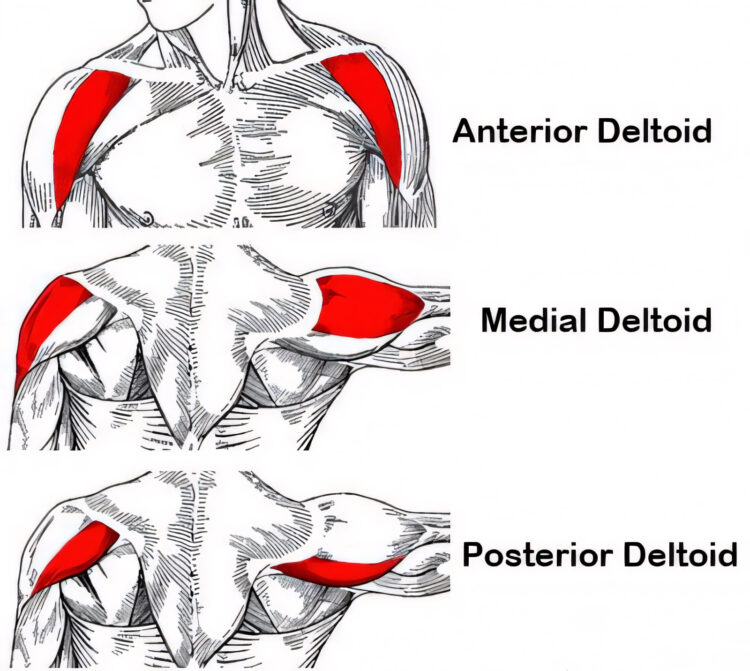
The deltoids, or shoulder muscles, are one of the most impactful muscle groups. Broad, muscular shoulders project power and affect how you look both in and out of clothes.
However, many lifters overemphasize the anterior (front) and medial (side) deltoids while neglecting the posterior (rear) deltoids—mostly because they’re out of sight and out of mind. Worse still, rear delts aren’t heavily involved in many upper-body exercises, so they rarely get trained indirectly, either.
That’s a problem. The posterior deltoids are essential for shoulder function and aesthetics. Neglecting them can hurt your posture, limit performance, and increase your risk of injury.
Where Are The Posterior Deltoids?
As their name suggests, the posterior deltoids are located on the back of your shoulders. They originate on the spine of the scapula (shoulder blade) and insert on the humerus (upper arm bone).
They’re responsible for pulling your arms backward (extension) and outward (horizontal abduction). In plain terms, the posterior deltoids help move your arm behind your body and out to the side (1).
Why They Matter
Most shoulder workouts involve lots of pressing exercises. These proven shoulder builders hammer the anterior and medial deltoids but do very little for the posterior delts. As such, this muscle is often weak and underdeveloped. This creates an imbalance that will affect how your shoulders look and perform.
Strong posterior delts are essential for:
- Balanced shoulder development
- Stabilizing the shoulder joint
- Optimal pulling strength
- Improving posture and alignment
The Best Exercises for Posterior Deltoid Development
There are a few compound exercises that work the posterior deltoids, such as wide grip rows and face pulls. But in my experience, the best way to train this underused body part is with isolation exercises. Isolation exercises allow you to target your posterior delts with laser-like precision and are best for establishing a strong mind-muscle connection.
1. Band Pull-Aparts
This no-frills exercise is ideal for home workouts or whenever you need a quick posterior deltoid training fix but can’t make it to the gym.
- Hold a resistance band with an overhand, shoulder-width grip. Raise your arms out in front of you.
- Bend your arms slightly and pull your shoulders down and back.
- Open your arms and stretch the band out across your chest.
- Return to the starting position and repeat.
- Perform seated or standing as preferred.
2. Reverse Cable Crossovers
Cables provide a safe and effective way to overload your muscles without stressing your joints. They also keep your muscles under constant tension for a more efficient workout.
- Stand between two high cable towers.
- Hold the left cable in your right hand and the right cable in your left hand. Cross your wrists in front of you with your arms extended, elbows slightly bent. Brace your core and pull your shoulders down and back.
- Open your arms and pull your elbows back until they are slightly behind your shoulders.
- Return to the starting position and repeat.
3. Reverse Pec Deck
The reverse pec deck guides your movement to ensure that the target muscles—the rear delts—are doing all the work.
- Sit with your chest against the backrest. Hold the handles with a neutral or overhand grip. Pull your shoulders down and back and brace your core.
- With your elbows slightly bent but rigid, open your arms and extend them backward until your hands are level or slightly behind your torso.
- Return to the starting position and repeat.
Related: 12 Best Rear Deltoid Exercises for Balanced Shoulders
Forgotten Lower Leg Muscle—Tibialis Anterior
When it comes to lower leg training, most lifters focus exclusively on their gastrocnemius and soleus, better known as the calf muscles. However, all muscles are arranged in opposing pairs, and almost no one does any work for the muscles on the front of the shins—the tibialis anterior.
While these muscles won’t have a huge impact on how you look in shorts, they still play a critical role in the health and function of your lower legs. As such, almost every lifter needs to train this small, essential muscle.
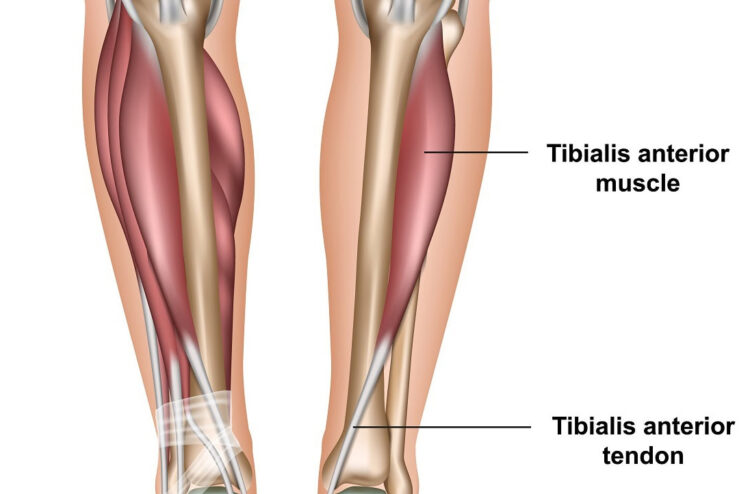
Where Is the Tibialis Anterior?
Muscles often get their name from Greek or Latin, and usually describe their location, function, or shape. As such, the tibialis anterior is located on the front (anterior) of the tibia, which is the main shin bone.
It originates on the upper two-thirds of the tibia and inserts near the inside of your foot at the base of the big toe. Functionally, it’s responsible for dorsiflexion—lifting your toes toward your shin, and helps control foot placement during walking and running (2).
Why It Matters
The tibialis anterior plays a big role in decelerating your foot as it lands during walking and running. As such, it’s critical for reducing the stress of high-impact activities. This underappreciated muscle is also important for ankle stability and offsets the work done by the calves.
Strengthening this muscle will:
- Reduce shin splint risk
- Improve ankle joint stability
- Enhance running and jumping mechanics
- Balance lower leg development
Plus, a well-developed tibialis anterior gives your lower legs a more complete, athletic look, especially from the side.
The Best Exercises for Tibialis Anterior Development
You don’t need a bunch of fancy machines or loads of weights to strengthen your tibialis anterior. In fact, bodyweight or resistance bands are often all that’s required. As such, there really is no reason to continue neglecting your tibialis anterior.
1. Standing Toe Raise
You can do this bodyweight exercise almost anywhere. Do as many reps as it takes to feel a deep burn in the front of your shin.
- Lean your back against a wall so your feet are about 18-24 inches in front of you.
- Keeping your legs straight, pull your toes up toward your shins.
- Pause for 2-3 seconds and then lower your toes back down.
2. Resistance Band Tibialis Anterior Raises
A lot of people never need more than their body weight to develop stronger tibialis anterior muscles. But if you want to take things to the next level, grab a loop-type resistance band and try this exercise.
- Sit on the floor with your legs extended.
- Place your resistance band around your feet and attach it to a suitable anchor.
- Shuffle back to tension the band.
- Pull your toes up toward your shins against the resistance offered by the band.
- Return to the starting position and repeat.
3. Dumbbell Tibialis Raises
No bands? No problem! You can train your tibialis muscles with a single dumbbell. This is the ideal exercise for measurable, progressive resistance.
- Hold a dumbbell between your feet and sit on an exercise bench with your legs extended.
- Flex your ankles and pull your toes up toward your shins.
- Extend your ankles, lower the weight, and repeat.
Related: Strengthen Your Shins: Master the Tibialis Raise Today!
A Critical But Ignored Upper Body Muscle—The Serratus Anterior
Nicknamed the “boxer’s muscle,” the serratus anterior is one of the most underappreciated muscles in the upper body.
As well as looking cool, the serratus anterior plays a vital role in shoulder health and upper-body function. Strengthening it will even boost your bench press! But, despite all this, very few lifters train this muscle or even know what it does.
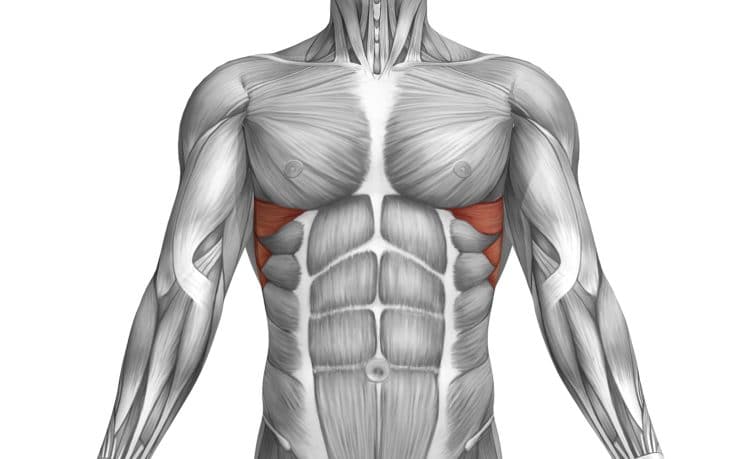
Where Is the Serratus Anterior?
The serratus anterior is so called because a) it looks like a serrated blade, and b) is located toward the front of your ribcage. Sitting between the pecs and the lats, the serratus anterior originates on the upper ribs and inserts on the medial border of the scapula—the inside edge of your shoulder blade.
Its main function is pulling the shoulder blades flat against the ribcage. It also assists with upward rotation and stabilization of the scapula during pressing and overhead movements (3).
Why It Matters
A strong, active serratus anterior stabilizes and controls your shoulder blades. When this muscle is weak or underdeveloped, it can contribute to:
- Shoulder pain or impingement during pressing
- Scapular winging (shoulder blades sticking out)
- Poor posture
- Limited range of motion overhead
Conversely, strengthening the serratus can:
- Protect and stabilize the shoulder joint
- Enhance overhead strength and mobility
- Improve posture
- Enhance upper body aesthetics
So, whether you’re throwing punches, benching, lifting weights above your head, or just want a more impressive-looking upper body, this is a muscle you can’t afford to ignore.
The Best Exercises for Serratus Anterior Development
Training the serratus anterior is all about control and range of motion, not about heavy weights. These tried-and-tested exercises will wake up this forgotten muscle and help you build strength where it matters.
1. Serratus Push-Up
Conventional push-ups are already a decent serratus anterior exercise. However, focusing exclusively on shoulder protraction makes them even better.
- Adopt the push-up position with legs and arms straight, core braced.
- Drive your hands into the floor and push your shoulders forward into a protracted position.
- Allow your shoulders to move backward and lower your chest down.
- You can also do this exercise kneeling or resting on your elbows—a serratus plank.
2. Serratus Crunch
The serratus anterior often works with your abs, e.g., when punching or throwing. This exercise trains these muscles together, making it a great option for athletes.
- Lie on the floor with your legs bent and feet flat. Hold a dumbbell in each hand with your arms vertical.
- Pull your shoulders down and back, pushing your scapulae into the floor.
- Contract your abs and lift your head and shoulders off the floor while simultaneously shrugging your shoulders forward. Push the weights straight up toward the ceiling.
- Return to the starting position and repeat.
3. Supine Serratus Punch
This simple exercise is much harder than it looks, so don’t go too heavy too soon. Instead, master the movement before increasing the load.
- Lie on your back on a bench or the floor.
- Hold a dumbbell in one hand, arm extended and vertical.
- Push your shoulder forward and your arm up—imagine you are trying to punch the ceiling.
- Lower your shoulder back down and repeat.
- Switch sides and do the same number of reps with the opposite arm.
Related: Serratus Anterior Exercises for Bodybuilders
Closing Thoughts
When it comes to strength training, it’s all too easy to focus on the big picture, forgetting that the smaller details are just as important. Yes, the bench press, squat, deadlift, etc., do matter, but so too do the smaller muscles that these exercises tend to neglect.
Eliminate the weak links in your chain by including exercises for the posterior deltoids, tibialis anterior, and serratus anterior in your programs. They’re not hard, and many can be done at home.
However, the payoff will be huge!
References:
- Elzanie A, Varacallo MA. Anatomy, Shoulder and Upper Limb, Deltoid Muscle. [Updated 2024 Jan 30]. In: StatPearls [Internet]. Treasure Island (FL): StatPearls Publishing; 2025 Jan-.
- Juneja P, Hubbard JB. Anatomy, Bony Pelvis and Lower Limb: Tibialis Anterior Muscles. [Updated 2023 Aug 28]. In: StatPearls [Internet]. Treasure Island (FL): StatPearls Publishing; 2025 Jan-.
- Lung K, St Lucia K, Lui F. Anatomy, Thorax, Serratus Anterior Muscles. 2024 Sep 10. In: StatPearls [Internet]. Treasure Island (FL): StatPearls Publishing; 2025 Jan–. PMID: 30285352.