

You’ve probably woken up with lower back pain at some point. Since you’re reading this, I’m assuming you’re dealing with it right now.
Lower back aches are incredibly annoying. They make people spend hundreds of dollars within a few days. I’ve seen this frustration too often and decided to do something about it.
I interviewed over 10 physiotherapists and chiropractors about their experience treating patients with chronic pain, poor posture, core engagement, and spinal mobility, and explored exercises that delivered the best results within the shortest period.
The result is three exercises that ensure you don’t have to rely on regular weekly or bi-weekly adjustments. Instead, you can focus on progressive rehab plans with exercises you can do in the comfort of your own home.
In this article, I share three simple, science-backed exercises, including cat-cow, bird dog, and glute bridges, that outshine those fleeting spinal adjustments. You’ll also learn how to implement this into your own routine. We have a lot to unpack, so sit tight and read on.
Understanding Chronic Back Pain

Chronic back pain often stems from weak core muscles, poor posture, or stiff joints. Chiropractic adjustments might crack your spine into temporary alignment, but they rarely fix the root issue, which is why you start getting that dreaded pain again within a few days.
Weak glutes, tight hips, or slouched shoulders are the most common culprits when it comes to back pain.
Exercises that target mobility, stability, and strength gains are the most reliable for making permanent progress. I have chosen these three dynamic stretches, as they activate your core and paraspinal muscles optimally. These also help improve spinal stability while releasing tension.
Exercise 1: Cat-Cow
Most of us have felt that nagging ache in our lower backs after a long day of standing and walking. This pain can also take the shape of delayed onset muscle soreness (DOMS) after a heavy deadlift session.
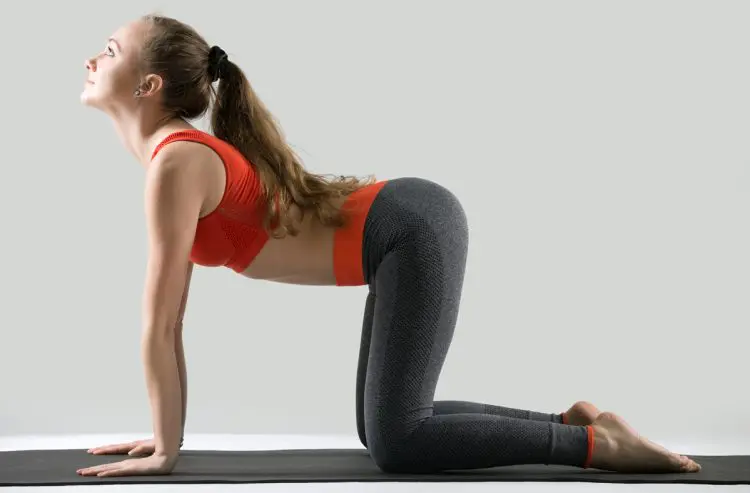
The cat-cow exercise tops the list of many chiropractors and physios when it comes to tackling chronic back pain, as it targets your spine’s flexibility, engaging the vertebrae from your neck to your tailbone.
This move involves alternating between flexion (rounding) and extension (arching), which promotes blood flow, loosens tight muscles, and eases pressure on spinal nerves.
Research published in the Annals of Rehabilitation Medicine concludes that dynamic spinal exercises like cat-cow improve lumbar mobility and reduce pain in just eight weeks. (1)
Step-by-Step Guide:
Since this exercise has two positions, many people mix them up, hampering its overall effectiveness. Here is how to perform this move correctly:
- Start Position: Get into a quadruped position with your hands under your shoulders and knees under your hips. Your spine should be neutral in the starting position, and engage your core lightly.
- Cow Phase: Breathe in deeply, drop your belly toward the floor while lifting your tailbone and tilting your head slightly upward. Feel a stretch in your spine and open your chest. Imagine you are a cow mooing at the top of its voice.
- Cat Phase: Round your back, tuck your chin to your chest while exhaling fully and pulling your navel toward your spine. Aim to replicate a cat’s defensive arched-back posture.
- Flow Smoothly: Transition between cat and cow poses with each breath, while feeling every vertebra shift.
Coach Tip: Your hands, knees, and toes should remain in the same position throughout the exercise. Limit the movement to your spine for maximum benefits.
Tips for Beginners and Modifications:
Although cat-cows are a beginner-friendly exercise, people with limited mobility might find kneeling on the floor challenging. In this case, sit upright on a chair with your hands on your knees, and alternate between arching and rounding your back.
Avoid rushing and prioritize stretching and contracting your spine throughout your range of motion while focusing on your breath.
More experienced lifters can hold each phase for an extra breath to deepen the stretch.
I notice that most people make the same mistakes while performing this exercise. They overarch their back into a deep stretch. Contrary to what these folks think, this does not mobilize their backs, but strains them.
You should also avoid resisting the urge to go through the motions just for the sake of them. Instead, sync your breath with each phase to maximize target muscle fiber recruitment.
Exercise 2: Bird Dog
If you think about it, your spine is a stack of delicate vertebrae. If you don’t have a strong core to stabilize it, this stack can crumble during heavy squats or deadlifts. Also, it won’t take long before your spine deforms due to sitting on a desk for extended periods.
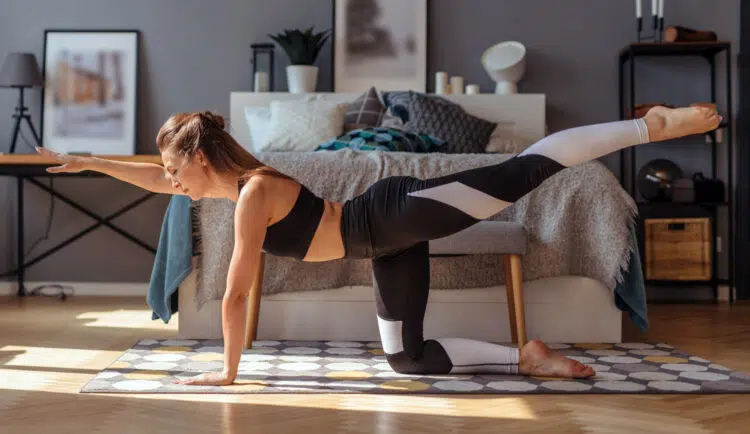
Bird dogs take cat-cows a step further. It engages your deep stabilizer muscles, including the transversus abdominis, multifidus, and obliques.
This move fortifies your spine and outshines the quick-fix adjustments going viral online. Making this exercise a part of your routine can help boost your spinal stability and overall balance.
A study suggests that bird-dog does not cause much fatigue to muscles but can make most selected muscles active, which is excellent for people under rehab and those who don’t want to overload their CNS with high-volume workouts. (2)
How To Perform:
This unassuming exercise trains your body to stay steady under stress and counters the strain from heavy lifts or prolonged sitting.
The starting position for this exercise is the same as cat-cows. You get in a tabletop position and engage your core to keep your spine neutral throughout the movement.
Take a deep breath in, then extend your right arm forward and left leg backward while keeping them in a straight line and parallel to the floor. Point your toes and actively drive your hands and legs in the opposite direction to achieve a deep stretch.
Avoid looking up during this exercise as it can strain your neck. Pause for 2-3 seconds at the top, squeezing your core to prevent wobbling. I tell my clients to imagine balancing a glass of water on their lower back during this position.
Slowly return to the starting position while breathing out. Repeat on the other side. Alternate between sides for the recommended sets.
Variations:
Newbies can start with an arm or leg-only variation to build confidence and the necessary core strength. On the flip side, advanced athletes can add a resistance band around their feet or hold a light dumbbell to intensify core engagement.
Common Mistakes to Avoid
A sloppy form can undermine the bird dog’s power. Constantly monitor your form to prevent the following errors:
- Arching your back: Don’t let your lower back sag during the lifting phase. Engage your core to maintain a straight spine. Making this mistake can lead to counterproductive results.
- Raising limbs too high: Overextending your arm or leg puts your pelvis in an awkward position, which could strain your back. Keep your limbs level with your torso throughout the exercise.
I highly recommend that beginners record themselves while performing this exercise. Alternatively, you could seek a professional’s help to ensure you’re doing the movements correctly. This can significantly cut short your learning curve.
Exercise 3: Glute Bridge
This exercise is gaining traction in gyms worldwide, thanks to female fitness influencers.
Although this exercise doesn’t directly target the lower back, it goes straight to the root cause of the issue. Sometimes, lower back pain is caused by poor posture and weak glutes.
The glutes are the biggest muscle in your body. The three glute muscles, gluteus maximus, medius, and minimus, act like a scaffold for your lower back. They stabilize your pelvis, reduce strain on your lumbar spine, and dictate your posture.
Weak glutes force your back to compensate during workouts and daily activities, like lifting groceries or playing with your kids. This can lead to pain over time.
Glute bridges aren’t just for sculpting a strong backside; they can strengthen your spine and boost overall functionality by aligning your hips and spine, easing tension, and preventing injury.
Tutorial:
- Lie on your back with your knees bent, feet flat on the floor, hip-width apart. Keep your arms relaxed at your sides.
- Brace your core, then squeeze your glutes and drive through your heels to lift your hips until your body forms a straight line from shoulders to knees.
- Hold the peak contraction for a couple of seconds to maximize target muscle activation.
- Avoid overextending your hips, as it can remove tension from your glutes and put it on your lower back.
- Resist gravity as you return to the starting position.
I recommend spending 4-6 seconds on the eccentric phase to increase the time under tension (TUT) and get the best bang for your training buck. (3)
Start with bodyweight bridges, prioritizing your form. Limit your ROM if you feel lower back strain. Progress to unilateral variations, which involve performing this exercise with one leg off the floor, as you gain more experience.
Integrating the Moves into Your Routine
Now that you know about the three most effective exercises for getting rid of lower back pain, it is time to put this knowledge to work.
The best part about this routine is that you don’t have to spend countless hours in a fancy gym to fix your body. You can do it in the comfort of your living room without any equipment in 10 minutes. Here is the routine:
| Exercise | Sets | Time (per set) | Rest (between sets) |
| Cat-Cow | 2 | 60 seconds | 30 seconds |
| Bird Dog | 2 | 60 seconds | 30 seconds |
| Glute Bridge | 2 | 60 seconds | 30 seconds |
Although you can perform these exercises in any order, I recommend sticking to his flow, as it is designed to gradually increase your training intensity and prep your spine to handle the growing demands.
Perform this workout ideally in the morning to wake up your spine or after a workout to release the tension.
Habits For Success
Combating back pain shouldn’t end at performing this 10-minute daily routine. Make the following habits a part of your daily routine to maximize your results:
- Posture awareness: Constantly monitor your form and put conscious effort into sitting tall and standing straight.
- Daily stretching: If you perform this workout first thing in the morning, do another short stretching session in the evening to relieve lower back tension.
- Movement breaks: Stand and walk after each hour if you sit for long periods, as this can prevent stiffness.
Why These Moves Outshine Chiropractic Care

I won’t lie; a chiropractic session can feel relieving, and the cracking sounds are very satisfying. They make you feel like you’re making meaningful adjustments to your body. However, the pain will always creep back in until you fix the underlying issues.
The Core Difference: Proactive vs. Passive
We live in a very lazy world. People prefer lying down on a chiropractor’s table and having them do all the work on their body, instead of exercising to strengthen their core, boost mobility and stability, and align their spine.
Chiropractic adjustments have a time and a place. You cannot expect a few sitting to fix chronic issues. They might deliver quick relief, but they don’t strengthen muscles or improve posture.
I must add that these three bodyweight exercises that you can do anywhere and at any time are much more cost-effective than a chiropractic session, which can cost anywhere between $50-500, depending on the practitioner.
Conclusion
Simple, deliberate movement can transform your life, and cat-cows, bird dogs, and glute bridges are powerhouses when it comes to taming chronic back pain.
Consistency is key when it comes to achieving your training objectives. Stick to the 10-minute routine laid out above for four to six weeks, and you’ll notice less stiffness and pain in your back and will regain your natural range of motion. Best of luck!
References:
- Moon HJ, Choi KH, Kim DH, Kim HJ, Cho YK, Lee KH, Kim JH, Choi YJ. Effect of lumbar stabilization and dynamic lumbar strengthening exercises in patients with chronic low back pain. Ann Rehabil Med. 2013 Feb;37(1):110-7. doi: 10.5535/arm.2013.37.1.110. Epub 2013 Feb 28. PMID: 23525973; PMCID: PMC3604220.
- Xiao J, Sun J, Gao J, Wang H, Yang X. The Activity of Surface Electromyographic Signal of Selected Muscles during Classic Rehabilitation Exercise. Rehabil Res Pract. 2016;2016:4796875. doi: 10.1155/2016/4796875. Epub 2016 Apr 19. PMID: 27195151; PMCID: PMC4853948.
- Burd NA, Andrews RJ, West DW, Little JP, Cochran AJ, Hector AJ, Cashaback JG, Gibala MJ, Potvin JR, Baker SK, Phillips SM. Muscle time under tension during resistance exercise stimulates differential muscle protein sub-fractional synthetic responses in men. J Physiol. 2012 Jan 15;590(2):351-62. doi: 10.1113/jphysiol.2011.221200. Epub 2011 Nov 21. PMID: 22106173; PMCID: PMC3285070.