



Ever wondered about the scientific name for muscle growth? You probably guessed it by now but yes… it’s called “muscle hypertrophy”.
There are potentially two types of hypertrophy that you should be aware of – Sarcoplasmic (fluid and glycogen increase) and myofibrillar hypertrophy (myofibril size increase). Since the goal of most athletes and regular fitness fanatics is increasing hypertrophy and strength, it’s helpful to know how the process works.
Although the exact science of muscle growth has still not yet been concluded, we generally know what it takes to achieve hypertrophy through training, nutrition, and other muscle-promoting factors.
So What Exactly Is Hypertrophy?
Well… we already know it’s an increase in muscle volume and mass.
But… to dig deeper, let’s talk about the two likely processes of hypertrophy.
Sarcoplasmic Hypertrophy
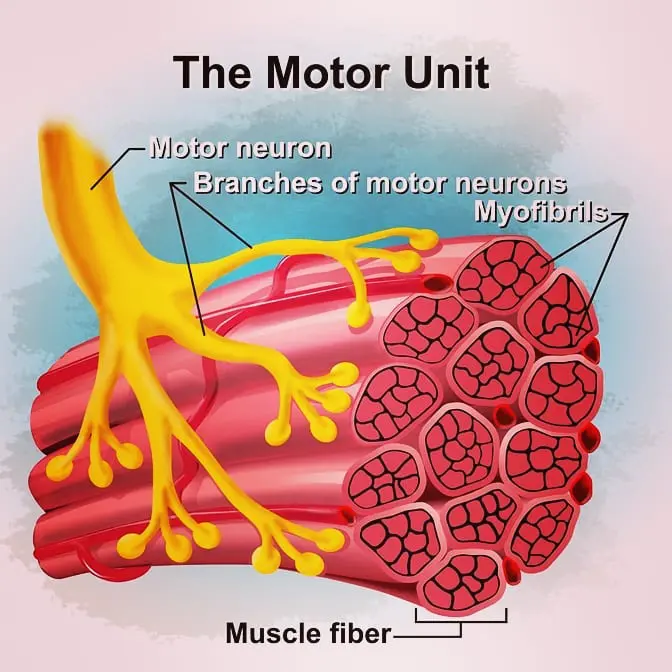
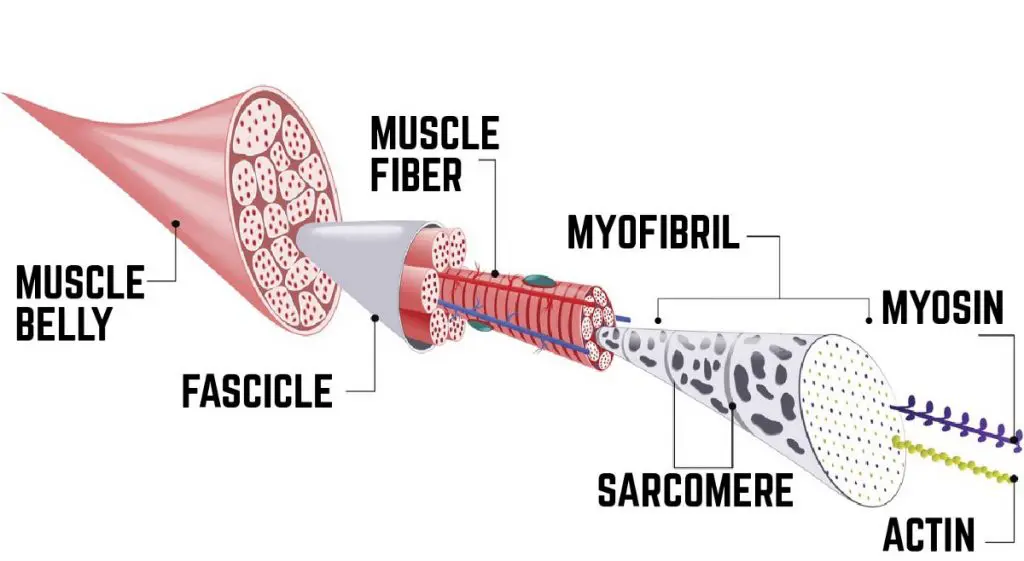
Sarcoplasmic hypertrophy is explained as an increase in fluids and energy substances surrounding the myofibrils contained in muscle fibers. The fluids include ATP, glycogen, creatine phosphate and water which increase the volume within a cell to create more space between muscle fibers.
This form of hypertrophy supports overall visual muscle size which is less conducive to overall muscle strength increase and function. It’s believed that bodybuilders benefit most from sarcoplasmic hypertrophy because strength is not needed to support the increase in muscle size.
Myofibrillar Hypertrophy
myofibrillar hypertrophy occurs from myofibrils (long strands in skeletal muscle which contracts) splitting off and forming more contractile proteins within a muscle fiber. This type of hypertrophy is supposedly better for strength athletes as it is conducive to more strength output (Contractile units) rather than purely muscle growth.
The increase in contractile units makes for a more functional muscle which is typically why strength athletes don’t need to have as much total muscle mass. Although, they still have a decent amount of overall size if training using higher rep ranges as well.
How does hypertrophy work?
When you weight train, you’re basically tearing down your muscle fibers and hypertrophy occurs as a result of different factors such as anabolic levels, nutrition, and optimum recovery and nuclei. This is known as myofibrillar hypertrophy as explained above.
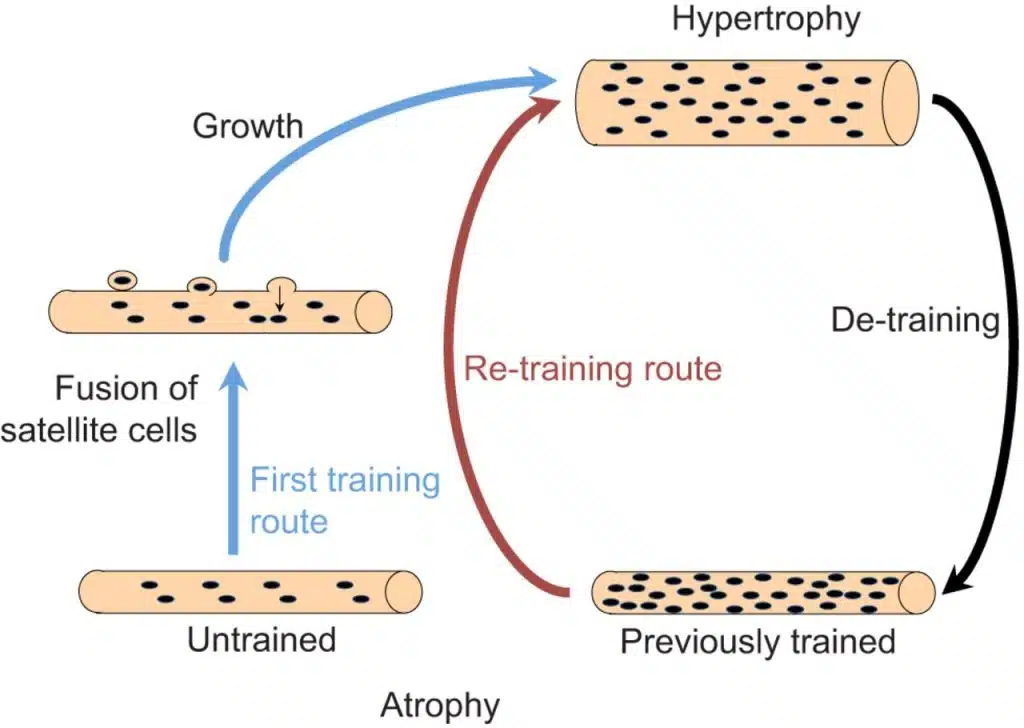
Science has shown that the muscle fibers increase in volume as a result of myonuclei (Control centers of muscle fibers) multiplication within muscle fibers.
How much muscle you can grow depends on your myonuclei count. Myonuclei are formed from satellite cells that provide nuclei to the muscle for repair after a tough training session.
How do you increase myonuclei?… By progressively increasing damage to the muscles. So in other words, more training volume should promote more nuclei in the muscles.
The other form of hypertrophy (sarcoplasmic) occurs when the fluids within a muscle fiber increases while the fibers do not increase in size as much.
Both forms of hypertrophy would have to occur though, regardless of if you train more for strength or muscle mass. However, the ratio of myofibril to sarcoplasmic increase will obviously be different between two individuals with a different training focus.
Who Can Benefit from Hypertrophy?
The short answer is… Everyone can!
Who doesn’t want increased strength and muscle growth? Well, probably people that enjoy having little muscle mass… and there’s nothing wrong with that!
Strength athletes – Training style is important for a strength athlete (In the case that science is correct about the theory of myofibril hypertrophy). That is why strength and power athletes can (Potentially) benefit more from myofibrillar hypertrophy training (reps of 3-6).
A strength athlete relies on muscle density and contractile units used to recruit more muscle fibers.
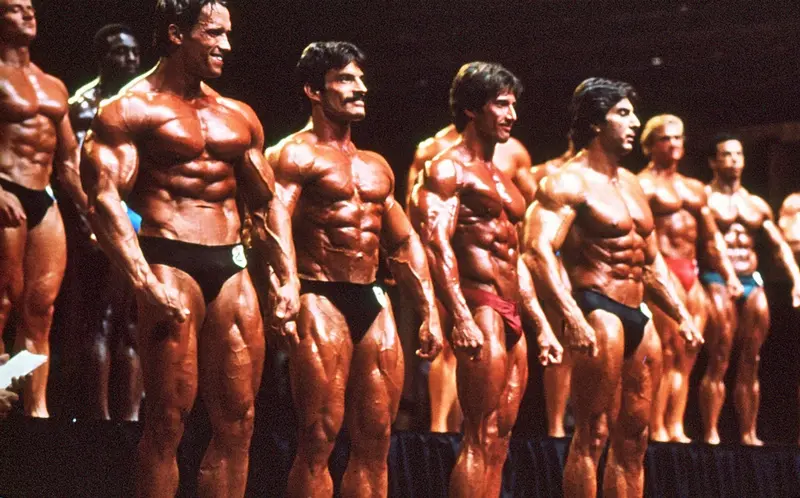
Bodybuilders – Muscle growth is the goal of every bodybuilder. Although they can greatly benefit from myofibrillar hypertrophy (and they do), the scientific reasoning behind sarcoplasmic hypertrophy is more conducive to overall visible muscle mass.
Once again, sarcoplasmic hypertrophy has not been proven as an exact science. However, someone seeking size gains would benefit from a similar (Or exact) scientific theory of training in such a manner.
What Are The Benefits of Hypertrophy?
There are so many benefits to hypertrophy that we can name the most important few… So we’ll do just that if you were wondering what you can expect from a hypertrophy training program…
- Increased muscular development
- Decreased chances of injury
- More strength and power
Muscle growth is an obvious benefit as the physical aspect of it is highly sought after by many gym-goers and athletes alike.
Hypertrophy prevents injuries as motor learning and aerobic/anaerobic are improved which promotes better muscular functioning.
For power athletes, hypertrophy is extremely beneficial for performing at a high level as a result of better power output. These same athletes can benefit greatly from adopting some sarcoplasmic training as well.
Moderate reps and resistance can increase muscle size, strength and it can prepare an athlete for advanced training. Higher reps may allow for better nutrient transfer to muscle cells, injury prevention, and improved functional muscle tissue capacity.
These benefits have long been discussed and are believed to be why bodybuilders (Or anyone training for mass) experience the amount of size gains that they do.
The “pump” may not allow for hypertrophy to occur on its own but the shuttling of nutrients from increased blood flow is acknowledged as a large contributor to muscle growth.
Are There Negatives to Specific Hypertrophy Training?
There are negatives to everything and hypertrophy is no different (Although the positives outweigh the negatives tenfold).
A strength athlete’s maximal power output can significantly decrease when using higher reps and little rest in between sets (The reason why low reps are best for maximum strength). Maximum energy resources must be reserved for short and heavy bursts of power. So this makes complete sense for a powerlifter to stick with low reps and long rest periods which are most beneficial.
On the other hand, a bodybuilder or someone focusing on mass-building may not see the desired results by sticking with a low rep range and focusing only on strength. Overall training volume and muscle stimulus are essential for maximizing a muscles’ visual size.
Not to mention, varying rep ranges may target specific muscle fibers (slow and fast-twitch) and we all know a bodybuilder needs all the muscle development they can get. But slow-twitch fibers especially, are more conducive to endurance through ATP (provides cell energy) utilization which is necessary for higher volume training (1)
How To Train For Sarcoplasmic and Myofibrillar Hypertrophy
Based on the information we have on the two different kinds of hypertrophy, you might benefit from discipline-specific training.
Strength – Explosive, low rep (1-5) training for maximum strength/power benefit. Rest 3-5+ minutes in between sets for maximum power output since you’ll be doing mostly compound exercises.
Size – Utilize various rep ranges sticking mostly within the 8-12 rep range for optimal size gains. Rest periods should be shorter (30 seconds – 1 minute, 30 seconds) to challenge the slow-twitch muscle fibers.
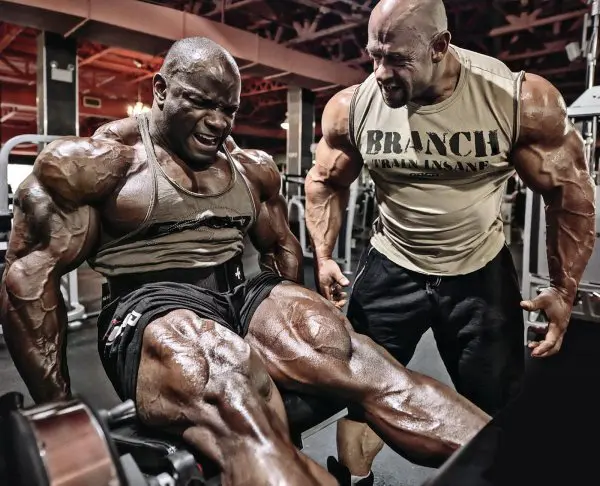
It’s ok to use both training methods for a hypertrophy goal but it’s more beneficial to focus on one for maximum results. Now again, keep in mind that muscle growth isn’t an exact science but real-world experience has shown us the difference between training for a specific purpose.
Not to mention, diet also plays a big role in body composition which is usually different between bodybuilders and powerlifters. So there are other factors to consider as well when comparing the effects of both hypertrophy types.
Wrapping Up
You now understand what hypertrophy is and the process. When we workout, we are encouraging hypertrophy whether it be in the form of sarcoplasmic or myofibrillar.
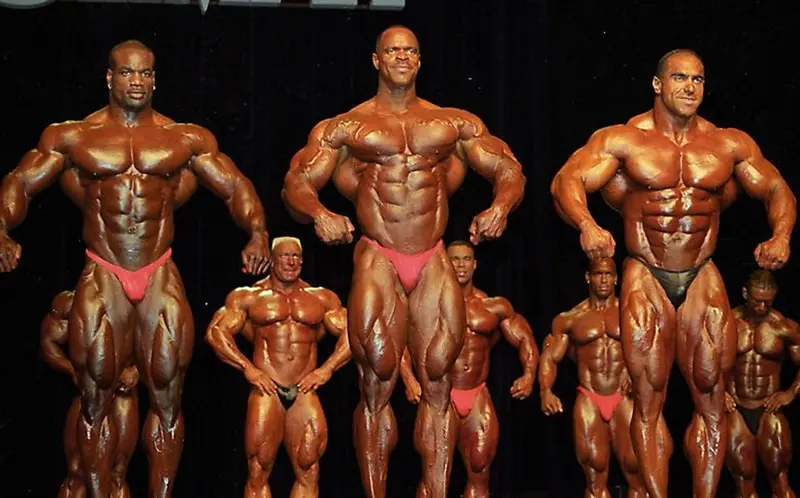
It’s a complex process but at the same time, we have come a long way in how we understand the concept of muscular growth and strength.
Regardless of your training preferences, we all strive for our own ideal of physical capability.
The two types of hypertrophy we’ve discussed (Sarcoplasmic and Myofibrillar) need to be tested and researched on a more long term basis to understand the potential mechanism behind each one. Until then, we only have the information that is currently available, based on scientific hypothesis and evidence.
But hypertrophy should still be the goal either way as the benefits are undeniable!
Frequently Asked Questions
What is muscle hypertrophy?
Muscle hypertrophy refers to the increase in muscle size through resistance training which focuses on progressive overload to elicit a growth response.
What causes muscle hypertrophy?
Muscle hypertrophy or growth can occur in a few different ways which are…
Sarcoplasmic hypertrophy – the sarcoplasm increases in size within a cell to create more space between muscle fiber. This form of hypertrophy supports overall visual muscle size. This theory of muscle growth is not a sure science.
myofibrillar hypertrophy – occurs from myofibrils splitting off and forming more contractile units with a muscle fiber. This type of hypertrophy is supposedly better for strength athletes as it is conducive to more strength output (Contractile units).
How to train for hypertrophy?
Hypertrophy can occur using any rep range. However, it’s generally accepted that the 8-12 rep range elicits the best gains due to the ideal combination of resistance and time under tension.
What are the benefits of hypertrophy training?
The benefits of hypertrophy training are increased muscle size and strength, improved physical appearance (aesthetics), better physical performance, a healthier body, and numerous mental benefits.
References
- What Is Hypertrophy? – Definition, Causes, Symptoms & Treatment https://study.com/academy/lesson/what-is-hypertrophy-definition-causes-symptoms-treatment.html
- Nosaka K, Newton M. Repeated Eccentric Exercise Bouts Do Not Exacerbate Muscle Damage and Repair. J Strength Cond Res. 2002 Feb;16(1):117-122.
- Nosaka K, Newton M. Concentric or eccentric training effect on eccentric exercise-induced muscle damage. Med Sci Sports Exerc. 2002 Jan;34(1):63-9.
- Drummond, M.J., Fry, C.S., Glynn, E.L., Dreyer, H.C., Dhanani, S., Timmerman, K.L., Volpi, E. and Rasmussen, B.B., 2009. Rapamycin administration in humans blocks the contraction‐induced increase in skeletal muscle protein synthesis. The Journal of physiology, 587(7), pp.1535-1546.
- “Hypertrophy.” Strength & Conditioning Research, 30 Sept. 2018, www.strengthandconditioningresearch.com/hypertrophy/
- Proske U, Morgan DL. Muscle damage from eccentric exercise: mechanism, mechanical signs, adaptation and clinical applications. J Physiol. 2001 Dec 1;537(Pt 2):333-45.
- Nosaka K, Newton M, Sacco P. Responses of human elbow flexor muscles to electrically stimulated forced lengthening exercise. Acta Physiol Scand. 2002 Feb;174(2):137-45.
- Nosaka K, Sakamoto K, Newton M, Sacco P. How long does the protective effect on eccentric exercise-induced muscle damage last? Med Sci Sports Exerc. 2001 Sep;33(9):1490-5.
- McHugh MP, Connolly DA, Eston RG, Gleim GW. Exercise-induced muscle damage and potential mechanisms for the repeated bout effect. Sports Med. 1999 Mar;27(3):157-70.
- Allen DG. Eccentric muscle damage: mechanisms of early reduction of force. Acta Physiol Scand. 2001 Mar;171(3):311-9.
- Mero, A., Leikas, A., Knuutinen, J., Hulmi, J.J. and Kovanen, V., 2009. Effect of strength training session on plasma amino acid concentration following oral ingestion of leucine, BCAAs or glutamine in men. European journal of applied physiology, 105(2), p.215.
- Clarkson PM. Eccentric exercise and muscle damage. Int J Sports Med. 1997 Oct;18 Suppl 4:S314-7.
- Paddon-Jones D, Abernethy PJ. Acute adaptation to low volume eccentric exercise. Med Sci Sports Exerc. 2001 Jul;33(7):1213-9.
- Nosaka K, Clarkson PM. Influence of previous concentric exercise on eccentric exercise-induced muscledamage. J Sports Sci. 1997 Oct;15(5):477-83.
- Carson JA. The regulation of gene expression in hypertrophying skeletal muscle. Exerc Sport Sci Rev. 1997;25:301-20.
- Lieber RL, Friden J. Mechanisms of muscle injury after eccentric contraction. J Sci Med Sport. 1999 Oct;2(3):253-65.
- Nosaka K, Clarkson PM. Muscle damage following repeated bouts of high force eccentric exercise. Med Sci Sports Exerc. 1995 Sep;27(9):1263-9.
- Nosaka K, Sakamoto K, Newton M, Sacco P. The repeated bout effect of reduced-load eccentric exercise on elbow flexor muscle damage. Eur J Appl Physiol. 2001 Jul;85(1-2):34-40.
- Goldberg, A.L., Etlinger, J.D., Goldspink, D.F. and Jablecki, C., 1975. Mechanism of work-induced hypertrophy of skeletal muscle. Medicine and science in sports, 7(3), pp.185-198.
- Bodine, S.C., Stitt, T.N., Gonzalez, M., Kline, W.O., Stover, G.L., Bauerlein, R., Zlotchenko, E., Scrimgeour, A., Lawrence, J.C., Glass, D.J. and Yancopoulos, G.D., 2001. Akt/mTOR pathway is a crucial regulator of skeletal muscle hypertrophy and can prevent muscle atrophy in vivo. Nature cell biology, 3(11), pp.1014-1019.
- Atherton PJ, Etheridge T, Watt PW, Wilkinson D, Selby A,Rankin D, Smith K & Rennie MJ (2010). Muscle full effect after oral protein: time-dependent concordance and discordance between human muscle protein synthesis and mTORC1 signaling. Am J Clin Nutr 92, 1080–1088.






Hello!
I am 22 years old, getting overweight these last months I think, and I don’t really know the reason why?!
I need to lose weight and I need fast because I just need that I want my healthy life back… I tried fitness It didn’t really help..
Btw I saw this website and for me it looked a nice one and a real product to lose weight fast and also very healthy..
Can someone check it or give it a review for me?! Thnx