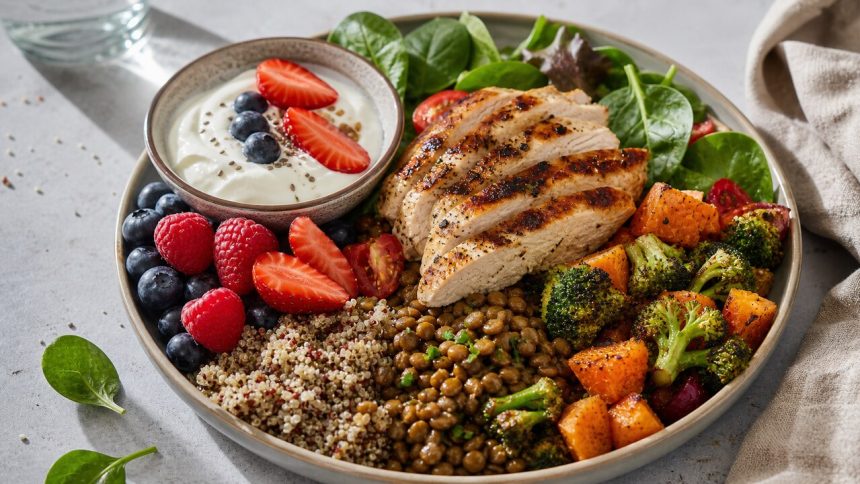
Protein-maxxing sounds useful because protein really does matter. It supports muscle repair, helps meals feel more satisfying, and makes dieting less chaotic. The problem is what usually happens next: people chase protein numbers with shakes, bars, and plain chicken while the rest of the plate disappears.
The better move is not “less protein.” It is a better rule: build meals around 30 grams of protein and 10 grams of fiber. That pairing gives you the muscle-friendly anchor people want from high-protein eating, plus the food volume, digestion support, and appetite control that protein-only snacks often miss.
Think of the 30/10 Plate as the practical version of protein-maxxing. It is simple enough to use at breakfast, lunch, dinner, or a post-workout meal, but it is balanced enough to work for people who care about fat loss, muscle gain, GLP-1-era appetite management, and everyday food sanity.
Quick Answer: What Is the 30/10 Plate?
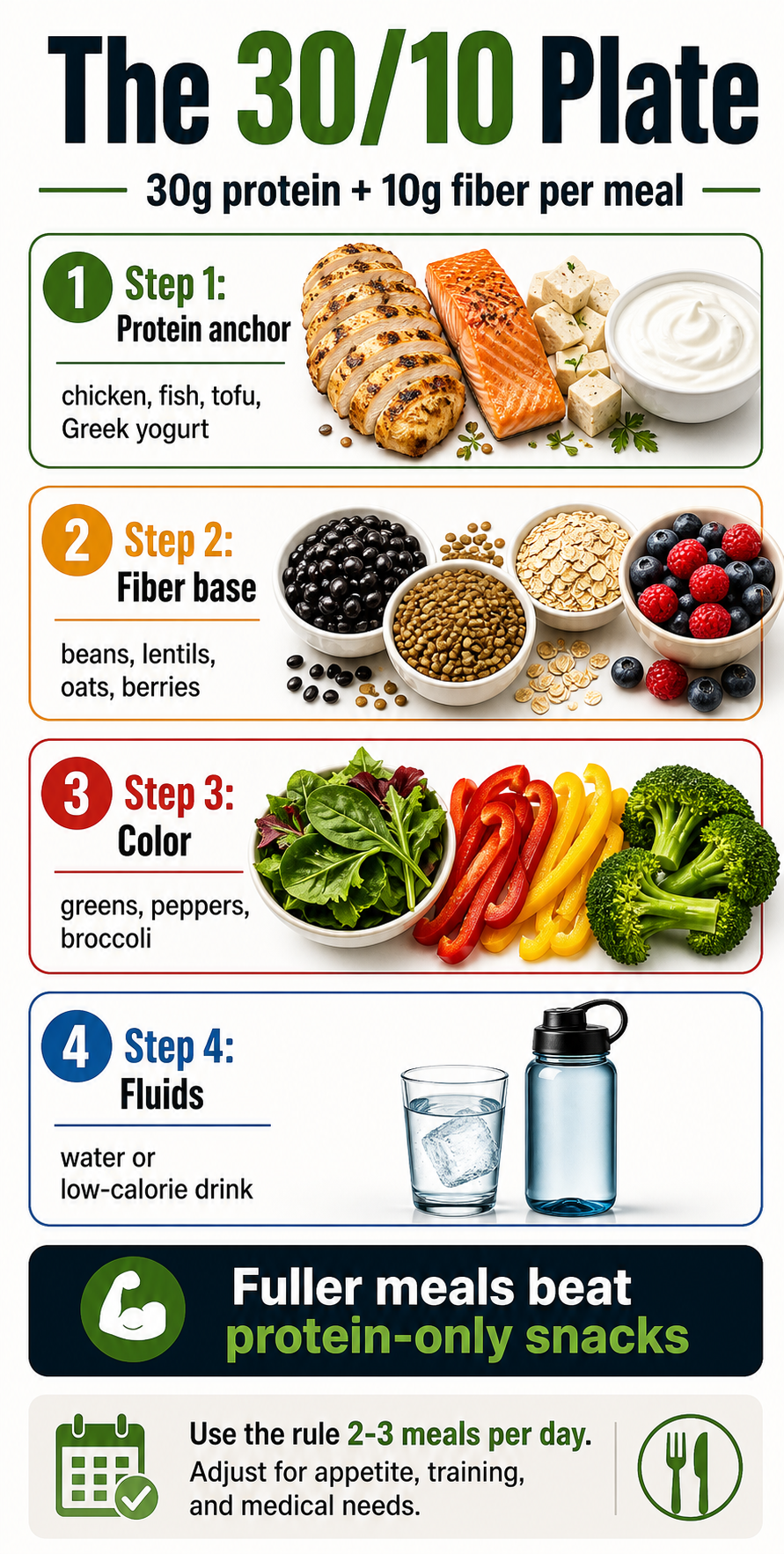
The 30/10 Plate is a meal-building rule: aim for about 30 grams of protein and 10 grams of fiber in the same meal. Protein supplies the muscle and satiety anchor; fiber adds food volume, slower digestion, and better meal quality. Use it for two to three meals per day, then adjust portions for your goal, appetite, and training.
Why Forget Protein-Maxxing by Itself?
Protein-maxxing fails when it turns a good nutrient into the whole strategy. A meal with 30 to 40 grams of protein can still leave you snacky if it has almost no fiber, no produce, and very little volume. A protein shake may help you hit a number, but it does not automatically create a filling meal.
Research supports the protein side of the equation. The International Society of Sports Nutrition notes that active people often benefit from higher protein intakes than the basic RDA, especially when they train hard or diet. But the same practical problem remains: protein quality and daily total matter, while meal structure decides whether the plan feels livable.
Fiber is the missing half for most people. Large systematic reviews link higher fiber and higher-quality carbohydrate intake with better weight and health markers. That does not mean fiber magically causes fat loss. It means high-fiber foods such as beans, lentils, oats, berries, vegetables, and whole grains make meals bigger, slower to eat, and harder to overdo.
Protein-maxxing is incomplete because protein alone does not guarantee a filling or balanced meal. A 30/10 Plate pairs roughly 30 grams of protein with 10 grams of fiber, which gives the meal a muscle-supporting anchor plus the volume and slower digestion that high-fiber foods provide.
How Do You Build a 30/10 Plate?
Start with the protein, then add the fiber. Do not try to make every food on the plate do everything. Chicken, fish, eggs, Greek yogurt, tofu, tempeh, cottage cheese, tuna, shrimp, lean turkey, and protein powder can carry the protein target. Beans, lentils, oats, berries, chia seeds, vegetables, whole-grain bread, quinoa, and edamame can carry the fiber target.
The easiest formula is:
- Protein anchor: 25 to 40 grams from meat, fish, dairy, eggs, soy, legumes, or a mixed source.
- Fiber base: 8 to 14 grams from beans, lentils, oats, berries, vegetables, whole grains, chia, flax, or edamame.
- Color: one to two fists of produce for volume, micronutrients, and better texture.
- Fluids: water, coffee, tea, or another low-calorie drink unless the meal needs extra calories.
If you already rely on shakes, this rule still fits. A shake can become a 30/10 meal when it includes Greek yogurt or protein powder plus berries, oats, chia, or ground flax. FitnessVolt has covered why whole-food smoothies can be more filling than whey-only shakes, and this is the same idea in plate form.
12 Meal Combos That Hit 30g Protein and 10g Fiber
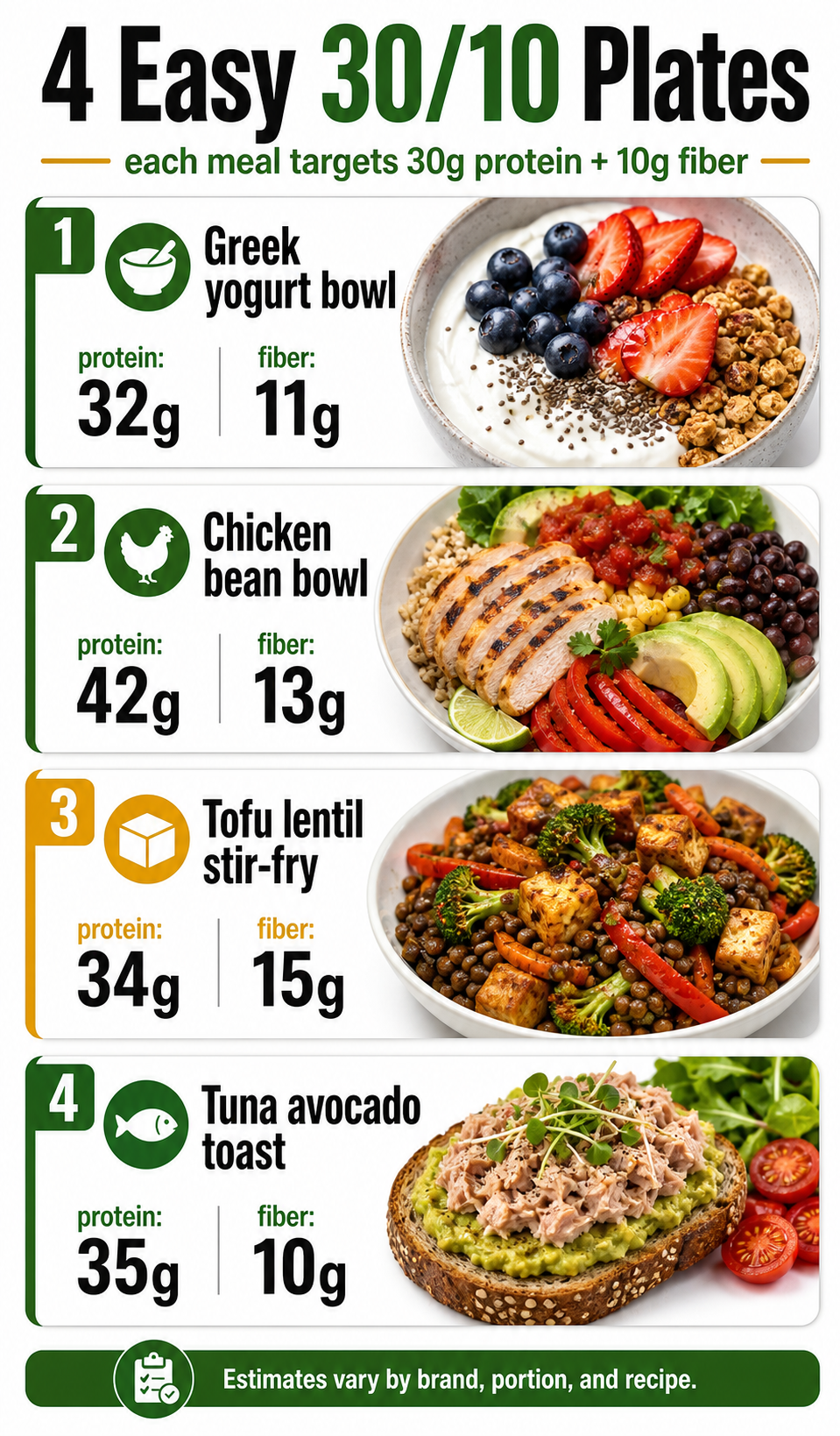
The numbers below are realistic estimates, not lab labels. Brands, cooking methods, and portion sizes change the final total. Use the table as a build guide, then adjust with a food scale, nutrition label, or database if you are tracking closely.
| Meal | Simple build | Protein | Fiber | Best for |
|---|---|---|---|---|
| Greek yogurt bowl | 2 cups nonfat Greek yogurt, berries, chia, small oat topping | 32-40g | 10-13g | Breakfast or post-workout |
| Chicken bean bowl | 5 oz chicken breast, 1/2 cup black beans, salsa, peppers, greens | 40-45g | 11-14g | Fat-loss lunch |
| Tofu lentil stir-fry | Firm tofu, lentils, broccoli, carrots, light sauce | 32-38g | 13-17g | Vegetarian dinner |
| Tuna avocado toast | 1 can tuna, 2 slices whole-grain toast, avocado, tomato | 33-38g | 9-12g | Fast no-cook meal |
| Cottage cheese berry oats | Cottage cheese, oats, raspberries, ground flax | 30-36g | 10-12g | Sweet high-protein meal |
| Salmon chickpea salad | 5 oz salmon, chickpeas, greens, cucumber, olive oil and lemon | 38-44g | 9-12g | Higher-fat balanced meal |
| Turkey chili | Lean turkey, kidney beans, tomatoes, peppers, onion | 35-42g | 11-15g | Batch cooking |
| Tempeh quinoa bowl | Tempeh, quinoa, broccoli, edamame, slaw | 32-38g | 10-14g | Plant-forward meal prep |
| Egg and bean tacos | Eggs plus egg whites, beans, corn tortillas, salsa | 30-36g | 9-12g | High-satiety breakfast |
| Shrimp lentil salad | Shrimp, lentils, greens, peppers, light vinaigrette | 36-42g | 11-14g | Lean dinner |
| Smoothie bowl | Greek yogurt or protein powder, berries, chia, spinach, oats | 30-40g | 10-14g | Shake upgrade |
| Chicken edamame rice bowl | Chicken, edamame, brown rice, broccoli, carrots | 42-50g | 9-12g | Training days |
How Should You Adjust the 30/10 Plate for Your Goal?
The 30/10 Plate is a structure, not a diet identity. The protein and fiber targets stay fairly steady, while calories, carbohydrates, and fats move up or down based on your goal.
For fat loss, keep the protein anchor and fiber base, then be honest about calorie-dense extras. Avocado, nuts, oils, cheese, granola, and sauces can still fit, but they are easy to underestimate. For muscle gain, keep the same plate and add more carbohydrates or fats around training. Rice, potatoes, oats, pasta, olive oil, and larger portions can turn the same 30/10 meal into a higher-calorie builder.
For recomposition, consistency matters more than perfection. FitnessVolt’s body recomposition guide explains why changes in waist, strength, photos, and training performance often matter more than one weigh-in. The 30/10 Plate supports that by making protein and fiber boringly repeatable.
For fat loss, use the 30/10 Plate with lean proteins, beans, lentils, berries, and vegetables while watching calorie-dense toppings. For muscle gain, keep the same protein and fiber floor but add more carbohydrates or fats around training. The rule changes meal quality; total calories still decide weight change.
What Are the Best Variations?
Vegetarian: Use tofu, tempeh, edamame, Greek yogurt, cottage cheese, eggs, lentils, beans, seitan, or a protein powder if needed. Plant-based meals often hit fiber easily but may need a more deliberate protein anchor.
Low-carb: Keep the protein high and get fiber from berries, chia, flax, avocado, greens, broccoli, cauliflower, peppers, edamame, and smaller bean portions. Low-carb does not have to mean low-fiber.
Budget: Rotate eggs, canned tuna, cottage cheese, Greek yogurt, dry beans, lentils, frozen vegetables, oats, canned tomatoes, and chicken thighs. The cheapest 30/10 meals are usually bowls, chili, overnight oats, and yogurt bowls. FitnessVolt’s overnight oats recipes are easy to adapt by adding Greek yogurt, protein powder, chia, berries, or cottage cheese.
GLP-1-friendly: If appetite is low, do not force huge plates. Use smaller, slower meals that still prioritize protein, fiber, fluids, and tolerable foods. People using appetite-altering medications should follow their clinician’s nutrition guidance, especially if nausea, reflux, constipation, or very low intake becomes a problem.
Does 30g Protein Per Meal Have to Be Exact?
No. The value of 30 grams is that it is memorable and useful. A smaller person may do well with 25 grams. A larger lifter may prefer 40 to 50 grams. The real lesson is protein distribution: do not let one meal carry the entire day while the other meals are mostly coffee, snacks, and low-protein grazing.
ISSN guidance supports spreading high-quality protein across the day for active people, and many practical nutrition plans land somewhere around 20 to 40 grams per meal depending on body size and goal. If you already track macros, the 30/10 Plate is a checkpoint. If you do not track, it is a shortcut that keeps your meals from drifting too far away from muscle and appetite support.
For broader eating rules, pair this article with FitnessVolt’s simple nutrition rules and use the 30/10 Plate as the meal-level version: protein first, fiber second, calories adjusted to the goal.
Who Should Be Careful With This Rule?
Most healthy adults can use the 30/10 Plate as a meal-building framework, but it is not medical advice. If you have kidney disease, a history of eating disorders, digestive disorders, diabetes treated with medication, or a clinician-prescribed diet, get personalized guidance before pushing protein or fiber higher.
Increase fiber gradually. Jumping from very low fiber to 30 grams per day can cause bloating, gas, or constipation if fluids are low. Add beans, lentils, oats, berries, and vegetables in stages, and drink enough water. The goal is a better plate, not a digestive challenge.
The 30/10 Plate is not a rigid medical diet. People with kidney disease, digestive disorders, diabetes medications, eating disorder history, or clinician-directed nutrition plans should individualize protein and fiber targets. Fiber should also increase gradually with adequate fluids to reduce bloating or constipation.
30/10 Plate Checklist
Before you call a meal “high protein,” run this quick check:
- Does it contain about 25 to 40 grams of protein?
- Does it contain about 8 to 14 grams of fiber?
- Can you name the main fiber source without guessing?
- Does it include produce, beans, lentils, oats, berries, or whole grains?
- Does it fit your goal after accounting for oils, sauces, nuts, cheese, and extras?
If the answer is yes, you probably built a useful meal. If the answer is “protein yes, fiber no,” add beans, lentils, berries, oats, vegetables, chia, flax, edamame, or whole-grain bread before you add another scoop of protein powder.
FAQ
Is 30 grams of protein per meal enough?
For many adults, 30 grams is a strong meal target. Smaller people may need less, while larger lifters, athletes, or people in aggressive fat-loss phases may prefer more. The rule is meant to keep meals protein-forward, not replace individualized macro targets.
Can I use a protein shake for the 30/10 Plate?
Yes, but make it more like a meal. Add berries, oats, chia, flax, Greek yogurt, spinach, or another fiber-rich food. A protein-only shake can hit the protein target while missing the fiber target.
Is 10 grams of fiber per meal too much?
It depends on your current intake. If you eat very little fiber, build up gradually. Start with one 30/10 meal per day or aim for 5 to 7 grams of fiber at first, then increase as your digestion adapts.
Will the 30/10 Plate cause weight loss?
Not automatically. Weight loss still depends on overall calorie balance. The 30/10 Plate can make calorie control easier because protein and fiber-rich foods tend to make meals more filling, but portions and total intake still matter.
Can I use this for muscle gain?
Yes. Keep the 30 grams of protein and 10 grams of fiber, then increase calories with larger servings of rice, potatoes, oats, pasta, olive oil, nuts, or other foods that fit your digestion and training needs.
Sources
- Jager, R., Kerksick, C. M., Campbell, B. I., et al. (2017). International Society of Sports Nutrition Position Stand: protein and exercise. Journal of the International Society of Sports Nutrition, 14, 20.
- Reynolds, A., Mann, J., Cummings, J., et al. (2019). Carbohydrate quality and human health: a series of systematic reviews and meta-analyses. The Lancet, 393(10170), 434-445.
- Slavin, J. (2013). Fiber and prebiotics: mechanisms and health benefits. Nutrients, 5(4), 1417-1435.
- U.S. Department of Agriculture. (n.d.). FoodData Central. Accessed May 11, 2026.