
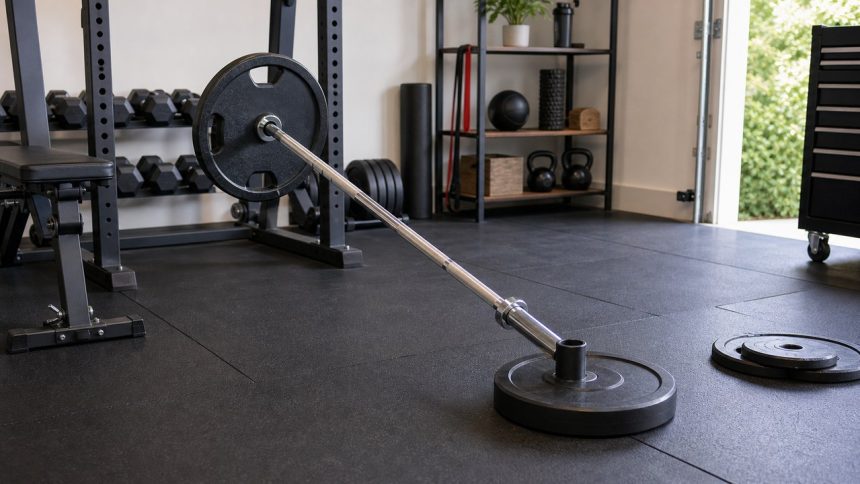
A landmine attachment turns one barbell into a row, press, squat, hinge, rotation, and core station. It is one of the best small-space upgrades for a home gym because the bar moves on an arc instead of needing a full rack setup for every exercise.
You can buy a landmine attachment, but a basic DIY version is possible if you understand the job: the base must keep one end of the barbell secure while letting the sleeve pivot smoothly. If the base slides, tips, or traps the sleeve at a bad angle, the setup is not ready.
What is the safest DIY landmine attachment?
The safest DIY landmine attachment is a heavy, low base that captures the bar sleeve without clamping it rigidly. A plate-loaded landmine base, pipe sleeve mounted in a heavy block, or corner-safe wedge can work. The base must stay put through rows, presses, and rotational drills.
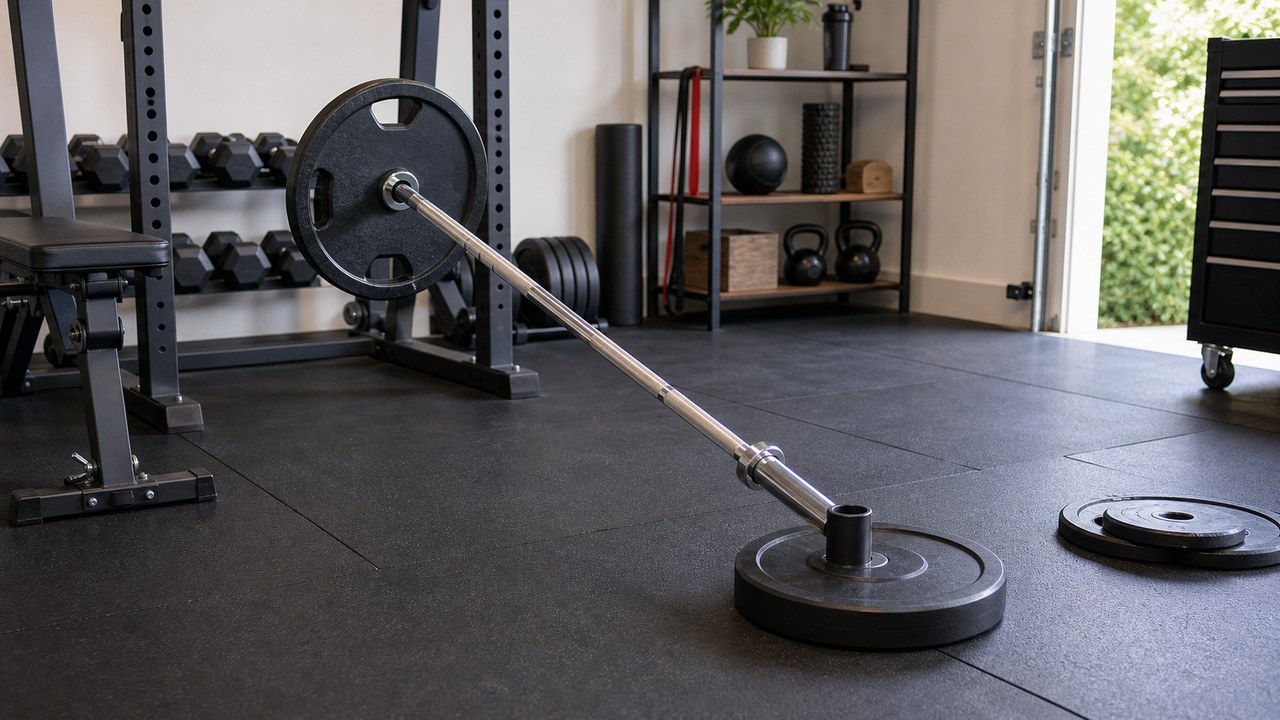
Do not jam a barbell into drywall, a loose corner, a glass door track, or a random weight plate hole and call it done. That shortcut works until the bar slips, chews up the wall, or loads your wrist at a bad angle.
What materials do you need?
You need a heavy base, a sleeve or cradle that fits the barbell end, smooth contact surfaces, and a way to stop the base from sliding. Most DIY builds use a short steel pipe, a heavy plate, a wood block, rubber padding, and bolts or clamps.
| Part | Good option | Avoid |
|---|---|---|
| Base | Heavy plate, wood box, or steel block | Loose bricks or light plastic |
| Sleeve cradle | Smooth pipe or landmine sleeve | Sharp metal edges |
| Padding | Rubber mat or dense pad | Bare metal on flooring |
| Hardware | Bolts, washers, lock nuts | Drywall screws |
| Clearance | 6 to 8 feet in front of the bar | Bar pointed at windows or mirrors |
How do you build a plate-based landmine?
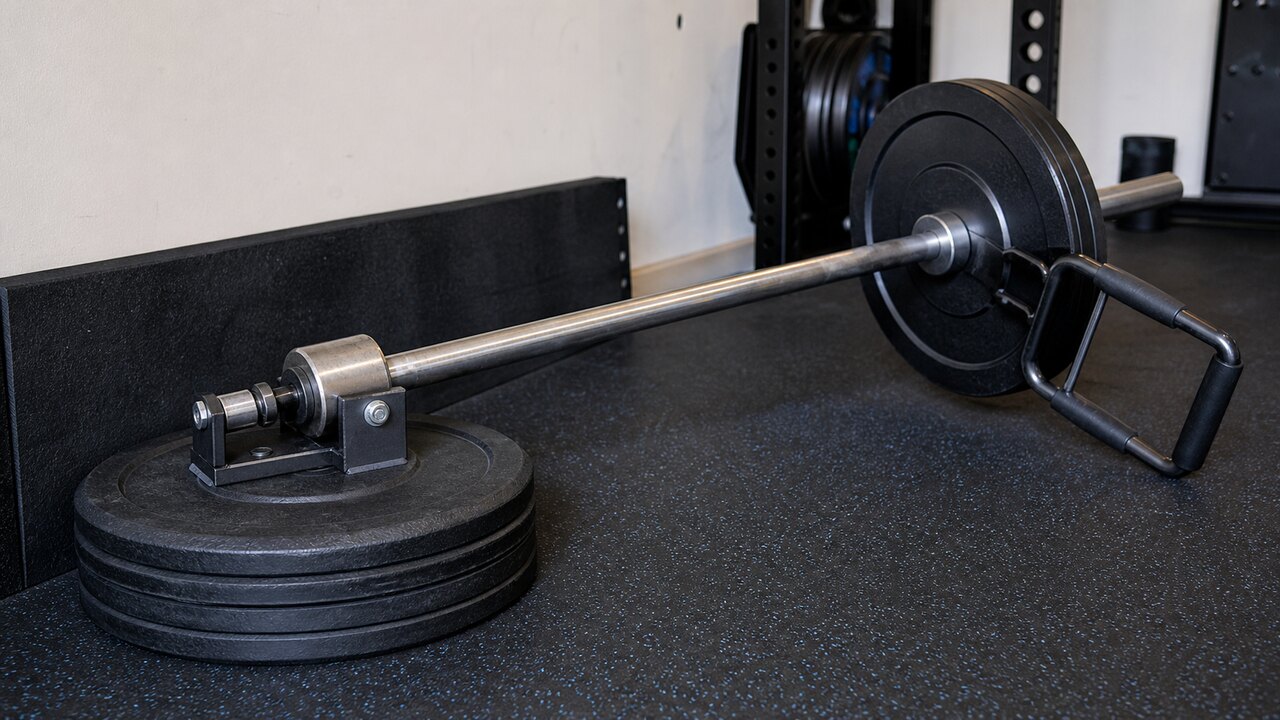
The simplest version uses a heavy plate or stacked plates as the base and a pipe sleeve fixed to that base. The pipe should be wide enough for the barbell sleeve to rotate without scraping, but not so loose that the bar jumps out when you row.
Place the base on rubber flooring, slide the empty bar sleeve into the pipe, and test the arc with no plates. Move through rows, half-kneeling presses, and light rotations. If the base shifts, add weight or rebuild. If the pipe edge scratches the bar, smooth it or add a liner.
Can you use a corner landmine?
A corner landmine can work if the corner is protected and the bar cannot slip. Use a dense rubber wedge or purpose-built corner sleeve, not bare drywall. The bar end should sit low, stable, and padded. If the corner belongs to a rental, skip this entirely.
Corner setups are fast but less controlled than a real base. They can mark walls, damage trim, or slide under hard rows. Use them for light work only unless the corner is built for it.
What exercises can you do?
A landmine works for T-bar rows, one-arm rows, half-kneeling presses, standing presses, landmine squats, Romanian deadlifts, anti-rotation presses, and rotational core drills. It is especially good for lifters who want pressing and rowing options without a full cable machine.
Start with these 5 moves: landmine row, half-kneeling press, landmine squat, single-arm row, and anti-rotation press. Use 2 to 4 sets of 8 to 15 reps. Keep the bar path controlled and stop if the base moves.
If you want alternatives for shoulder training, FitnessVolt’s landmine press alternatives can help you program around equipment limits.
How much weight should you use?
Start with the empty bar or one small plate. The landmine arc changes leverage through the rep, so a weight that feels easy at the bottom can feel awkward at the top. Add weight slowly in 10- to 25-pound jumps depending on the movement.
For rows and squats, the setup can handle more load if the base is stable. For presses and rotations, ego is the problem. Use enough load to train the muscle without twisting your low back or letting the base slide.
What safety checks matter?
Check the base before every set, keep the bar pointed away from windows and people, use collars when plates can slide, and make sure the sleeve can rotate freely. A landmine is simple, but it still creates leverage. Small shifts at the base become big shifts at the handle end.
- Test the empty bar before loading.
- Keep 6 to 8 feet of clear space in front of the bar.
- Use collars on loaded landmine work.
- Do not anchor into drywall or furniture.
- Stop if the base slides more than 1 inch.
For collars, see our barbell collar guide. For a broader garage setup, pair this build with the home workout equipment guide.
Who should buy instead of DIY?
Buy a landmine attachment if you train heavy rows, use the setup several times per week, rent your space, or do not have tools to make a smooth sleeve. A commercial unit is usually cheaper than repairing a wall, replacing a bent bar sleeve, or rebuilding a bad base twice.
DIY makes sense when you already have scrap material, basic tools, and a clear surface to test the build. It does not make sense if the only thing holding the bar in place is hope.
Bottom line
A DIY landmine attachment can be a smart home-gym upgrade if the base is heavy, low, padded, and stable. Build around the bar sleeve’s movement, not around whatever pipe happens to be nearby. Test empty, add load slowly, use collars, and stop using the setup if it shifts under force.
Sources
- Centers for Disease Control and Prevention. (2024). Adult Activity: An Overview. CDC. Accessed May 30, 2026.
- Nationwide Children’s Hospital. (n.d.). Home Exercise Equipment. Center for Injury Research and Policy. Accessed May 30, 2026.