Cottage cheese has an image problem, not a protein problem. It is cheap, high in protein, easy to keep in the fridge, and flexible enough for sweet or savory meals. The issue is that most people eat it plain once, decide it tastes like diet food, and never learn how to build around it.
The smarter approach is to treat cottage cheese like a protein base. Add crunch, acid, fruit, herbs, vegetables, eggs, potatoes, toast, or pasta depending on the meal. When the texture is still a problem, blend it into sauces, dips, pancakes, or smoothies instead of forcing yourself to eat curds with a spoon.
Use these ideas as meal templates. The exact protein numbers depend on brand and serving size, so check your label, but most one-cup servings land around the kind of protein target that makes a meal easier to build.
The Better Move
Use the trend as a doorway, then build a system you can repeat. The win is not novelty. The win is a rule that survives real training weeks, busy mornings, missed meals, stress, and imperfect equipment. That is why this article focuses on decisions, not hacks.
Start With Texture
If you dislike cottage cheese, the problem is often texture rather than flavor. Small-curd, whipped, and blended versions feel very different. Blending cottage cheese with lemon juice, herbs, or fruit turns it into a creamy base for dips and sauces. That one change can move it from a food you tolerate to a tool you actually use.
- Blend it for sauces and dips.
- Use small-curd if large curds bother you.
- Add crunch: cereal, cucumbers, crackers, seeds, or toast.
Build Around Protein Plus Fiber
Cottage cheese brings protein, but the meal gets better when you add fiber and color. A bowl with berries and high-fiber cereal is more filling than plain cottage cheese. A savory bowl with vegetables and potatoes feels more like lunch. This is the same logic behind FitnessVolt’s {plate}: protein works better when the plate supports satiety.
- Use the 30/10 plate rule for the broader meal rule.
- Add berries, beans, vegetables, potatoes, or whole grains.
- If sodium is high in your brand, balance the rest of the day instead of panicking.
Use It When Cooking Feels Like Too Much
The best cottage cheese meal is often the one that prevents a worse choice. If you are tired, a bowl with cottage cheese, crackers, cucumber, and fruit can be better than skipping protein or ordering a giant meal. For lifters, the consistency matters more than making every meal impressive.
- If breakfast is the hardest meal, compare these with 15 high-protein breakfasts.
- If you prefer multiple protein feedings, protein pacing is the broader strategy.
- Keep two sweet toppings and two savory toppings ready.
Do Not Force It Into Every Meal
Cottage cheese is useful, not magical. If dairy bothers your stomach or you simply hate it, use Greek yogurt, eggs, tofu, tuna, chicken, or a protein smoothie instead. The win is having an easy protein base, not proving loyalty to one food.
- Choose lactose-free options if needed.
- Skip it if dairy worsens digestion.
- Rotate protein sources to avoid boredom.
10-Minute Cottage Cheese Ideas
| Meal | Build | Best use |
|---|---|---|
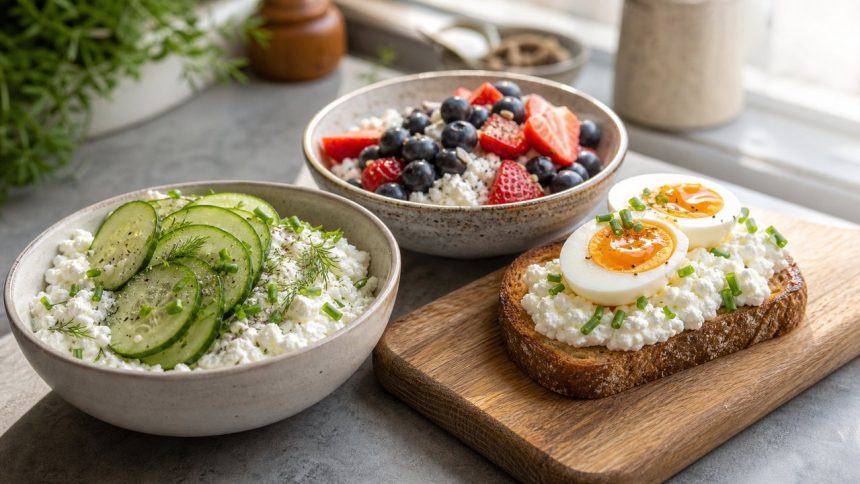
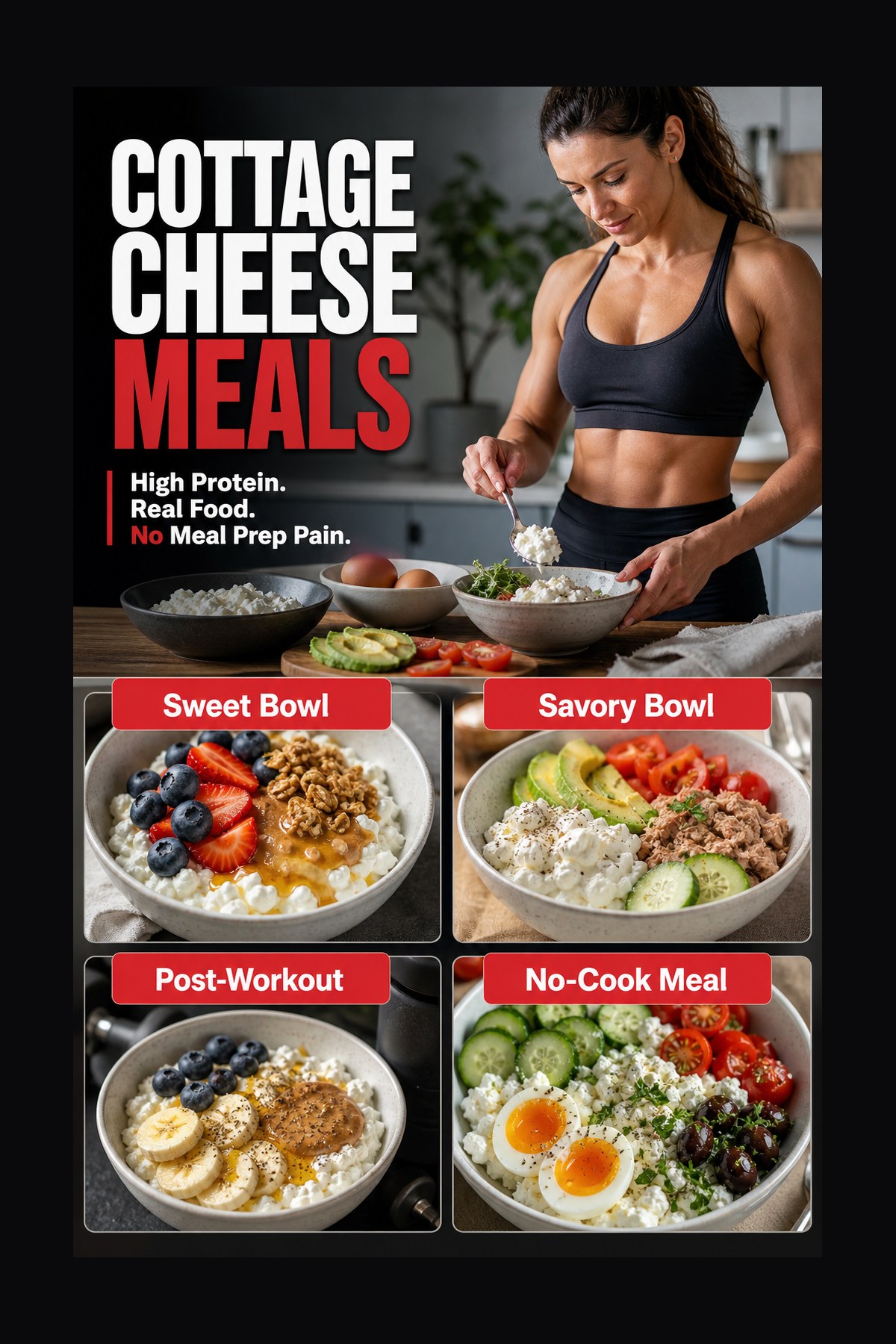
| Berry crunch bowl | Cottage cheese, berries, high-fiber cereal | Breakfast or dessert swap |
| Savory cucumber bowl | Cottage cheese, cucumber, tomato, herbs | Low-effort lunch |
| Egg toast | Cottage cheese on toast with eggs | Higher-protein breakfast |
| Blended ranch-style dip | Cottage cheese, lemon, garlic, herbs | Vegetable snack |
| Potato bowl | Cottage cheese, potatoes, salsa, scallions | Post-workout carbs and protein |
Use It This Week
Choose one sweet build and one savory build for the week. That matters because cottage cheese fatigue is real. If every serving is the same bowl, you will blame the food instead of the lack of variety.
Use the blended version if texture is the blocker. A cottage-cheese ranch-style dip, creamy pasta sauce, or berry smoothie bowl can deliver the protein without forcing the curd texture.
Check the label for sodium and serving size. Cottage cheese varies more than people expect, so the same-looking bowl can have different calories and sodium depending on the brand.
Adjust It By Goal
| Goal | Best adjustment | Why |
|---|---|---|
| Breakfast | Toast, eggs, fruit, or cereal | Turns a snack into a meal |
| Cutting | Vegetable bowl or dip | High protein with more volume |
| Muscle gain | Potatoes, toast, pasta, or oats | Adds useful carbs |
| Texture issues | Blend into sauce or dip | Same protein, easier mouthfeel |
When To Change The Plan
Do not judge the plan from one perfect day or one bad day. Most useful fitness and nutrition changes need a short runway. Give the system one to two weeks unless pain, dizziness, digestive distress, sleep disruption, or a clear medical concern shows up sooner. Early feedback is useful, but it needs context.
The right adjustment is usually smaller than the emotional reaction. If the plan feels too hard, reduce the dose before abandoning the idea. If it feels too easy, repeat it until the habit is stable before adding complexity. Most people fail these trends by escalating too quickly, not by starting too conservatively.
- Change one variable at a time so the result is readable.
- Keep the part that improves training, hunger, recovery, or consistency.
- Remove the part that adds friction without a clear payoff.
- Treat pain, dizziness, unusual fatigue, or persistent digestive symptoms as stop signs, not discipline tests.
The Smarter Starting Dose
Start smaller than your motivation wants. A conservative first dose protects the rest of the week and gives you cleaner feedback. Once the behavior is repeatable, progression is easy. When the starting point is too aggressive, the plan often fails for reasons that have nothing to do with the idea itself.
That is especially important for lifters because everything competes with recovery. A new food habit can change digestion. A new cardio session can change leg fatigue. A new recovery tool can change sleep timing. The first job is to make the change fit the training week. The second job is to make it stronger.
Mistakes To Avoid
- Eating it plain when you already know you dislike the texture.
- Ignoring sodium if you eat multiple servings daily.
- Calling it a meal without adding fruit, vegetables, or carbs when you need them.
- Using only sweet versions and getting bored fast.
How To Know It Is Working
The right version should make the next decision easier. Training should feel more predictable, meals should require less negotiation, and recovery should become easier to read. If the plan adds stress, confusion, pain, or obsessive tracking, simplify it before adding another layer.
Use one clear metric for two weeks. For nutrition articles, that could be hunger, protein consistency, calories, or training energy. For training articles, use performance, soreness, joint comfort, and repeatability. If the metric improves without creating a new problem, keep the system.
Where This Fits On FitnessVolt
This piece is meant to connect with the rest of your training and nutrition system, not replace it. Use the linked FitnessVolt guides where they match your next decision, especially when you need a calculator, a workout progression, or a more detailed nutrition framework.
Reader Scenarios
Texture problem
Blend cottage cheese into a dip, sauce, or smoothie bowl. You still get the protein value without forcing a texture you dislike.
Cutting phase
Use savory bowls with cucumber, tomatoes, herbs, potatoes, and lean protein. The goal is a bigger meal, not a plain cup of dairy.
Muscle-gain phase
Pair cottage cheese with toast, oats, potatoes, fruit, or pasta. It is easier to eat enough when the protein base carries useful carbs.
What To Track For Two Weeks
Use a short tracking window before judging the plan. Two weeks is long enough to reveal whether the idea fits real life, but short enough that you are not locked into a strategy that clearly does not work. Write down the one outcome the article is meant to improve, then watch that outcome instead of chasing every possible metric.
For food articles, track hunger, meal repeatability, digestion, training energy, and whether the habit prevents a worse decision later. For training and recovery articles, track performance, soreness, joint comfort, sleep, and whether the session is easy enough to repeat. If the plan improves one clear outcome without creating a new problem, keep it. If it only adds work, simplify it.
FAQ
Is cottage cheese good for building muscle?
It can be. It provides a convenient protein source, and many brands are rich in casein-dominant dairy protein. Total daily protein and training still matter most.
What can I mix with cottage cheese?
Berries, cereal, cinnamon, cucumber, tomatoes, herbs, eggs, potatoes, toast, salsa, and blended sauces all work well.
Is cottage cheese better than Greek yogurt?
Neither is universally better. Cottage cheese is often thicker and savory-friendly. Greek yogurt may be smoother and easier for sweet bowls.
Can cottage cheese help weight loss?
It can help if it makes meals higher in protein and more filling while fitting total calories. It does not cause fat loss by itself.
Sources
- U.S. Department of Agriculture. n.d. FoodData Central. Accessed June 4, 2026.
- Jäger R, et al. 2017. International Society of Sports Nutrition Position Stand: protein and exercise. Journal of the International Society of Sports Nutrition. Accessed June 4, 2026.
- Mamerow MM, et al. 2014. Dietary protein distribution positively influences 24-h muscle protein synthesis. Journal of Nutrition. Accessed June 4, 2026.