The stair climber looks simple, which is why people waste it. They step on, pick a random level, lean into the rails, suffer for a while, and call it cardio. That works only until boredom, knee irritation, or sloppy posture wins.
A better stair climber workout has a purpose. It can be steady conditioning, a glute-focused finisher, a short interval session, or a lower-impact alternative to running. The machine is not magic. The value comes from posture, step control, duration, and progression.
Use this guide to turn the stair climber into a real training tool instead of a guilt machine at the end of leg day.
The Better Move
Use the trend as a doorway, then build a system you can repeat. The win is not novelty. The win is a rule that survives real training weeks, busy mornings, missed meals, stress, and imperfect equipment. That is why this article focuses on decisions, not hacks.
Fix Your Posture First
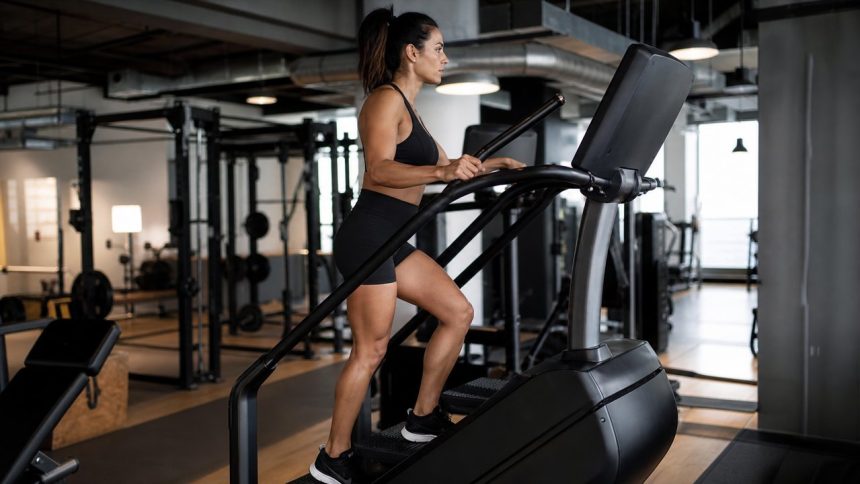
If you hang on the rails, the machine becomes less useful. Light contact for balance is fine. Dumping bodyweight into your arms changes the workload and can irritate shoulders or low back. Stand tall, keep the full foot on the step when possible, and let the legs do the work.
- Hands lightly touch rails, not support bodyweight.
- Look forward instead of folding over the console.
- Use a level that allows clean steps.
Choose The Right Version For The Day
Do not use the same stair climber workout every time. After heavy legs, keep it short or skip it. On upper-body days, longer steady work fits better. On conditioning days, intervals can work. The machine should match the stress budget of the week.
- Compare steady work with FitnessVolt’s 12-3-30 workout treadmill guide.
- If walking fits recovery better, use walking workout guide.
- When knees are cranky, reduce speed and step height demand before quitting.
Progress With Time Before Level
A common mistake is increasing level too quickly. The stair climber punishes ego because every level jump changes breathing and leg fatigue. Add minutes first. When 25-30 minutes feels controlled, increase level slightly or add short intervals.
- Week 1: 15-20 minutes steady.
- Week 2: 20-25 minutes steady.
- Week 3: add 6 short intervals.
- Week 4: choose steady or intervals based on recovery.
Use It For Glutes Without Turning Sideways
Sideways stair climber steps and exaggerated kickbacks look interesting online, but they are usually unnecessary and can be awkward on a moving machine. A better glute bias is simple: full foot, slight forward torso from the ankles, controlled step, no rail hanging. Save fancy angles for stable floor exercises.
- For direct lower-body work, use best quad exercises and glute movements outside the machine.
- Keep knees tracking over toes.
- Stop before fatigue turns each step into a stumble.
Pick Your Stair Climber Session
| Goal | Session | Use it when |
|---|---|---|
| Conditioning base | 20-30 min steady RPE 5-6 | Upper day or rest day |
| Quick sweat | 12 min moderate steady | After short lifts |
| Intervals | 30 sec hard / 60 sec easy x 8 | Separate from heavy legs |
| Fat-loss support | 3 steady sessions weekly | Calories need consistency |
Use It This Week
Start with two stair climber sessions this week. One steady session and one shorter interval session is enough. If legs stay sore for days, reduce level before reducing frequency.
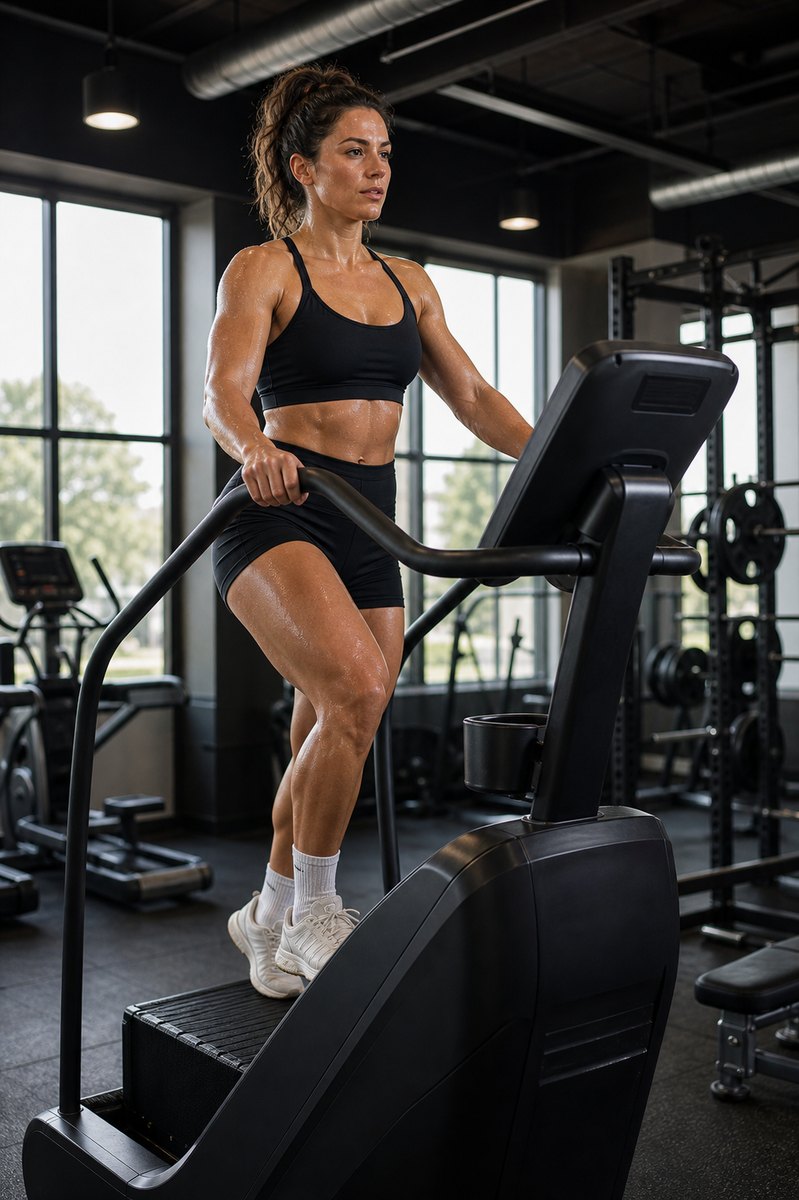
Posture is the quality check. If you need to hang on the rails, the level is too high for the workout you are trying to do. Lower the machine and make the legs earn the session.
Keep the stair climber away from your hardest lower-body work at first. Once you know how your knees and calves respond, you can place it more aggressively.
Adjust It By Goal
| Goal | Best adjustment | Why |
|---|---|---|
| Fat loss | Steady 20-30 minute sessions | Repeatable calorie output |
| Leg endurance | Moderate level, no rail hanging | Local muscular stamina |
| Conditioning | Short intervals, separate from heavy legs | Higher breathing demand |
| Recovery day | Easy level only | Movement without punishment |
When To Change The Plan
Do not judge the plan from one perfect day or one bad day. Most useful fitness and nutrition changes need a short runway. Give the system one to two weeks unless pain, dizziness, digestive distress, sleep disruption, or a clear medical concern shows up sooner. Early feedback is useful, but it needs context.
The right adjustment is usually smaller than the emotional reaction. If the plan feels too hard, reduce the dose before abandoning the idea. If it feels too easy, repeat it until the habit is stable before adding complexity. Most people fail these trends by escalating too quickly, not by starting too conservatively.
- Change one variable at a time so the result is readable.
- Keep the part that improves training, hunger, recovery, or consistency.
- Remove the part that adds friction without a clear payoff.
- Treat pain, dizziness, unusual fatigue, or persistent digestive symptoms as stop signs, not discipline tests.
The Smarter Starting Dose
Start smaller than your motivation wants. A conservative first dose protects the rest of the week and gives you cleaner feedback. Once the behavior is repeatable, progression is easy. When the starting point is too aggressive, the plan often fails for reasons that have nothing to do with the idea itself.
That is especially important for lifters because everything competes with recovery. A new food habit can change digestion. A new cardio session can change leg fatigue. A new recovery tool can change sleep timing. The first job is to make the change fit the training week. The second job is to make it stronger.
Mistakes To Avoid
- Leaning heavily on rails.
- Using high levels before posture is clean.
- Doing intervals after brutal leg day.
- Using awkward sideways steps on a moving machine.
How To Know It Is Working
The right version should make the next decision easier. Training should feel more predictable, meals should require less negotiation, and recovery should become easier to read. If the plan adds stress, confusion, pain, or obsessive tracking, simplify it before adding another layer.
Use one clear metric for two weeks. For nutrition articles, that could be hunger, protein consistency, calories, or training energy. For training articles, use performance, soreness, joint comfort, and repeatability. If the metric improves without creating a new problem, keep the system.
Where This Fits On FitnessVolt
This piece is meant to connect with the rest of your training and nutrition system, not replace it. Use the linked FitnessVolt guides where they match your next decision, especially when you need a calculator, a workout progression, or a more detailed nutrition framework.
Video Reference
Reader Scenarios
Fat-loss finisher
Use 10-12 controlled minutes after upper-body training. Keep posture clean and stop before rail-hanging starts.
Conditioning day
Use short intervals only when legs are fresh enough to handle them. If calves or knees stay sore, return to steady work.
Knee-sensitive lifter
Lower the level, shorten the session, and use a full-foot step. Pain is a reason to adjust, not push harder.
What To Track For Two Weeks
Use a short tracking window before judging the plan. Two weeks is long enough to reveal whether the idea fits real life, but short enough that you are not locked into a strategy that clearly does not work. Write down the one outcome the article is meant to improve, then watch that outcome instead of chasing every possible metric.
For food articles, track hunger, meal repeatability, digestion, training energy, and whether the habit prevents a worse decision later. For training and recovery articles, track performance, soreness, joint comfort, sleep, and whether the session is easy enough to repeat. If the plan improves one clear outcome without creating a new problem, keep it. If it only adds work, simplify it.
How to Know the Stair Climber Is Working
A good stair climber block should leave a clear training signal without wrecking your next lower-body workout. Track three things: whether your pace improves at the same perceived effort, whether your breathing settles faster between hard intervals, and whether your calves, knees, or hips feel worse the next day. If performance rises and soreness stays manageable, the plan is doing its job. If leg training drops, reduce interval volume before abandoning the machine.
FAQ
Is the stair climber good cardio?
Yes. It can build conditioning and leg endurance when intensity and posture are controlled.
Does the stair climber build glutes?
It can contribute, especially with full-foot stepping and upright control, but it should not replace loaded hip thrusts, split squats, or other direct strength work.
How long should I use the stair climber?
Start with 15-20 minutes. Build toward 25-30 minutes for steady work or use shorter interval sessions.
Is stair climber bad for knees?
Not automatically. Poor posture, excessive level, and too much volume can irritate knees. Start conservatively and reduce intensity if symptoms appear.
Sources
- American College of Sports Medicine. n.d. Physical Activity Guidelines resources. Accessed June 4, 2026.
- Ainsworth BE, et al. 2011. Compendium of Physical Activities. Medicine & Science in Sports & Exercise. Accessed June 4, 2026.
- Garber CE, et al. 2011. Quantity and Quality of Exercise for Developing and Maintaining Fitness. Medicine & Science in Sports & Exercise. Accessed June 4, 2026.