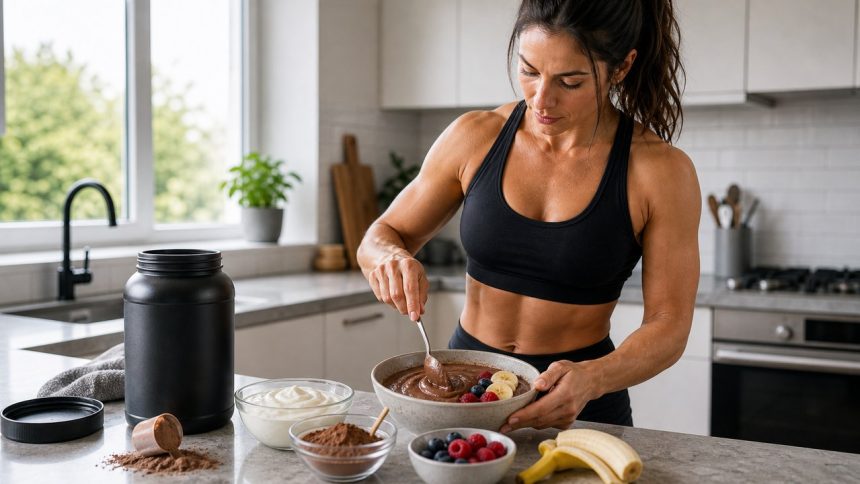
Protein pudding works because it solves the two problems most protein bars create: weak fullness and poor texture for the calories. A bowl built with Greek yogurt, protein powder, cocoa, berries, and a measured topping can land around 30 to 45 grams of protein with more volume than most bars. The win is not magic. It is a better format.
Most lifters already know the protein target. The hard part is finding a repeatable snack that does not taste like homework. Bars are useful in a bag or airport, but they are usually fixed. You get the brand’s sweetness, fiber blend, fat level, and chew. Protein pudding gives you control over all of it.
The Formula
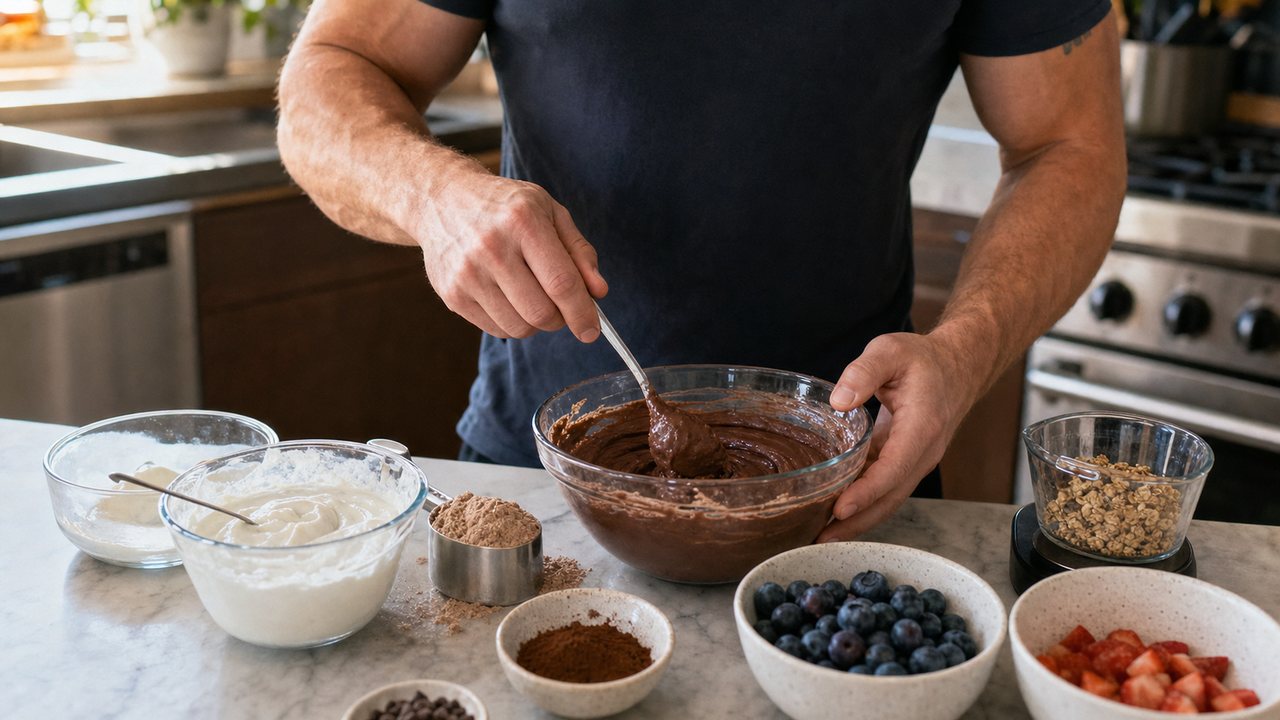
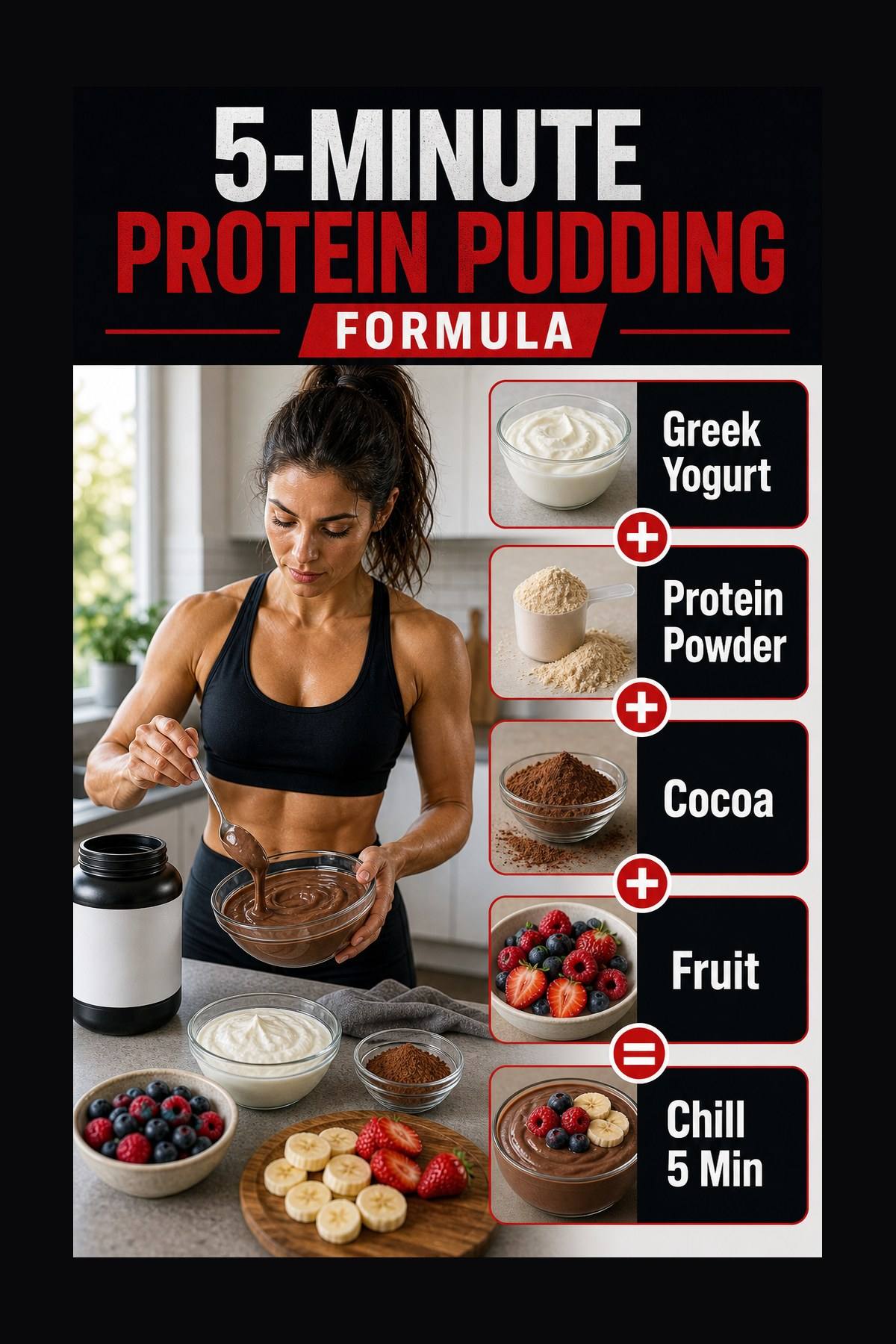
The best protein pudding formula is simple: start with a thick protein base, add one scoop of protein powder, use flavoring that does not add many calories, then finish with fiber and texture. That creates a snack that feels like food, not just a flavored supplement.
| Part | Best Choices | What It Adds |
|---|---|---|
| Protein base | Greek yogurt, skyr, blended cottage cheese | Thickness, casein-rich dairy protein, calcium |
| Powder | Whey, casein, whey-casein blend | Protein boost and flavor |
| Flavor | Cocoa, cinnamon, vanilla, espresso powder | More taste without turning it into candy |
| Fiber | Berries, chia, oats, pumpkin | Fullness and better texture |
| Crunch | Granola, walnuts, cereal, cacao nibs | Chew, contrast, and satisfaction |
If you already use a protein powder you trust, this is also a practical way to use it outside a shaker. FitnessVolt’s whey protein powder guide is a useful refresher if your current powder turns gritty or too sweet when mixed into yogurt.
Why It Beats Most Bars
A protein bar wins on portability. Protein pudding wins on volume, freshness, and macro control. That matters because a bar that delivers 20 grams of protein can still leave you hunting for more food if it is small, dry, or built mostly around sweeteners and fat.
| Snack | Typical Strength | Main Limitation | Best Use |
|---|---|---|---|
| Protein pudding | High volume, adjustable macros | Needs a bowl and fridge | Home, office fridge, evening snack |
| Protein bar | Portable and shelf-stable | Fixed calories and texture | Travel, gym bag, emergency meal gap |
| Protein shake | Fast and easy | Low chew and weaker fullness | Post-workout or low appetite |
| Greek yogurt cup | Simple and high protein | Can feel unfinished alone | Base snack or quick breakfast |
This does not mean bars are bad. FV has reviewed plenty of useful options, including low-sugar protein bars. The smarter rule is situational: use bars when portability matters, and use pudding when fullness and control matter more.
The 5-Minute Build
For one serving, mix 200 to 250 grams of Greek yogurt with one scoop of protein powder. Add cocoa or cinnamon, then thin it with one tablespoon of milk at a time until the texture looks glossy. Add berries or banana after the base is smooth, and keep crunchy toppings separate until serving.
- Add the base first: Greek yogurt or skyr gives the pudding body.
- Mix powder slowly: Stir half the scoop first, then the rest, so the texture stays smooth.
- Flavor before topping: Cocoa, vanilla, salt, cinnamon, or espresso powder should go into the base.
- Add fiber: Berries, chia, oats, or pumpkin make the snack more filling.
- Finish with crunch: Use a measured topping, not a free-pour handful.
The measured topping is the difference between a high-protein snack and a 650-calorie dessert pretending to be a snack. Granola, nuts, and cereal can all work. They just need a portion.
Macro Targets by Goal
The right pudding depends on the job. A cutting snack should keep protein high and toppings measured. A bulking snack can carry more oats, granola, banana, or nut butter. A late-night version should be thicker and slower to eat so it feels finished.
| Goal | Protein Target | Carb Add-On | Fat Add-On | Best Build |
|---|---|---|---|---|
| Cutting | 30-40 g | Berries | Small nut or seed topping | Greek yogurt, whey, cocoa, berries |
| Maintenance | 30-45 g | Fruit or oats | Measured granola or walnuts | Yogurt, whey-casein, berries, crunch |
| Bulking | 35-50 g | Oats, banana, granola | Peanut butter or nuts | Yogurt, powder, oats, banana, nut butter |
| Late-night | 30-45 g | Optional berries | Light topping | Greek yogurt or casein-heavy blend |
The ISSN position stand on protein and exercise lists 1.4 to 2.0 grams of protein per kilogram per day as sufficient for most exercising individuals and gives 20 to 40 grams as a common per-serving range. That makes a well-built pudding a real protein feeding, not a tiny “healthy dessert” with a scoop waved over it.
Texture Fixes That Matter
Bad protein pudding is usually a ratio problem. Gritty pudding has too much powder or not enough mixing time. Runny pudding needs a thicker base, a little casein, chia, or more chill time. Flat pudding needs salt, cocoa, cinnamon, vanilla, or fruit before it needs more sweetener.
| Problem | Likely Cause | Fix |
|---|---|---|
| Gritty | Too much powder at once | Add powder in two rounds and mix longer |
| Runny | Too much milk or thin yogurt | Use Greek yogurt, casein, chia, or chill 20 minutes |
| Too sweet | Flavored powder plus sweet toppings | Add cocoa, salt, or plain yogurt |
| Not filling | No fiber or chew | Add berries, oats, chia, or measured nuts |
| Too many calories | Unmeasured toppings | Use a tablespoon, not the bag |
Four Builds That Actually Work
Use these as templates, not rules. USDA FoodData Central is the best place to verify exact numbers for your brand and serving size, but these builds give lifters a realistic starting point.
| Build | Ingredients | Approximate Use Case |
|---|---|---|
| Chocolate cut | Greek yogurt, chocolate whey, cocoa, berries | High protein, controlled calories |
| Peanut butter bulk | Greek yogurt, vanilla whey, banana, oats, peanut butter | Higher calorie muscle-gain snack |
| Berry crunch | Skyr, vanilla powder, berries, granola | Office fridge snack |
| Mocha night bowl | Greek yogurt, chocolate casein, cocoa, decaf espresso powder | Thicker late-night option |
If you want a more portable snack system, pair this idea with FV’s 3-box high-protein snack system. If you want a topping that keeps the bowl from feeling soft, our protein granola roundup gives you better options than random cereal.
Common Mistakes
The biggest mistake is treating protein pudding like a free-food dessert. The second is using a powder you already dislike in shakes. The third is skipping texture. A snack can hit the protein number and still fail if it feels like paste.
- Do not over-thin it: Add liquid slowly.
- Do not ignore protein quality: Use a powder that mixes well and gives a real protein dose.
- Do not fake the fiber: Add fruit, oats, chia, or pumpkin when fullness matters.
- Do not free-pour toppings: Crunch is useful, but calories count.
- Do not prep crunch into the bowl: Add granola or cereal at serving time.
How to Choose the Right Protein Powder for Pudding
The powder matters more in pudding than it does in a shake because the texture is exposed. A thin whey isolate can work, but it often needs less liquid and more mixing time. Casein thickens fast and can turn paste-like if you use too much. A whey-casein blend is the most forgiving choice for most lifters because it gives body without becoming cement.
Flavor strength also matters. Chocolate and vanilla are easiest to control. Fruit flavors can clash with yogurt, and overly sweet powders can make the bowl taste more like frosting than food. If your powder already tastes too sweet in water, use plain Greek yogurt, cocoa, salt, and berries to balance it before adding more sweetener.
The Bar-Replacement Decision Tree
| Question | Choose Pudding If | Choose a Bar If |
|---|---|---|
| Do you have a fridge? | Yes, and you can eat with a spoon. | No, you need bag-safe food. |
| Is fullness the priority? | You want volume and toppings. | You only need a quick protein hit. |
| Are calories tight? | You can measure the bowl. | The bar label fits your target exactly. |
| Are you traveling? | You have a cooler or hotel fridge. | You need shelf-stable food. |
Storage and Prep Rules
Protein pudding is simple, but dairy-based snacks still need basic food-safety discipline. Keep it refrigerated, use clean containers, and prep only a few servings at a time. If the smell, texture, or taste changes, throw it out. Meal prep should make eating easier, not turn the fridge into a risk assessment.
For best texture, prep the base without crunchy toppings. Add granola, cereal, nuts, or cacao nibs right before eating. Fruit can go in early if you like a softer bowl, but sliced banana is better added fresh because it browns and changes texture quickly.
FAQ
Can I make protein pudding without protein powder?
Yes, but it becomes a high-protein yogurt bowl rather than true protein pudding. Use Greek yogurt, skyr, cottage cheese, or a blend of those foods. Protein powder is still the easiest way to push one bowl into the 30 to 45 gram range.
Is whey or casein better for protein pudding?
Whey is lighter and usually mixes fast. Casein makes a thicker pudding and can feel more filling. A whey-casein blend often gives the best texture because it avoids the thinness of whey-only bowls and the heavy paste of too much casein.
Can I meal prep protein pudding?
Yes. Prep the base for two or three days, keep it covered in the fridge, and add crunchy toppings right before eating. If the pudding thickens overnight, stir in a small splash of milk before serving.
Is protein pudding better than a protein bar?
At home or at work, usually yes for fullness and flexibility. On the road, a bar is easier. The better choice depends on the job: pudding for volume and macro control, bars for portability.
What should I add for fiber?
Berries, chia seeds, oats, pumpkin, and a measured amount of high-fiber cereal work well. Start small with chia because it thickens quickly and can cause digestive discomfort if you jump from very low fiber to a lot at once.
The Coach Rule
Build the bowl around the job it needs to do. If it is replacing a snack, keep it lighter and higher in protein. If it is replacing a small meal, add oats, fruit, or granola. If it is replacing dessert, keep the protein high but make the texture enjoyable enough that you do not go looking for the real dessert afterward.
The best version is the one you will repeat. A technically perfect pudding with a powder you hate will lose to a decent bar by Thursday. Keep one lean version and one higher-calorie version in rotation so the habit matches both cutting and higher-food training phases.
Bottom Line
Protein pudding is not a miracle recipe. It is a better snack format for lifters who want protein, volume, texture, and control. Use bars when you need portability. Use pudding when you have five minutes, a fridge, and a goal bigger than simply surviving until the next meal.
Sources
- Jager R, et al. International Society of Sports Nutrition Position Stand: protein and exercise. Journal of the International Society of Sports Nutrition. 2017.
- U.S. Department of Agriculture. FoodData Central. Accessed June 20, 2026.