

A bar muscle-up takes you from hanging under a bar to supporting yourself on top of it on straight arms, in one movement: a high pull-up that flows into a straight-bar dip. A strict bar muscle-up starts from a still dead hang, with no kip, kick or swing. This page shows you which step of the progression you are on, and the one thing to train next.
Do not test full muscle-ups before you have the base. Without a strong pull-up, a straight-bar dip and a high chest-to-bar pull, attempts rarely work and the risk of injury goes up. The check below tells you which of these to build first. If you can, have an experienced gymnastics or calisthenics coach watch your transition drills.
The bar muscle-up progression, step by step
Pass each step before you spend time on the next. The pass mark is the number to hit with strict form.
-
1

Pull-up base
Pass: 5 strict pull-ups
Start every rep from straight arms. Half reps hide the weak bottom range.
-
2
Straight-bar dips
Pass: 5 straight-bar dips
Lean the chest over the bar and keep the hips back. That is the position you finish a muscle-up in.
-
3
Chest-to-bar pull-ups
Pass: 5 strict chest-to-bar pull-ups and 10 strict pull-ups
Pull the bar toward your lower chest, not your chin. Think of driving the elbows down to your hips. Keep building plain pull-ups too: this step asks for 10.
-
4
Low-bar transitions
Pass: 3 clean low-bar transitions, feet on the floor
Both elbows must come over the bar at the same time. If one arm leads, slow down.
-
5
Jumping muscle-ups and negatives
Pass: 3 clean jumping bar muscle-ups
Jump only as much as you need. Let the pull do the work and wait to turn over until the chest is high.
-
6
Strict bar muscle-up
Pass: 1 strict bar muscle-up from a still hang
Pull high and turn over late. CrossFit names that patience before the dip as key to the bar muscle-up.


How to do a bar muscle-up
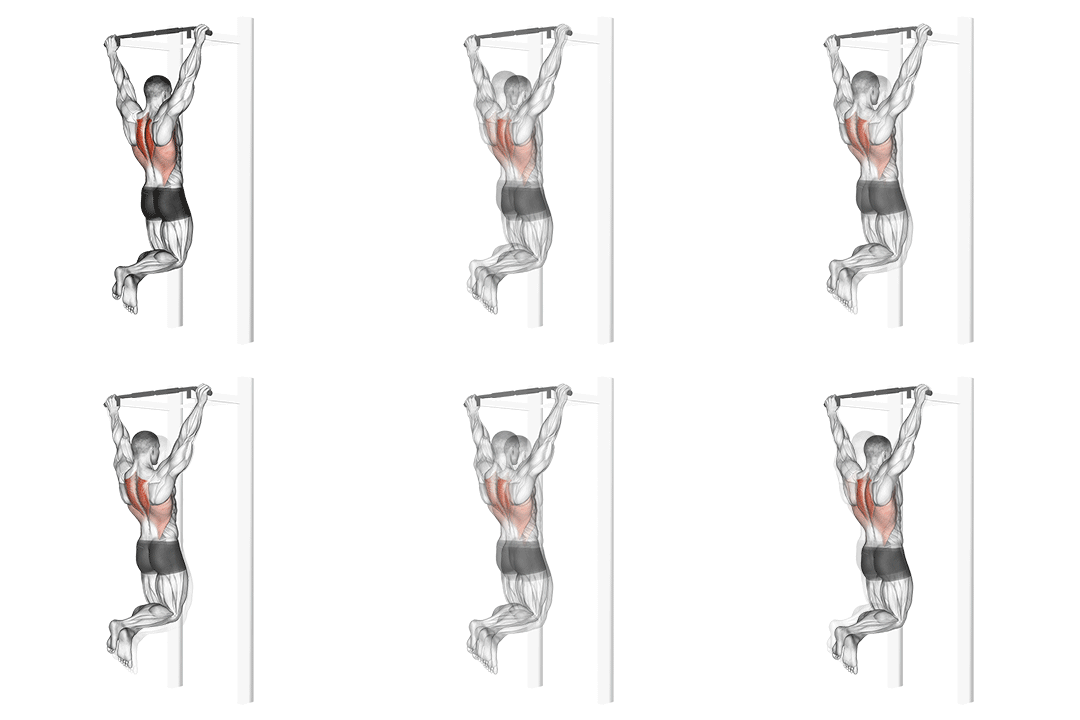
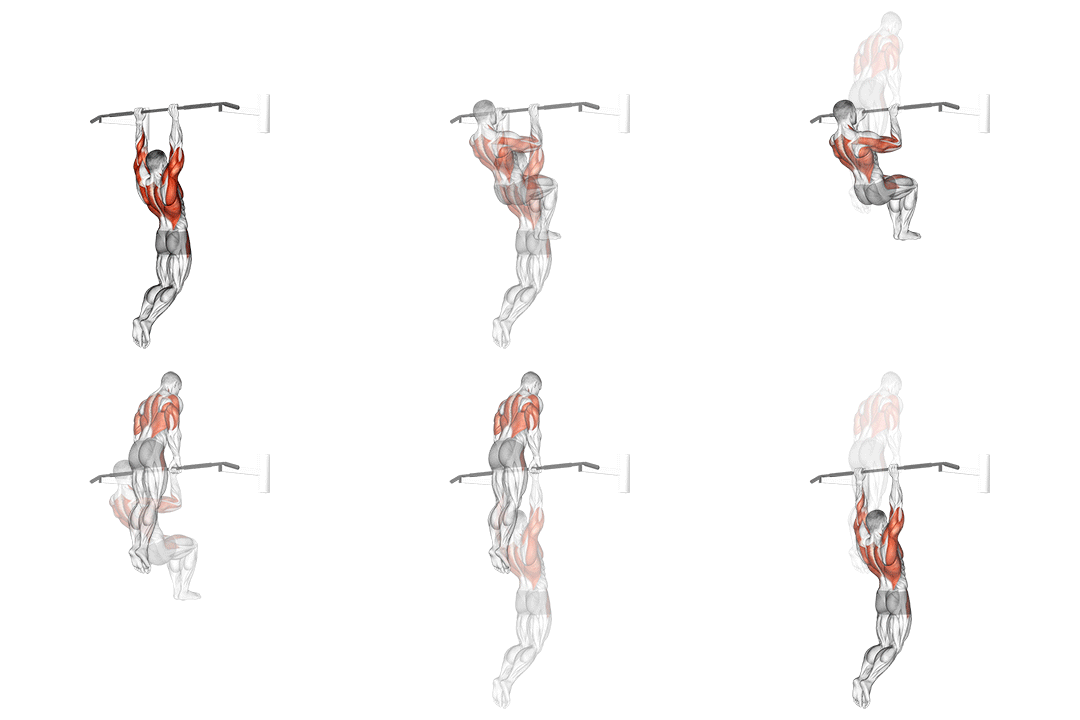
- Hang from a sturdy bar with an overhand grip, hands about shoulder-width apart.
- Pull your shoulders down and back and brace your core, with your legs slightly in front of you.
- Pull hard toward your lower chest, not your chin. The lower on your body the bar ends up, the easier the turnover is.
- As your chest rises past the bar, roll your wrists over the top and lean your chest forward over the bar.
- Press up to straight arms, as at the top of a straight-bar dip.
- Lower yourself back down to a hang under control. Dropping fast loads the elbows and shoulders.
Make sure there is room above the bar: you finish with your head well above it. Bodyweight matters too. The heavier you are, the harder the turnover, so losing excess fat makes the muscle-up easier to learn.
Common bar muscle-up mistakes
Turning over too early
The chest tips forward before it is above the bar and the rep stalls. Keep pulling, then turn over.
One elbow comes over first
A chicken-wing rep loads one elbow and does not count as strict. Go back to low-bar transitions.
Kipping to get the first rep
A swing can get you over the bar but skips the strength this skill needs. Keep the start still.
Testing to failure
Tired attempts teach a low pull. Make a few fresh attempts, then train the weak step.
Train the bar muscle-up safely
- Use a bar that does not move under load, with room above and in front of it.
- Warm up the shoulders, elbows and wrists before high pulls and attempts.
- Stop for elbow or shoulder pain, numbness or grip failure.
- Learn to lower yourself from the top support before you try full reps.
- Use chalk and keep calluses filed down. Stop if the skin on your palms starts to tear.
- Leave at least a day between muscle-up sessions while you learn. The turnover is hard on the elbows and shoulders.
Muscles worked in the bar muscle-up
- Lats, biceps, traps and rhomboids: do the pull.
- Chest, triceps and front delts: press you out of the dip at the top.
- Forearms: hold the grip through the turnover.
- Rotator cuff: controls the shoulder through the transition. The muscle-up is hard on these small muscles, which is why the warm-up matters.
- Core: keeps the body still so the pull goes up, not out.
Benefits of the bar muscle-up
The muscle-up trains the pull and the push in one movement, so it works almost every muscle in the upper body and the core. Pulling high and fast builds upper-body power, and the turnover takes coordination that slow pull-ups never teach.
Bar muscle-up variations
- Band-assisted muscle-ups: loop a band over the bar and under your feet or knees. Start with a strong band and move to lighter ones. Useful for heavier lifters.
- Kipping bar muscle-ups: the CrossFit version uses a hip swing to drive the chest over the bar. Learn the strict version first, so the swing adds to strength you already have.
- Ring muscle-ups: the rings let your arms move freely, but you need a false grip and a different transition. The steps on this page are for the bar.
- Weighted muscle-ups: once strict reps are easy, add a dip belt or weighted vest. Start light.
- Pull-up and straight-bar dip superset: strict pull-ups followed straight away by straight-bar dips train the same muscles while you build toward the full rep.
To see how your muscle-up count compares with other lifters, see the muscle-up strength standards. If you cannot do a pull-up yet, start with our pull-up progression.
How long does it take to learn the bar muscle-up?
There is no fixed timeline. CrossFit's coaching guide says building the strength for a muscle-up can take months, even years, and it depends on where you start. Retest every 3 weeks and judge progress by the step you are on.
Where the bar muscle-up pass marks come from
- CrossFit, The Strict Bar Muscle-Up
- CrossFit, Developing a Muscle-Up
- CrossFit Affiliate Programming, Bar Muscle-Up Training Plan (Train for the Open)
- r/bodyweightfitness wiki, Pull-up Progression
- r/bodyweightfitness wiki, Dipping Progression
- r/bodyweightfitness wiki, Recommended Routine
- USA Gymnastics, Shoulder Maintenance 101
Pass marks are FitnessVolt coaching standard v1, based on these sources. They show readiness to practise the next step, not a guarantee.