Bigger arms come from understanding what elbow flexors and extensors actually do, then training them with enough range, tension, and recoverable volume.
This legacy FitnessVolt article has been rebuilt as a current evergreen guide. The goal is not to make the topic sound complicated. The goal is to give lifters a usable framework: what matters, what does not, and how to apply the science without losing the plot in the gym.
What do the biceps do?
The biceps brachii flexes the elbow, helps supinate the forearm, and contributes modestly to shoulder flexion. It has a long head and a short head, which is why arm-training conversations often drift toward angles and grips. Those details matter, but they matter after basic execution is solved.
The brachialis and brachioradialis also help bend the elbow. That means not every productive curl has to feel identical. Supinated curls bias the classic biceps look. Hammer-style curls often involve more brachialis and brachioradialis. A complete arm plan uses both instead of arguing over one perfect curl.
What do the triceps do?
The triceps brachii extends the elbow. It has three heads: long, lateral, and medial. The long head also crosses the shoulder, which is why overhead extensions can feel different from pressdowns. If you only press and never train the triceps in a long-muscle position, you may leave useful work on the table.
Big pressing movements train the triceps, but isolation work is still valuable. Presses load elbow extension while the shoulder and chest share the job. Extensions and pressdowns let you add arm-specific volume without turning every set into a heavy bench press.
Should you train biceps and triceps together?
You can train biceps and triceps together, on push-pull days, or after larger upper-body lifts. The best setup is the one that lets you train arms hard without stealing recovery from back, chest, and shoulder work. Arms recover faster than heavy squats, but elbows still have a vote.
Supersetting curls and pressdowns can save time and create a strong local pump. Heavy arm work may need more rest. If elbow pain rises or reps become sloppy, separate the movements and reduce junk volume.
What are the best biceps exercises?
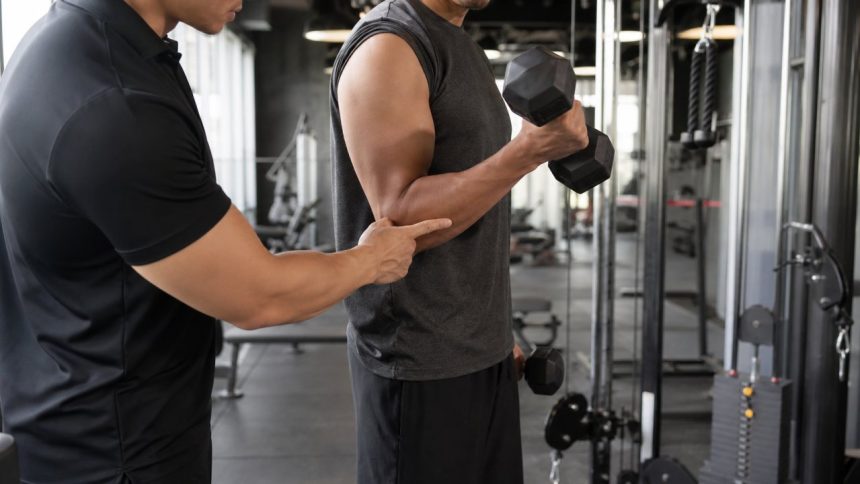
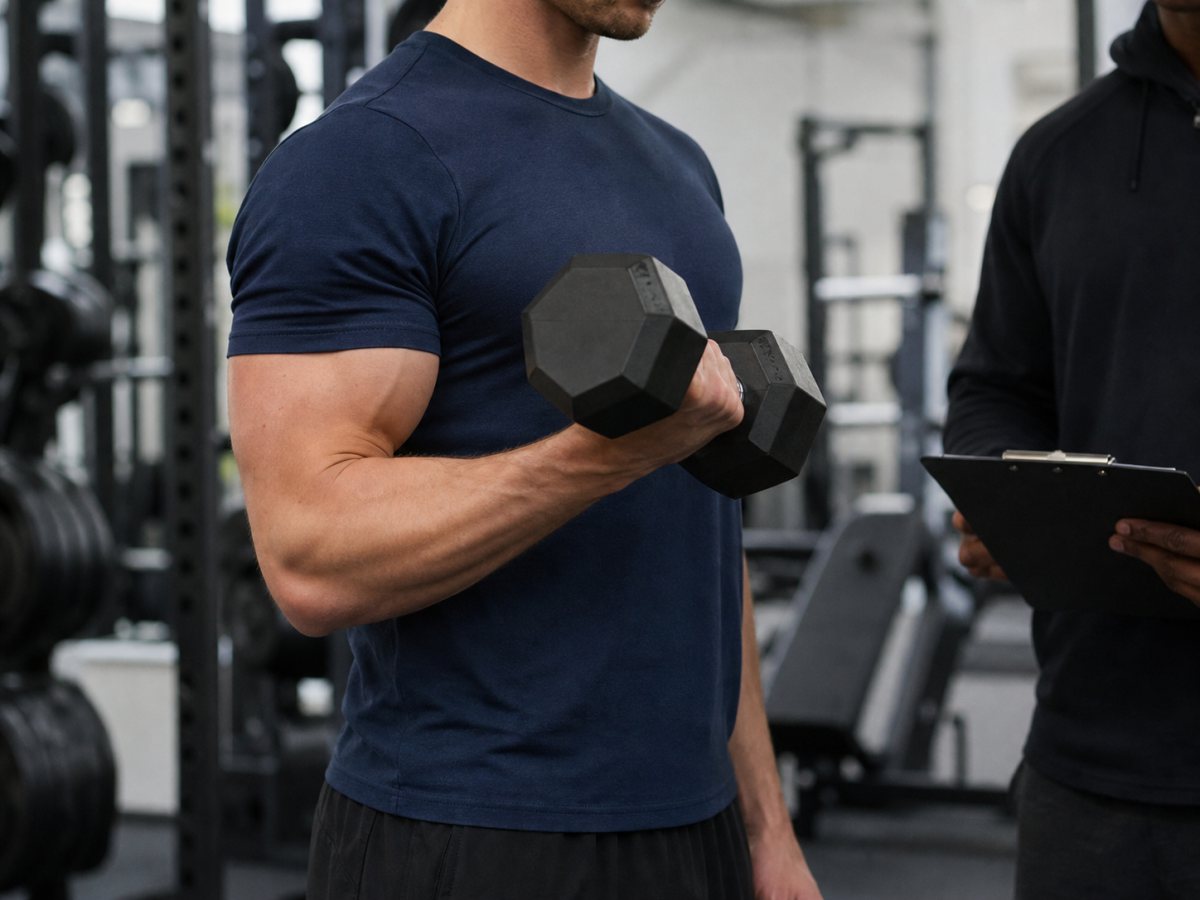
The best biceps exercises let you flex the elbow through a controlled range while keeping the shoulder and wrist from taking over. Dumbbell curls, incline curls, preacher curls, cable curls, hammer curls, and chin-up variations can all work. The exercise is only good if you can repeat it with tension where you intend.
Use a mix of arm positions. A preacher curl shortens the shoulder angle and makes cheating harder. An incline curl lengthens the biceps more. A cable curl keeps tension smooth. Rotate tools when progress stalls, not every time boredom appears.
| Muscle | Main Job | Good Exercise Choices |
|---|---|---|
| Biceps brachii | Elbow flexion and supination | Supinated curl, incline curl |
| Brachialis | Elbow flexion | Hammer curl, preacher curl |
| Brachioradialis | Elbow flexion with neutral grip | Hammer curl, reverse curl |
| Triceps long head | Elbow extension, shoulder involvement | Overhead cable extension |
| Triceps lateral and medial heads | Elbow extension | Pressdown, close-grip press |
What are the best triceps exercises?
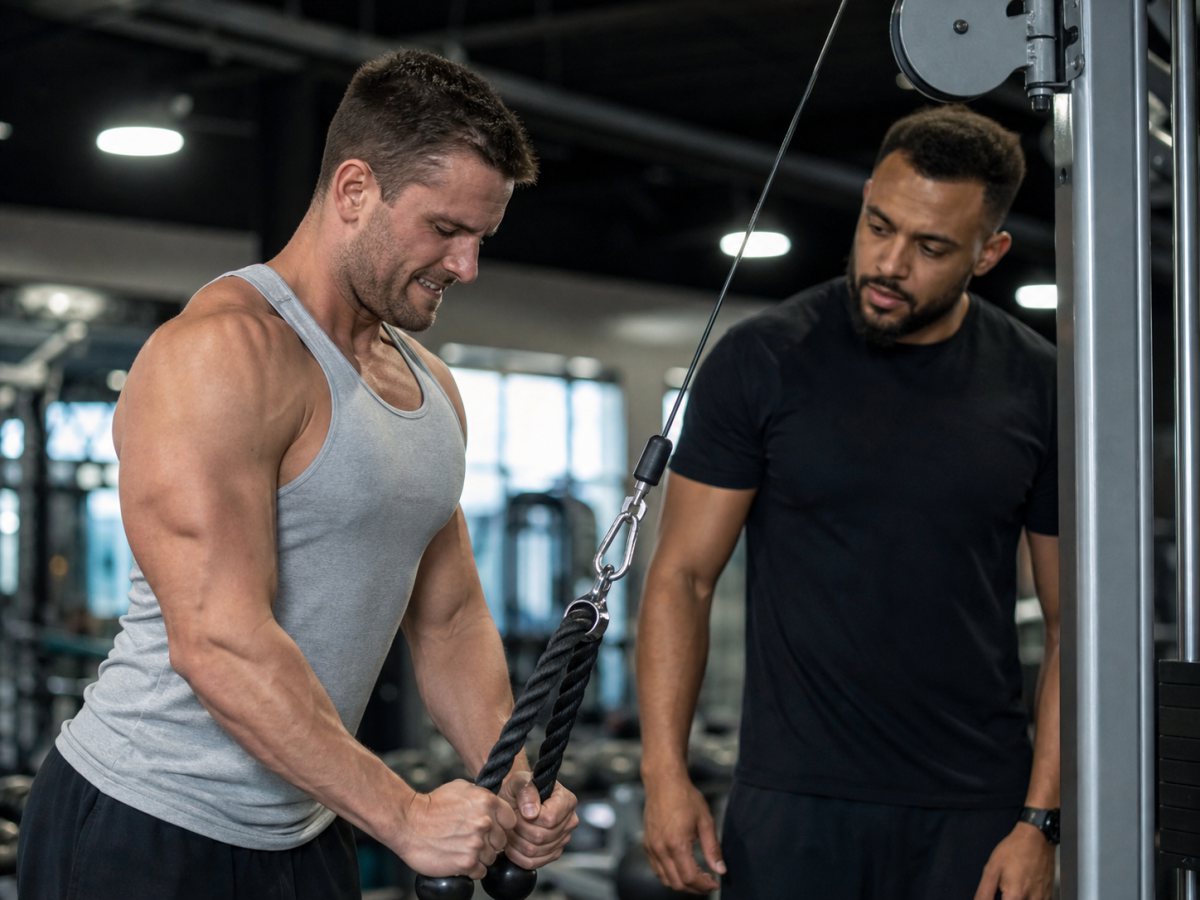
The best triceps exercises cover pressing, pressdowns, and overhead extension patterns. Close-grip bench presses, dips, cable pressdowns, skull crushers, overhead cable extensions, and machine extensions can all build the triceps. The long head usually benefits from overhead or shoulder-flexed work.
Do not turn every triceps exercise into a shoulder movement. On pressdowns, keep the upper arm still enough to finish with elbow extension. On overhead work, let the elbows bend and straighten without flaring into a painful position.
How much arm volume do you need?
Most lifters can grow arms with 6 to 14 direct sets per week for biceps and triceps, depending on how much pulling and pressing they already do. If you row, pull up, bench, and overhead press hard, your arms are not starting from zero. Direct work fills gaps.
A practical split might use four biceps sets and four triceps sets twice per week. Start there, track reps, and add only if performance and elbow comfort stay good. More sets are not better if they make every curl look like a lower-back exercise.
How should you use range of motion?
Use the largest pain-free range you can control. The stretched part of a curl or overhead extension can be valuable, but only if the joint tolerates it and the target muscle stays loaded. Half reps can have a place as finishers, not as your whole plan.
Tempo is useful here. Lower the weight under control, pause briefly where you usually cheat, then lift without throwing the shoulder forward. If the dumbbell moves but the elbow does not flex much, you are doing body English, not arm training.
| Goal | Weekly Starting Point | Progression |
|---|---|---|
| Bigger biceps | 6 to 12 direct sets | Add reps before load |
| Bigger triceps | 8 to 14 direct sets | Mix pressdowns and overhead work |
| Elbow-friendly work | Lower load, higher control | Slower eccentric |
| Strength carryover | Presses plus direct work | Keep heavy sets clean |
What mistakes keep arms small?
The biggest arm-training mistakes are using too much load, cutting the range short, changing exercises constantly, ignoring the brachialis and long-head triceps, and treating arm work as an afterthought after exhausting everything else. Small muscles still need serious programming.
Use progressive overload and avoid the common workout mistakes that turn arm training into ego lifting. A clean curl that adds reps over months beats a sloppy curl that impresses nobody.
FitnessVolt arm rule of thumb
Train the biceps by owning elbow flexion and forearm position. Train the triceps by owning elbow extension across both pressdown and overhead patterns. Keep the joints quiet, make the muscle do the work, and progress the boring basics until your sleeves notice.
A strong arm plan is not complicated. It is specific, repeatable, and honest. If the reps target the right tissue, the weekly sets are recoverable, and your logbook improves, the anatomy is doing its job.
Should arm training go to failure?
Arm isolation exercises can be taken close to failure more often than heavy compound lifts because the systemic cost is lower. That does not mean every curl and extension needs to become a sloppy grinder. Most productive arm sets live within zero to three reps in reserve, with stricter form early in the workout and occasional higher-effort finishers after the main work is complete.
Failure is most useful when the exercise is stable. Cable curls, preacher curls, machine curls, pressdowns, and machine extensions are better candidates than heavy cheat curls or unstable skull crushers. If the final reps shift stress from the target muscle to the shoulder, wrist, or low back, the set reached technical failure before muscular failure. Count that honestly.
How do you protect your elbows?
Elbows usually complain when volume jumps too fast, grip is too aggressive, extension work is loaded beyond control, or pressing and pulling volume is already high. Rotate grips, use cables when free weights feel harsh, warm up with lighter sets, and avoid adding new high-volume arm work in the same week you increase heavy benching, rows, or pull-ups.
Persistent tendon pain is a signal to adjust the plan, not a badge of discipline. Reduce the most irritating movement first, keep pain-free ranges in the program, and rebuild volume gradually. The goal is bigger arms attached to joints that still let you train them.
Sources
- StatPearls. (2023). Anatomy, Shoulder and Upper Limb, Biceps Muscle. NCBI Bookshelf.
- StatPearls. (2023). Anatomy, Shoulder and Upper Limb, Triceps Muscle. NCBI Bookshelf.
- Schoenfeld, B. J. (2010). The mechanisms of muscle hypertrophy and their application to resistance training. Journal of Strength and Conditioning Research.
- Schoenfeld, B. J., Ogborn, D., & Krieger, J. W. (2017). Dose-response relationship between weekly resistance training volume and increases in muscle mass. Journal of Sports Sciences.