

Assisted Wide-grip Chest Dip (kneeling) vs Lever Chest Press: Complete Comparison Guide
Assisted Wide-grip Chest Dip (kneeling) vs Lever Chest Press — you’re choosing between two beginner-friendly lever-based chest moves. I’ll walk you through how each targets the pectorals, the differences in triceps and shoulder involvement, equipment needs, risk factors, and clear progression guidelines. You’ll get specific technique cues (elbow path, torso angle, seat height), recommended rep ranges for hypertrophy (6–12) and strength (3–6), and practical scenarios showing when to pick one over the other. Read on to match the movement to your goal and avoid common setup mistakes.
Exercise Comparison
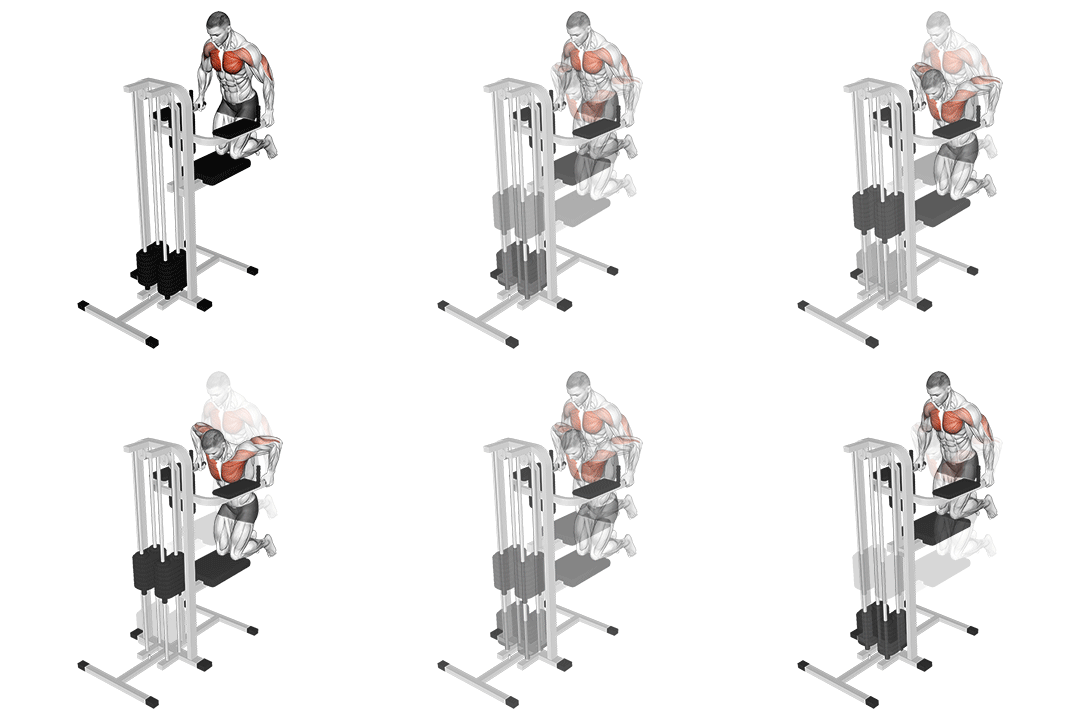
Assisted Wide-grip Chest Dip (kneeling)
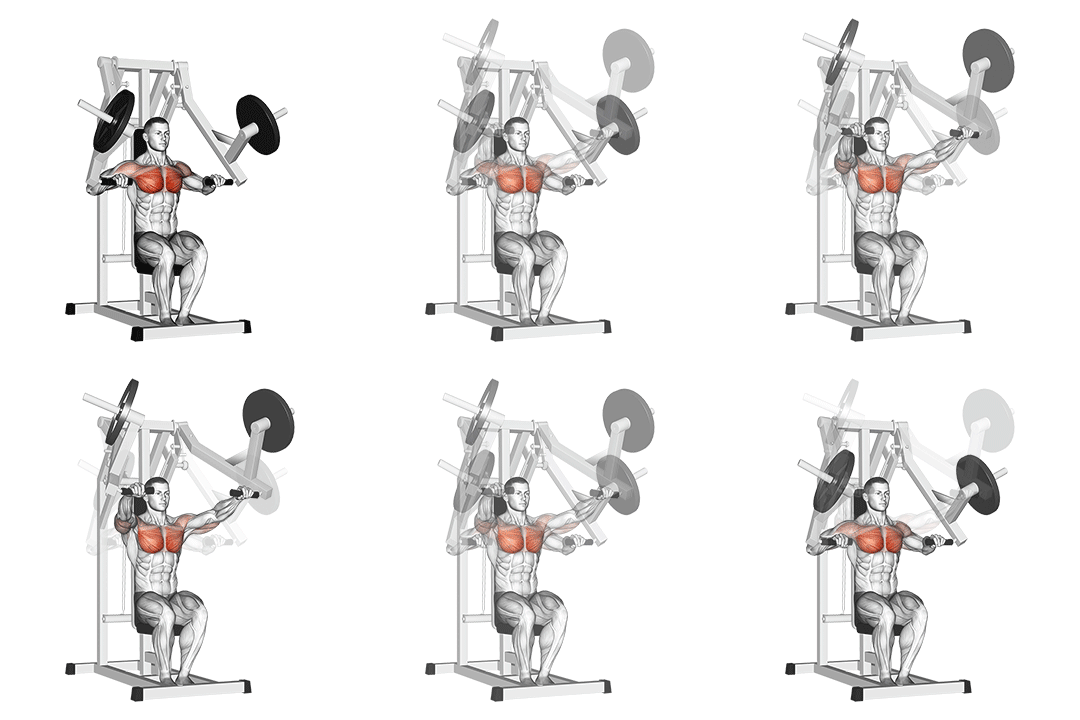
Lever Chest Press
Head-to-Head Comparison
| Attribute | Assisted Wide-grip Chest Dip (kneeling) | Lever Chest Press |
|---|---|---|
| Target Muscle |
Pectorals
|
Pectorals
|
| Body Part |
Chest
|
Chest
|
| Equipment |
Lever
|
Lever
|
| Difficulty |
Beginner
|
Beginner
|
| Movement Type |
Compound
|
Compound
|
| Secondary Muscles |
2
|
2
|
Secondary Muscles Activated
Assisted Wide-grip Chest Dip (kneeling)
Lever Chest Press
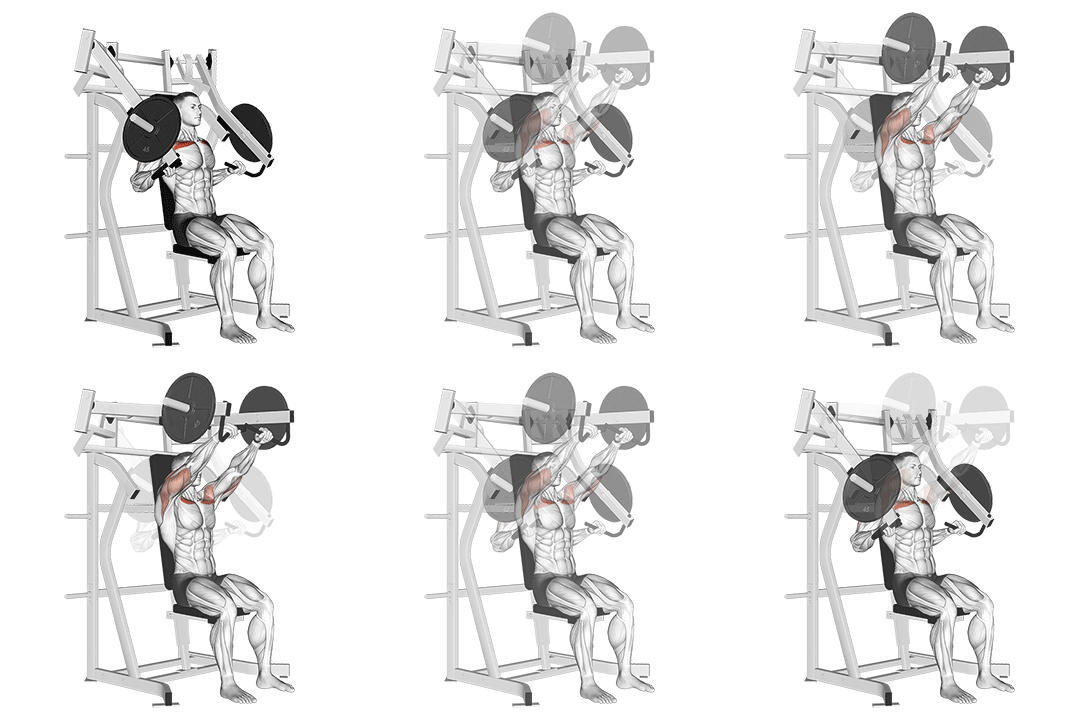
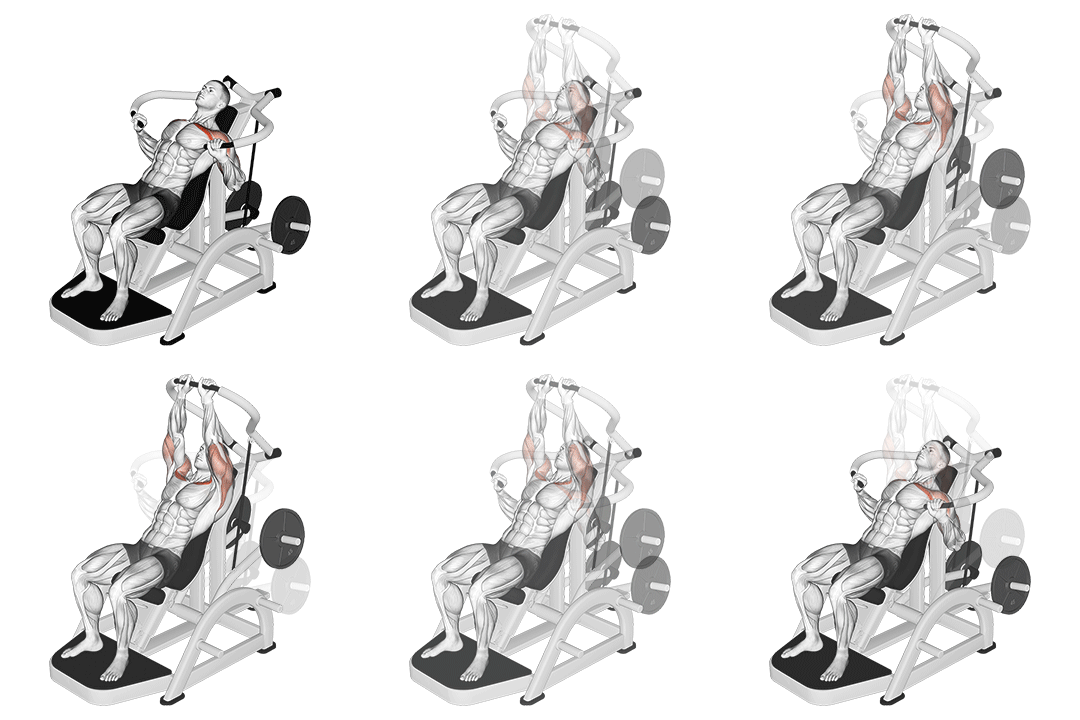
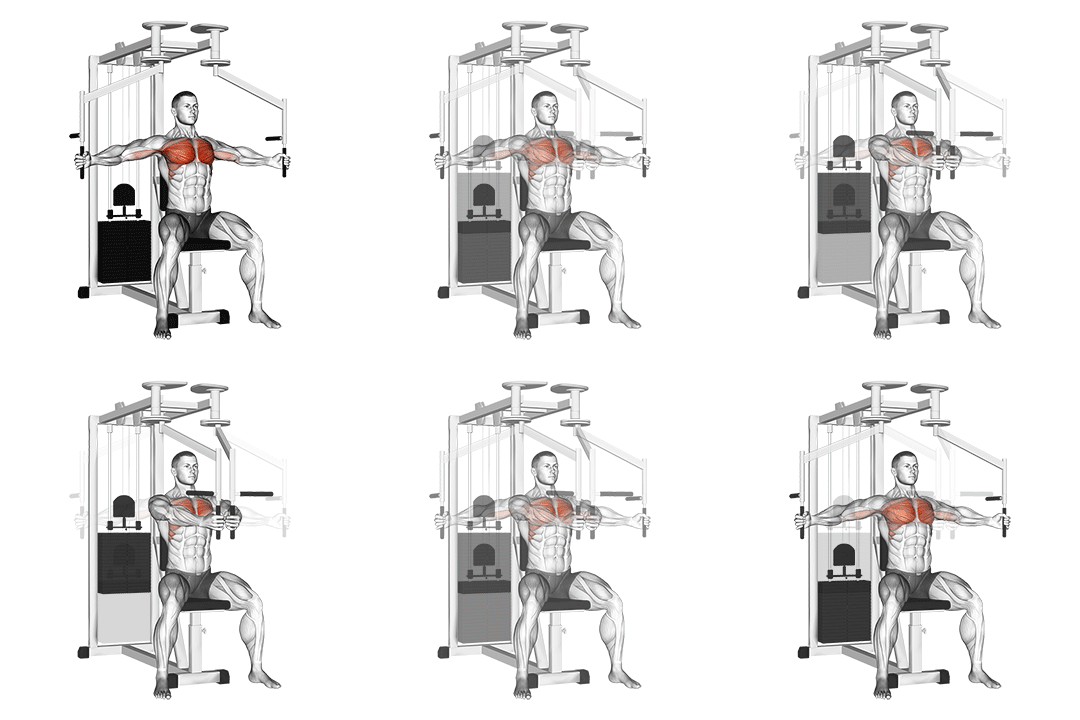
Visual Comparison
Overview
Assisted Wide-grip Chest Dip (kneeling) vs Lever Chest Press — you’re choosing between two beginner-friendly lever-based chest moves. I’ll walk you through how each targets the pectorals, the differences in triceps and shoulder involvement, equipment needs, risk factors, and clear progression guidelines. You’ll get specific technique cues (elbow path, torso angle, seat height), recommended rep ranges for hypertrophy (6–12) and strength (3–6), and practical scenarios showing when to pick one over the other. Read on to match the movement to your goal and avoid common setup mistakes.
Key Differences
- Both exercises target the Pectorals using Lever. The main differences are in their movement patterns and muscle activation angles.
Pros & Cons
Assisted Wide-grip Chest Dip (kneeling)
+ Pros
- Stronger stretch on sternal pecs and long-tension exposure for muscle growth
- Trains scapular control and joint stability useful for bodyweight pressing
- Easy to scale by adjusting assistance weight for exact loading
- Carries good transfer to unassisted dips and other functional pushing moves
− Cons
- Requires an assisted-dip station or specific attachment
- Greater shoulder stress if you use excessive depth or flare elbows >45°
- Harder to quantify load precisely compared to stacked/plate machines
Lever Chest Press
+ Pros
- Fixed path and back support reduce technical demand and injury risk
- Simple, linear progression by adding weight in small increments
- Consistent muscle tension through the press arc for reliable overload
- Widely available in commercial gyms
− Cons
- Less demand on scapular stabilizers and functional control
- Can under-recruit pec stretch at the bottom compared to dips
- Seat misadjustment or improper elbow angle reduces pec emphasis
When Each Exercise Wins
The kneeling wide-grip dip takes the pectorals through a longer length-tension curve and increases stretch-mediated tension, which promotes muscle growth when paired with 6–12 reps and controlled tempo. Use progressive reduction in assistance and full but safe range to maximize sternal pec loading.
Lever chest press allows precise, incremental loading and safer heavy sets (3–6 reps) with back support and a repeatable path, making it superior for raw pressing strength development and progressive overload.
The fixed plane and seat support make it simpler for beginners to learn horizontal pressing mechanics and build baseline strength without demanding high scapular control or exposing the shoulder to large end-range loads.
If you can rig assistance with bands or a compact assisted dip station, the kneeling version scales to very low loads and can be performed with minimal footprint; most lever press machines aren’t practical for home setups.
Frequently Asked Questions
Can I do both Assisted Wide-grip Chest Dip (kneeling) and Lever Chest Press in the same workout?
Yes — pair them intelligently: start with the lever chest press as your heavy compound for strength (3–6 reps) or main hypertrophy sets (6–10), then use assisted dips as a secondary movement focusing on stretch and tempo for 8–12 reps. Monitor fatigue to avoid shoulder overload.
Which exercise is better for beginners?
The lever chest press is better for absolute beginners because its fixed path and back support simplify motor learning and reduce early injury risk. Once you build basic pressing strength and scapular control, add assisted dips to develop range and functional pressing ability.
How do the muscle activation patterns differ?
Assisted wide-grip dips emphasize pectoral activation at longer muscle lengths with greater shoulder extension and horizontal adduction, increasing sternal head stress. Lever chest press produces more consistent mid-range tension with a horizontal force vector and less demand on scapular stabilizers.
Can Lever Chest Press replace Assisted Wide-grip Chest Dip (kneeling)?
Yes for strength and consistent overload — the lever press can substitute when shoulder health or equipment availability limit dips. However, it won’t fully replicate the dip’s long-length pectoral stretch and transfer to unassisted dip progressions, so include dips when your goal is that specific stimulus.
Expert Verdict
Choose the assisted wide-grip chest dip (kneeling) when your goal is targeted pectoral development and improved bodyweight pressing mechanics — especially if you can control depth and progress by reducing assistance. Aim for 6–12 reps with a 2–3 second eccentric to exploit stretch-mediated tension. Pick the lever chest press if you want straightforward strength progression, consistency, and lower shoulder demand; use 3–6 reps for strength blocks and 6–12 for hypertrophy with strict seat alignment and a 0–45° elbow path. Both are useful: use the lever press to build baseline strength and the assisted dip to increase pec stretch and transfer to free dips.
Also Compare
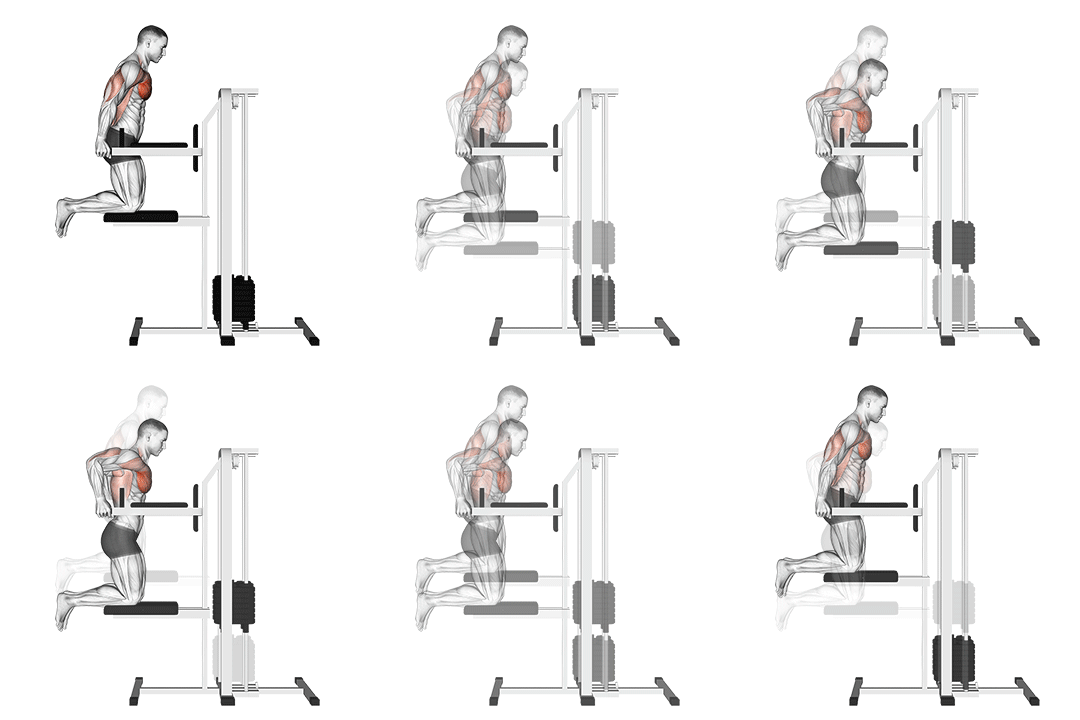
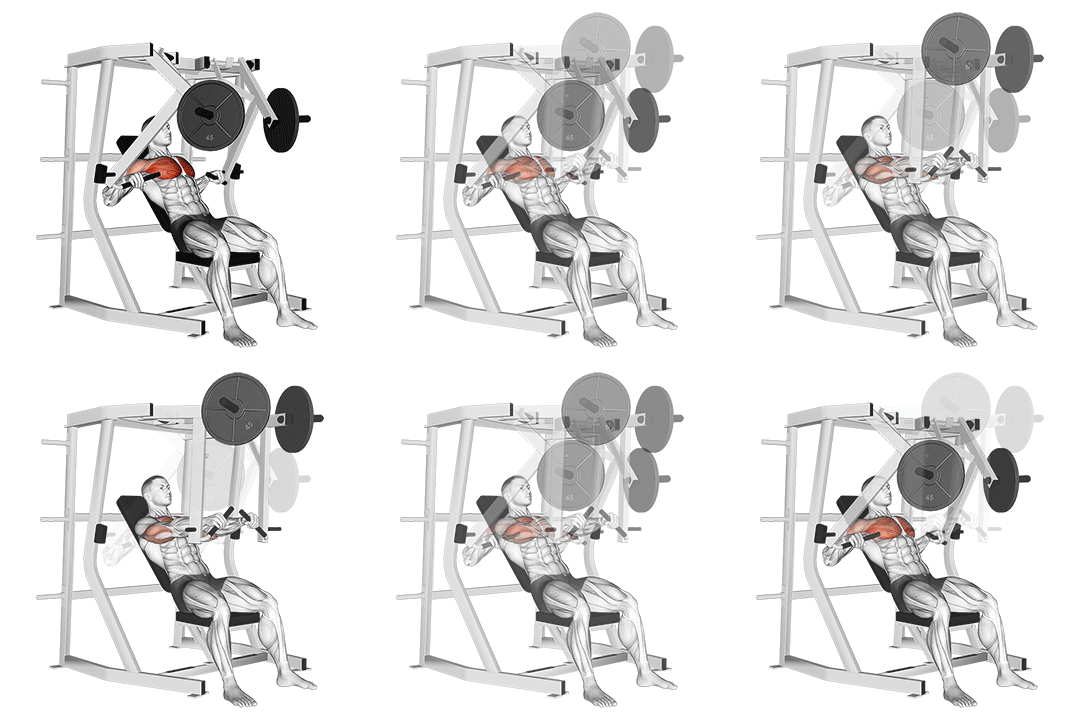
More comparisons with Assisted Wide-grip Chest Dip (kneeling)
Compare More Exercises
Use our free comparison tool to analyze any two exercises head-to-head.
Compare Exercises