

Assisted Wide-grip Chest Dip (kneeling) vs Lever Decline Chest Press: Complete Comparison Guide
Assisted Wide-grip Chest Dip (kneeling) vs Lever Decline Chest Press is the matchup many lifters ask about when choosing chest work. You’ll get a direct breakdown of how each exercise loads the pectorals, how they recruit triceps and shoulders, and the key technique cues to maximize safety and muscle growth. I’ll cover biomechanics (muscle length-tension and force vectors), practical setup tips, rep-range recommendations for strength and hypertrophy, plus clear scenarios where one is the better choice for your goals.
Exercise Comparison
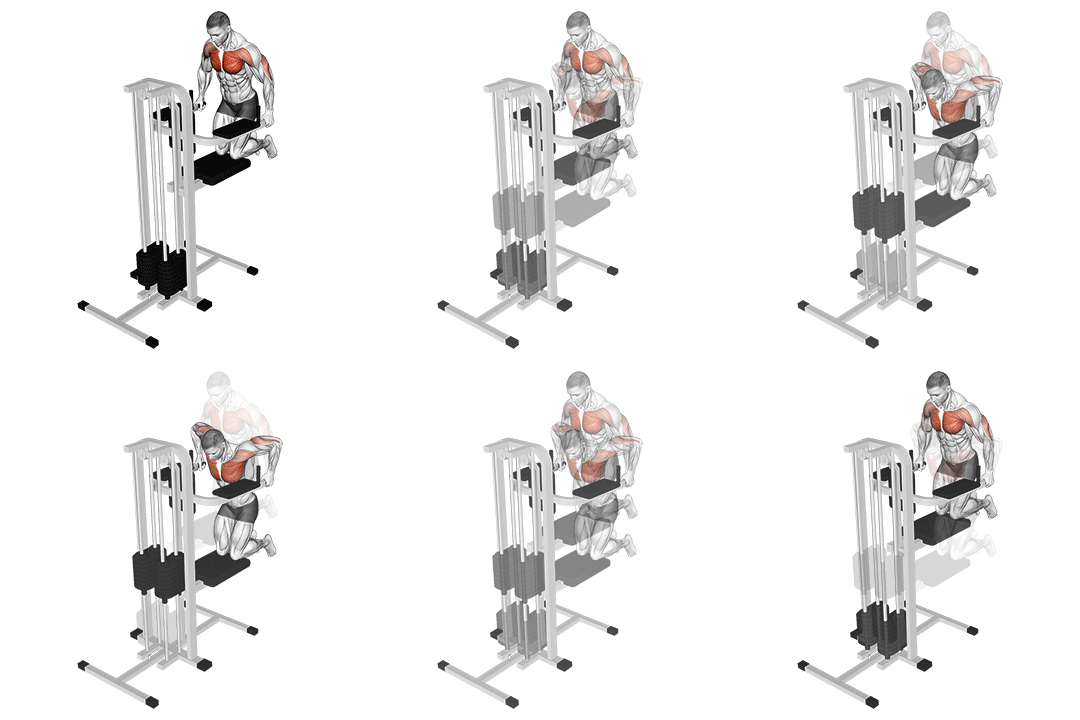
Assisted Wide-grip Chest Dip (kneeling)
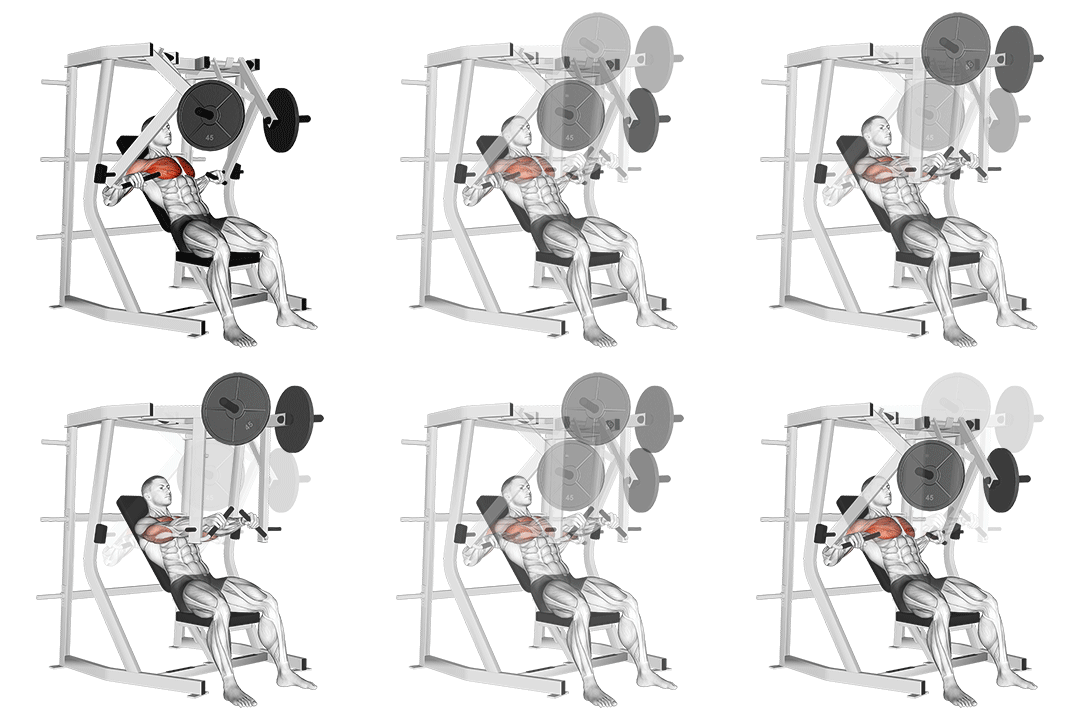
Lever Decline Chest Press
Head-to-Head Comparison
| Attribute | Assisted Wide-grip Chest Dip (kneeling) | Lever Decline Chest Press |
|---|---|---|
| Target Muscle |
Pectorals
|
Pectorals
|
| Body Part |
Chest
|
Chest
|
| Equipment |
Lever
|
Lever
|
| Difficulty |
Beginner
|
Intermediate
|
| Movement Type |
Compound
|
Compound
|
| Secondary Muscles |
2
|
2
|
Secondary Muscles Activated
Assisted Wide-grip Chest Dip (kneeling)
Lever Decline Chest Press
Visual Comparison
Overview
Assisted Wide-grip Chest Dip (kneeling) vs Lever Decline Chest Press is the matchup many lifters ask about when choosing chest work. You’ll get a direct breakdown of how each exercise loads the pectorals, how they recruit triceps and shoulders, and the key technique cues to maximize safety and muscle growth. I’ll cover biomechanics (muscle length-tension and force vectors), practical setup tips, rep-range recommendations for strength and hypertrophy, plus clear scenarios where one is the better choice for your goals.
Key Differences
- Difficulty levels differ: Assisted Wide-grip Chest Dip (kneeling) is beginner, while Lever Decline Chest Press is intermediate.
- Both exercises target the Pectorals using Lever. The main differences are in their movement patterns and muscle activation angles.
Pros & Cons
Assisted Wide-grip Chest Dip (kneeling)
+ Pros
- High pec stretch at bottom of movement improves length-tension stimulus
- Easily regressable with assistance or bands for beginners
- Engages scapular stabilizers and triceps, offering compound carryover
- Minimal setup adjustments — quick to start a set on most assisted machines
− Cons
- Deep range can stress anterior shoulder if mobility or control is poor
- Progression depends on reducing assistance rather than large weight jumps
- Requires an assisted dip station or band setup — not a pure home-bodyweight move
Lever Decline Chest Press
+ Pros
- Precise loading increments for progressive overload
- Stable seat and guided path reduce scapular drift and shoulder hyperextension
- Excellent for heavy sets (3–6 reps) and hypertrophy clusters (6–12 reps)
- Adjustable decline angle (15–30°) targets lower pec fibers reliably
− Cons
- Requires a specific lever decline machine that some gyms lack
- More setup time to adjust seat, foot placement, and back support
- Less scapular and core engagement compared with dips
When Each Exercise Wins
The lever decline press allows precise progressive overload and consistent time under tension—use 6–12 reps with controlled eccentrics. The fixed path and adjustable decline angle (15–30°) let you reliably target lower-pec fibers for hypertrophy.
Strength requires heavy, repeatable loading; the lever press supports 3–6 rep work sets with safe, incremental weight increases. Its stable setup minimizes technical drift so you can push higher absolute loads.
Assistance lets beginners train the dip pattern without needing baseline pressing strength; you can decrease assistance in small steps to build concentric force and scapular control before moving to heavier presses.
While both exercises typically use machines, dip mechanics are easier to mimic at home with resistance bands and a sturdy parallel bar or low rails. That makes regressions and progressions more practical outside the gym.
Frequently Asked Questions
Can I do both Assisted Wide-grip Chest Dip (kneeling) and Lever Decline Chest Press in the same workout?
Yes. Use the assisted dips early as a warm-up/activation (2–3 sets of 8–12 reps with assistance) then follow with heavier lever decline press sets for 3–6 strength reps or 6–10 hypertrophy reps. That sequence uses dips to prime the pecs and scapular stabilizers before heavy loading.
Which exercise is better for beginners?
Assisted Wide-grip Chest Dip (kneeling) is better for true beginners because the machine or band assistance lets you practice the movement pattern and build concentric strength safely. Reduce assistance gradually as your strength and shoulder control improve.
How do the muscle activation patterns differ?
Dips produce peak activation during the transition from deep eccentric to concentric as the pecs are stretched, combining vertical load and shoulder extension. The decline press concentrates activation in a steady horizontal/decline vector with consistent mid-range peak tension and less scapular mobility demand.
Can Lever Decline Chest Press replace Assisted Wide-grip Chest Dip (kneeling)?
For many lifters the lever decline press can substitute if the goal is hypertrophy or strength because it offers controlled loading. If you want the stretch stimulus, scapular control improvements, or a beginner-friendly regression, keep assisted dips in your program as complementary work.
Expert Verdict
Use Assisted Wide-grip Chest Dip (kneeling) when you need a beginner-friendly compound chest move that emphasizes a long pec stretch and builds scapular and triceps stability. It’s ideal for ramping neural control and mobility while you reduce assistance. Choose Lever Decline Chest Press when your goal is controlled progressive overload and heavy training—set the decline to 15–30° and focus on 3–6 reps for strength or 6–12 reps for hypertrophy. Both have a place: dips for skill and stretch-focused development, lever decline press for systematic strength and size with precise loading.
Also Compare
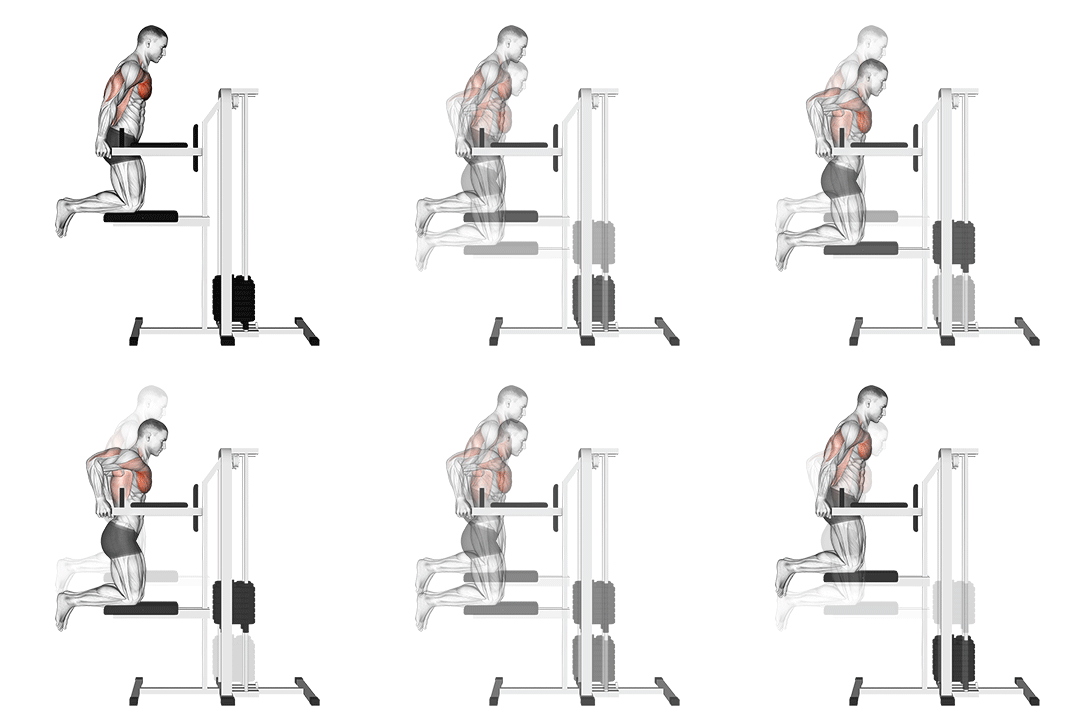
More comparisons with Assisted Wide-grip Chest Dip (kneeling)
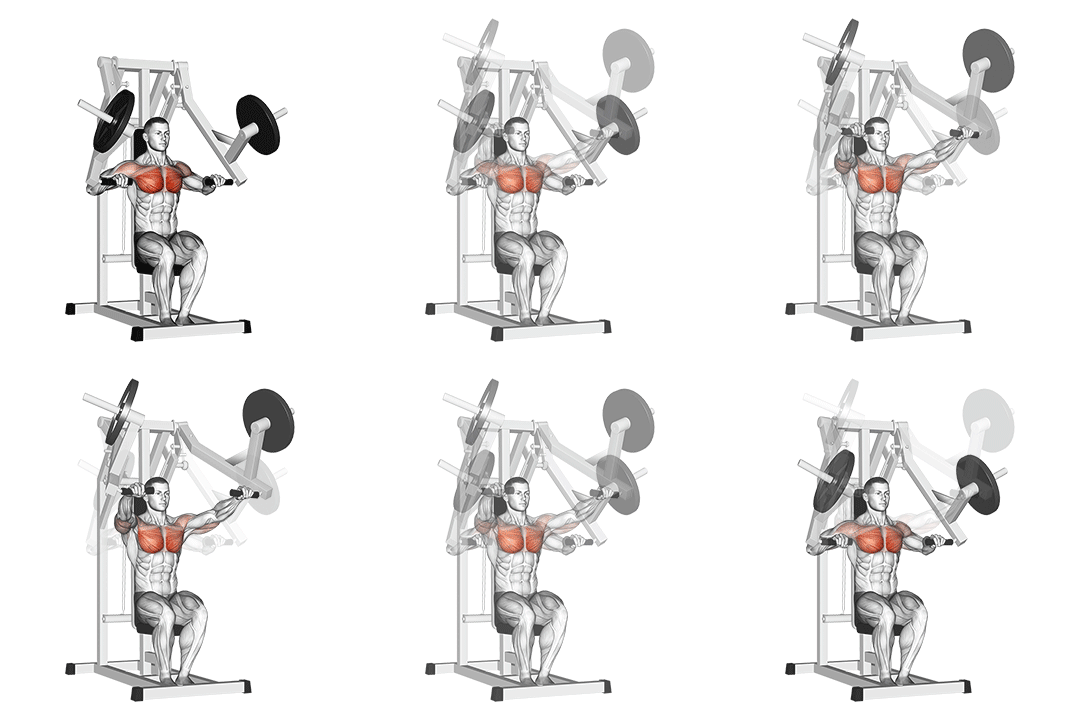
More comparisons with Lever Decline Chest Press
Compare More Exercises
Use our free comparison tool to analyze any two exercises head-to-head.
Compare Exercises