

Assisted Wide-grip Chest Dip (kneeling) vs Lever Seated Fly: Complete Comparison Guide
Assisted Wide-grip Chest Dip (kneeling) vs Lever Seated Fly sets up a clear contrast between a compound pressing pattern and a machine isolation movement. You’ll get practical guidance on technique, muscle activation, rep ranges, and when to choose each one for muscle growth, strength, or rehab. I’ll cover biomechanics (force vectors, length-tension), exact cues you can use in the gym, progression options, and how secondary muscles like triceps, deltoids, and traps come into play so you can pick the right tool for your chest development.
Exercise Comparison
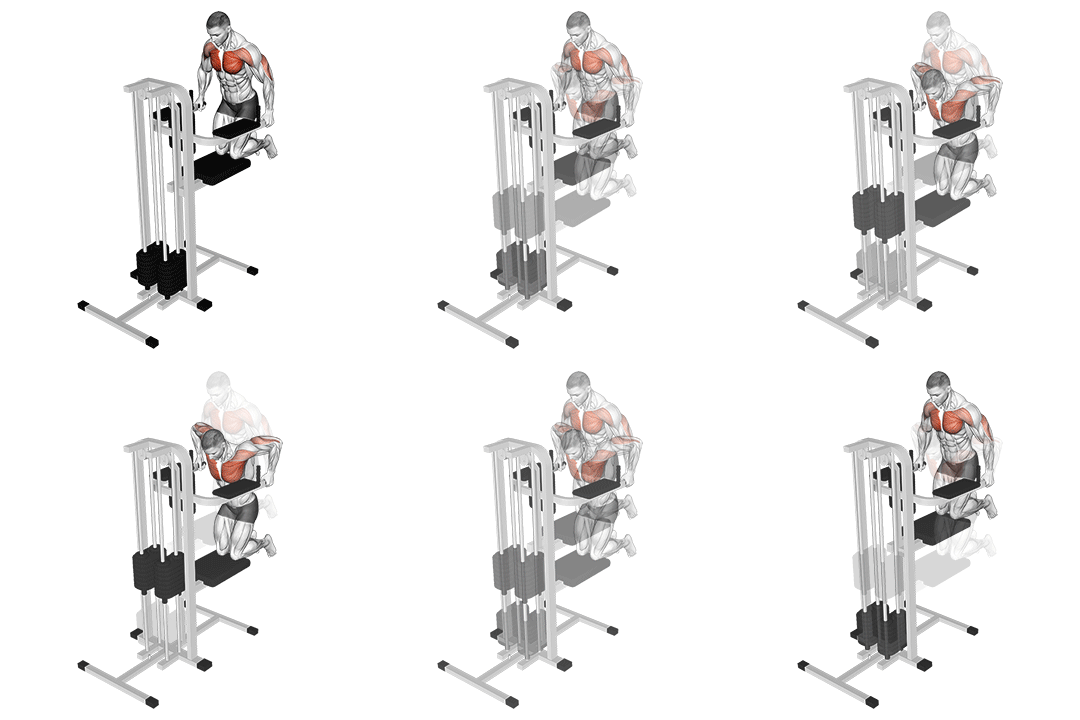
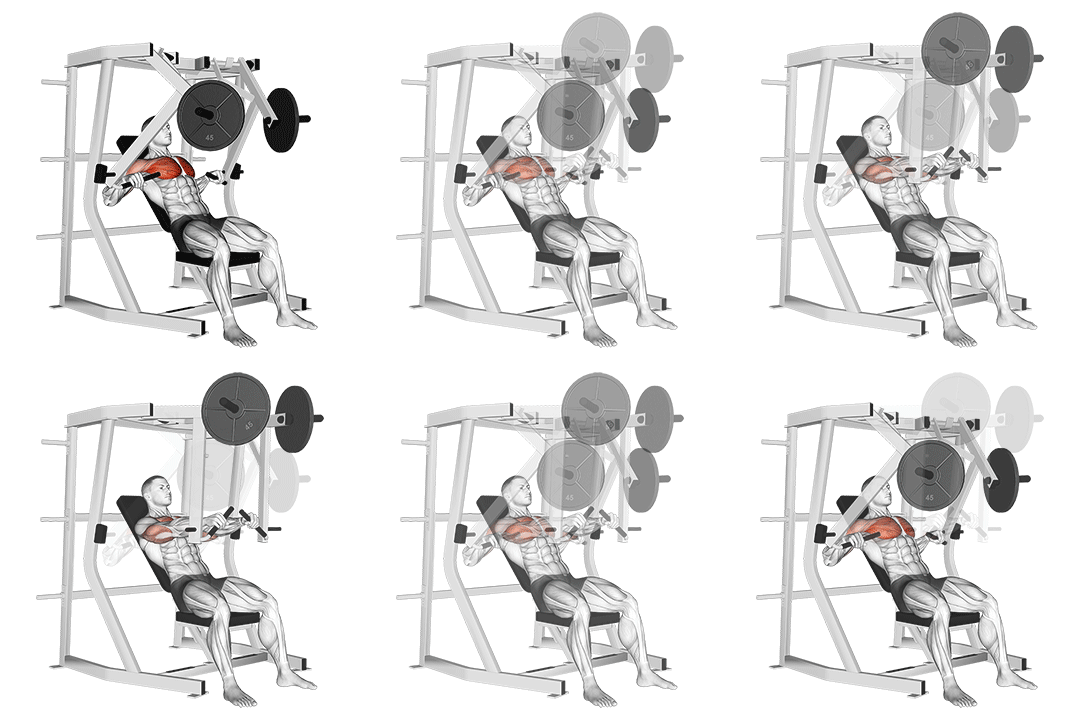
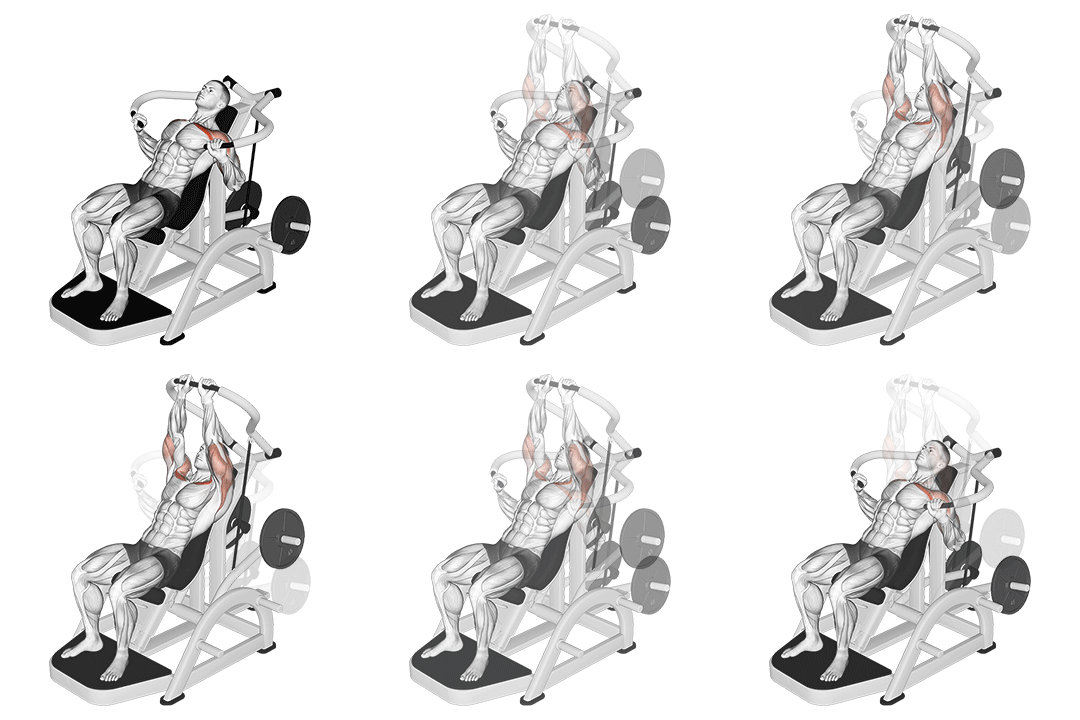
Assisted Wide-grip Chest Dip (kneeling)
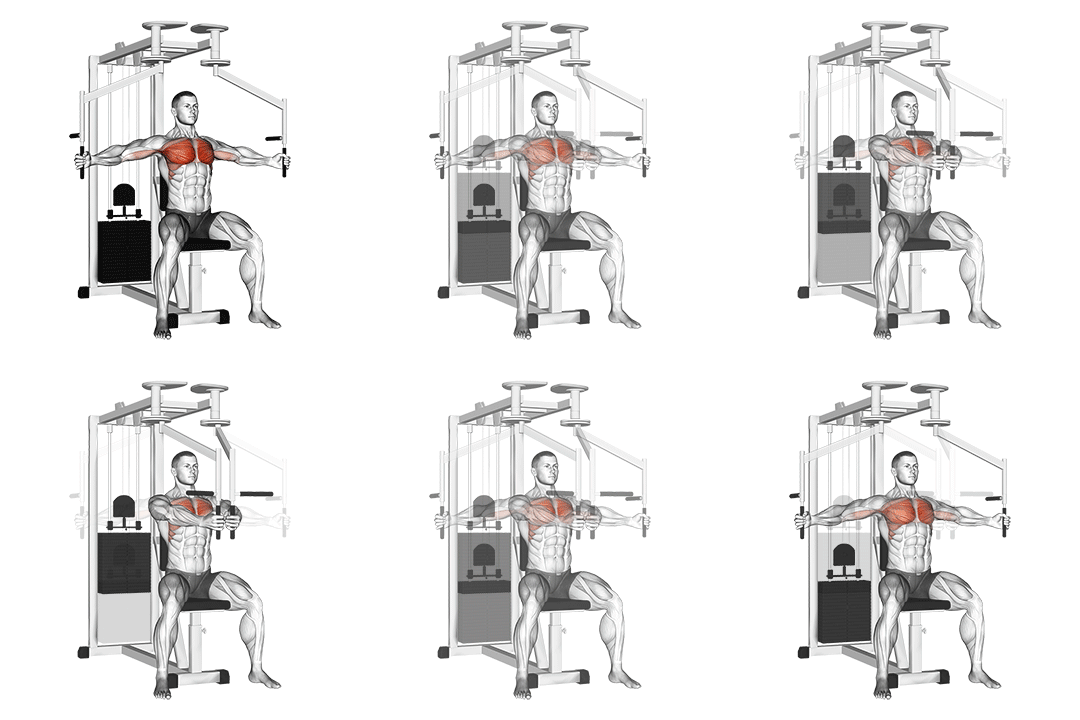
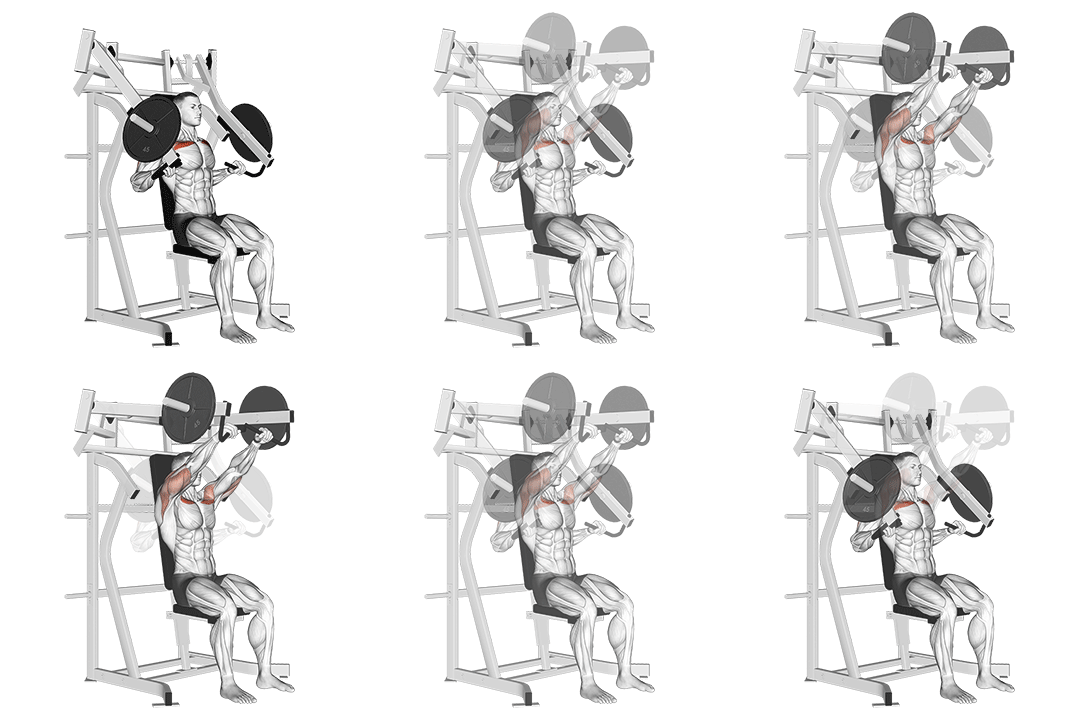
Lever Seated Fly
Head-to-Head Comparison
| Attribute | Assisted Wide-grip Chest Dip (kneeling) | Lever Seated Fly |
|---|---|---|
| Target Muscle |
Pectorals
|
Pectorals
|
| Body Part |
Chest
|
Chest
|
| Equipment |
Lever
|
Lever
|
| Difficulty |
Beginner
|
Beginner
|
| Movement Type |
Compound
|
Isolation
|
| Secondary Muscles |
2
|
2
|
Secondary Muscles Activated
Assisted Wide-grip Chest Dip (kneeling)
Lever Seated Fly
Visual Comparison
Overview
Assisted Wide-grip Chest Dip (kneeling) vs Lever Seated Fly sets up a clear contrast between a compound pressing pattern and a machine isolation movement. You’ll get practical guidance on technique, muscle activation, rep ranges, and when to choose each one for muscle growth, strength, or rehab. I’ll cover biomechanics (force vectors, length-tension), exact cues you can use in the gym, progression options, and how secondary muscles like triceps, deltoids, and traps come into play so you can pick the right tool for your chest development.
Key Differences
- Assisted Wide-grip Chest Dip (kneeling) is a compound movement, while Lever Seated Fly is an isolation exercise.
- Both exercises target the Pectorals using Lever. The main differences are in their movement patterns and muscle activation angles.
Pros & Cons
Assisted Wide-grip Chest Dip (kneeling)
+ Pros
- Compound movement recruits multiple muscle groups for higher total load and neural drive
- Better for building overall pressing strength and functional chest thickness
- Easy to progressively reduce assistance to increase mechanical tension
- Requires core and scapular stability, improving functional control
− Cons
- Higher shoulder and elbow stress if performed with poor form or excessive depth
- Requires a lever-assisted dip station, which isn’t universal in home gyms
- More technical cues to manage (torso lean, elbow path, assistance level)
Lever Seated Fly
+ Pros
- Machine-guided path makes it easy to learn and control tempo
- Isolates pectorals for focused time under tension and precise rep ranges
- Lower demand on triceps and core—good for targeting chest without fatiguing synergists
- Quick setup and microloading for incremental progression
− Cons
- Limited carryover to multi-joint pressing strength
- Fixed arc can create awkward joint alignment if seat height is incorrect
- Less total muscle recruitment, so less systemic overload per set
When Each Exercise Wins
The dip lets you load the chest with higher absolute resistance and longer muscle fibers under tension, especially when you control a 2–3 second eccentric. Use 6–12 reps for mechanical tension and progressive reduction of assistance for consistent overload.
As a multi-joint press, dips allow larger load increases and neural adaptation. Reducing assistance over time improves force production across joints, which translates better to other pressing lifts.
The seat and guided arc remove stabilization variables, letting you learn scapular control and tempo. Start with 8–15 reps and a 2–3 second eccentric to build motor control before adding compound complexity.
You can replicate the assisted dip with resistance bands, a chair, or a low parallel bar and pulley/looped bands, making it more adaptable when you lack a pec-deck machine at home.
Frequently Asked Questions
Can I do both Assisted Wide-grip Chest Dip (kneeling) and Lever Seated Fly in the same workout?
Yes. Use the Assisted Wide-grip Chest Dip early as a heavy compound set (3–5 sets of 6–10) then finish with Lever Seated Fly for 2–4 sets of 8–15 to increase time under tension and isolate pectoral fibers.
Which exercise is better for beginners?
Lever Seated Fly is generally better for absolute beginners because the machine guides movement and lowers coordination demands. Start there to build scapular stability, then add assisted dips as you develop core and elbow control.
How do the muscle activation patterns differ?
Dips produce a multi-joint activation with high triceps and pec co-contraction and peak force during mid-range; flies produce mostly single-joint pec activation with consistent mid- to end-range tension. Torque and neural drive are higher in dips due to the compound pattern.
Can Lever Seated Fly replace Assisted Wide-grip Chest Dip (kneeling)?
It can replace it for isolation work or when joint stress is a concern, but it won’t fully replace the strength and systemic overload that compound dips provide. Use flies to complement or temporarily substitute dips depending on your goal.
Expert Verdict
Choose Assisted Wide-grip Chest Dip (kneeling) when you want compound overload, improved pressing strength, and greater recruitment of triceps and core—lean your torso 20–30° forward and stop around 90° elbow flexion. Pick Lever Seated Fly when you need to isolate the pectorals, control tempo, or manage fatigue from multi-joint work; set the seat so the machine axis aligns with your shoulder and keep a 10–20° elbow bend. For hypertrophy prioritize the dip for heavier progressive overload; for targeted chest shaping, rehab, or precise loading choose the fly. Both have a place: alternate them by phase to balance tension, control, and recovery.
Also Compare
More comparisons with Assisted Wide-grip Chest Dip (kneeling)
Compare More Exercises
Use our free comparison tool to analyze any two exercises head-to-head.
Compare Exercises