

Band Horizontal Pallof Press vs Band Push Sit-up: Complete Comparison Guide
Band Horizontal Pallof Press vs Band Push Sit-up — if you train core strength and want clarity, this comparison is for you. {Exercise1} vs {Exercise2} will appear in the first section so you can scan quickly. I’ll walk you through primary and secondary muscle activation, equipment needs, learning curve, injury risk, and clear use cases with rep ranges and technique cues. Read on to learn which exercise loads the rectus abdominis versus anti-rotation systems, how force vectors differ, and when to program each for stability, hypertrophy, or home sessions.
Exercise Comparison
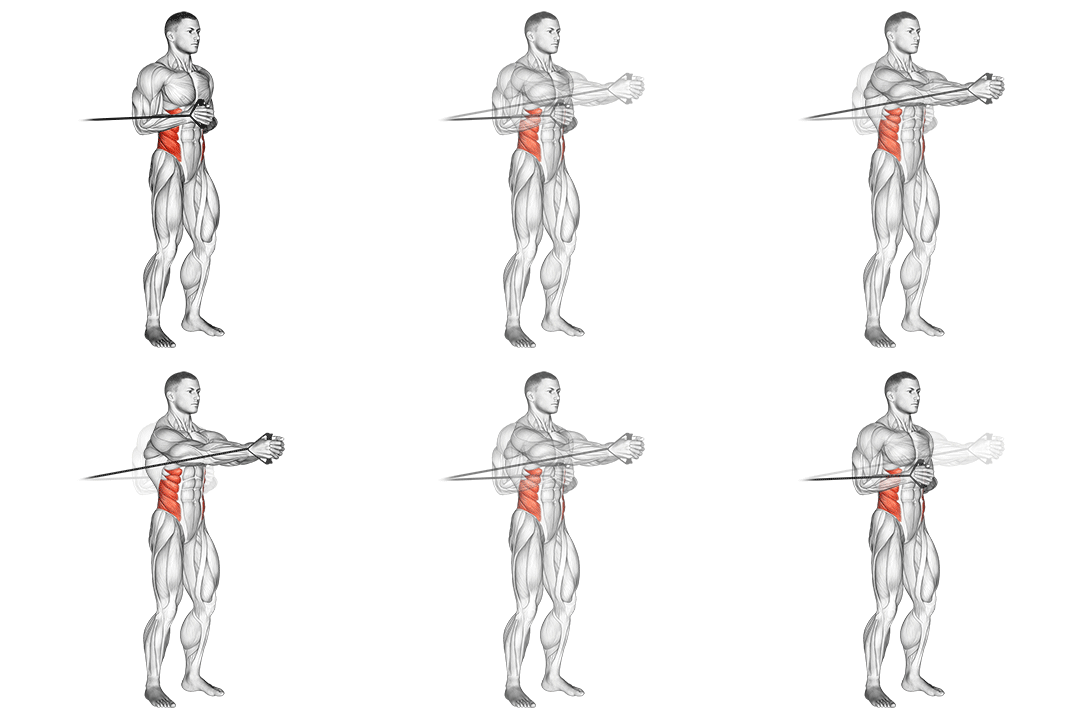
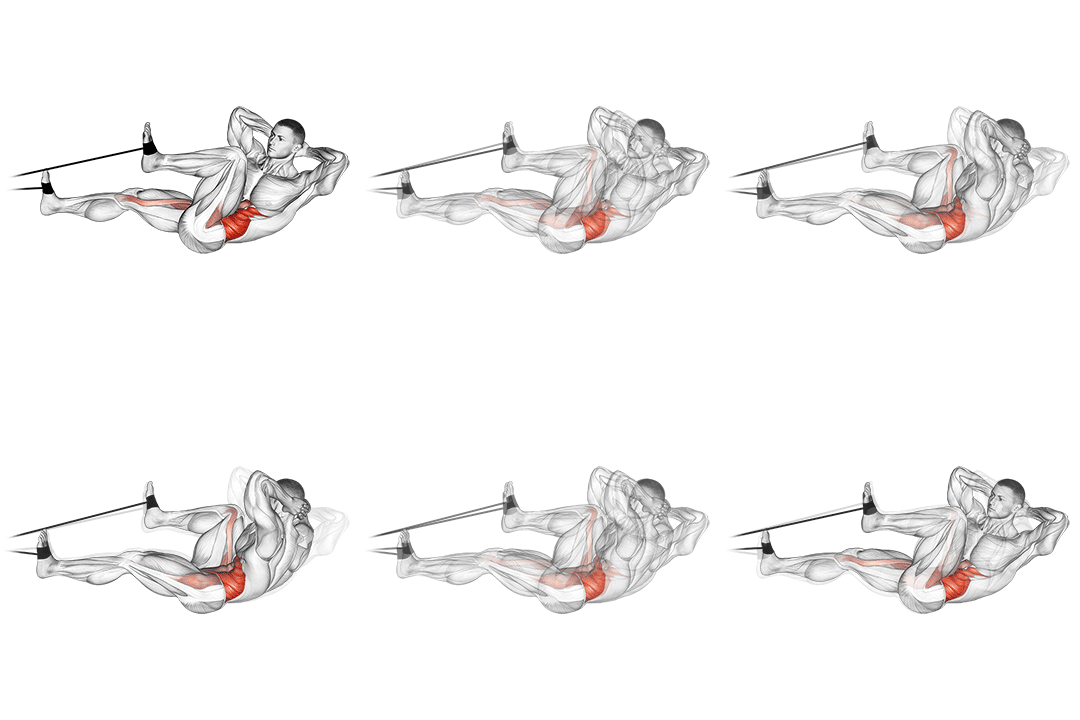
Band Horizontal Pallof Press
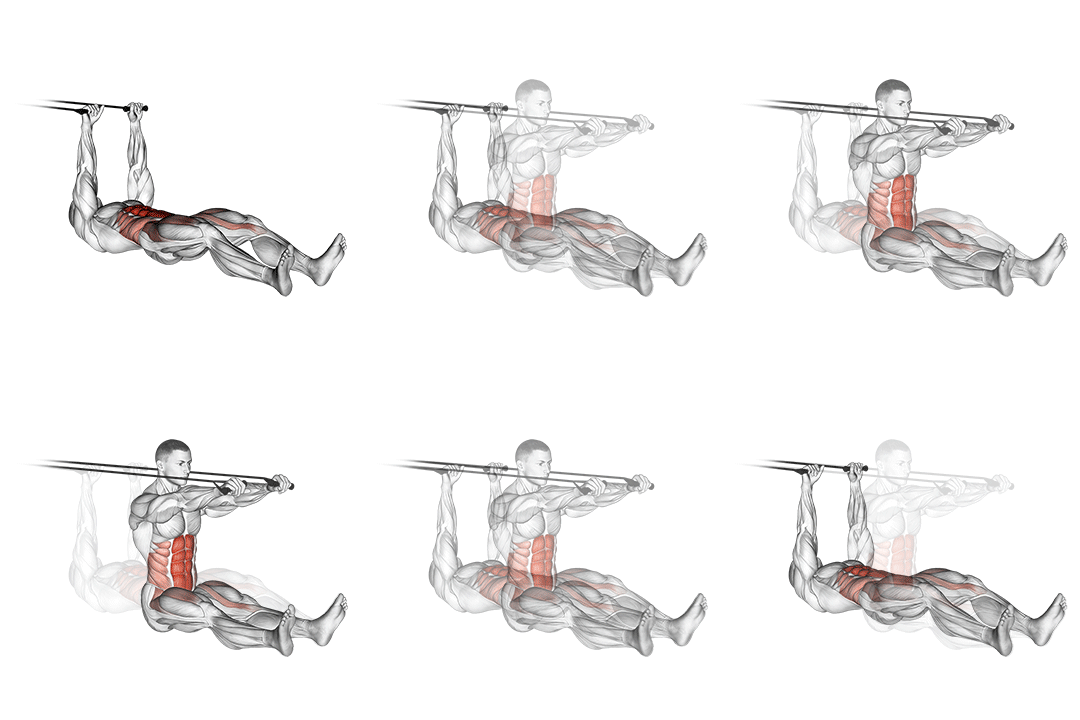
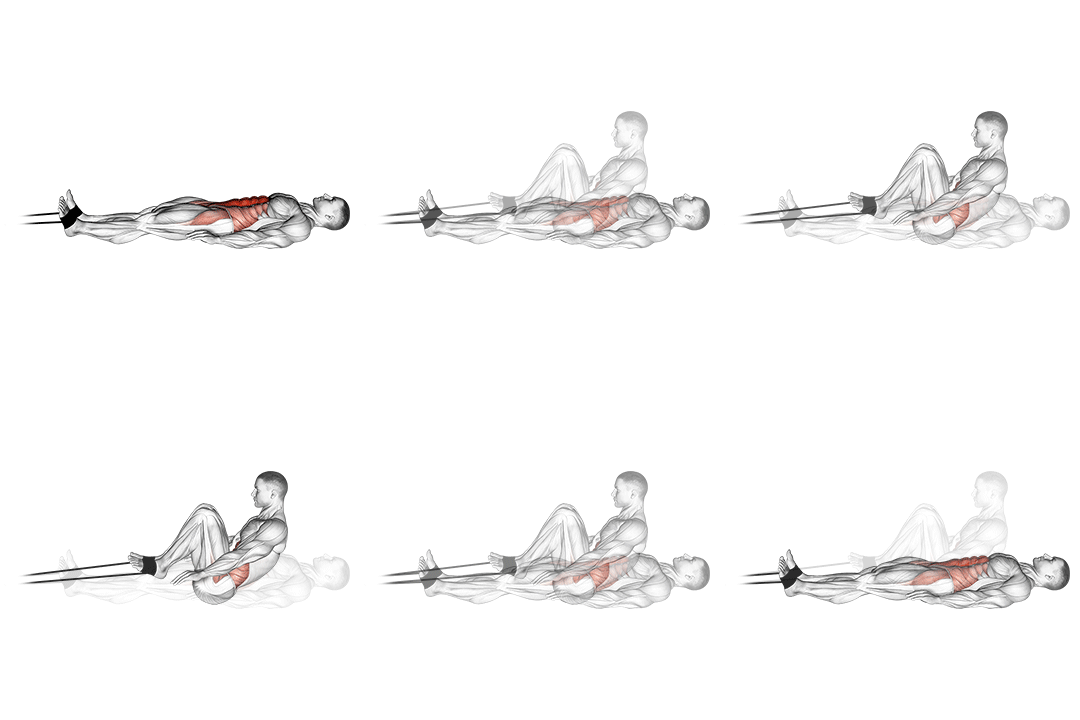
Band Push Sit-up
Head-to-Head Comparison
| Attribute | Band Horizontal Pallof Press | Band Push Sit-up |
|---|---|---|
| Target Muscle |
Abs
|
Abs
|
| Body Part |
Waist
|
Waist
|
| Equipment |
Band
|
Band
|
| Difficulty |
Intermediate
|
Intermediate
|
| Movement Type |
Isolation
|
Isolation
|
| Secondary Muscles |
2
|
2
|
Secondary Muscles Activated
Band Horizontal Pallof Press
Band Push Sit-up
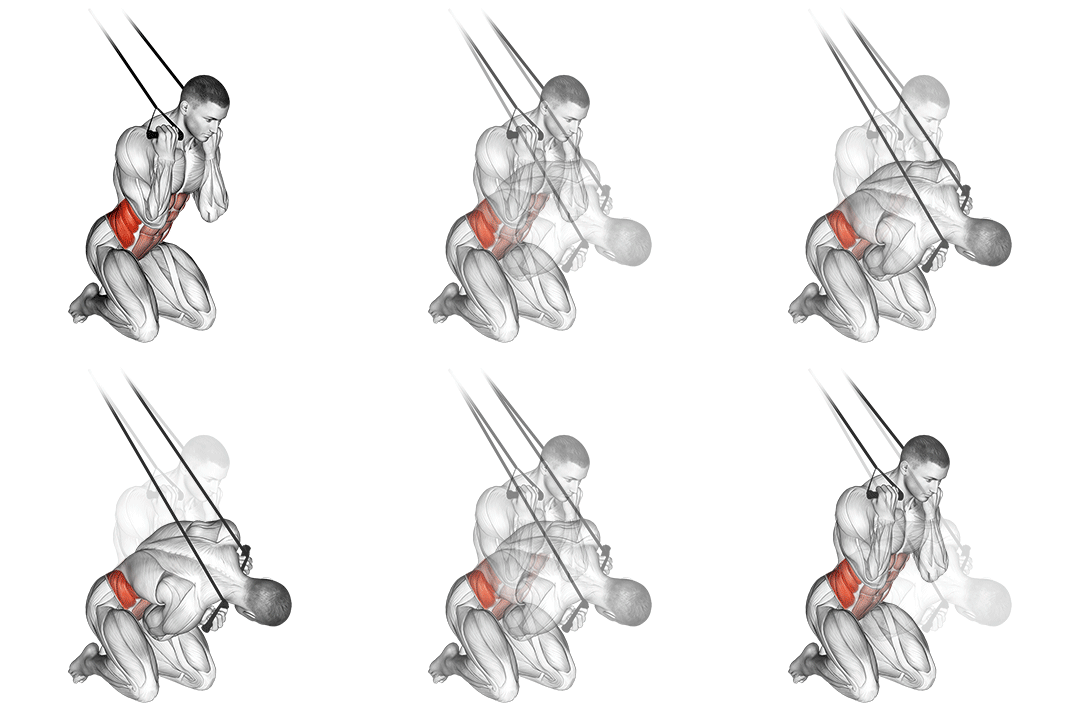
Visual Comparison
Overview
Band Horizontal Pallof Press vs Band Push Sit-up — if you train core strength and want clarity, this comparison is for you. {Exercise1} vs {Exercise2} will appear in the first section so you can scan quickly. I’ll walk you through primary and secondary muscle activation, equipment needs, learning curve, injury risk, and clear use cases with rep ranges and technique cues. Read on to learn which exercise loads the rectus abdominis versus anti-rotation systems, how force vectors differ, and when to program each for stability, hypertrophy, or home sessions.
Key Differences
- Both exercises target the Abs using Band. The main differences are in their movement patterns and muscle activation angles.
Pros & Cons
Band Horizontal Pallof Press
+ Pros
- Excellent anti-rotation training that improves transverse plane stability
- Low spinal flexion, safer for disc-prone athletes when performed with neutral spine
- Easy to scale by changing band tension or distance from anchor
- Improves pelvic and glute stability via single-leg or split-stance variants
− Cons
- Requires an external anchor at roughly chest height
- Less direct rectus abdominis shortening, so not optimal alone for hypertrophy
- Technical cueing needed to prevent shoulder compensation
Band Push Sit-up
+ Pros
- Simple set-up—loop band under feet for most home users
- Produces strong concentric rectus abdominis activation for hypertrophy
- Easy to increase time-under-tension with controlled eccentrics
- Familiar movement pattern for most trainees (sit-up hinge)
− Cons
- Increases lumbar flexion stress; risky with poor form or disc history
- Shoulder and neck strain if you pull with the arms or jut the chin
- Less anti-rotation carryover; limited transverse-plane training
When Each Exercise Wins
The push sit-up produces repeated concentric-eccentric cycles and greater rectus shortening across a 60–90° ROM; use 8–20 reps, slow eccentrics (3–4 s), and heavier bands to maximize time under tension for hypertrophy.
Pallof Press builds anti-rotation strength and transferable core stiffness under lateral load. Use heavier bands, 6–12 reps or 10–30 s holds, and single-leg progressions to increase core torque capacity.
Beginners already understand trunk flexion; the push sit-up has a simpler movement pattern and easier loading via band tension, making it faster to learn while you build abdominal endurance.
Requires only a band and floor space—no door anchor at chest height—so it integrates more readily into small-space routines with minimal setup.
Frequently Asked Questions
Can I do both Band Horizontal Pallof Press and Band Push Sit-up in the same workout?
Yes. Pair the Pallof Press early for nervous-system-driven anti-rotation strength (3–4 sets of 6–12 reps or 10–20 s holds), then use the Band Push Sit-up later for higher-rep abdominal work (8–20 reps with controlled eccentrics). That order preserves technique and reduces fatigue-driven compensation.
Which exercise is better for beginners?
Band Push Sit-up is generally better for beginners due to its familiar trunk-flexion pattern and simple band setup. Start with light band tension and focus on slow eccentrics and neck alignment before progressing load.
How do the muscle activation patterns differ?
Pallof Press drives isometric co-contraction of obliques, transverse abdominis, and glutes to resist rotation (force vector is lateral), while Push Sit-up creates short-duration peaks in rectus abdominis during concentric flexion and sustained tension during eccentric lowering (force vector is sagittal).
Can Band Push Sit-up replace Band Horizontal Pallof Press?
Not fully. If your goal is anti-rotation strength and pelvic stability, the Pallof Press is the superior choice. Use the push sit-up for rectus-focused hypertrophy or endurance, but keep Pallof variations in your program for transverse-plane control.
Expert Verdict
Use the Band Horizontal Pallof Press when your priority is core stiffness, anti-rotation strength, and pelvic control—program it with heavy bands, longer holds (10–30 s), or single-leg variants to build real-world stability. Choose the Band Push Sit-up when you want direct rectus abdominis loading and hypertrophy; emphasize controlled eccentrics (3–5 s), 8–20 reps, and gradual band progression. For balanced core development, pair them across sessions: Pallof presses on strength/stability days and push sit-ups on hypertrophy or conditioning days. Prioritize form: neutral spine for Pallof, chin-tuck and no neck pulling for sit-ups.
Also Compare
More comparisons with Band Horizontal Pallof Press
Compare More Exercises
Use our free comparison tool to analyze any two exercises head-to-head.
Compare Exercises