

Band Assisted Wheel Rollerout vs Band Push Sit-up: Complete Comparison Guide
Band Assisted Wheel Rollerout vs Band Push Sit-up — you’re choosing between two banded isolation moves that both target the abs but load them very differently. In this guide you’ll get clear technique cues, muscle activation comparisons, equipment needs, difficulty breakdowns, and practical progressions. I’ll show how each exercise loads the rectus abdominis, which one taxes the lower back or shoulders more, and give rep ranges and band-tension tips so you can pick the best fit for your goals and training history.
Exercise Comparison
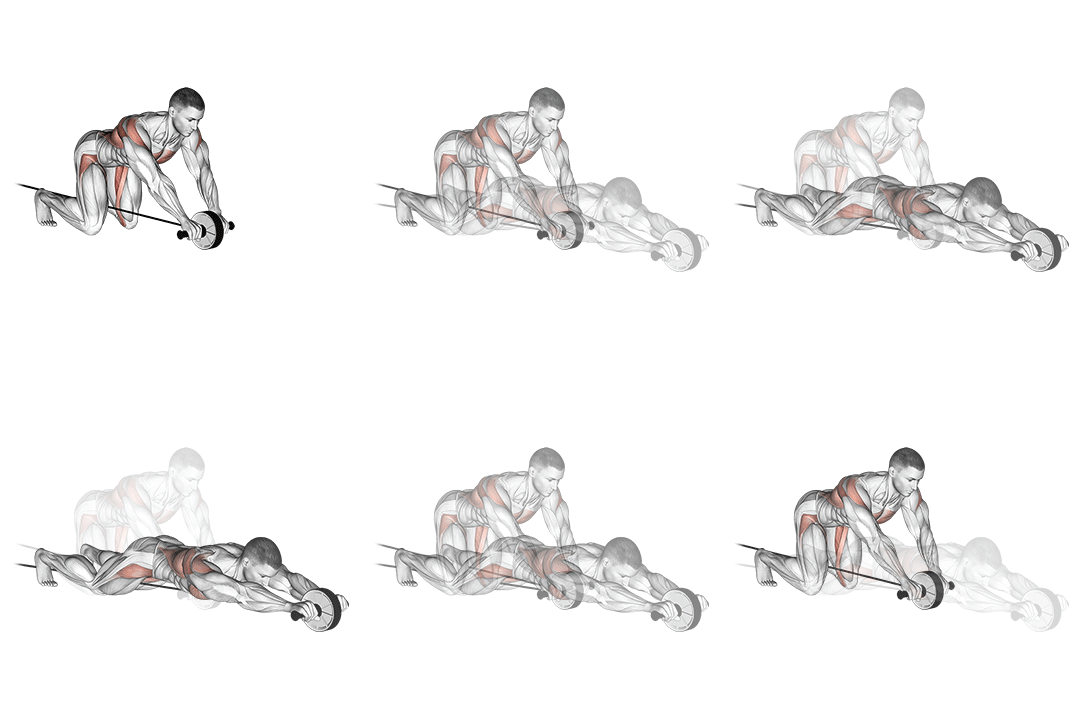
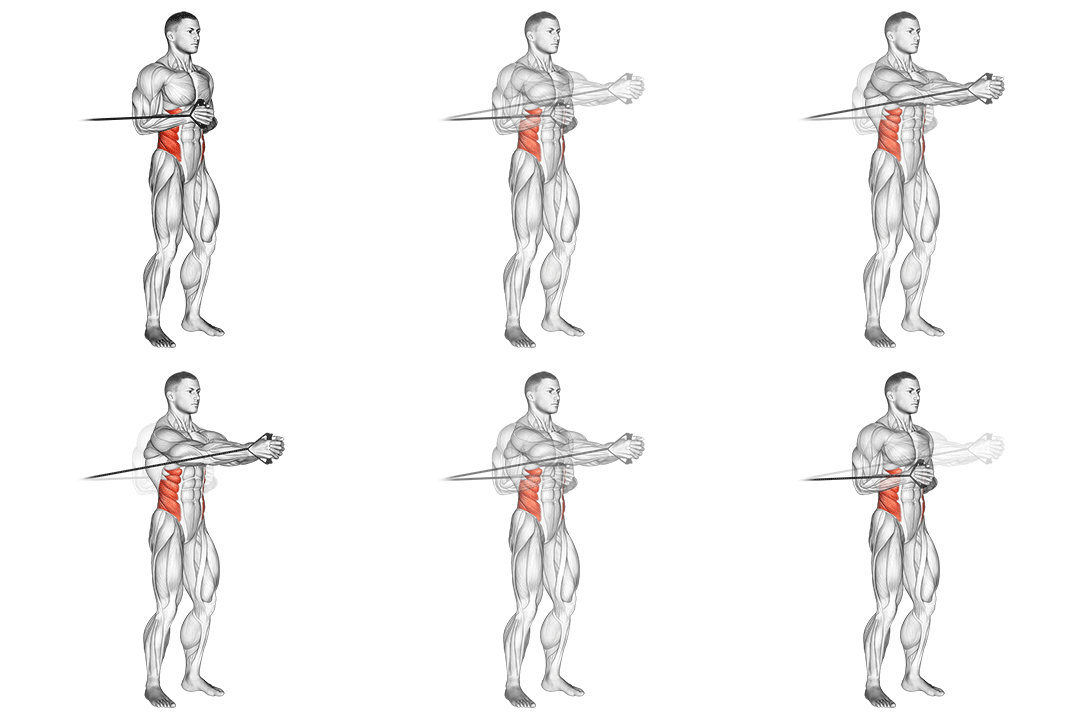
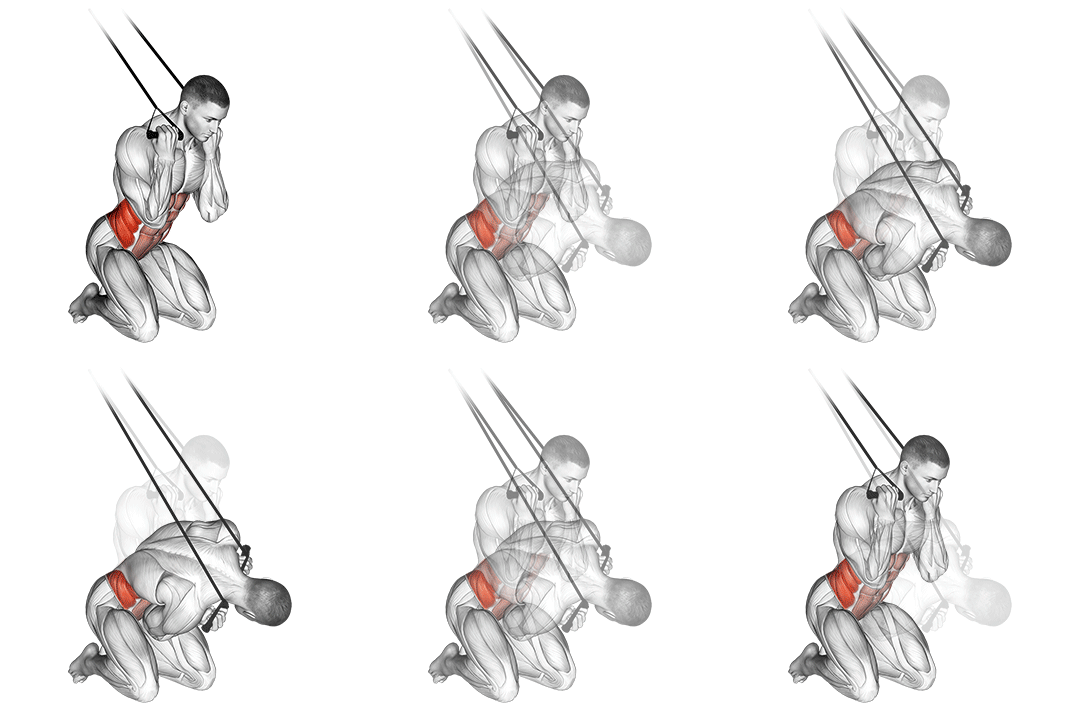
Band Assisted Wheel Rollerout
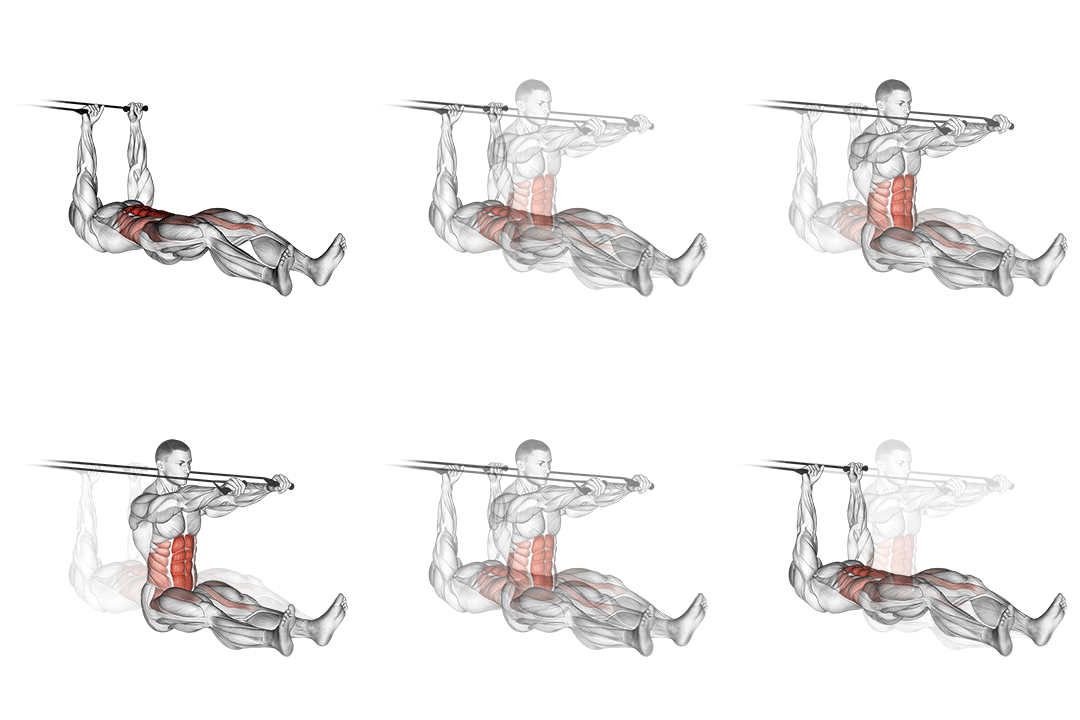
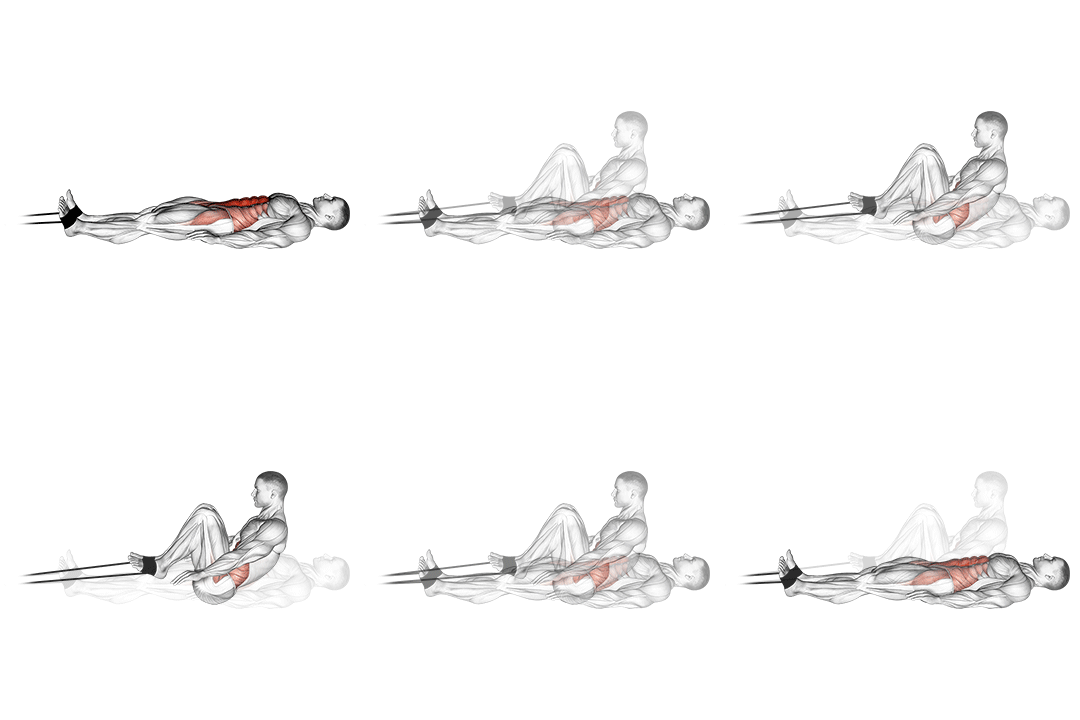
Band Push Sit-up
Head-to-Head Comparison
| Attribute | Band Assisted Wheel Rollerout | Band Push Sit-up |
|---|---|---|
| Target Muscle |
Abs
|
Abs
|
| Body Part |
Waist
|
Waist
|
| Equipment |
Band
|
Band
|
| Difficulty |
Intermediate
|
Intermediate
|
| Movement Type |
Isolation
|
Isolation
|
| Secondary Muscles |
1
|
2
|
Secondary Muscles Activated
Band Assisted Wheel Rollerout
Band Push Sit-up
Visual Comparison
Overview
Band Assisted Wheel Rollerout vs Band Push Sit-up — you’re choosing between two banded isolation moves that both target the abs but load them very differently. In this guide you’ll get clear technique cues, muscle activation comparisons, equipment needs, difficulty breakdowns, and practical progressions. I’ll show how each exercise loads the rectus abdominis, which one taxes the lower back or shoulders more, and give rep ranges and band-tension tips so you can pick the best fit for your goals and training history.
Key Differences
- Both exercises target the Abs using Band. The main differences are in their movement patterns and muscle activation angles.
Pros & Cons
Band Assisted Wheel Rollerout
+ Pros
- Creates high mechanical tension on rectus abdominis through a long lever, excellent for core stiffness.
- Scalable: vary band tension, ROM (kneeling → standing), and tempo for strength-focused progressions.
- Improves anti-extension strength that transfers to deadlift and overhead pressing stabilization.
- Also trains posterior chain stabilizers (erector spinae and scapular stabilizers) under load.
− Cons
- Higher technical demand and greater lumbar shear risk if you lose bracing.
- Requires an ab wheel and reliable band anchoring, increasing setup complexity.
- Can overload shoulders if you lack scapular mobility or strength.
Band Push Sit-up
+ Pros
- Minimal equipment — just a band and flat space, easy for home workouts.
- Easier to learn and scale; band assistance lets you hit 8–20+ rep ranges safely.
- Adds shoulder and chest involvement, offering some upper-body carryover.
- Less acute lumbar stress due to shorter lever and concentric-dominant pattern.
− Cons
- Lower peak anti-extension tension on the rectus compared with a rollerout.
- More hip-flexor involvement, which can reduce pure abdominal stimulus.
- Can encourage neck strain or thoracic rounding if performed with poor technique.
When Each Exercise Wins
The rollerout creates greater mechanical tension on the rectus via a longer lever and higher moment arm, which stimulates hypertrophy when performed in 6–15 rep ranges with controlled tempo and band assistance to manage load.
It trains anti-extension strength and intersegmental stiffness under high load, translating directly to bracing strength for heavy compound lifts; progress with reduced assistance and longer ROM for maximal carryover.
The push sit-up follows a natural trunk-flexion pattern and allows easy reduction of band tension, making it safer and faster to learn while still building abdominal endurance and control.
It requires only a band and space, has simple setup, and scales across rep ranges, making it the practical choice for limited-equipment sessions.
Frequently Asked Questions
Can I do both Band Assisted Wheel Rollerout and Band Push Sit-up in the same workout?
Yes. Use the rollerout as the primary strength stimulus (heavier, lower reps, slower eccentrics) and the push sit-up for volume-driven finishers. Structure them with rollerouts early in the session and push sit-ups later to avoid fatigue-driven form breakdown on high-skill reps.
Which exercise is better for beginners?
Band Push Sit-up is better for beginners because its movement pattern is more familiar and easier to scale with band tension. It builds baseline abdominal control before progressing to the higher technical demand of the rollerout.
How do the muscle activation patterns differ?
The rollerout emphasizes eccentric/isometric loading of rectus abdominis and requires high posterior chain stabilization; peak tension occurs at end-range extension. The push sit-up emphasizes concentric trunk flexion with greater hip-flexor contribution and added anterior shoulder activation when resisted by a band.
Can Band Push Sit-up replace Band Assisted Wheel Rollerout?
Not fully. The push sit-up can substitute for volume and endurance work but does not match the rollerout’s anti-extension overload needed for maximal core stiffness and transfer to heavy compound lifts. Use it as a complementary or interim option, not a complete replacement for strength-specific goals.
Expert Verdict
If your primary goal is developing core stiffness, anti-extension strength and targeted rectus overload, prioritize the Band Assisted Wheel Rollerout and progress from kneeling to longer ROMs while dialing band assistance down. If you want an accessible, low-setup movement to build abdominal endurance, practice trunk flexion safely, and add some shoulder/chest involvement, the Band Push Sit-up is the better daily choice. Use the push sit-up for volume and conditioning (12–20 reps), and bring in the rollerout for targeted strength blocks (6–12 reps, slow eccentrics). Rotate both to cover strength and endurance needs.
Also Compare
More comparisons with Band Assisted Wheel Rollerout
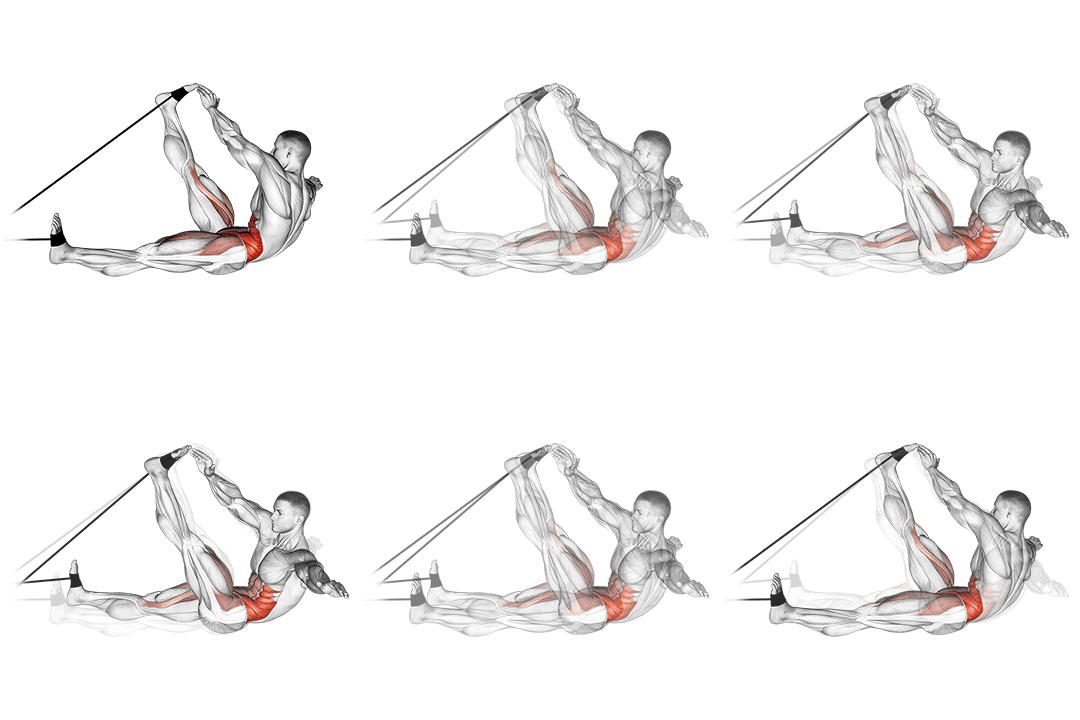
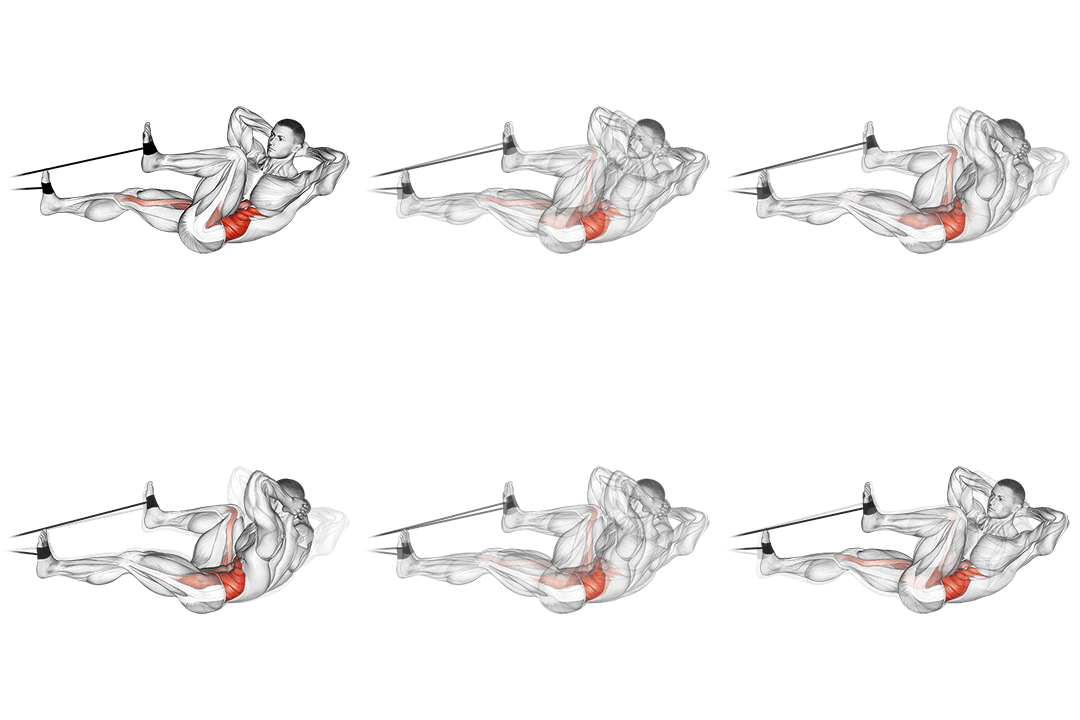
Compare More Exercises
Use our free comparison tool to analyze any two exercises head-to-head.
Compare Exercises