

Band Bicycle Crunch vs Band Push Sit-up: Complete Comparison Guide
Band Bicycle Crunch vs Band Push Sit-up — you can use either to train your abs with a band, but they stress the core in different ways. This guide helps you pick by comparing primary and secondary muscle activation, equipment needs, difficulty, injury risk, and programming tips. You’ll get specific technique cues (angles, tension, reps), short progressions, and clear recommendations for muscle growth, strength, beginners, and home workouts so you can choose the exercise that matches your goals.
Exercise Comparison
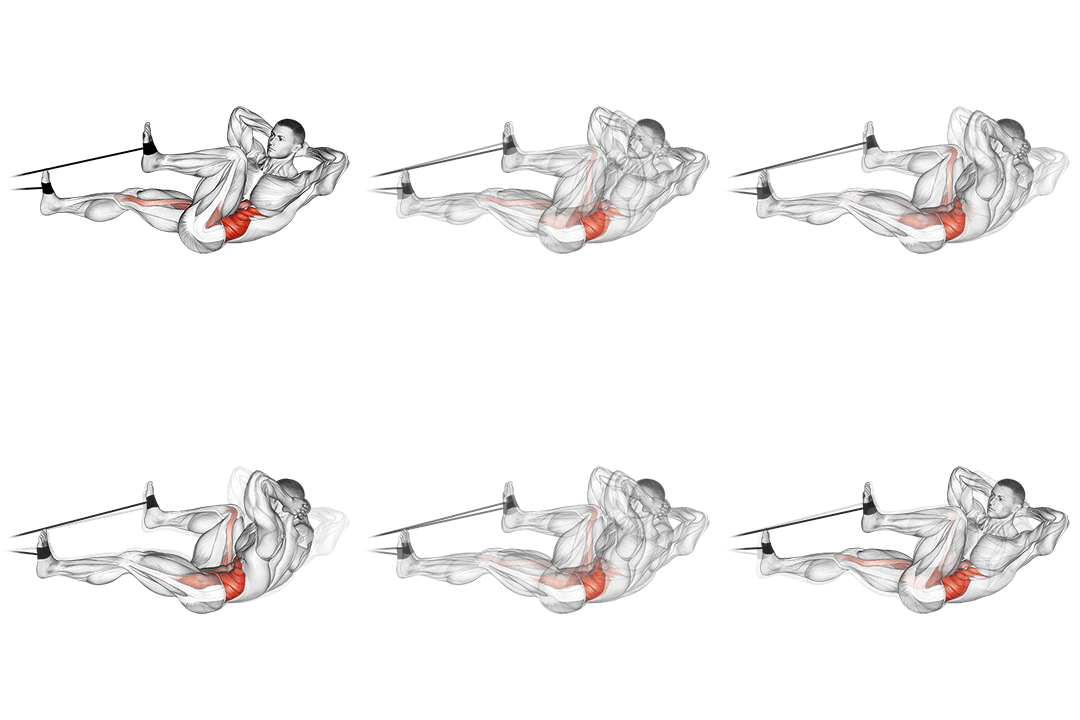
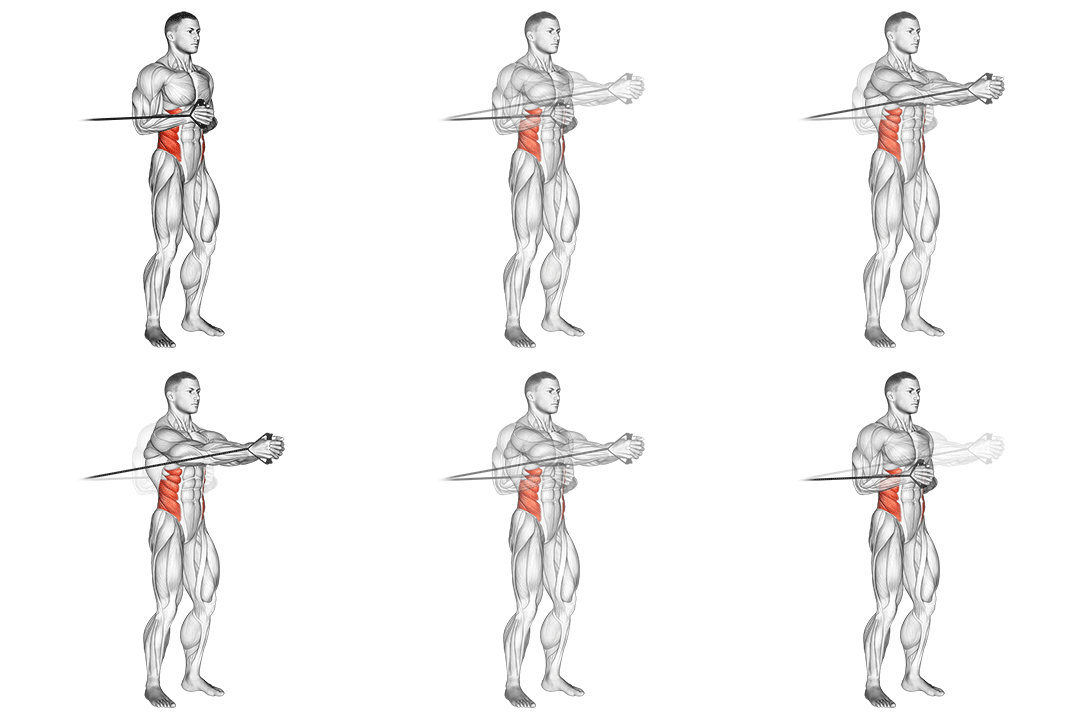
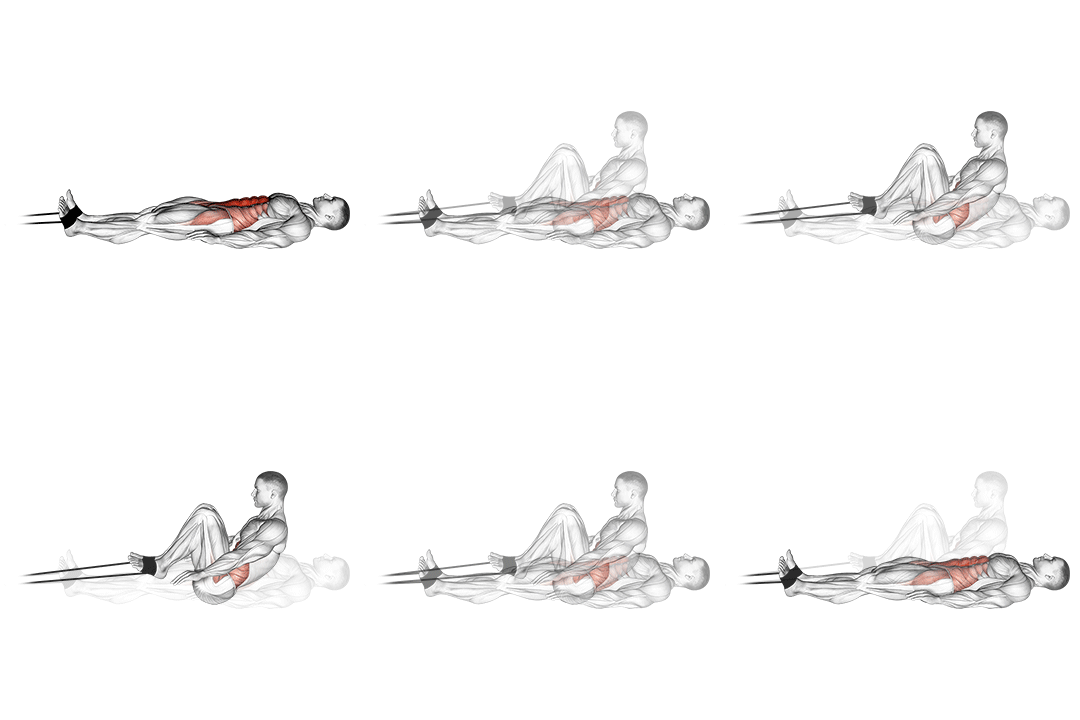
Band Bicycle Crunch
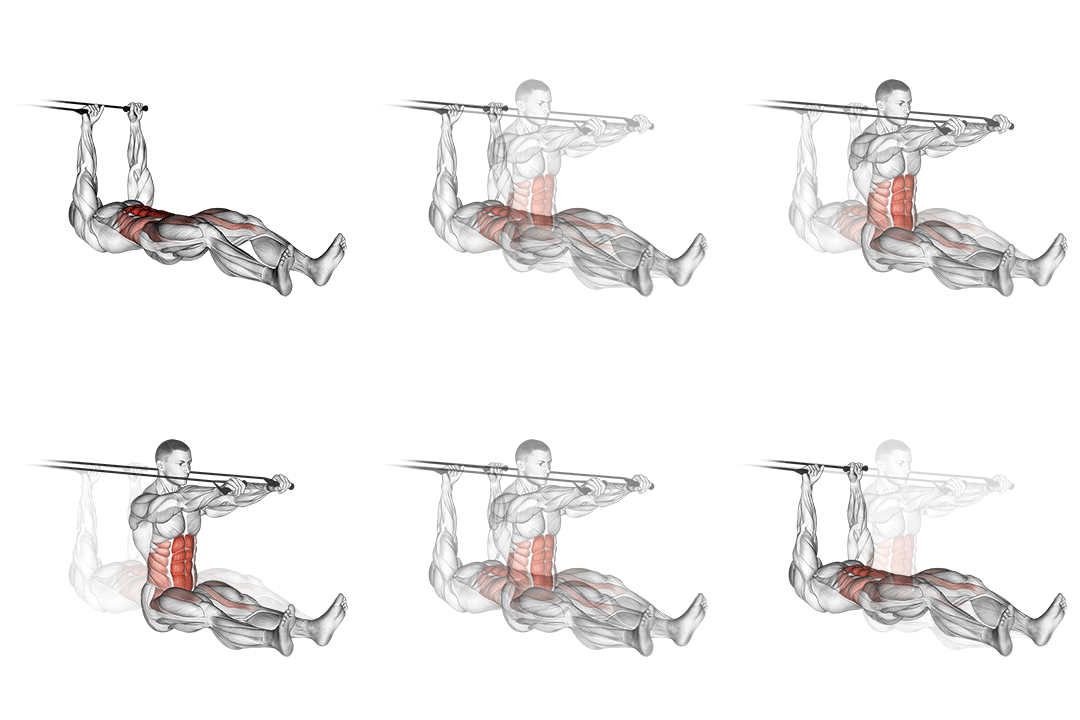
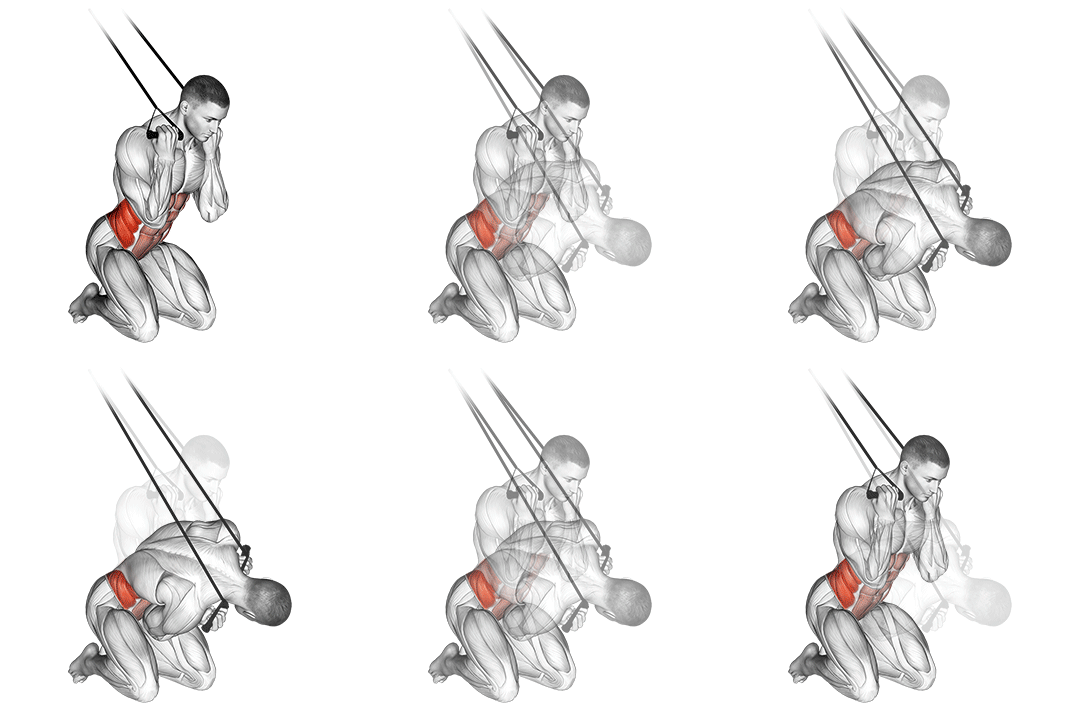
Band Push Sit-up
Head-to-Head Comparison
| Attribute | Band Bicycle Crunch | Band Push Sit-up |
|---|---|---|
| Target Muscle |
Abs
|
Abs
|
| Body Part |
Waist
|
Waist
|
| Equipment |
Band
|
Band
|
| Difficulty |
Intermediate
|
Intermediate
|
| Movement Type |
Isolation
|
Isolation
|
| Secondary Muscles |
2
|
2
|
Secondary Muscles Activated
Band Bicycle Crunch
Band Push Sit-up
Visual Comparison
Overview
Band Bicycle Crunch vs Band Push Sit-up — you can use either to train your abs with a band, but they stress the core in different ways. This guide helps you pick by comparing primary and secondary muscle activation, equipment needs, difficulty, injury risk, and programming tips. You’ll get specific technique cues (angles, tension, reps), short progressions, and clear recommendations for muscle growth, strength, beginners, and home workouts so you can choose the exercise that matches your goals.
Key Differences
- Both exercises target the Abs using Band. The main differences are in their movement patterns and muscle activation angles.
Pros & Cons
Band Bicycle Crunch
+ Pros
- High oblique activation via cross-body rotation — great for anti-rotation work
- Low equipment needs; no fixed anchor required
- Good for high-rep endurance work and fatigue-resistant core sets (12–30+ reps)
- Easier on the shoulders and chest because loading is local to the waist
− Cons
- Requires coordination and timing — steeper technical learning curve
- Less absolute overload potential for maximal strength
- Can overwork hip flexors if you use excessive leg drive
Band Push Sit-up
+ Pros
- Easier to add progressive resistance with heavier bands
- Stronger rectus stimulus in the sagittal plane for raw trunk flexion strength
- Natural movement pattern for many lifters — fast motor learning
- Also challenges shoulder stabilizers and upper chest for added carryover
− Cons
- Needs a reliable anchor or strong foot placement
- Higher compressive load on the lumbar spine if performed with poor form
- Can over-recruit upper-body muscles, reducing pure core focus
When Each Exercise Wins
Band Push Sit-up wins because you can progressively increase band tension to overload the rectus abdominis in the 8–15 rep range. The consistent sagittal load and ability to pause at peak contraction create longer time under tension for muscle growth.
Push sit-ups allow heavier external resistance and lower-rep strength work (3–6 reps with strong bands), producing higher torque at the trunk and better transfer to loaded compound lifts that demand strong spinal flexion control.
Beginners pick up the sit-up pattern faster and can scale resistance simply by using lighter bands or reducing range to 30–45° of trunk flexion. That straightforward progression reduces technical errors compared with coordinating bicycle mechanics.
Bicycle crunches need minimal setup and no anchor, making them easier to perform in small spaces. They also allow long-duration core endurance sets without heavy bands or equipment.
Frequently Asked Questions
Can I do both Band Bicycle Crunch and Band Push Sit-up in the same workout?
Yes. Pair them intelligently: start with heavy-band Push Sit-ups for 3–5 sets of 4–8 reps to target strength, then finish with Band Bicycle Crunches for 2–4 sets of 15–25 reps to develop rotational endurance and fatigue the obliques.
Which exercise is better for beginners?
Band Push Sit-up is generally better for beginners because it follows a simple sagittal pattern and you can scale resistance easily. Focus on light bands, a shortened range (30–45°), and strict breathing before increasing load.
How do the muscle activation patterns differ?
Bicycle crunches create alternating oblique peaks during cross-body rotation with continuous rectus tension, whereas push sit-ups produce a rising concentric rectus peak as trunk flexion increases. Biomechanically, bicycles emphasize rotational torque and hip flexion, while push sit-ups increase sagittal flexion torque and band-driven external load.
Can Band Push Sit-up replace Band Bicycle Crunch?
It can for sagittal rectus development, but it won’t match the oblique and hip-flexor stimulus from bicycle crunches. If your goal includes rotational control or anti-rotation strength, keep the Band Bicycle Crunch in your plan.
Expert Verdict
Use Band Push Sit-up when your goal is to overload the rectus abdominis and build raw trunk-flexion strength or measurable muscle growth — program 4–6 sets of 4–12 reps with progressively heavier bands and short pauses at peak contraction. Choose Band Bicycle Crunch when you want rotational strength, oblique development, and high-rep core endurance; perform 3–4 sets of 12–30 reps with controlled 30–45° torso rotations and strict pelvic control. If you train at home with minimal gear, the bicycle version is more accessible. Prioritize neutral neck alignment, posterior pelvic tilt on the concentric, and controlled tempo (1–2 s concentric, 2–3 s eccentric) to reduce injury risk for both.
Also Compare
More comparisons with Band Bicycle Crunch
Compare More Exercises
Use our free comparison tool to analyze any two exercises head-to-head.
Compare Exercises