

Band Alternating V-up vs Band Push Sit-up: Complete Comparison Guide
Band Alternating V-up vs Band Push Sit-up — if you want to sharpen your midsection, these two banded isolation moves are top options. You’ll get a clear breakdown of muscle activation, equipment needs, difficulty, technique cues, and when to pick each movement for hypertrophy, strength, or home training. I’ll show exact rep ranges (6–20), joint angles to control, and simple progressions so you can pick the move that matches your current strength and goals. Read on and I’ll give straightforward recommendations you can use in your next workout.
Exercise Comparison
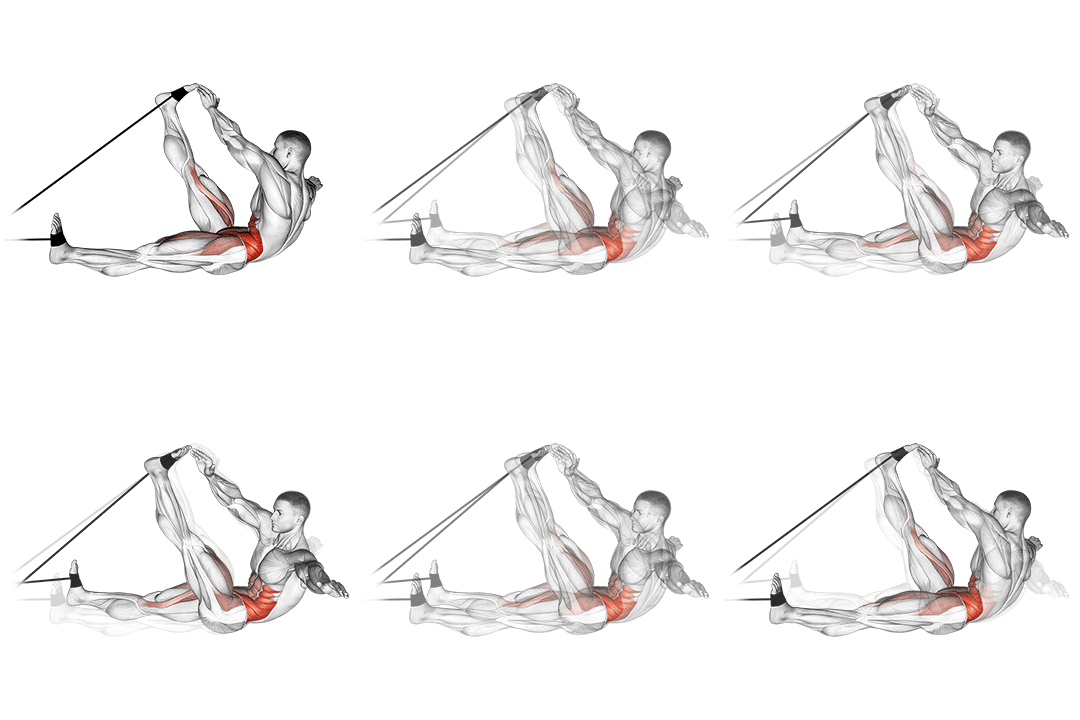
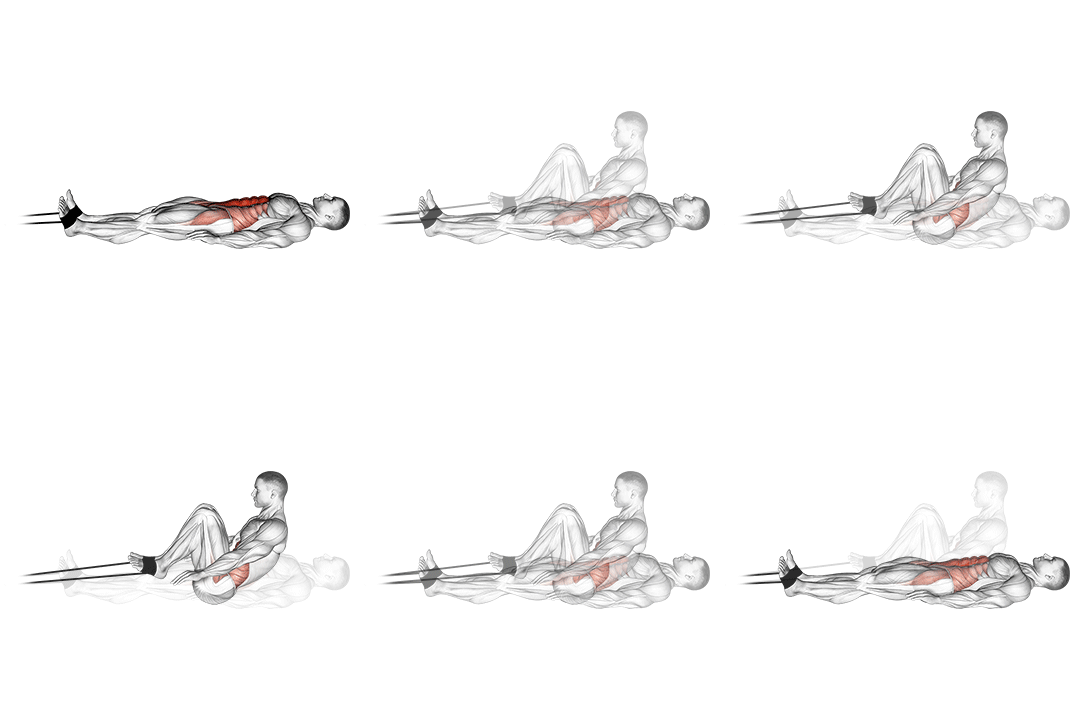
Band Alternating V-up
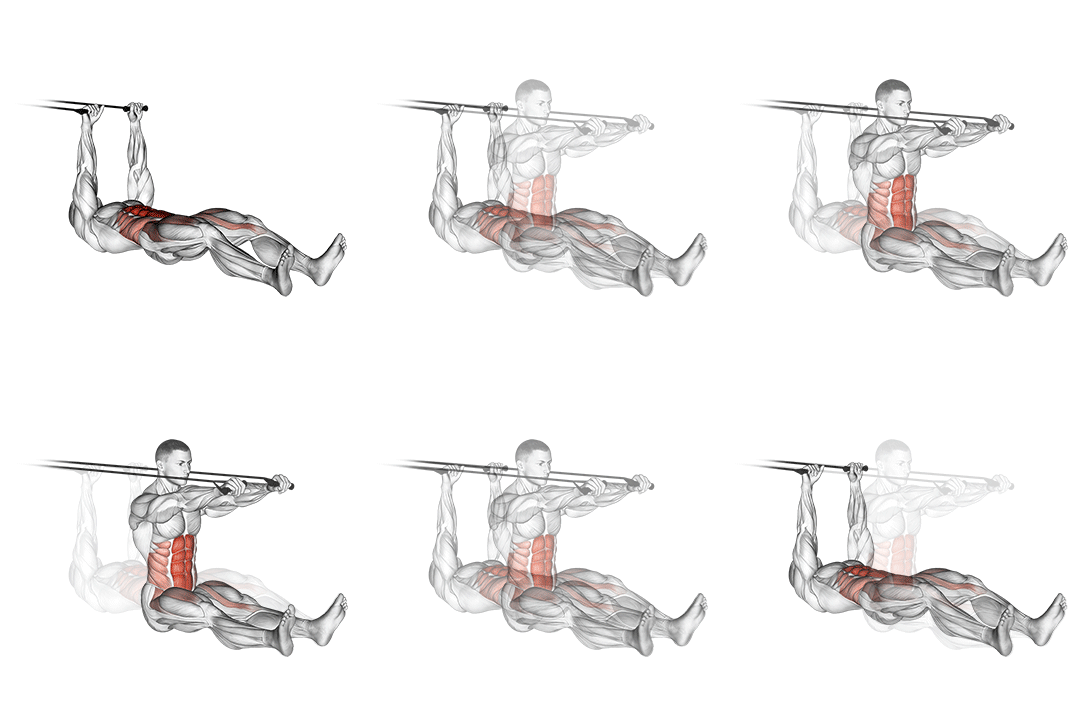
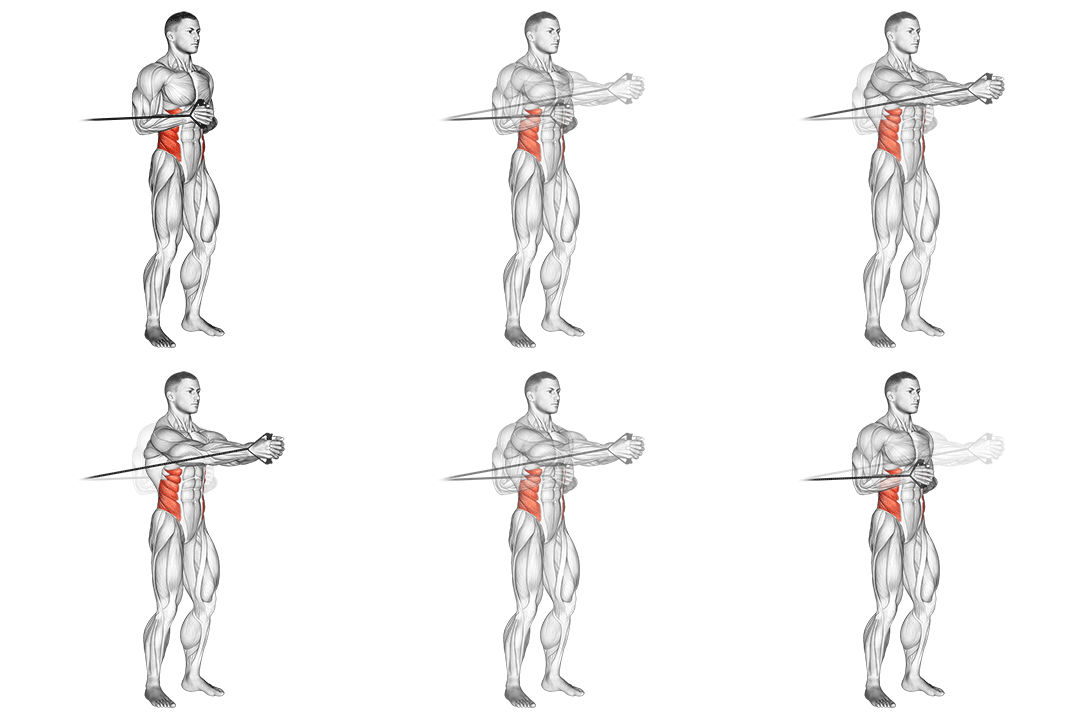
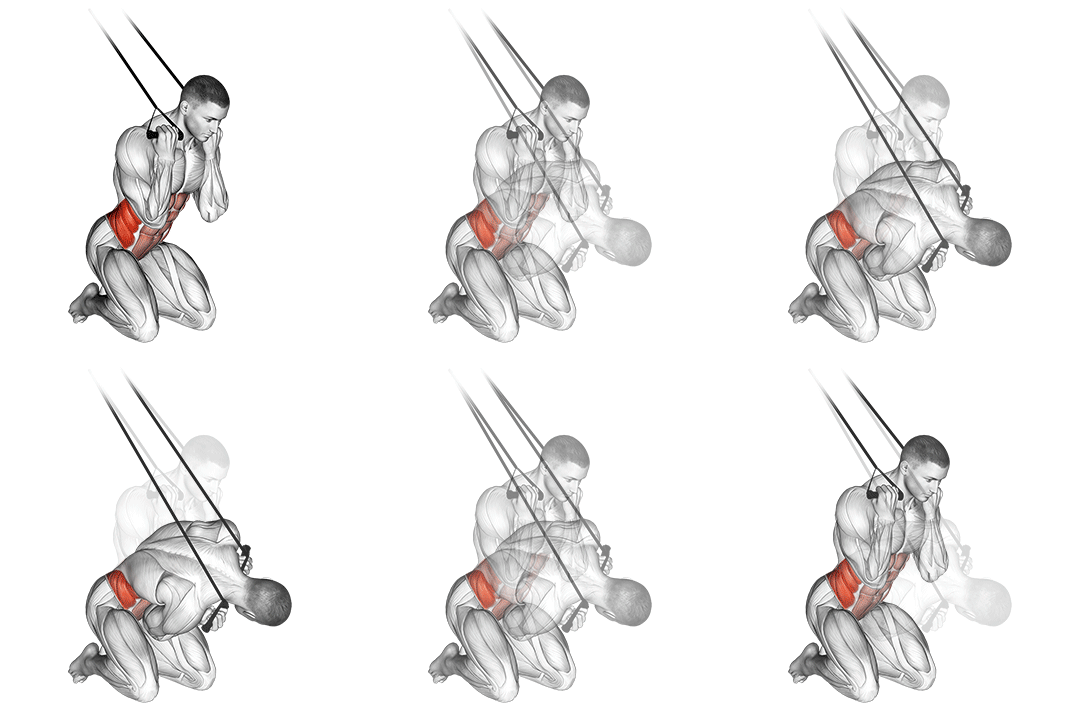
Band Push Sit-up
Head-to-Head Comparison
| Attribute | Band Alternating V-up | Band Push Sit-up |
|---|---|---|
| Target Muscle |
Abs
|
Abs
|
| Body Part |
Waist
|
Waist
|
| Equipment |
Band
|
Band
|
| Difficulty |
Advanced
|
Intermediate
|
| Movement Type |
Isolation
|
Isolation
|
| Secondary Muscles |
1
|
2
|
Secondary Muscles Activated
Band Alternating V-up
Band Push Sit-up
Visual Comparison
Overview
Band Alternating V-up vs Band Push Sit-up — if you want to sharpen your midsection, these two banded isolation moves are top options. You’ll get a clear breakdown of muscle activation, equipment needs, difficulty, technique cues, and when to pick each movement for hypertrophy, strength, or home training. I’ll show exact rep ranges (6–20), joint angles to control, and simple progressions so you can pick the move that matches your current strength and goals. Read on and I’ll give straightforward recommendations you can use in your next workout.
Key Differences
- Difficulty levels differ: Band Alternating V-up is advanced, while Band Push Sit-up is intermediate.
- Both exercises target the Abs using Band. The main differences are in their movement patterns and muscle activation angles.
Pros & Cons
Band Alternating V-up
+ Pros
- High unilateral core demand improves anti-extension and rotational control
- Strong hip-flexor and rectus abdominis recruitment for powerful midline contractions
- Progresses via heavier bands, slower eccentrics, or single-leg pause holds
- Creates a large end-range load because band tension increases with stretch
− Cons
- Advanced skill requirement — needs good hip and spinal control
- Higher lumbar shear risk if technique breaks down
- Less upper-body involvement so harder to scale with simple anchors
Band Push Sit-up
+ Pros
- Easier to learn and scale for higher rep hypertrophy work (10–20 reps)
- Adds shoulder and chest activation, distributing load away from hip flexors
- Band anchor position allows fine-tuning of resistance quickly
- Lower technical demand makes it ideal for circuit or conditioning work
− Cons
- Less unilateral stability challenge compared with alternating V-ups
- Can overload anterior shoulder if band tension is too high
- Less targeted hip-flexor strengthening for athletic carryover
When Each Exercise Wins
Band Push Sit-up lets you accumulate higher volume (10–20 reps) with controllable band tension and stable mechanics, producing more time under tension for rectus abdominis hypertrophy. The shoulder/chest contribution also lets you use heavier band setups without failing core form.
Alternating V-ups demand greater unilateral strength, hip-flexor power, and anti-extension torque — ideal for building raw core strength. Use heavier bands, tempo eccentrics (3–4 seconds), and 6–12 reps per side to maximize force production.
The Push Sit-up mirrors a standard sit-up pattern and lets you reduce or increase band tension easily, making it safer and faster to learn. Start with 10–15 reps and focus on posterior pelvic tilt and neck neutrality.
You can perform Push Sit-ups with a single loop and a door anchor or under-foot setup, and the movement scales well without complex progressions. It’s compact, easy to program in circuits, and requires less coaching to perform safely.
Frequently Asked Questions
Can I do both Band Alternating V-up and Band Push Sit-up in the same workout?
Yes. Pair them by doing the Push Sit-up for 2–3 sets of 12–15 reps as a volume movement, then follow with 2–3 sets of Alternating V-ups for 6–10 reps per side as a strength/stability finisher. Monitor fatigue and keep quality of movement high to avoid lumbar compensation.
Which exercise is better for beginners?
Band Push Sit-up is better for beginners because it follows a familiar sit-up pattern and lets you dial band tension easily. Focus on posterior pelvic tilt, exhale through the concentric, and keep the neck neutral while you build core endurance.
How do the muscle activation patterns differ?
Alternating V-ups split the force vector between hip flexion and trunk flexion, increasing iliopsoas and rectus femoris activation alongside rectus abdominis. Push Sit-ups add an anterior push vector from the shoulders/chest, reducing hip-flexor dominance and shifting some load to the upper body while still stressing the rectus abdominis in trunk flexion.
Can Band Push Sit-up replace Band Alternating V-up?
Yes for general hypertrophy and accessible core training, but not for unilateral strength and hip-flexor development. If your goal is single-leg stability or maximal core strength, keep Alternating V-ups in your program; use Push Sit-ups when you need volume or simpler progression.
Expert Verdict
Choose Band Push Sit-up when you want a scalable, home-friendly ab exercise that increases hypertrophy through higher reps and adjustable band tension — aim for 10–20 reps, 3–4 sets, and keep the chin neutral and ribs closed. Pick Band Alternating V-up when you need a more advanced core strength tool that trains unilateral stability and hip flexor power — use heavier bands, 6–12 reps per side, slow eccentric control, and pause at 45–60° to force mid-range tension. Both improve rectus abdominis work; prioritize the V-up for strength and the Push Sit-up for volume and accessibility.
Also Compare
More comparisons with Band Alternating V-up
Compare More Exercises
Use our free comparison tool to analyze any two exercises head-to-head.
Compare Exercises