

Band One Arm Twisting Chest Press vs Cross Over - With Bands: Complete Comparison Guide
Band One Arm Twisting Chest Press vs Cross Over - With Bands — you’ll get a clear head-to-head so you can pick the best move for your chest work. I’ll walk you through primary and secondary muscle activation, equipment and setup, technique cues (hand path, elbow angle, scapular control), and which exercise wins for hypertrophy, strength, beginners, and home training. Expect specific rep ranges (6–12 for strength/overload, 8–15 for hypertrophy), biomechanical notes on force vectors and length-tension, plus practical progression tips you can use next session.
Exercise Comparison
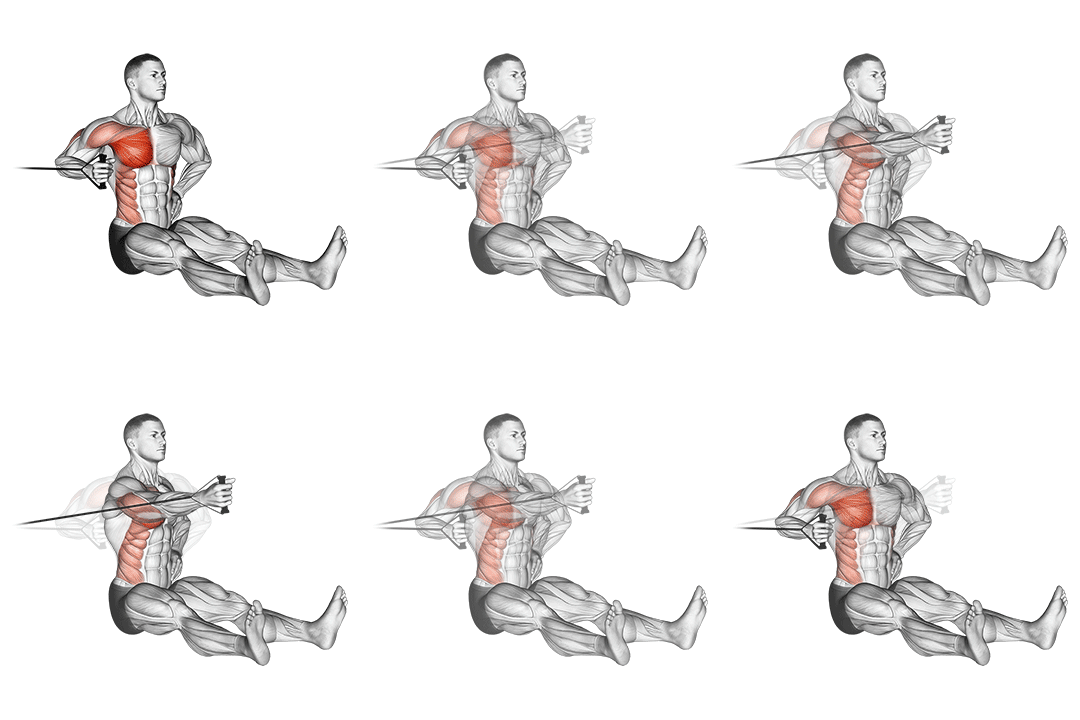
Band One Arm Twisting Chest Press

Cross Over - With Bands
Head-to-Head Comparison
| Attribute | Band One Arm Twisting Chest Press | Cross Over - With Bands |
|---|---|---|
| Target Muscle |
Pectorals
|
Pectorals
|
| Body Part |
Chest
|
Chest
|
| Equipment |
Band
|
Band
|
| Difficulty |
Intermediate
|
Intermediate
|
| Movement Type |
Compound
|
Isolation
|
| Secondary Muscles |
2
|
2
|
Secondary Muscles Activated
Band One Arm Twisting Chest Press
Cross Over - With Bands
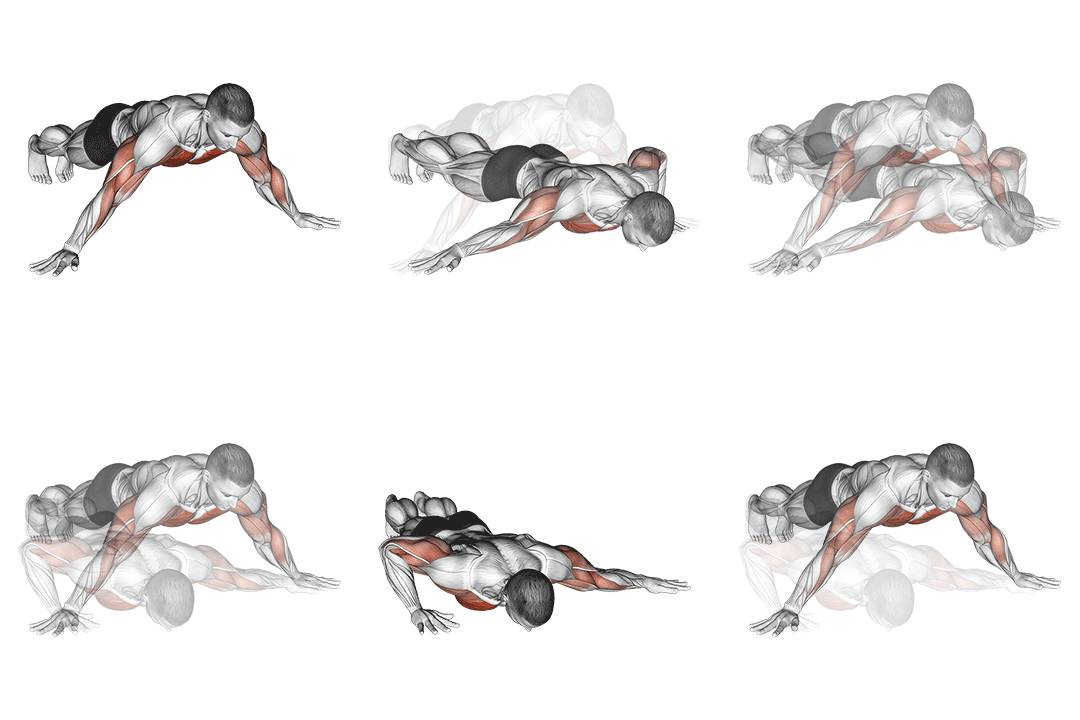
Visual Comparison
Overview
Band One Arm Twisting Chest Press vs Cross Over - With Bands — you’ll get a clear head-to-head so you can pick the best move for your chest work. I’ll walk you through primary and secondary muscle activation, equipment and setup, technique cues (hand path, elbow angle, scapular control), and which exercise wins for hypertrophy, strength, beginners, and home training. Expect specific rep ranges (6–12 for strength/overload, 8–15 for hypertrophy), biomechanical notes on force vectors and length-tension, plus practical progression tips you can use next session.
Key Differences
- Band One Arm Twisting Chest Press is a compound movement, while Cross Over - With Bands is an isolation exercise.
- Both exercises target the Pectorals using Band. The main differences are in their movement patterns and muscle activation angles.
Pros & Cons
Band One Arm Twisting Chest Press
+ Pros
- Delivers unilateral pressing strength and anti-rotation stability
- Easily increases load by using thicker bands or shortened lever arm
- Builds pressing pattern transferable to push-ups and presses
- Engages core and scapular stabilizers, improving functional control
− Cons
- Higher coordination demand — needs solid scapular control
- Can place rotational torque on the shoulder if rushed
- Less pure peak-pec isolation compared to fly-style crossovers
Cross Over - With Bands
+ Pros
- Isolates pecs for strong peak contraction and stretch
- Simple motor pattern — easy to teach and cue (bring hands to midline)
- Excellent for hypertrophy via long eccentric tension
- Lower triceps demand so pecs take primary load
− Cons
- Requires symmetrical dual anchors or careful band routing
- Less transfer to horizontal pressing strength
- Can overstretch pecs and stress anterior shoulder if anchor height is wrong
When Each Exercise Wins
Crossovers allow a longer eccentric length and stronger peak contraction of the pecs, which increases time under tension and mechanical tension — aim for 8–15 reps with 2–4 second eccentrics to maximize hypertrophy.
The twisting press is a compound, unilateral pattern that lets you apply higher net horizontal force and progressive overload. Use lower reps (6–10) and heavier band tension to build unilateral pressing strength and carryover to bilateral lifts.
Crossovers use a straightforward horizontal adduction path and lower coordination demand, making it easier to master scapular retraction and controlled ROM before progressing to rotational, unilateral presses.
The one-arm twisting press needs only a single anchor and one band, making it quicker to set up in tight spaces. It also trains multiple qualities (press strength + stability) in one movement, maximizing efficiency at home.
Frequently Asked Questions
Can I do both Band One Arm Twisting Chest Press and Cross Over - With Bands in the same workout?
Yes. Pair them by ordering compound first: start with Band One Arm Twisting Chest Press for 3–5 sets of 6–10 reps to tax pressing strength, then follow with Cross Over - With Bands for 2–3 sets of 10–15 reps to finish with focused hypertrophy work and metabolic stress.
Which exercise is better for beginners?
Cross Over - With Bands is better for beginners because it uses a simpler horizontal adduction pattern and lower stabilization demand, letting you learn scapular retraction and controlled ROM before advancing to unilateral twisting presses.
How do the muscle activation patterns differ?
The twisting press combines horizontal adduction with internal rotation and elbow extension, recruiting pecs plus triceps and anterior deltoid under a rising-force curve. Crossovers produce a more constant tension focused on pec fibers through a long eccentric stretch and peak midline contraction, with less triceps involvement.
Can Cross Over - With Bands replace Band One Arm Twisting Chest Press?
If your goal is pure pec hypertrophy, yes — crossovers can replace the twisting press. If you want to build unilateral pressing strength, rotary control, or transfer to compound pushes, keep the Band One Arm Twisting Chest Press in your program as it provides different force-vector and stability demands.
Expert Verdict
Use Cross Over - With Bands when you want targeted pec work, especially for hypertrophy phases. Its near-pure horizontal adduction gives a strong stretch and peak contraction — program 3–4 sets of 8–15 reps with controlled eccentrics. Choose Band One Arm Twisting Chest Press when you need compound pressing strength, unilateral balance, and anti-rotation control; load heavier, 3–5 sets of 6–10 reps, and focus on a controlled 45° forearm twist at lockout. Both have a place: pick Cross Over for isolation and shaping, pick the twisting press for functional pressing power and core integration. Rotate them across mesocycles to target both length-tension and force-vector adaptations.
Also Compare
More comparisons with Band One Arm Twisting Chest Press
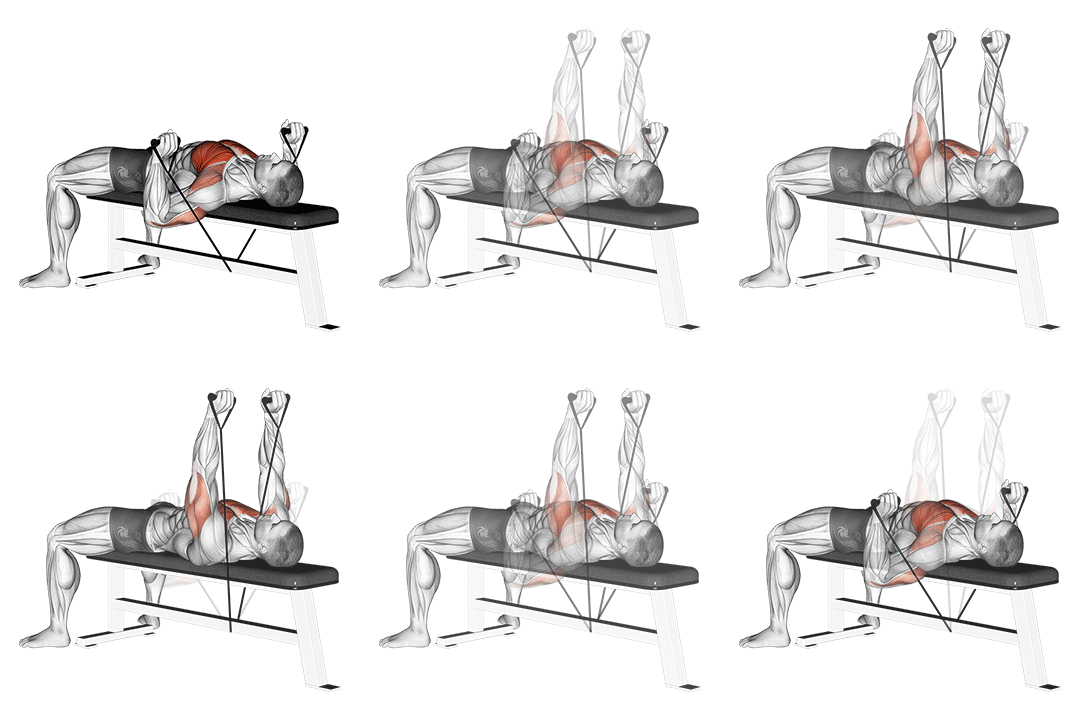
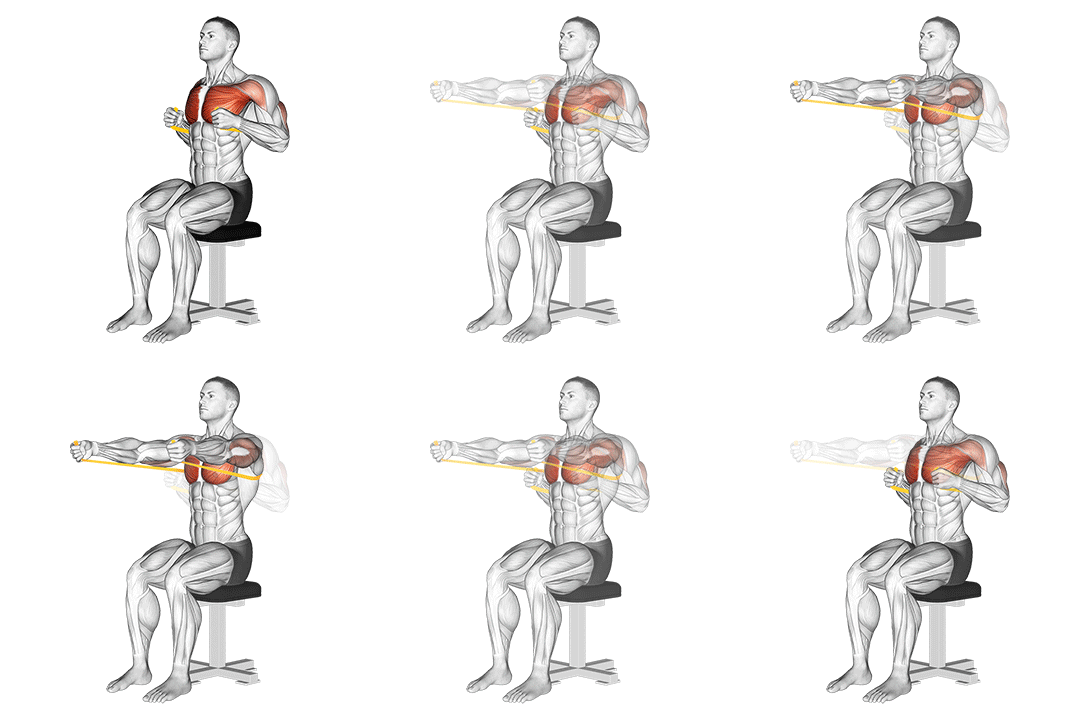
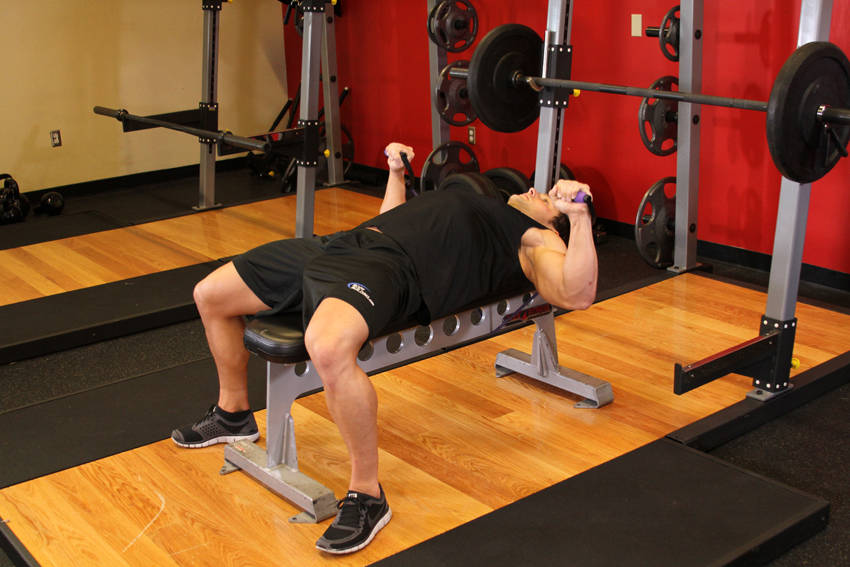
More comparisons with Cross Over - With Bands
Compare More Exercises
Use our free comparison tool to analyze any two exercises head-to-head.
Compare Exercises