

Barbell Alternate Biceps Curl vs Barbell Preacher Curl: Complete Comparison Guide
Barbell Alternate Biceps Curl vs Barbell Preacher Curl — if you want clearer elbow flexion, better peak contraction, or simpler home training, this comparison is for you. I'll walk you through how each exercise targets the biceps, the role of the forearms, required equipment, and precise technique cues that change activation. You’ll get rep-range recommendations (6–12 for strength/hypertrophy, 10–15 for isolation), progression tips, and clear scenarios for when to pick one over the other so you can choose the right move for your goals.
Exercise Comparison
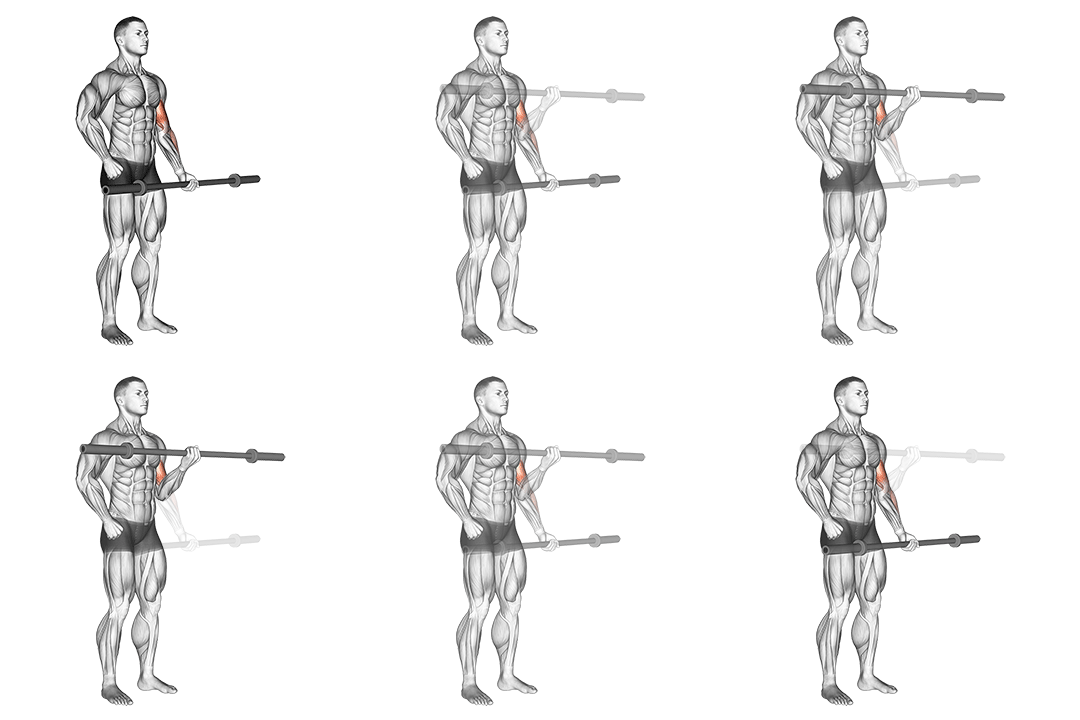
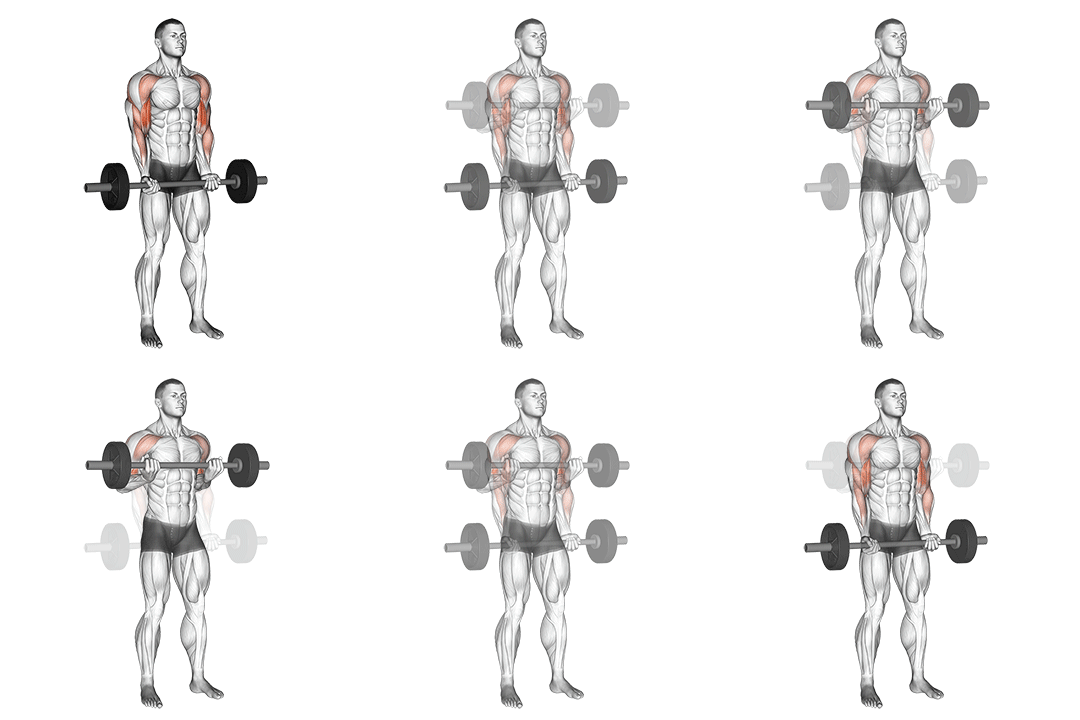
Barbell Alternate Biceps Curl
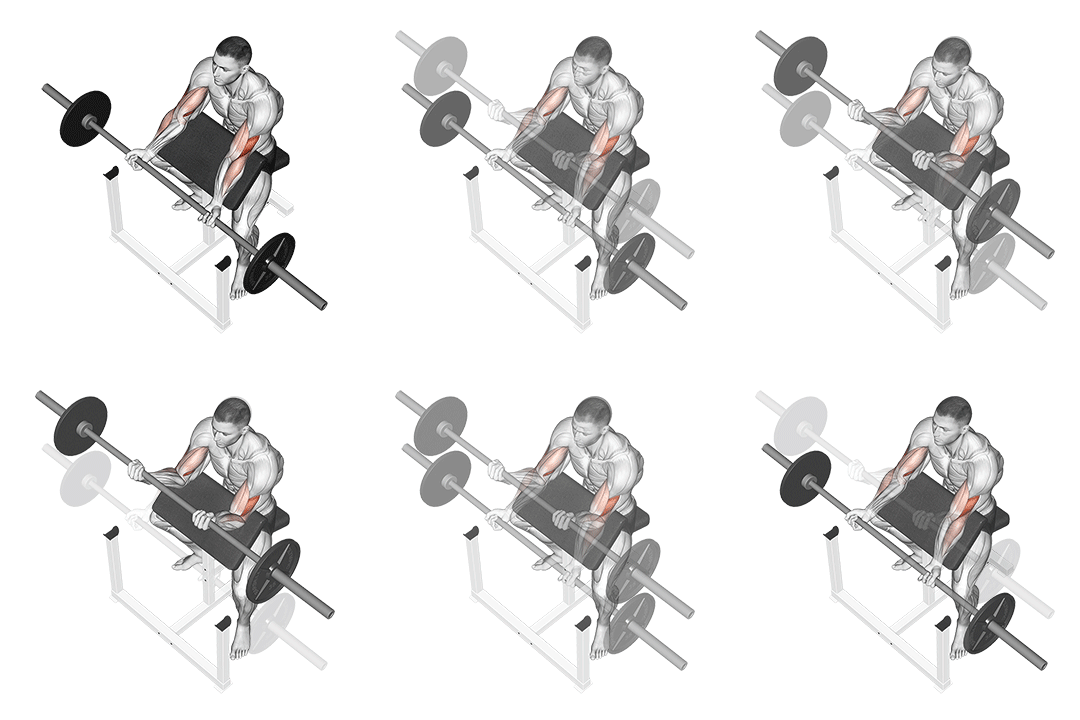
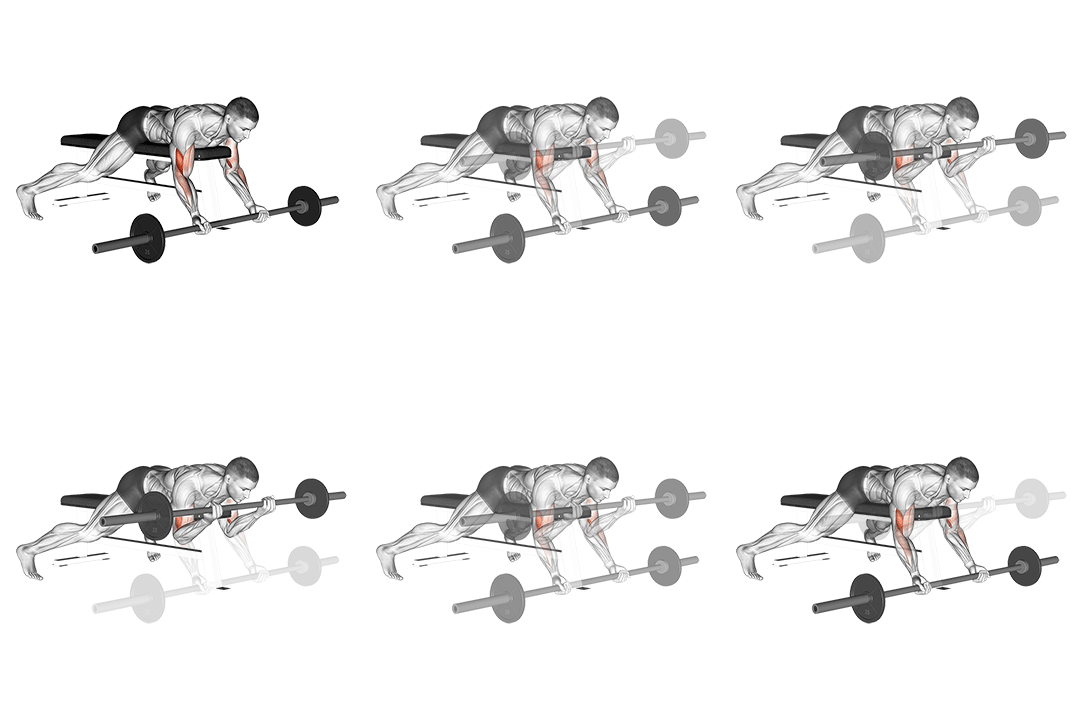
Barbell Preacher Curl
Head-to-Head Comparison
| Attribute | Barbell Alternate Biceps Curl | Barbell Preacher Curl |
|---|---|---|
| Target Muscle |
Biceps
|
Biceps
|
| Body Part |
Upper-arms
|
Upper-arms
|
| Equipment |
Barbell
|
Barbell
|
| Difficulty |
Beginner
|
Beginner
|
| Movement Type |
Isolation
|
Isolation
|
| Secondary Muscles |
1
|
1
|
Secondary Muscles Activated
Barbell Alternate Biceps Curl
Barbell Preacher Curl
Visual Comparison
Overview
Barbell Alternate Biceps Curl vs Barbell Preacher Curl — if you want clearer elbow flexion, better peak contraction, or simpler home training, this comparison is for you. I'll walk you through how each exercise targets the biceps, the role of the forearms, required equipment, and precise technique cues that change activation. You’ll get rep-range recommendations (6–12 for strength/hypertrophy, 10–15 for isolation), progression tips, and clear scenarios for when to pick one over the other so you can choose the right move for your goals.
Key Differences
- Both exercises target the Biceps using Barbell. The main differences are in their movement patterns and muscle activation angles.
Pros & Cons
Barbell Alternate Biceps Curl
+ Pros
- Allows unilateral work to fix left-right strength imbalances
- Requires minimal equipment — easy for home training
- Permits heavier total loads for strength progression
- Natural elbow path with free-standing posture improves functional control
− Cons
- Easier to use momentum and cheat, reducing time under tension
- More forearm involvement can limit pure biceps isolation
- Requires strict posture to avoid lower-back strain
Barbell Preacher Curl
+ Pros
- Excellent isolation of the biceps with limited shoulder aid
- Keeps constant tension through the top range for hypertrophy
- Reduces momentum, improving quality of each rep
- Clear bar path makes technique feedback immediate
− Cons
- Requires preacher bench or pad — less accessible at home
- Fixed elbow position can aggravate elbow tendon issues if overloaded
- Less opportunity for unilateral correction of imbalances
When Each Exercise Wins
Preacher curls hold the biceps under steady tension and minimize shoulder contribution, maximizing mechanical tension at the top of the lift. For 8–12 reps with controlled 2–3 second eccentrics, the isolation promotes targeted muscle growth.
Standing alternate curls let you handle heavier loads and train through a longer concentric range, engaging supporting stabilizers that help transfer force. Use 4–8 reps with progressive overload and strict form to build elbow-flexion strength.
The basic standing curl pattern is easier to learn and requires no special bench alignment. Beginners can safely practice elbow flexion mechanics and wrist alignment before adding isolation work like preacher curls.
You only need a barbell (or dumbbells) and space to stand, making it ideal for home setups. Preacher curls typically need a dedicated bench, which most home gyms lack.
Frequently Asked Questions
Can I do both Barbell Alternate Biceps Curl and Barbell Preacher Curl in the same workout?
Yes. Start with the movement that requires the most neural freshness for your goal (e.g., preacher for isolation hypertrophy or alternate for strength), then use the other for accessory work. Keep total weekly volume in the 10–20 hard sets range for biceps to avoid overtraining.
Which exercise is better for beginners?
Barbell Alternate Biceps Curl is generally better for beginners because the standing position is intuitive and requires less specialized equipment. It teaches elbow flexion mechanics and wrist alignment before adding the strict isolation of the preacher curl.
How do the muscle activation patterns differ?
Alternate curls allow slight shoulder stabilization and more forearm contribution, producing a sequential activation with peak biceps force near mid-range (~60–90°). Preacher curls lock the elbow, reducing shoulder input and producing a concentrated biceps peak at the top of the arc with more constant tension.
Can Barbell Preacher Curl replace Barbell Alternate Biceps Curl?
Preacher curls can replace alternate curls when your goal is strict isolation and hypertrophy, but they don’t address unilateral imbalances or require the same stabilization pattern. For strength-building or home training, alternate curls remain the better option.
Expert Verdict
Use Barbell Preacher Curls when you want strict isolation, high-quality time under tension, and peak contraction at the top of the range — aim for 8–12 reps with slow eccentrics to stimulate hypertrophy. Choose Barbell Alternate Biceps Curls when you need accessibility, heavier loading, or unilateral correction; use 4–8 reps for strength or 8–12 for size. If you have elbow tendon issues, favor standing curls with lighter loads and controlled tempo. For balanced development, rotate both into your program: preacher curls for focused sets and alternate curls for heavier compound-style loading.
Also Compare
More comparisons with Barbell Alternate Biceps Curl
More comparisons with Barbell Preacher Curl
Compare More Exercises
Use our free comparison tool to analyze any two exercises head-to-head.
Compare Exercises