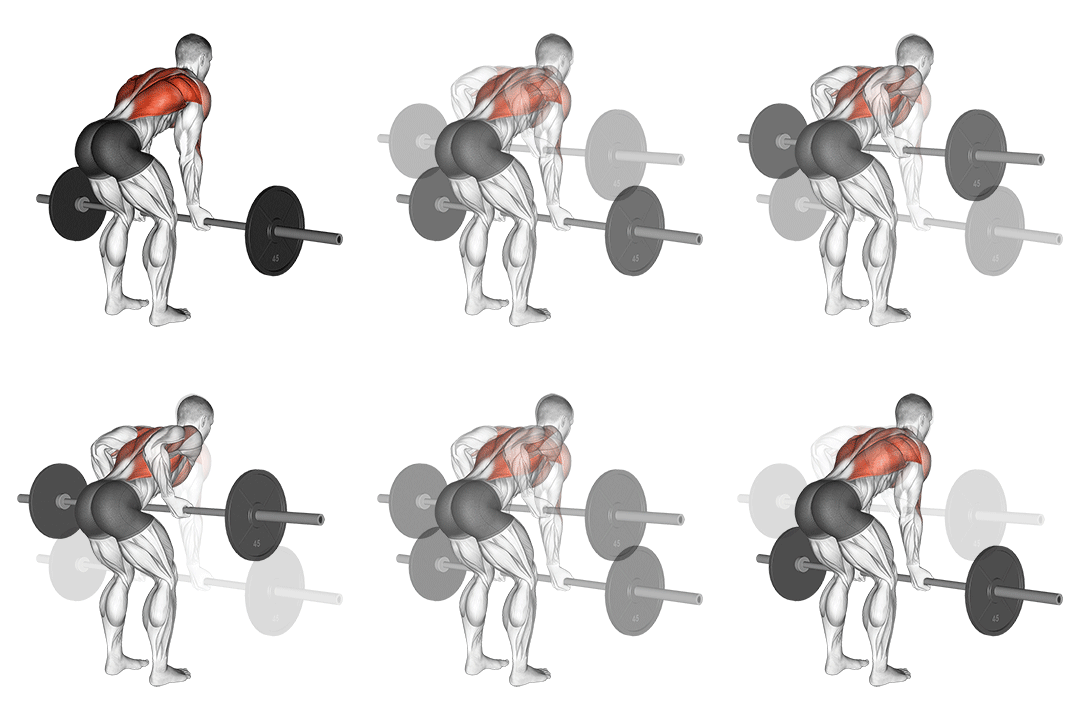
Barbell Decline Wide-grip Pullover vs Barbell Pullover

Compare target muscles, equipment, difficulty, movement type, and secondary muscles for Barbell Decline Wide-grip Pullover and Barbell Pullover.

Change comparison Share

Get comparison link

Select the link and use your device's Copy command.

Comparison overview

AI-generated
Barbell Decline Wide-grip Pullover vs Barbell Pullover — both target the lats but change leverage, range of motion, and chest involvement. If you want clear guidance, this comparison walks you through primary and secondary muscle activation, equipment needs, difficulty, injury risk, and rep ranges so you can pick the move that fits your program. You’ll get technique cues (grip width, elbow angle, scapular control), biomechanical reasoning (length-tension and force vector shifts), and practical recommendations for hypertrophy, strength, beginners, and home training.

Exercise Comparison

Exercise A
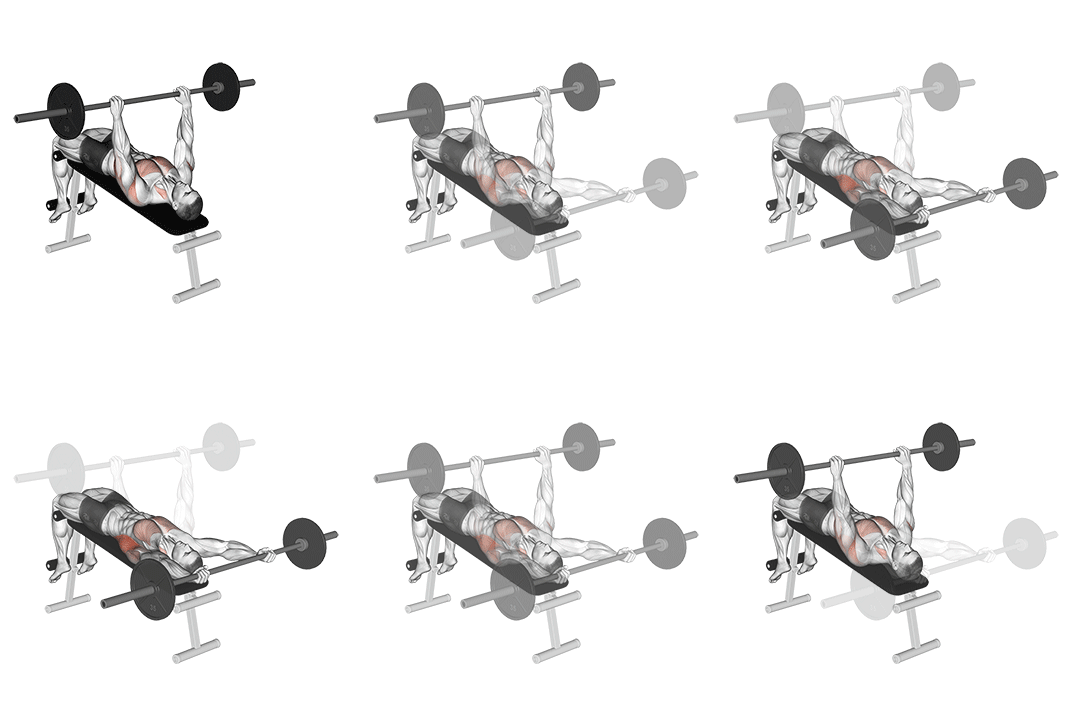
Barbell Decline Wide-grip Pullover demonstration

Barbell Decline Wide-grip Pullover

Target Lats
Equipment Barbell
Body Part Back
Difficulty Intermediate
Movement Isolation
Secondary Muscles
Triceps Chest
VS
Exercise B
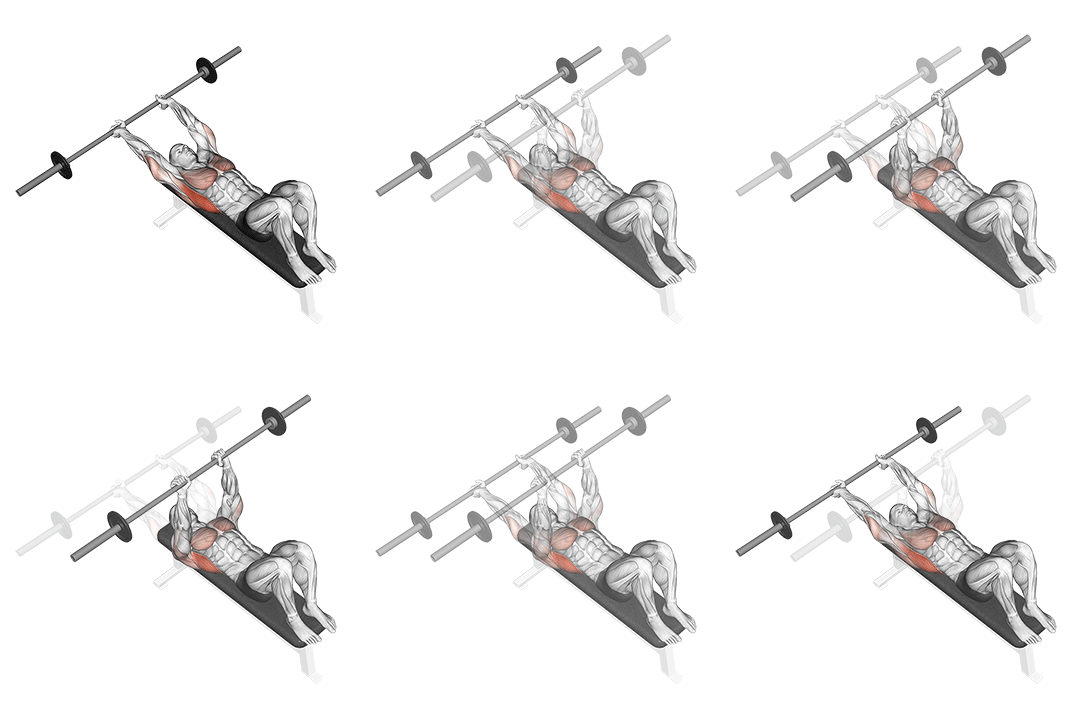
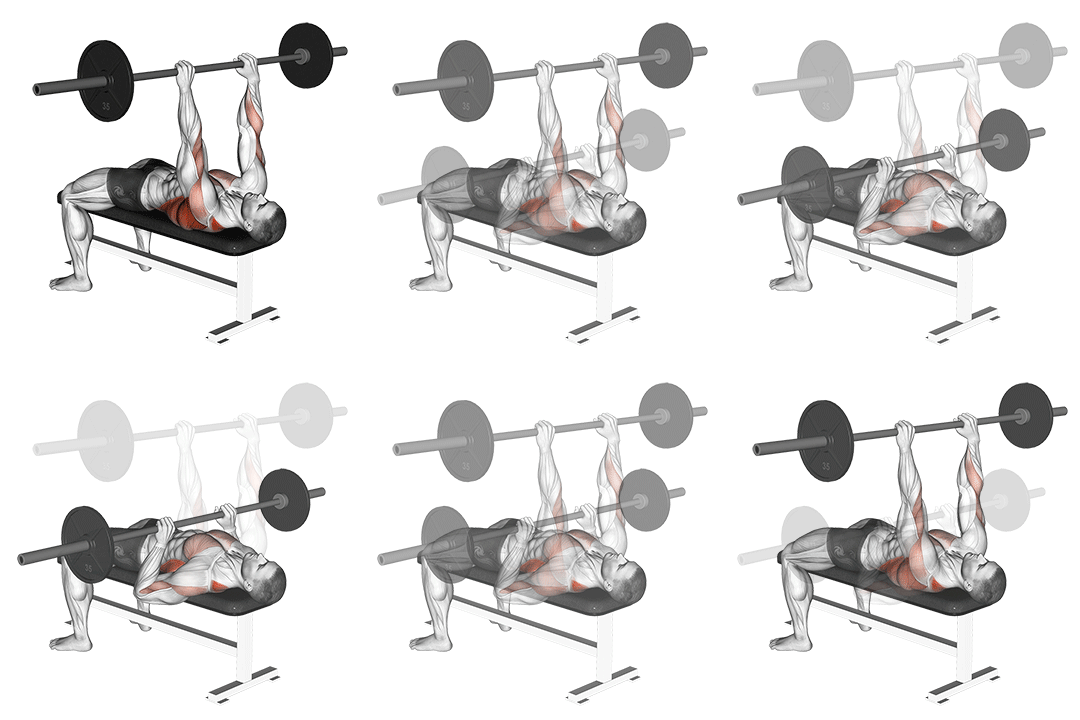
Barbell Pullover demonstration

Barbell Pullover

Target Lats
Equipment Barbell
Body Part Back
Difficulty Intermediate
Movement Isolation
Secondary Muscles
Chest Triceps

Head-to-Head Comparison

Different values are marked. These are catalogue attributes, not performance scores.

Muscles used

Listed target and secondary muscles, shown on the body. Locations, not activation or strength scores.

  • Target
  • Secondary
  • Not highlighted

Barbell Decline Wide-grip Pullover

Front
Barbell Decline Wide-grip Pullover: front muscle locationsSolid: listed target. Striped: listed secondary. Grey: not highlighted. Locations, not activation or strength scores. See the muscle names below.
Back
Barbell Decline Wide-grip Pullover: back muscle locationsSolid: listed target. Striped: listed secondary. Grey: not highlighted. Locations, not activation or strength scores. See the muscle names below.
Target
Lats
Secondary
Triceps, Chest

Barbell Pullover

Front
Barbell Pullover: front muscle locationsSolid: listed target. Striped: listed secondary. Grey: not highlighted. Locations, not activation or strength scores. See the muscle names below.
Back
Barbell Pullover: back muscle locationsSolid: listed target. Striped: listed secondary. Grey: not highlighted. Locations, not activation or strength scores. See the muscle names below.
Target
Lats
Secondary
Chest, Triceps

Grey does not mean a muscle is unused. The diagrams show only the mapped catalogue labels.

Attribute Barbell Decline Wide-grip Pullover Barbell Pullover
Target Muscle
Lats
Lats
Body Part
Back
Back
Equipment
Barbell
Barbell
Difficulty
Intermediate
Intermediate
Movement Type
Isolation
Isolation
Secondary Muscles
Triceps, Chest
Chest, Triceps

Visual Comparison

An illustrative 1–10 profile derived from catalog difficulty, equipment, and listed-muscle fields—not measured performance or muscle activation.

Key Differences

  • Both exercises target the Lats using Barbell. The catalogue does not establish which exercise is better for an individual goal.

Muscle comparison

Shared target muscles

Both movements load the latissimus dorsi through shoulder extension and long-axis humeral adduction; peak tension occurs near end-range shoulder extension. The decline wide-grip version increases initial stretch on the lats by placing the torso at roughly a 15–30° decline, shifting the line of pull so the lats operate at a longer muscle length for greater passive tension.

Secondary muscle differences

The Barbell Decline Wide-grip Pullover places more emphasis on the triceps long head and lower chest due to increased shoulder horizontal abduction and wider grip, while the flat Barbell Pullover recruits the chest (sternal pecs) and anterior deltoid slightly more as the humerus travels in a more sagittal plane. The decline version typically reduces anterior deltoid contribution and boosts lower pec tension.

Muscle involvement analysis

During both exercises the lats activate concentrically as you pull the bar back up and eccentrically as you lower it; decline wide-grip increases eccentric stretch magnitude, raising time under tension. With a wider grip you increase horizontal abduction moment arms, shifting force vectors laterally and increasing chest/triceps torque. Keep elbows ~10–20° bent to focus tension on lats and limit biceps involvement.

Equipment and setup

Barbell Decline Wide-grip Pullover: setup

Barbell Decline Wide-grip Pullover requires a decline bench (15–30° recommended), a barbell, and collars. You need space to safely load and unload the bar behind the head and ideally a spotter for heavier sets.

Barbell Pullover: setup

Barbell Pullover needs a flat bench or stability ball and a barbell. It can be done on a flat bench, which most gyms and many homes have, and it doesn’t require the angled decline bench.

Access and practicality

Barbell Pullover is more accessible because it only needs a flat bench and barbell. The decline variant requires extra equipment (decline bench) and more setup, so it’s less practical for home gyms without specialized benches.

Learning and progression

Learning the movements

Barbell Pullover is easier to learn because the flat bench keeps the torso stable and the movement path is more straightforward. Decline wide-grip adds setup complexity and a larger ROM that requires better shoulder control.

Progression considerations

Decline wide-grip offers greater progression potential for hypertrophy via increased stretch and time under tension; you can manipulate decline angle, grip width, and eccentric tempo. Barbell Pullover allows linear loading with heavier weights more safely for strength-oriented sets.

Limitations and precautions

Decline wide-grip has a higher shoulder strain risk due to increased end-range extension and wider humeral abduction, especially if shoulders lack mobility. Use a conservative ROM and 10–20° elbow flexion to reduce anterior capsule stress; Barbell Pullover has lower risk when you avoid excessive lean and uncontrolled negatives.

Pros & Cons

Barbell Decline Wide-grip Pullover

+ Pros

  • Greater lat stretch and length-tension advantage at 15–30° decline
  • Increases lower chest and triceps long-head recruitment via wider grip
  • Better time-under-tension stimulus for hypertrophy with deeper eccentrics
  • Allows targeted isolation when you control scapular retraction and elbow angle

− Cons

  • Requires a decline bench and more setup space
  • Higher shoulder stress at end range, especially with poor mobility
  • Harder to safely load heavy without a spotter

Barbell Pullover

+ Pros

  • Easier setup—only a flat bench or stability ball required
  • Safer to load heavier weights for strength-focused sets
  • Cleaner sagittal plane pull that’s easier to teach and learn
  • More versatile for home gyms and circuit formats

− Cons

  • Slightly less passive stretch on the lats compared with decline
  • Can shift more load to pecs and anterior deltoids if form drifts
  • Less emphasis on triceps long-head than the wide-grip decline variation

When Each Exercise Wins

1
For muscle hypertrophy: Barbell Decline Wide-grip Pullover

The decline wide-grip increases initial stretch and eccentric time under tension, driving greater mechanical tension in the lats and lower pecs. Use 8–12 reps with 2–3 second eccentrics and controlled range to maximize growth.

2
For strength gains: Barbell Pullover

The flat-barbell pullover allows heavier, more stable loading and a cleaner force vector for progressive overload. Aim for 4–6 reps with longer rest and focus on strong concentric drive.

3
For beginners: Barbell Pullover

Its simpler setup and reduced end-range shoulder stress make the flat pullover easier to learn. Start with light weight, keep elbows slightly bent (10–20°), and practice controlled tempo before increasing load.

4
For home workouts: Barbell Pullover

Most home gyms lack a decline bench; the flat pullover works with a bench or stability ball and still targets the lats effectively. Use moderate reps (8–15) and prioritize technique to avoid shoulder strain.

Frequently Asked Questions

Can I do both Barbell Decline Wide-grip Pullover and Barbell Pullover in the same workout?
Yes. Sequence matters: do the pullover variant that requires heavier loading or better technique first. For hypertrophy, start with the decline wide-grip for 3–4 sets of 8–12 controlled reps, then finish with 2 sets of flat pullovers for density and varied force vectors.

Which exercise is better for beginners?

Barbell Pullover is better for beginners because it has a simpler setup and lower end-range shoulder stress. Begin with light weight, keep elbows slightly bent, and focus on scapular control before progressing to decline versions.

How do the muscle activation patterns differ?

Both exercises load lats through shoulder extension, but the decline wide-grip increases eccentric stretch and lateral force vectors, raising lower pec and triceps long-head activation. The flat pullover stays more sagittal, shifting some load to the sternum-facing pec fibers and anterior deltoid.

Can Barbell Pullover replace Barbell Decline Wide-grip Pullover?

Yes for general lat stimulus and accessibility, but not if your goal is maximizing stretch-induced hypertrophy of the lats and lower chest. Replace it when you lack a decline bench or have shoulder mobility limits, and add decline pullovers when you need extra length-tension stimulus.

Comparison Summary

Use the Barbell Decline Wide-grip Pullover when your priority is lat hypertrophy and you have the shoulder mobility and equipment to control a longer range of motion. Its decline angle and wider grip increase stretch and recruit the lower chest and triceps more, so program it for 8–12 reps with slow eccentrics. Choose the Barbell Pullover when you want a simpler, more accessible movement for strength or mixed-programming—it lets you load heavier, learn faster, and do it at home. For beginners or anyone with shoulder issues, start with the flat pullover, emphasize a 10–20° elbow bend, scapular stability, and progressive loading before testing decline variations.
Exercise instructions

Steps from the exercise catalogue. Read the full sequence before starting.

Barbell Decline Wide-grip Pullover
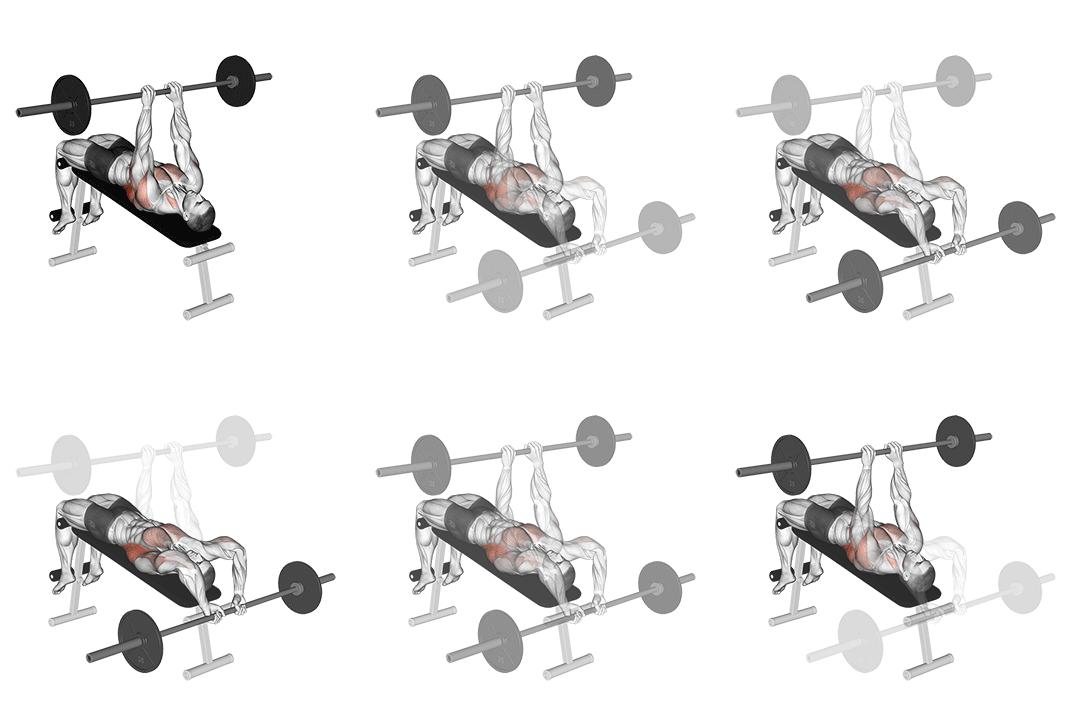
  1. Lie on a decline bench with your head lower than your hips and your feet secured.
  2. Hold a barbell with a wide grip and extend your arms straight above your chest.
  3. Lower the barbell behind your head in a controlled manner, keeping your arms straight.
Read remaining steps for Barbell Decline Wide-grip Pullover
  1. Pause for a moment, then raise the barbell back to the starting position.
  2. Repeat for the desired number of repetitions.

Barbell Pullover

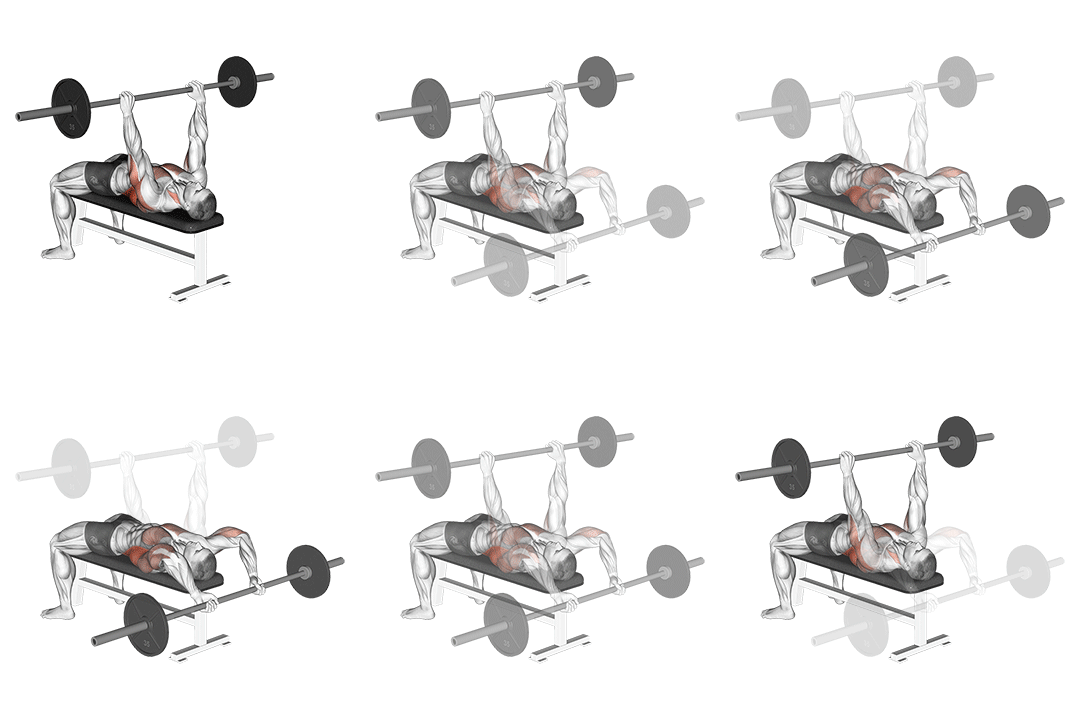
  1. Lie flat on a bench with your head at one end and your feet on the floor.
  2. Hold a barbell with a shoulder-width grip and extend your arms straight above your chest.
  3. Keeping your arms straight, lower the barbell behind your head in a controlled manner until you feel a stretch in your lats.
Read remaining steps for Barbell Pullover
  1. Pause for a moment, then raise the barbell back to the starting position.
  2. Repeat for the desired number of repetitions.

Also Compare

Compare another pair

Choose two exercises to see their differences side by side.

Compare Exercises