

Barbell Seated Calf Raise vs Standing Barbell Calf Raise: Complete Comparison Guide
Barbell Seated Calf Raise vs Standing Barbell Calf Raise — {Exercise1} vs {Exercise2} — you’ll learn which movement better targets the soleus or gastrocnemius, what equipment each needs, and how to program them for strength or size. I’ll cover muscle activation, specific technique cues (foot placement, knee angle, tempo), rep ranges (6–12 for strength, 12–20+ for endurance/soleus), and practical scenarios so you can pick the right variation for your goals and training setup.
Exercise Comparison
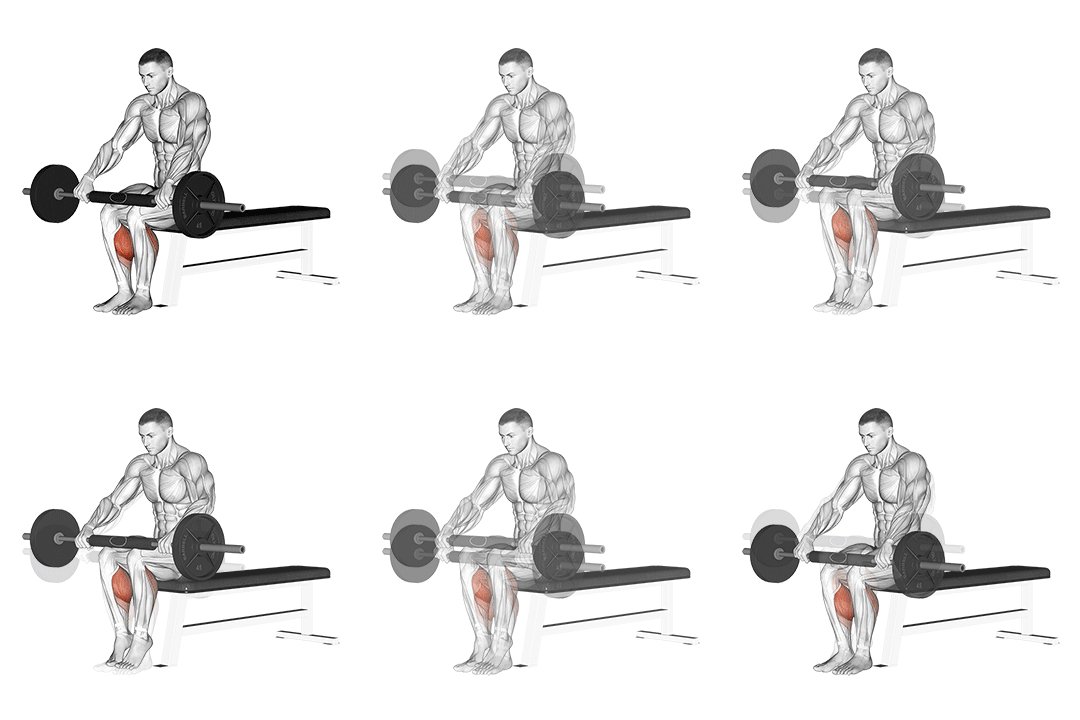
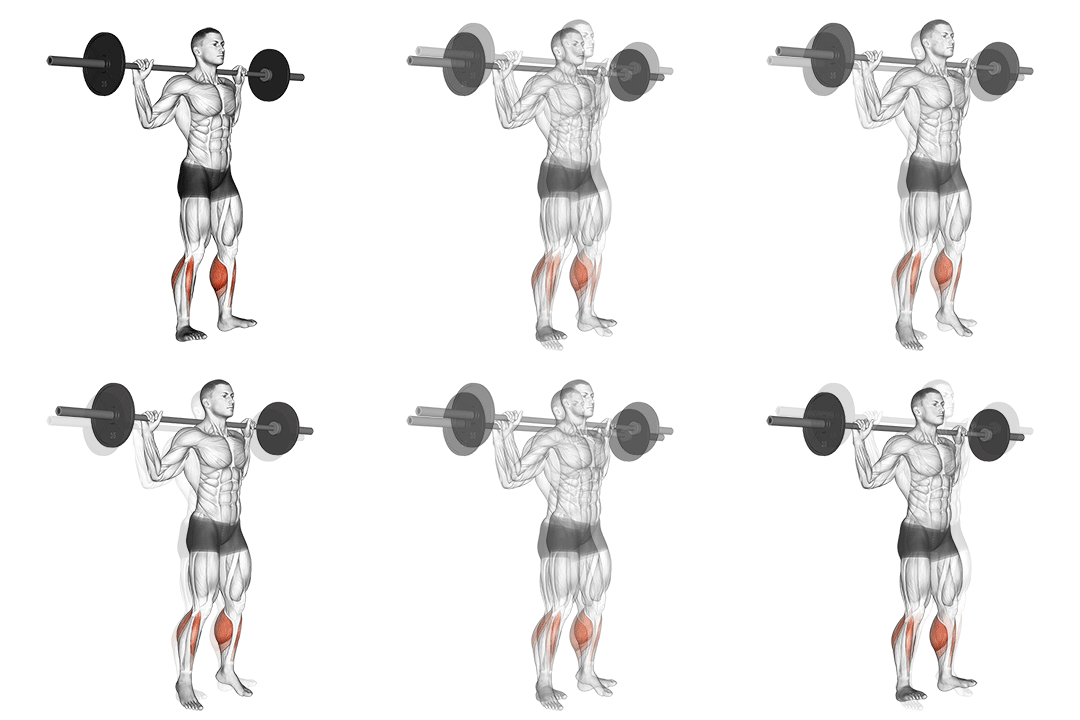
Barbell Seated Calf Raise
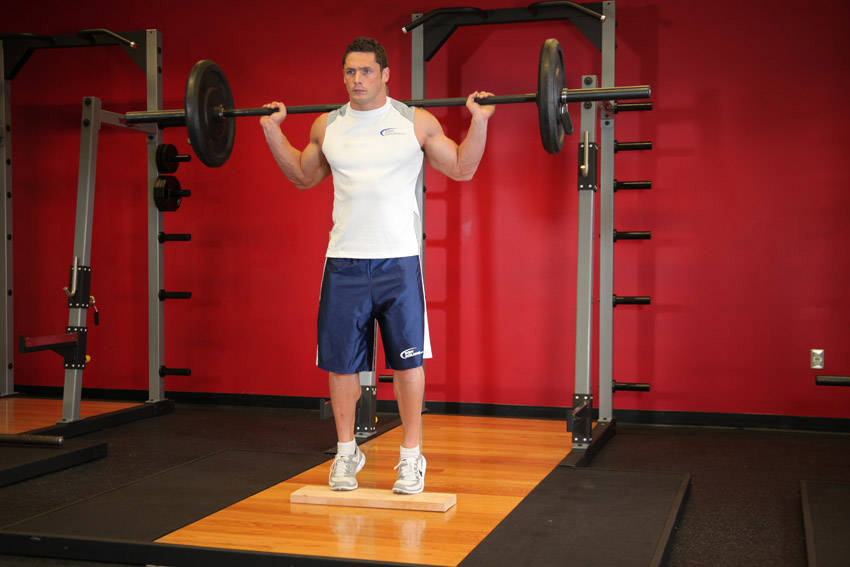
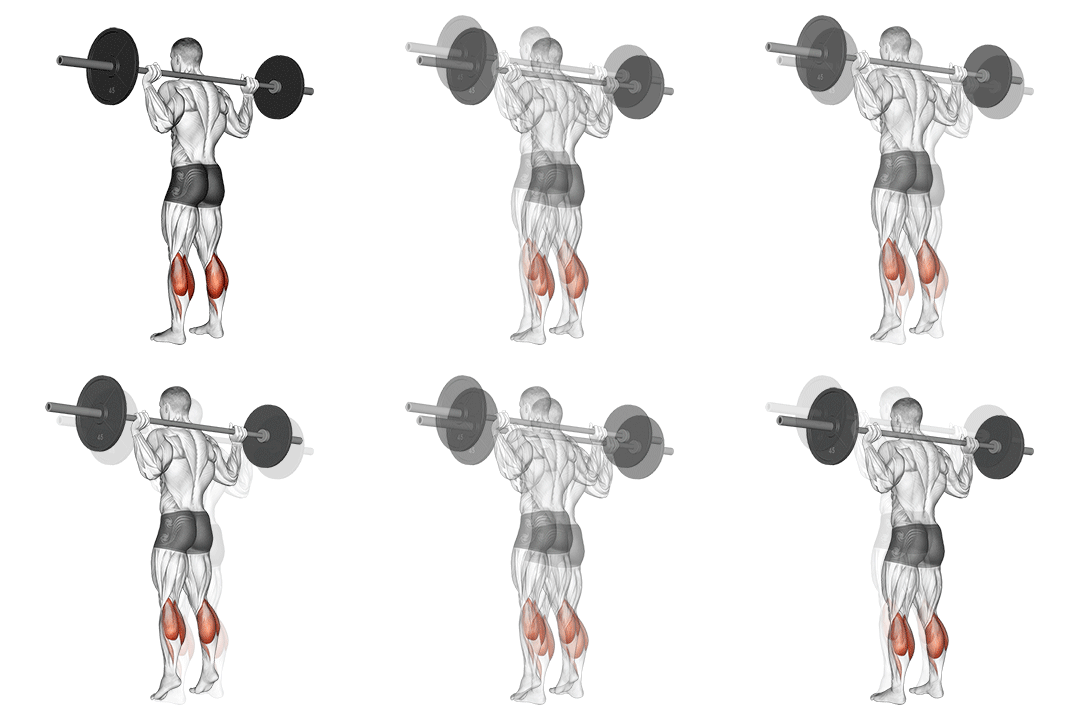
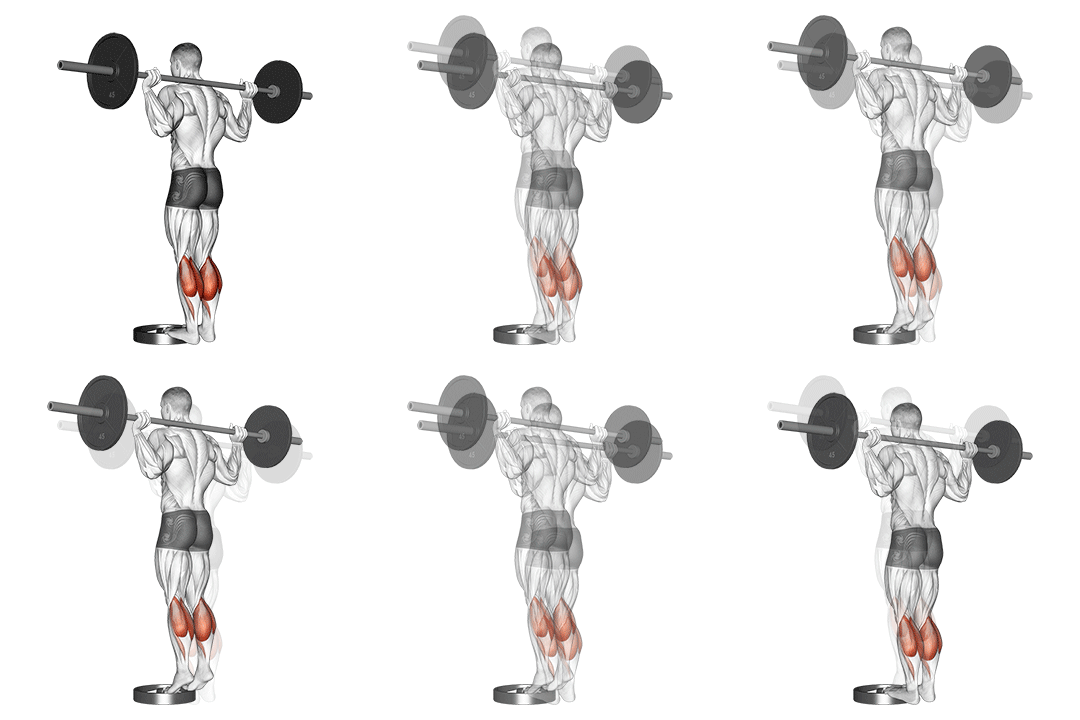
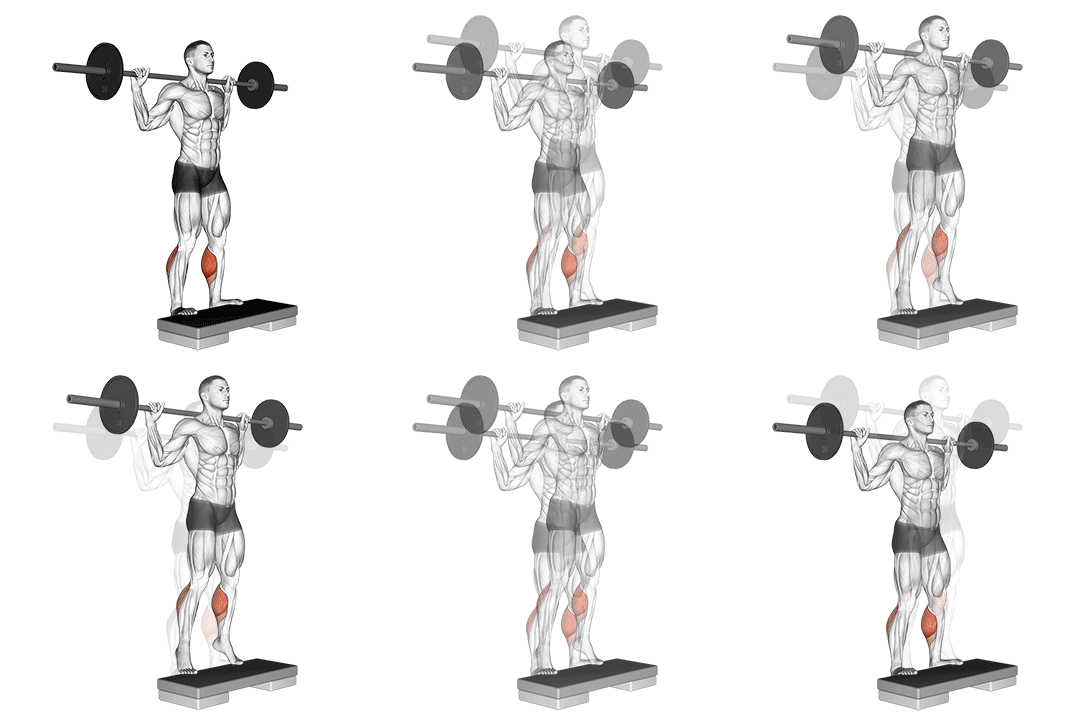
Standing Barbell Calf Raise
Head-to-Head Comparison
| Attribute | Barbell Seated Calf Raise | Standing Barbell Calf Raise |
|---|---|---|
| Target Muscle |
Calves
|
Calves
|
| Body Part |
Lower-legs
|
Lower-legs
|
| Equipment |
Barbell
|
Barbell
|
| Difficulty |
Beginner
|
Beginner
|
| Movement Type |
Isolation
|
Isolation
|
| Secondary Muscles |
2
|
0
|
Secondary Muscles Activated
Barbell Seated Calf Raise
Standing Barbell Calf Raise
Visual Comparison
Overview
Barbell Seated Calf Raise vs Standing Barbell Calf Raise — {Exercise1} vs {Exercise2} — you’ll learn which movement better targets the soleus or gastrocnemius, what equipment each needs, and how to program them for strength or size. I’ll cover muscle activation, specific technique cues (foot placement, knee angle, tempo), rep ranges (6–12 for strength, 12–20+ for endurance/soleus), and practical scenarios so you can pick the right variation for your goals and training setup.
Key Differences
- Both exercises target the Calves using Barbell. The main differences are in their movement patterns and muscle activation angles.
Pros & Cons
Barbell Seated Calf Raise
+ Pros
- Better isolates the soleus by placing the knee in flexion
- Lower spinal loading—safer for those with back issues
- Easier to learn and control tempo for eccentric emphasis
- Excellent for high-rep endurance work (12–20+ reps)
− Cons
- Less gastrocnemius stimulus due to knee flexion
- Setup can be awkward without a proper bench or pad
- Harder to load maximally compared to standing variations
Standing Barbell Calf Raise
+ Pros
- Greater gastrocnemius activation with extended knee
- Allows heavier loading and single-leg progressions
- More accessible setup—just a barbell and a step
- Better carryover to upright athletic movements
− Cons
- Higher balance and spinal stability demands
- Greater compressive load on the spine under maximal weights
- Less soleus isolation compared with seated version
When Each Exercise Wins
Seated raises place the soleus at a stronger position for high-rep, time-under-tension work. Use 12–20+ reps with controlled eccentrics to stimulate the soleus’ predominantly slow-twitch fibers for visible lower-leg thickness.
Standing allows heavier absolute loading and single-leg overloads that increase maximal plantarflexion torque. Train 4–8 reps with heavy loads and long rest intervals to improve force production through the full ankle range.
Seated raises simplify the movement by isolating ankle motion and reducing balance requirements. Beginners can learn controlled dorsiflexion-to-plantarflexion rhythm and build endurance before progressing to standing variations.
Standing variations need minimal kit: a barbell and a step or even a stacked plate. They’re easier to set up at home and allow effective single-leg work if space or load is limited.
Frequently Asked Questions
Can I do both Barbell Seated Calf Raise and Standing Barbell Calf Raise in the same workout?
Yes. Pair them by order and goal: do standing raises first for heavy strength work (4–8 reps), then seated raises for pure soleus volume (12–20 reps). Keep total sets per session in the 6–10 range to avoid overtraining the Achilles and calves.
Which exercise is better for beginners?
Barbell Seated Calf Raise is better for most beginners because it removes balance demands and lets you focus on ankle-only movement. Start with 2–4 sets of 12–15 controlled reps to build tendon tolerance and motor control.
How do the muscle activation patterns differ?
Knee angle shifts activation: with the knee flexed (seated) the gastrocnemius shortens and contributes less, so the soleus carries a larger share of plantarflexion force. Standing with an extended knee increases gastrocnemius force output and overall plantarflexion torque.
Can Standing Barbell Calf Raise replace Barbell Seated Calf Raise?
Standing raises can replace seated for general calf work but won’t isolate the soleus as effectively. If your goal is full calf development, include both: standing for gastrocnemius strength and seated for soleus volume.
Expert Verdict
Use both exercises to get complete calf development: seated raises to prioritize the soleus with higher reps (12–20+), and standing raises to load the gastrocnemius and build maximal plantarflexion strength with lower reps (4–12). If you must choose one, pick barbell seated for muscle thickness and endurance-focused work, or standing barbell for strength, heavier loading, and practical carryover to upright activities. Program them across a week—e.g., two calf sessions: one seated-focused (3–4 sets of 15–20, slow 2–3s eccentrics) and one standing-focused (4–6 sets of 6–12, full ROM off a step)—to exploit different length-tension and force-vector benefits.
Also Compare
More comparisons with Barbell Seated Calf Raise
More comparisons with Standing Barbell Calf Raise
Compare More Exercises
Use our free comparison tool to analyze any two exercises head-to-head.
Compare Exercises