

Barbell Standing Calf Raise vs Barbell Standing Rocking Leg Calf Raise: Complete Comparison Guide
Barbell Standing Calf Raise vs Barbell Standing Rocking Leg Calf Raise — two barbell-based isolation moves that target the calves but load the body differently. If you want clearer cues on which to use for muscle growth, strength, balance, or joint comfort, this guide has your back. You’ll get technique cues, biomechanics (length-tension, ankle dorsiflexion angles), rep and load recommendations, and practical programming advice so you can pick the best option for your goals and train smarter.
Exercise Comparison
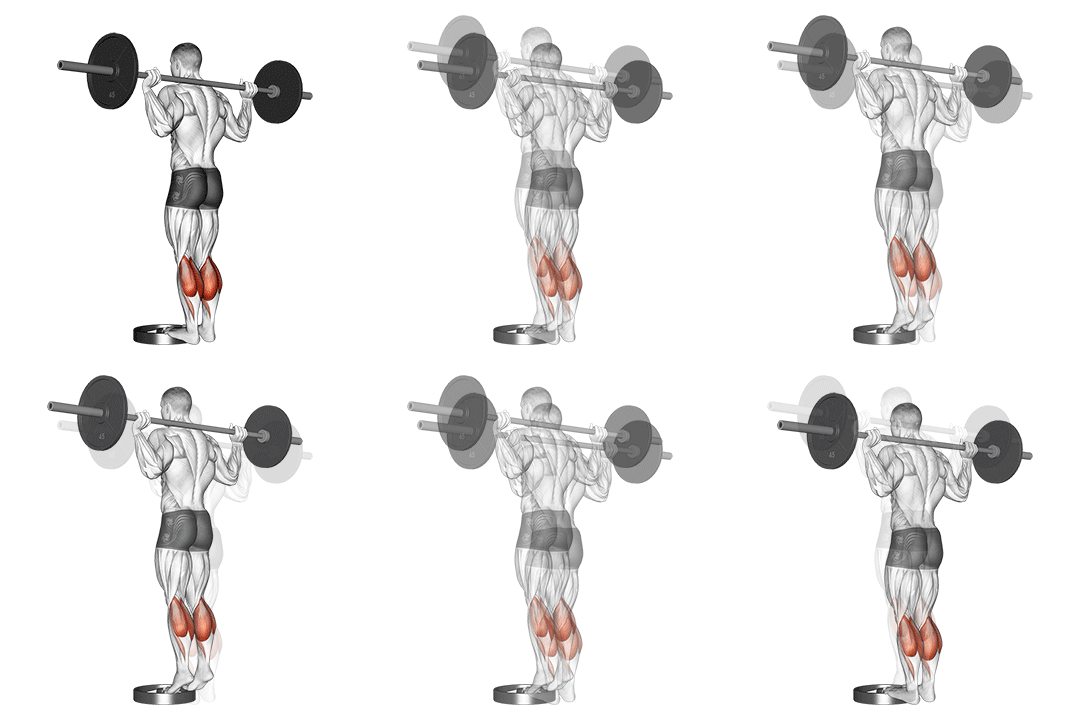
Barbell Standing Calf Raise
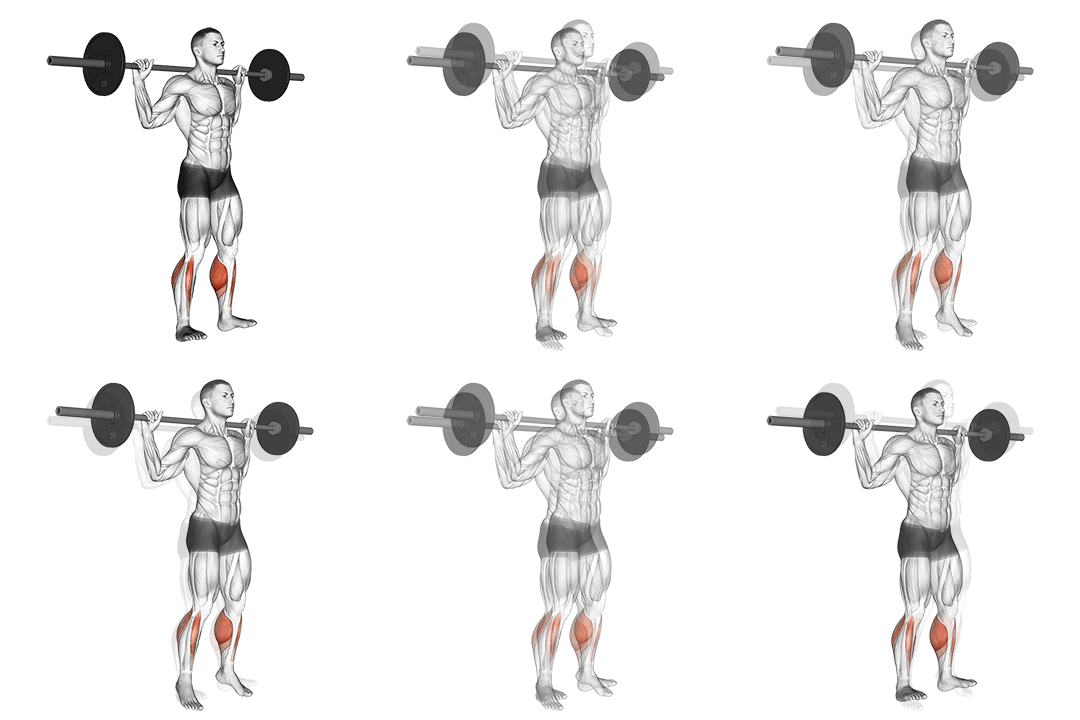
Barbell Standing Rocking Leg Calf Raise
Head-to-Head Comparison
| Attribute | Barbell Standing Calf Raise | Barbell Standing Rocking Leg Calf Raise |
|---|---|---|
| Target Muscle |
Calves
|
Calves
|
| Body Part |
Lower-legs
|
Lower-legs
|
| Equipment |
Barbell
|
Barbell
|
| Difficulty |
Intermediate
|
Intermediate
|
| Movement Type |
Isolation
|
Isolation
|
| Secondary Muscles |
2
|
2
|
Secondary Muscles Activated
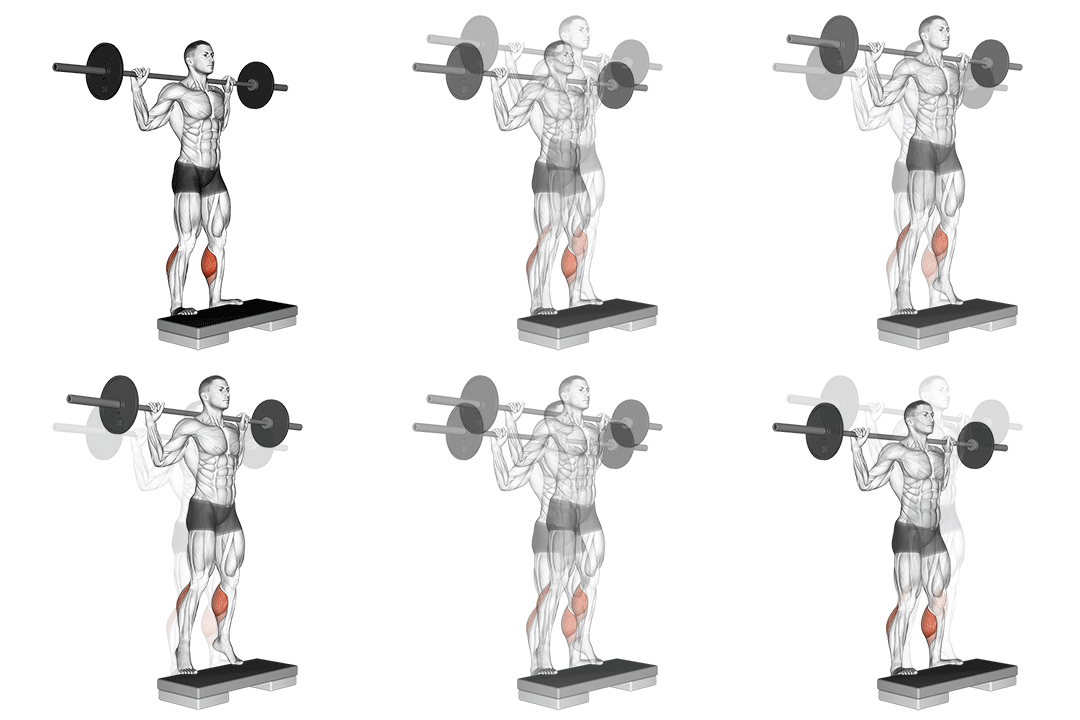
Barbell Standing Calf Raise
Barbell Standing Rocking Leg Calf Raise
Visual Comparison
Overview
Barbell Standing Calf Raise vs Barbell Standing Rocking Leg Calf Raise — two barbell-based isolation moves that target the calves but load the body differently. If you want clearer cues on which to use for muscle growth, strength, balance, or joint comfort, this guide has your back. You’ll get technique cues, biomechanics (length-tension, ankle dorsiflexion angles), rep and load recommendations, and practical programming advice so you can pick the best option for your goals and train smarter.
Key Differences
- Both exercises target the Calves using Barbell. The main differences are in their movement patterns and muscle activation angles.
Pros & Cons
Barbell Standing Calf Raise
+ Pros
- Allows heavier, more consistent loading for progressive overload
- Cleaner single-joint plantarflexion pattern—easier to master technique cues
- Requires less space and is simple to program with sets of 8–20 reps
- Better for hitting peak gastrocnemius force in knee-extended position
− Cons
- Limited secondary muscle training—less core or quad carryover
- Requires a stable platform and spot/rack setup for heavy loads
- May feel stiff for people with limited ankle dorsiflexion without a raised block
Barbell Standing Rocking Leg Calf Raise
+ Pros
- Adds dynamic balance and stability demands to train neuromuscular control
- Greater ankle ROM and eccentric control can increase time under tension
- Engages quadriceps briefly for improved functional carryover
- Can feel more joint-friendly for lifters who prefer movement variation
− Cons
- Harder to load consistently for progressive overload
- Higher coordination and knee stress — technique faults increase injury risk
- Requires more space and attention to balance and foot placement
When Each Exercise Wins
The standard raise lets you apply heavier, consistent loads and control time under tension with pauses and slow eccentrics. Target 8–20 reps with 2–4 second eccentrics to maximize muscle fiber recruitment and mechanical tension.
Strength requires progressive overload and stable force application; the standard raise supports heavier plates and clearer incremental loading for 4–8 rep strength blocks while preserving optimal gastrocnemius leverage.
Simpler single-joint mechanics and easier balance make the standard raise better for learning proper plantarflexion mechanics and developing sufficient ankle dorsiflexion before adding multi-plane variations.
Both need a barbell, but the standard raise requires less space and coordination. It’s easier to scale at home with a block and progressive loading using smaller increments or rep schemes.
Frequently Asked Questions
Can I do both Barbell Standing Calf Raise and Barbell Standing Rocking Leg Calf Raise in the same workout?
Yes. Start with heavy Barbell Standing Calf Raises for 3–5 sets of 6–12 reps to load the calves, then finish with 2–3 sets of Rocking Leg raises for 10–15 reps to increase ROM and stability without fatiguing maximal strength.
Which exercise is better for beginners?
Barbell Standing Calf Raise is better for beginners because it’s a simpler single-joint movement with less balance demand. Learn strict plantarflexion and achieve full ankle dorsiflexion (about 20–30°) before adding rocking variations.
How do the muscle activation patterns differ?
The standard raise emphasizes gastrocnemius force when the knee is extended and produces a consistent peak near the top of plantarflexion. The rocking variation adds dynamic knee motion and a shifting center-of-mass, producing variable tension peaks and modest extra quad activation during the rocking cycle.
Can Barbell Standing Rocking Leg Calf Raise replace Barbell Standing Calf Raise?
Not as a full replacement if your goal is maximal loading and progressive strength. Use rocking raises as a complementary variation to improve ROM, balance, and muscular endurance, but keep the standard raise as your primary heavy-loading choice.
Expert Verdict
Use the Barbell Standing Calf Raise when your priority is consistent mechanical tension, heavier loading, and straightforward progression for calf muscle growth and strength. Its knee-extended position places the gastrocnemius at an advantageous length-tension relationship and makes loading predictable. Use the Barbell Standing Rocking Leg Calf Raise when you want to add balance, ankle ROM, and brief quad engagement into a calf-focused session—it’s useful as an accessory for proprioception and control. For most lifters focused on hypertrophy or strength, prioritize the standard raise and add rocking variations for variety and neuromuscular challenge.
Also Compare
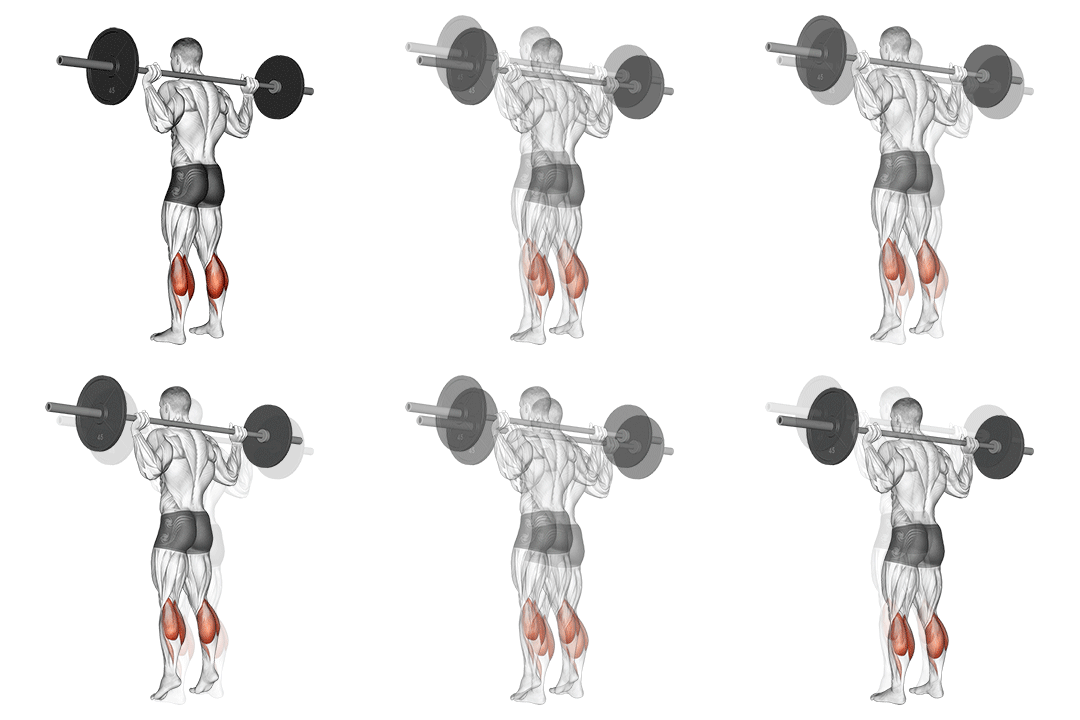
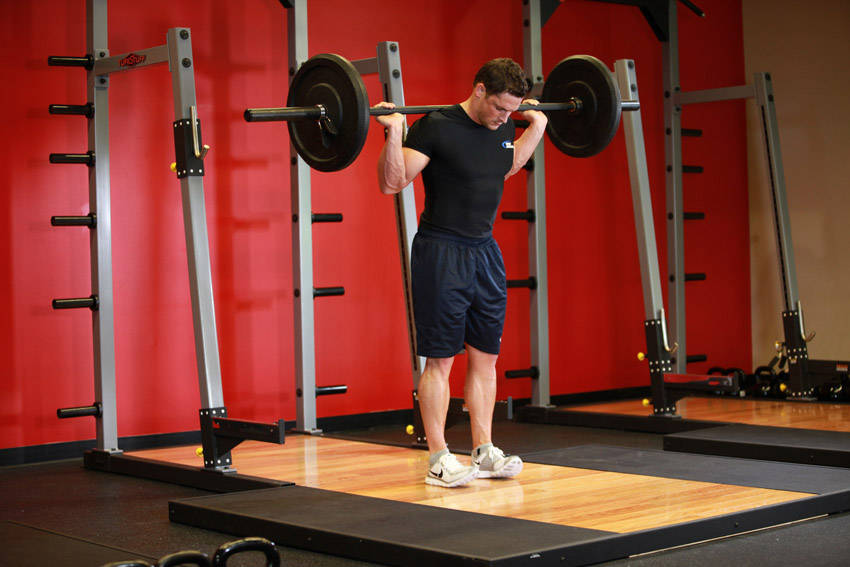
More comparisons with Barbell Standing Calf Raise
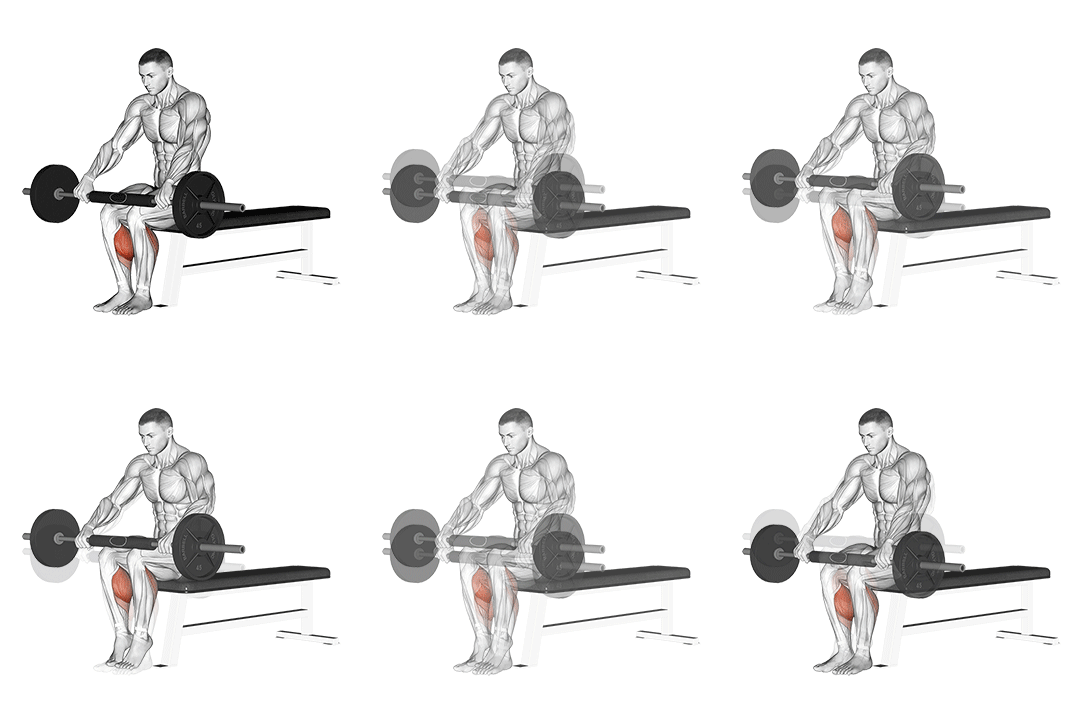
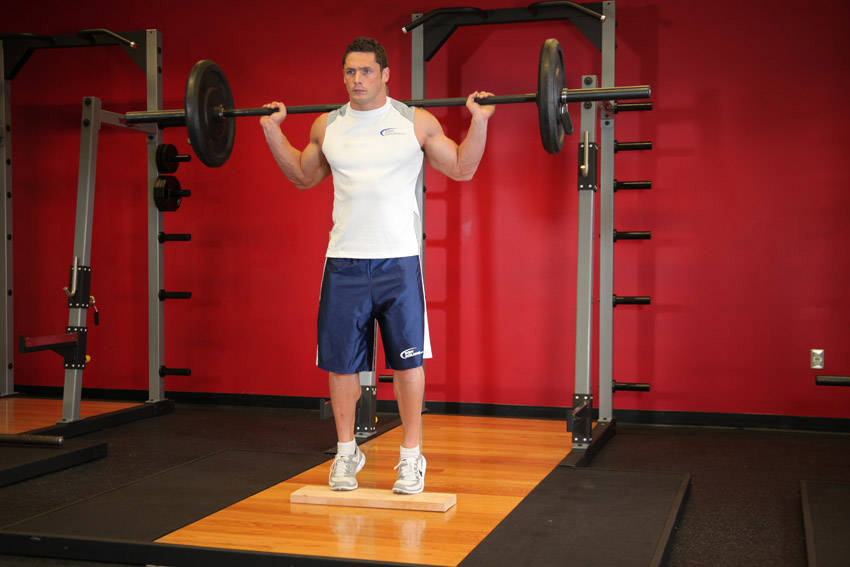
More comparisons with Barbell Standing Rocking Leg Calf Raise
Compare More Exercises
Use our free comparison tool to analyze any two exercises head-to-head.
Compare Exercises