

Deadlift With Bands vs Deadlift With Chains: Complete Comparison Guide
Deadlift With Bands vs Deadlift With Chains — you want a clear pick for back strength and posterior-chain development. I’ll break down how each method changes load curves, which muscles get extra work, setup and equipment needs, and practical cues so you can use them safely. You’ll get rep ranges for strength and hypertrophy, notes on progression, and decisive recommendations based on whether your priority is pure strength, muscle growth, or convenience. Read on and you’ll know exactly when to clip on bands and when to drape chains over the bar.
Exercise Comparison
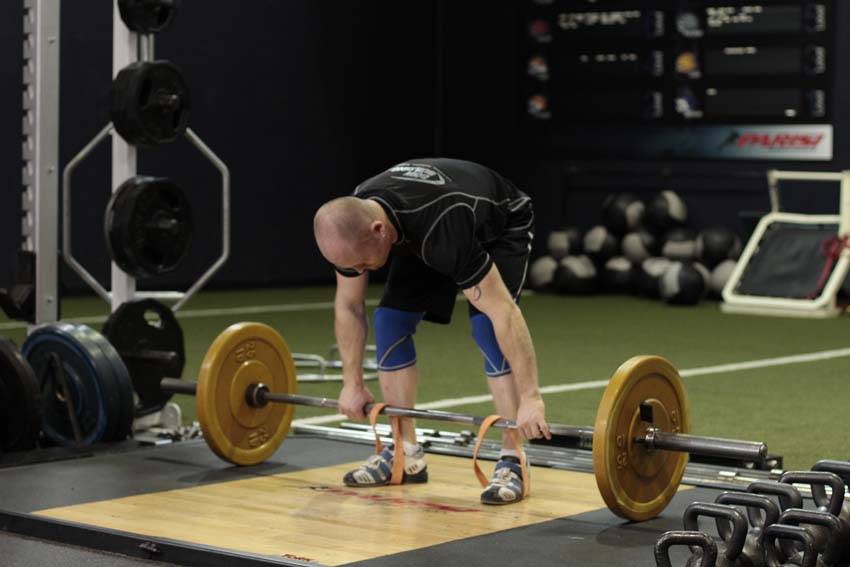
Deadlift With Bands
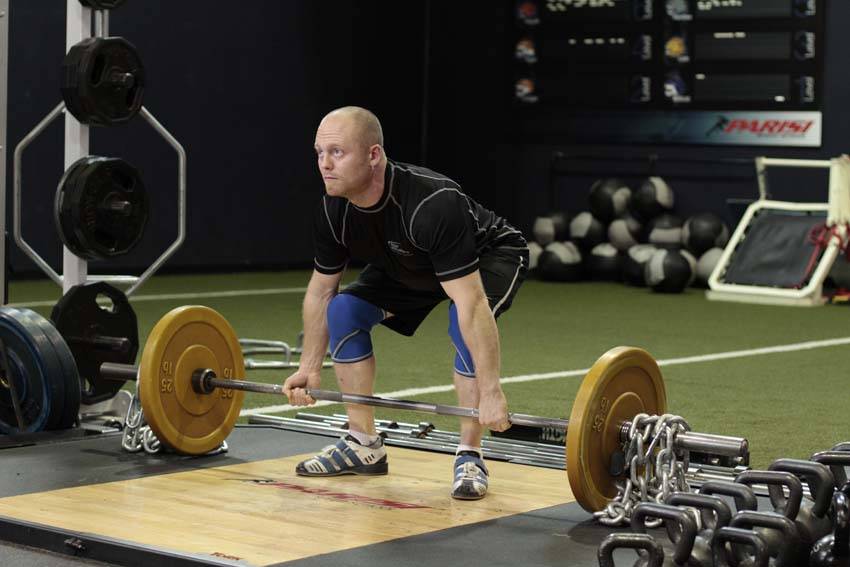
Deadlift With Chains
Head-to-Head Comparison
| Attribute | Deadlift With Bands | Deadlift With Chains |
|---|---|---|
| Target Muscle |
Erector-spinae
|
Erector-spinae
|
| Body Part |
Back
|
Back
|
| Equipment |
Barbell
|
Barbell
|
| Difficulty |
Advanced
|
Advanced
|
| Movement Type |
Compound
|
Compound
|
| Secondary Muscles |
6
|
6
|
Secondary Muscles Activated
Deadlift With Bands
Deadlift With Chains
Visual Comparison
Overview
Deadlift With Bands vs Deadlift With Chains — you want a clear pick for back strength and posterior-chain development. I’ll break down how each method changes load curves, which muscles get extra work, setup and equipment needs, and practical cues so you can use them safely. You’ll get rep ranges for strength and hypertrophy, notes on progression, and decisive recommendations based on whether your priority is pure strength, muscle growth, or convenience. Read on and you’ll know exactly when to clip on bands and when to drape chains over the bar.
Key Differences
- Both exercises target the Erector-spinae using Barbell. The main differences are in their movement patterns and muscle activation angles.
Pros & Cons
Deadlift With Bands
+ Pros
- Exponential top-end tension boosts lockout strength and glute/erector engagement
- Portable and low-cost; easy to change band tension on the fly
- Greater eccentric stretch-shortening stimulus via elastic recoil
- Fine micro-loading by adding or swapping bands
− Cons
- Adds horizontal force and instability that demands superior technique
- Anchor setup can alter pull angle and effectiveness
- Tension quantification is less precise than fixed weights
Deadlift With Chains
+ Pros
- Linear, predictable rise in load with minimal horizontal pull
- Cleaner vertical force vector helps maintain bar path and technique
- Durable and straightforward to quantify added weight
- Good for heavy singles and low-rep maximal strength work
− Cons
- Less portable and more expensive than bands
- Top-end added weight increments can be large (harder to micro-load)
- Requires space and often a lift-off or spotter for safe chaining
When Each Exercise Wins
Bands maintain higher tension through the lockout and create an extended time-under-tension via elastic recoil, which increases loading at shortened muscle lengths favorable for hypertrophy in the erectors, glutes, and hamstrings. Use 6–12 reps and moderate tempo (2–3s eccentric).
Chains provide a steadier, more predictable increase in top-end load that lets you focus on maximal force production in heavy singles and doubles (1–5 reps). The linear load curve helps transfer more directly to competition-style flat-bar deadlifts.
Chains produce less lateral instability and a clearer vertical load progression, making it easier to learn bar path and hip-hinge mechanics before adding elastic complexity. Start with light chains and master form in the 5–8 rep range.
Bands are compact, inexpensive, and easy to rig in small spaces. They let you simulate accommodating resistance without hauling heavy chain links or specialized hardware.
Frequently Asked Questions
Can I do both Deadlift With Bands and Deadlift With Chains in the same workout?
Yes — pair them smartly: use chains for heavy singles or doubles early in the session, then follow with banded sets for volume and lockout overload. Limit total heavy work to avoid CNS fatigue; a sample session is 3 heavy chain singles then 3–4 banded sets of 6–8 reps.
Which exercise is better for beginners?
Chains are generally better for beginners because they keep the force vector vertical and create a predictable ramp in load. Start with light chains, focus on hip hinge and neutral spine, and stay in the 5–8 rep range until technique is consistent.
How do the muscle activation patterns differ?
Both increase erector-spinae activation at the lockout, but bands produce an exponential tension curve that raises activity at shortened muscle lengths and stresses stabilizers more. Chains add load more linearly, so activation increases steadily through the final 10–20% of range without added lateral forces.
Can Deadlift With Chains replace Deadlift With Bands?
Yes for some goals: chains can replace bands when you want predictable, heavy top-end loading for maximal strength. They’re less effective if you need compact equipment or want elastic recoil for hypertrophy, so pick the tool that matches your training block.
Expert Verdict
Use Deadlift With Bands when your goal is increased lockout tension, hypertrophy, and training variety—bands excel for higher-rep work (6–12) and for teaching force production through shortened ranges. Choose Deadlift With Chains when you prioritize raw strength transfer and want a predictable, linear load ramp for heavy singles and low-rep sets (1–5). For athletes learning technique or those who need precise load quantification, chains are the safer bet. If you train at home or travel a lot, bands give you approachable variable resistance. In practice, rotate both across mesocycles: bands for top-end hypertrophy blocks and chains for max-strength blocks.
Also Compare
More comparisons with Deadlift With Bands
More comparisons with Deadlift With Chains
Compare More Exercises
Use our free comparison tool to analyze any two exercises head-to-head.
Compare Exercises