Deadlift With Chains vs Deficit Deadlift

Compare target muscles, equipment, difficulty, movement type, and secondary muscles for Deadlift With Chains and Deficit Deadlift.

Change comparison Share

Get comparison link

Select the link and use your device's Copy command.

Comparison overview

AI-generated
Deadlift With Chains vs Deficit Deadlift — two advanced barbell variations that stress your erector spinae and posterior chain in different ways. If you want clearer choices for muscle growth, raw strength, setup, and technique cues, this comparison helps you decide. You’ll get side-by-side breakdowns of primary and secondary muscle activation, equipment needs, learning curves, injury risk, rep ranges, and when to use each lift in a program. Read on and you’ll walk away with concrete coaching cues, rep-range recommendations, and realistic progress templates you can use the next time you step under the bar.

Exercise Comparison

Exercise A
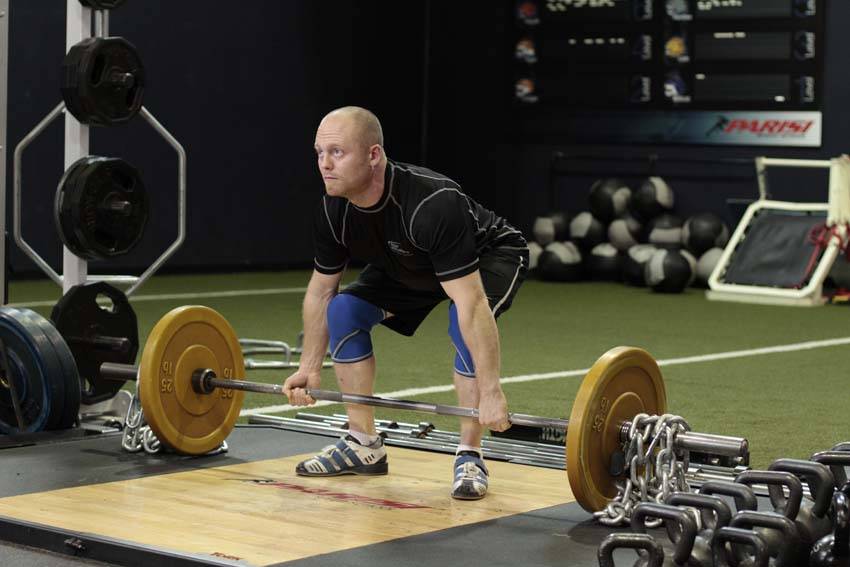
Deadlift With Chains demonstration

Deadlift With Chains

Target Erector-spinae
Equipment Barbell
Body Part Back
Difficulty Advanced
Movement Compound
Secondary Muscles
Forearms Glutes Hamstrings Middle Back Quadriceps Traps
VS
Exercise B
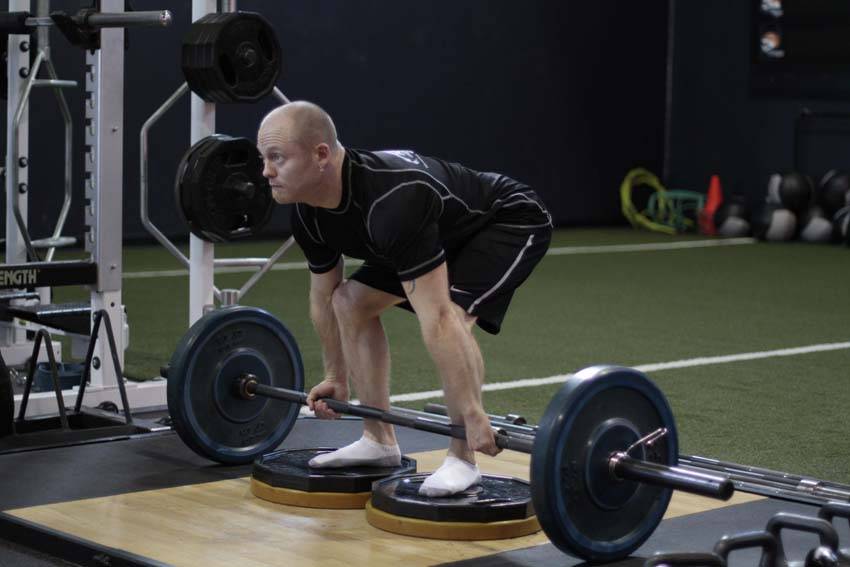
Deficit Deadlift demonstration

Deficit Deadlift

Target Erector-spinae
Equipment Barbell
Body Part Back
Difficulty Advanced
Movement Compound
Secondary Muscles
Forearms Glutes Hamstrings Middle Back Quadriceps Traps

Head-to-Head Comparison

Different values are marked. These are catalogue attributes, not performance scores.

Muscles used

Listed target and secondary muscles, shown on the body. Locations, not activation or strength scores.

  • Target
  • Secondary
  • Not highlighted

Deadlift With Chains

Front
Deadlift With Chains: front muscle locationsSolid: listed target. Striped: listed secondary. Grey: not highlighted. Locations, not activation or strength scores. See the muscle names below.
Back
Deadlift With Chains: back muscle locationsSolid: listed target. Striped: listed secondary. Grey: not highlighted. Locations, not activation or strength scores. See the muscle names below.
Target
Erector-spinae
Secondary
Forearms, Glutes, Hamstrings, Middle Back, Quadriceps, Traps

Not shown on diagram: Erector-spinae, Middle Back. These labels do not identify a precise region on this map.

Deficit Deadlift

Front
Deficit Deadlift: front muscle locationsSolid: listed target. Striped: listed secondary. Grey: not highlighted. Locations, not activation or strength scores. See the muscle names below.
Back
Deficit Deadlift: back muscle locationsSolid: listed target. Striped: listed secondary. Grey: not highlighted. Locations, not activation or strength scores. See the muscle names below.
Target
Erector-spinae
Secondary
Forearms, Glutes, Hamstrings, Middle Back, Quadriceps, Traps

Not shown on diagram: Erector-spinae, Middle Back. These labels do not identify a precise region on this map.

Grey does not mean a muscle is unused. The diagrams show only the mapped catalogue labels.

Attribute Deadlift With Chains Deficit Deadlift
Target Muscle
Erector-spinae
Erector-spinae
Body Part
Back
Back
Equipment
Barbell
Barbell
Difficulty
Advanced
Advanced
Movement Type
Compound
Compound
Secondary Muscles
Forearms, Glutes, Hamstrings, Middle Back, Quadriceps, Traps

Visual Comparison

An illustrative 1–10 profile derived from catalog difficulty, equipment, and listed-muscle fields—not measured performance or muscle activation.

Key Differences

  • Both exercises target the Erector-spinae using Barbell. The catalogue does not establish which exercise is better for an individual goal.

Muscle comparison

Shared target muscles

Both drills heavily load the erector spinae via the hip-hinge pattern and spinal stabilization under axial load. Biomechanically they produce similar peak hip-extension torque, so peak erector-spinae recruitment overlaps substantially. Expect comparable peak EMG-style activation in the top half of the lift, but the distribution across the range differs because chains alter the load curve while a deficit increases range of motion.

Secondary muscle differences

Deficit deadlifts increase knee and hip flexion at setup (typically 1–3 inches of extra ROM), shifting more work onto the quadriceps and lengthening hamstrings and glutes on the eccentric. Deadlifts with chains increase load as you stand, emphasizing lockout muscles — glutes, traps, and upper hamstrings — and challenge grip/forearms differently due to the dynamic loading. Middle back and scapular retractors work in both, but chains bias top-range spinal extension while deficits emphasize low-range pulling strength.

Muscle involvement analysis

Deficit: greater initial moment arm at the hip and knee, so erectors and hamstrings start under higher tension across a longer ROM; expect a 5–10% relative increase in time-under-tension for posterior muscles versus a standard deadlift. Chains: variable resistance reduces load at the bottom and increases it by ~10–30% at lockout depending on chain mass, shifting peak activation toward terminal knee and hip extension. Force vectors stay more vertical with chains if bar path is kept tight; deficits produce a steeper shin angle and slightly more horizontal shear on the lumbar spine.

Equipment and setup

Deadlift With Chains: setup

Deadlift With Chains requires a standard barbell, quality lifting chains or chain sets sized to add ~10–30% of working weight at lockout, sturdy collars or chain hooks, and a platform with clearance for the slack. You may also want a mat to protect the floor and collars.

Deficit Deadlift: setup

Deficit Deadlift requires a barbell and a stable 1–4 inch platform (stacked plates, deadlift blocks, or a solid box). No specialty hardware is necessary; you can create deficits with bumper plates or low boxes.

Access and practicality

Deficit Deadlift — easier to set up and replicate in most commercial gyms or home setups because it only needs plates or a box. Chains are less common, heavier to transport, and require more careful setup and spacing.

Learning and progression

Learning the movements

Deficit Deadlift has a gentler equipment learning curve but demands disciplined hip-hinge timing and may feel harder at lighter loads because of increased ROM. Deadlift With Chains introduces the concept of accommodating resistance and variable load, which adds coordination and timing complexity—making chains harder to master for most lifters.

Progression considerations

Deadlift With Chains offers robust long-term progression via changing chain mass or chain length and combining with bands to alter the resistance curve. Deficit Deadlift progression is straightforward—increase deficit height, weight, or volume—but has fewer loading curve options.

Limitations and precautions

Both are advanced and carry increased risk if technique breaks down. Deficits increase lumbar shear and hip/knee demand at the bottom, raising low-back stress if you round; chain deadlifts can encourage jerky transitions and overloading the lockout if you chase top-end weight. Overall, chains slightly raise acute joint-load risk due to variable peak loads, while deficits raise chronic low-back strain risk if you exceed your mobility limits.

Pros & Cons

Deadlift With Chains

+ Pros

  • Improves lockout strength via accommodating resistance
  • Trains force production through the top 10–30% of the range
  • Allows progressive manipulation of resistance curve (chains + bands)
  • Teaches bar tension and vertical bar path under changing load

− Cons

  • Requires specialty equipment and careful setup
  • Adds complexity to timing and technical execution
  • Can overload lockout if you progress too quickly

Deficit Deadlift

+ Pros

  • Increases range of motion to lengthen posterior chain under load
  • Simple equipment—easy to implement in most gyms
  • Enhances low-position pulling strength and quad contribution
  • Useful for improving start-of-lift mechanics and positional strength

− Cons

  • Raises lumbar shear and low-back stress if mobility or core control is lacking
  • Can limit top-end loading compared with standard deadlift due to extended ROM
  • Harder to use very heavy absolute loads safely without excellent technique

When Each Exercise Wins

1
For muscle hypertrophy: Deficit Deadlift

Deficits increase range of motion and time under tension, stressing hamstrings, glutes, and erectors through a longer eccentric and concentric path. For hypertrophy aim for 6–12 reps per set with 2–3 inch deficits to maximize length-tension and metabolic stimulus.

2
For strength gains: Deadlift With Chains

Chains give accommodating resistance that overloads the lockout and improves force production in the top range—ideal for 1–5 rep strength phases. Use chains adding 10–30% variable load to train acceleration and finish strength.

3
For beginners: Deficit Deadlift

You can start with a small 1-inch deficit and light loads to teach hip hinge and positional control; it’s easier to implement than chains. Progress deficit height gradually while emphasizing neutral spine and bar-path cues.

4
For home workouts: Deficit Deadlift

Requires only a barbell and a stable elevated surface (stacked plates or a box), making it far more practical than carrying heavy chains or specialty gear.

Frequently Asked Questions

Can I do both Deadlift With Chains and Deficit Deadlift in the same workout?

Yes — but organize them smartly. Use the variation aligned with your primary focus first (heavy chain work for strength, deficit for hypertrophy/positional practice) and follow with the other for 2–4 sets as an accessory. Keep total heavy volume limited to avoid CNS and lumbar overload.

Which exercise is better for beginners?

Deficit Deadlift is more approachable because you can start with a very small deficit and light weight to build hip-hinge mechanics. Avoid chains until you can consistently hit a clean bar path and locked-neutral spine under heavy singles or doubles.

How do the muscle activation patterns differ?

Deficits increase initial hip and knee moments so erectors, hamstrings, and quads start under higher tension across a longer ROM. Chains lower bottom-end load and ramp load toward lockout, shifting peak activation toward glutes, traps, and upper hamstrings during terminal extension.

Can Deficit Deadlift replace Deadlift With Chains?

For hypertrophy and positional strength, deficits can replace chains effectively. For targeting lockout velocity and top-range force production, chains are superior—so replacement depends on whether you prioritize ROM-based hypertrophy or accommodating resistance for strength.

Comparison Summary

Use Deadlift With Chains when your primary goal is raw strength and improving lockout acceleration—program chains in heavy 1–5 rep blocks, adding 10–30% of top-end load and focusing on explosive hip extension and maintaining a vertical bar path. Choose Deficit Deadlifts when you want extra ROM for muscle growth, better low-start strength, and increased quad contribution; program 6–12 rep sets or moderate 3–6 rep sets with 1–3 inch deficits. Technique cues: keep a tight chest, hinge at the hips, pull the bar close to the shins, and maintain a neutral spine. If mobility or core control is limited, regress before increasing deficit height or chain mass. Both lifts are advanced—use them purposefully within 6–8 week blocks and prioritize quality reps over maximal load.

Exercise instructions

Steps from the exercise catalogue. Read the full sequence before starting.

Deadlift With Chains

  1. You can attach the chains to the sleeves of the bar, or just drape the middle over the bar so there is a greater weight increase as you lift.
  2. Approach the bar so that it is centered over your feet. You feet should be about hip width apart. Bend at the hip to grip the bar at shoulder width, allowing your shoulder blades to protract. Typically, you would use an overhand grip or an over/under grip on heavier sets. With your feet, and your grip set, take a big breath and then lower your hips and bend the knees until your shins contact the bar.
  3. Look forward with your head, keep your chest up and your back arched, and begin driving through the heels to move the weight upward. After the bar passes the knees, aggressively pull the bar back, pulling your shoulder blades together as you drive your hips forward into the bar.
Read remaining steps for Deadlift With Chains
  1. Lower the bar by bending at the hips and guiding it to the floor.

Deficit Deadlift

  1. Begin by having a platform or weight plates that you can stand on, usually 1-3 inches in height. Approach the bar so that it is centered over your feet. You feet should be about hip width apart. Bend at the hip to grip the bar at shoulder width, allowing your shoulder blades to protract. Typically, you would use an overhand grip or an over/under grip on heavier sets.
  2. With your feet, and your grip set, take a big breath and then lower your hips and bend the knees until your shins contact the bar. Look forward with your head, keep your chest up and your back arched, and begin driving through the heels to move the weight upward. After the bar passes the knees, aggressively pull the bar back, pulling your shoulder blades together as you drive your hips forward into the bar.
  3. Lower the bar by bending at the hips and guiding it to the floor.

Also Compare

Compare another pair

Choose two exercises to see their differences side by side.

Compare Exercises