

Deadlift With Bands vs One Half Locust: Complete Comparison Guide
Deadlift With Bands vs One Half Locust — both target the erector spinae but they do it differently. You’ll get a clear, practical comparison so you can pick the right move for strength, muscle growth, or rehab. I’ll cover primary and secondary muscle activation, setup and technique cues, equipment needs, learning curve, progression paths, and injury risk. Expect rep ranges, angles, and specific coaching points so you can use either exercise safely and effectively depending on your goals and training environment.
Exercise Comparison
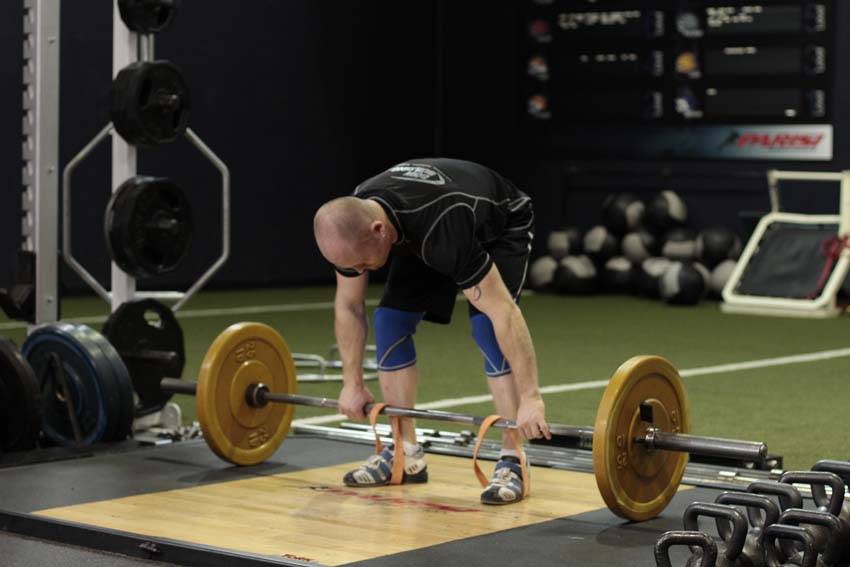
Deadlift With Bands
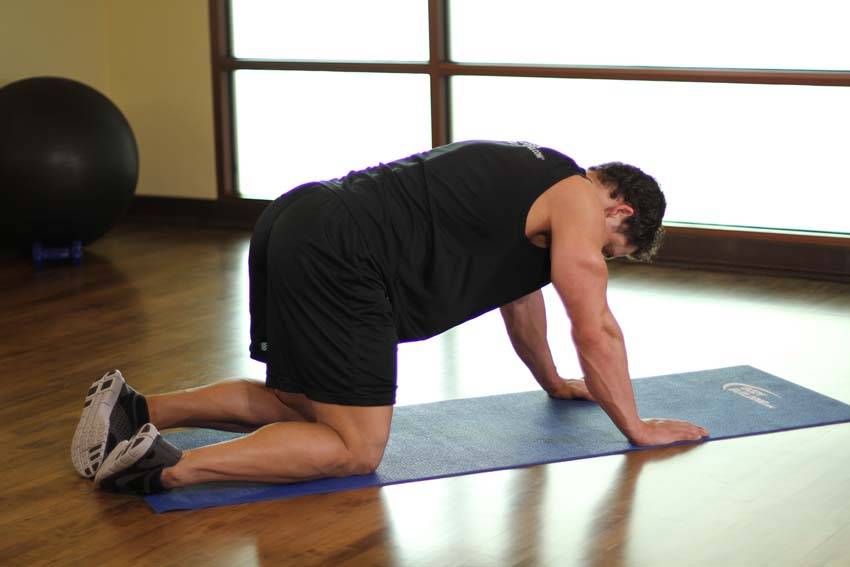
One Half Locust
Head-to-Head Comparison
| Attribute | Deadlift With Bands | One Half Locust |
|---|---|---|
| Target Muscle |
Erector-spinae
|
Erector-spinae
|
| Body Part |
Back
|
Back
|
| Equipment |
Barbell
|
Body-weight
|
| Difficulty |
Advanced
|
Beginner
|
| Movement Type |
Compound
|
Isolation
|
| Secondary Muscles |
6
|
3
|
Secondary Muscles Activated
Deadlift With Bands
One Half Locust
Visual Comparison
Overview
Deadlift With Bands vs One Half Locust — both target the erector spinae but they do it differently. You’ll get a clear, practical comparison so you can pick the right move for strength, muscle growth, or rehab. I’ll cover primary and secondary muscle activation, setup and technique cues, equipment needs, learning curve, progression paths, and injury risk. Expect rep ranges, angles, and specific coaching points so you can use either exercise safely and effectively depending on your goals and training environment.
Key Differences
- Equipment differs: Deadlift With Bands uses Barbell, while One Half Locust requires Body-weight.
- Deadlift With Bands is a compound movement, while One Half Locust is an isolation exercise.
- Difficulty levels differ: Deadlift With Bands is advanced, while One Half Locust is beginner.
Pros & Cons
Deadlift With Bands
+ Pros
- Loads erector spinae under high external resistance for strong mechanical tension
- Trains the full posterior chain—glutes, hamstrings, quads, traps and forearms
- Band-resisted curve improves lockout strength and overload at end-range
- Multiple progression levers: band tension, bar weight, rep ranges (3–12)
− Cons
- Requires barbell, bands, and setup space
- Technically demanding—poor form increases lumbar risk
- Higher CNS and joint stress with heavy sets
One Half Locust
+ Pros
- Zero-equipment, low-cost option ideal for home or rehab
- Simple technique that isolates spinal extensors safely when done correctly
- Builds endurance and time under tension for lower-back resilience
- Easy to regress or progress with reps, holds, or light weights
− Cons
- Limited ability to produce high mechanical tension for maximal hypertrophy
- Minimal hip and hamstring involvement—less carryover to hip-dominant strength
- Can encourage hyperextension if you don’t cue neutral spine and scapular retraction
When Each Exercise Wins
Deadlift With Bands lets you apply greater mechanical tension and progressive overload across the posterior chain. The band adds variable resistance so you can target both mid-range and lockout, making it superior for increasing muscle size when paired with 6–12 rep sets.
Deadlifts with bands support heavy, low-rep work (3–6 reps) and improve rate of force development and lockout strength. The multi-joint force vectors recruit high-threshold motor units needed for maximal strength.
One Half Locust is simpler to learn and control, needs no equipment, and teaches spinal extension without complex hip-knee coordination. Use it to build endurance and awareness before progressing to loaded hinges.
One Half Locust requires only body weight and a mat, making it the clear choice for limited-space training. It still strengthens the erectors and can be loaded incrementally with household items if needed.
Frequently Asked Questions
Can I do both Deadlift With Bands and One Half Locust in the same workout?
Yes. Use One Half Locust as a low-load activation or warm-up (2–3 sets of 12–20) and perform Deadlift With Bands later as the primary heavy lift (3–5 sets of 3–8). That order primes the erectors for heavy loading and improves movement quality.
Which exercise is better for beginners?
One Half Locust is better for most beginners because it teaches spinal extension in a controlled, low-load way. After mastering control and bracing, you can progress to hip-hinge patterns and loaded deadlifts.
How do the muscle activation patterns differ?
Deadlift With Bands produces high, phasic activation across hip extensors and spinal erectors with rising load at lockout, recruiting fast motor units for force. One Half Locust produces sustained, lower-amplitude activation focused on spinal extensors and endurance motor units with longer time under tension.
Can One Half Locust replace Deadlift With Bands?
Not if your goal is maximal strength or hypertrophy—One Half Locust cannot match the mechanical tension and multi-joint force transfer of deadlifts. It can complement or substitute temporarily for low-load rehab, endurance work, or when equipment is unavailable.
Expert Verdict
Choose Deadlift With Bands when your goal is posterior-chain strength or hypertrophy and you have the equipment and technical base to hinge correctly. It provides scalable mechanical tension, variable resistance for lockout work, and broad transfer to athletic performance. Pick One Half Locust when you need a low-risk, no-equipment option to build spinal extensor endurance, rehabilitate movement control, or introduce beginners to back extension mechanics. For most trainees, include both: use locust variations for volume and motor control, and deadlifts with bands for high-tension, progressive overload sessions.
Also Compare
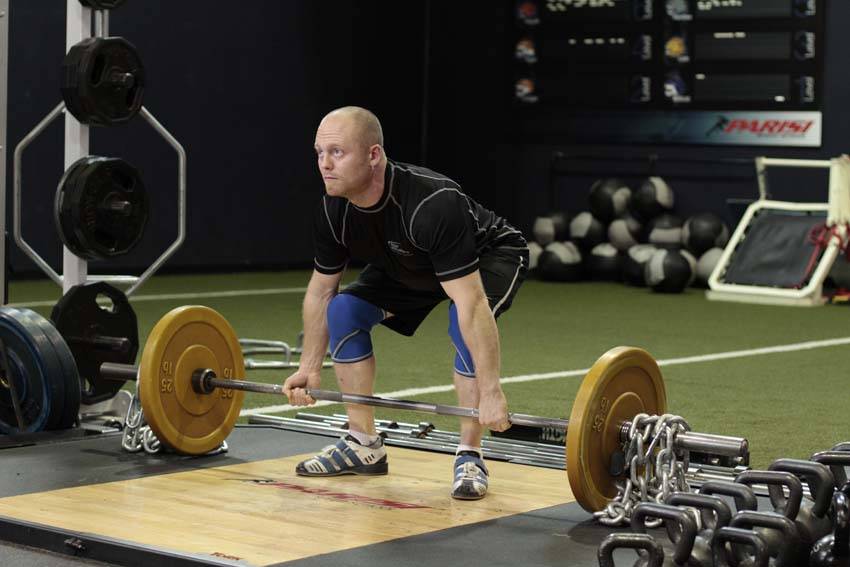
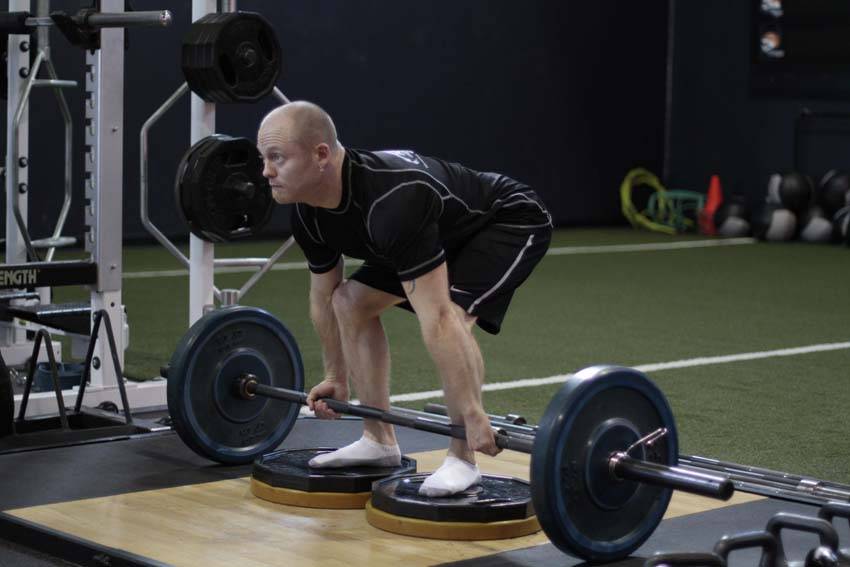
More comparisons with Deadlift With Bands
Compare More Exercises
Use our free comparison tool to analyze any two exercises head-to-head.
Compare Exercises