

Deficit Deadlift vs Stiff Leg Barbell Good Morning: Complete Comparison Guide
Deficit Deadlift vs Stiff Leg Barbell Good Morning — two advanced barbell variations that load the erector-spinae hard but do it differently. You’ll get clear guidance on how each moves the spine and hips, which secondary muscles take the load, exact technique cues, suggested rep ranges (1–5 for max strength vs 6–12+ for hypertrophy), and when to program each into your routine. Read on to learn biomechanical differences, equipment needs, and practical progressions so you can pick the right lift for your goals.
Exercise Comparison
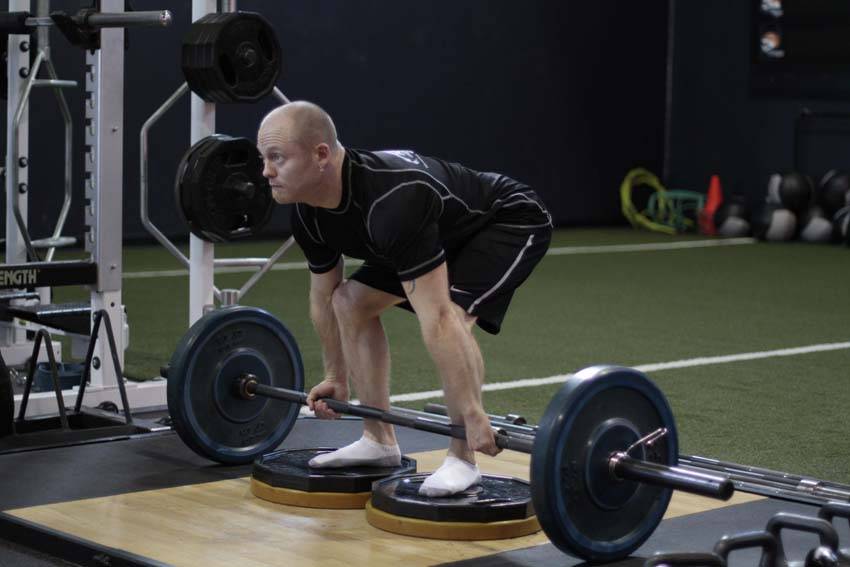
Deficit Deadlift
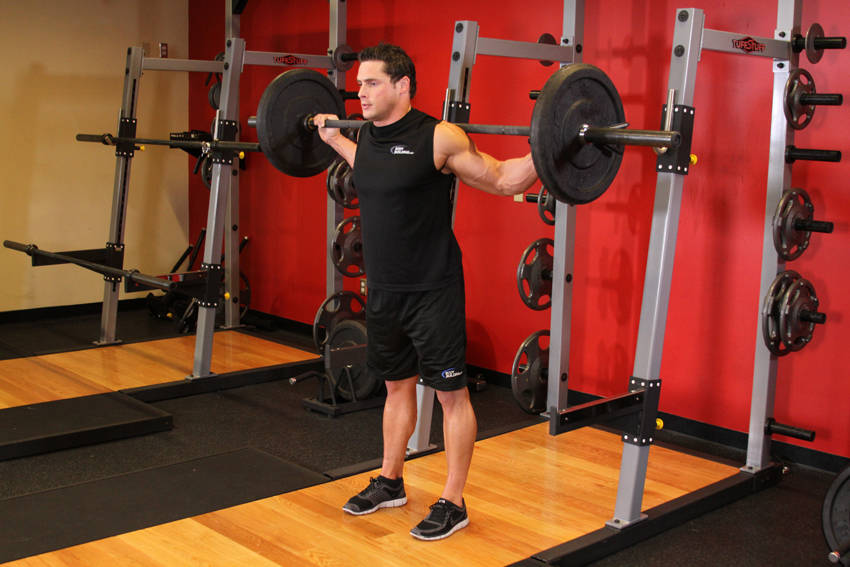
Stiff Leg Barbell Good Morning
Head-to-Head Comparison
| Attribute | Deficit Deadlift | Stiff Leg Barbell Good Morning |
|---|---|---|
| Target Muscle |
Erector-spinae
|
Erector-spinae
|
| Body Part |
Back
|
Back
|
| Equipment |
Barbell
|
Barbell
|
| Difficulty |
Advanced
|
Advanced
|
| Movement Type |
Compound
|
Compound
|
| Secondary Muscles |
6
|
2
|
Secondary Muscles Activated
Deficit Deadlift
Stiff Leg Barbell Good Morning
Visual Comparison
Overview
Deficit Deadlift vs Stiff Leg Barbell Good Morning — two advanced barbell variations that load the erector-spinae hard but do it differently. You’ll get clear guidance on how each moves the spine and hips, which secondary muscles take the load, exact technique cues, suggested rep ranges (1–5 for max strength vs 6–12+ for hypertrophy), and when to program each into your routine. Read on to learn biomechanical differences, equipment needs, and practical progressions so you can pick the right lift for your goals.
Key Differences
- Both exercises target the Erector-spinae using Barbell. The main differences are in their movement patterns and muscle activation angles.
Pros & Cons
Deficit Deadlift
+ Pros
- Increases deadlift starting strength by 5–10% through extra ROM and stronger first pull
- Recruits quads, traps, forearms, and middle back for more whole-body overload
- Easily quantifiable progressive overload with heavier absolute loads
- Improves bar path and drive-off-floor mechanics
− Cons
- Higher lumbar and knee stress due to increased range of motion
- Requires platform/blocks, limiting accessibility
- Technique breakdown under heavy loads leads to shear forces on the spine
Stiff Leg Barbell Good Morning
+ Pros
- Places constant tension on erectors and hamstrings for hypertrophy
- Requires minimal equipment—barbell and rack only
- Easier to practice hip hinge with light loads and higher reps
- Lower demand on grip and traps compared to heavy deadlifts
− Cons
- Less direct carryover to maximal deadlift lockout strength
- Risk of lumbar flexion if you push load without solid bracing
- Limited quad and knee-extension stimulus
When Each Exercise Wins
Good mornings create sustained tension at longer hamstring and erector lengths and suit 6–12+ rep ranges with controlled eccentrics, which maximizes time under tension and muscle growth in the posterior chain.
Deficit deadlifts allow heavier absolute loads and directly train the initial pull off the floor and knee extension mechanics, improving 1–5 RM deadlift strength and transfer to conventional deadlifts.
Good mornings let you learn and reinforce the hip hinge and spinal bracing with lighter loads and higher reps; deficits add ROM and heavy loads that increase technical demands for novices.
Good mornings need only a barbell and rack, so you can program them at home without a dedicated platform or extra blocks required for safe deficit pulls.
Frequently Asked Questions
Can I do both Deficit Deadlift and Stiff Leg Barbell Good Morning in the same workout?
Yes—program them thoughtfully. Do deficits early when you’re fresh for heavy strength work (1–5 reps), and place good mornings later as an accessory at 6–12+ reps for hypertrophy and posterior chain volume, or alternate them across training days to avoid excessive lumbar fatigue.
Which exercise is better for beginners?
Stiff-leg good mornings are better for most beginners because they allow you to learn the hip hinge and spinal bracing with lighter loads and higher reps. Deficits introduce extra ROM and heavier loading that demand more technical consistency.
How do the muscle activation patterns differ?
Deficit deadlifts mix knee and hip extension so quads, glutes, hamstrings, and middle back contribute more during the initial pull; good mornings are a pure hip hinge with peak erector and hamstring activation at long muscle lengths, emphasizing eccentric control.
Can Stiff Leg Barbell Good Morning replace Deficit Deadlift?
It can replace deficits for hypertrophy and hinge practice, but not for maximal deadlift start strength. If your goal is a stronger conventional deadlift 1–3 RM, deficits are the better substitute; for size and hinge control, good mornings suffice.
Expert Verdict
Use deficit deadlifts when your primary goal is raw pulling strength and improving the deadlift start: program heavy sets in the 1–5 rep range, keep a flat back, bar over midfoot, and use a 1–4 inch platform to increase ROM. Choose stiff-leg barbell good mornings when you want targeted posterior chain hypertrophy, improved hip-hinge mechanics, or a safer home option: use 6–12+ reps, controlled 2–4 second eccentrics, and a slight knee bend (5–15°). Both target the erectors; rotate them cyclically—heavy deficits for 4–8 weeks of strength blocks, then 4–8 weeks of higher-volume good mornings for size and resilience.
Also Compare
More comparisons with Deficit Deadlift
More comparisons with Stiff Leg Barbell Good Morning
Compare More Exercises
Use our free comparison tool to analyze any two exercises head-to-head.
Compare Exercises