

Dumbbell Alternate Biceps Curl vs Dumbbell Alternating Seated Bicep Curl On Exercise Ball
Compare target muscles, equipment, difficulty, movement type, and secondary muscles for Dumbbell Alternate Biceps Curl and Dumbbell Alternating Seated Bicep Curl On Exercise Ball.
Get comparison link
Select the link and use your device's Copy command.
Comparison overview
AI-generatedExercise Comparison
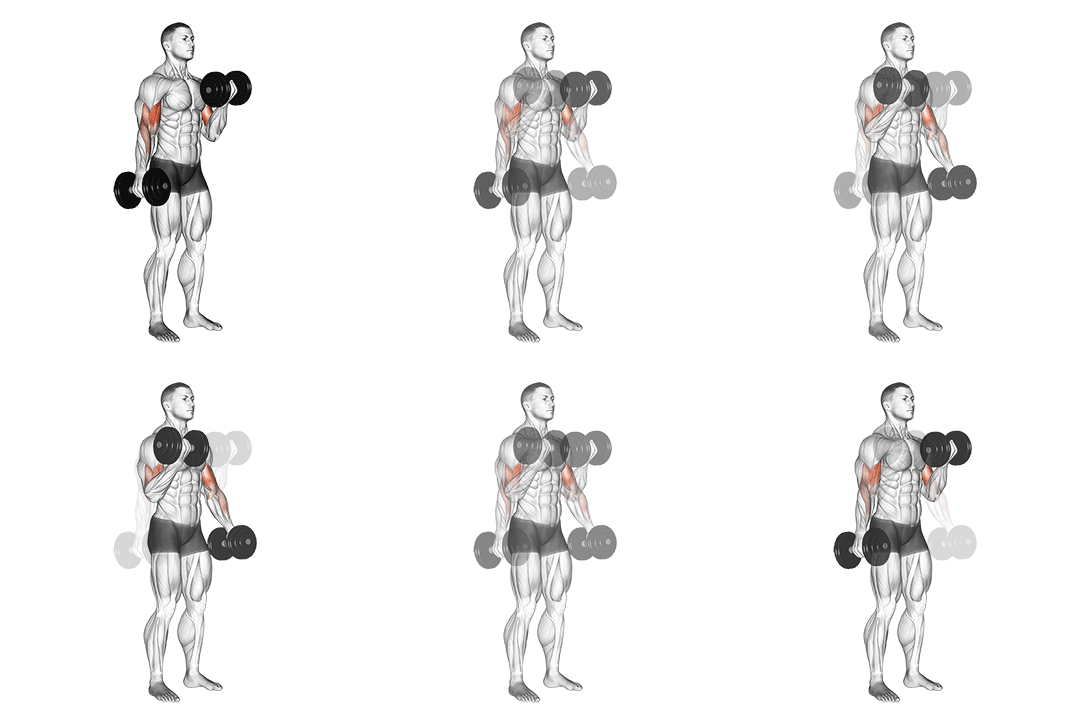
Dumbbell Alternate Biceps Curl
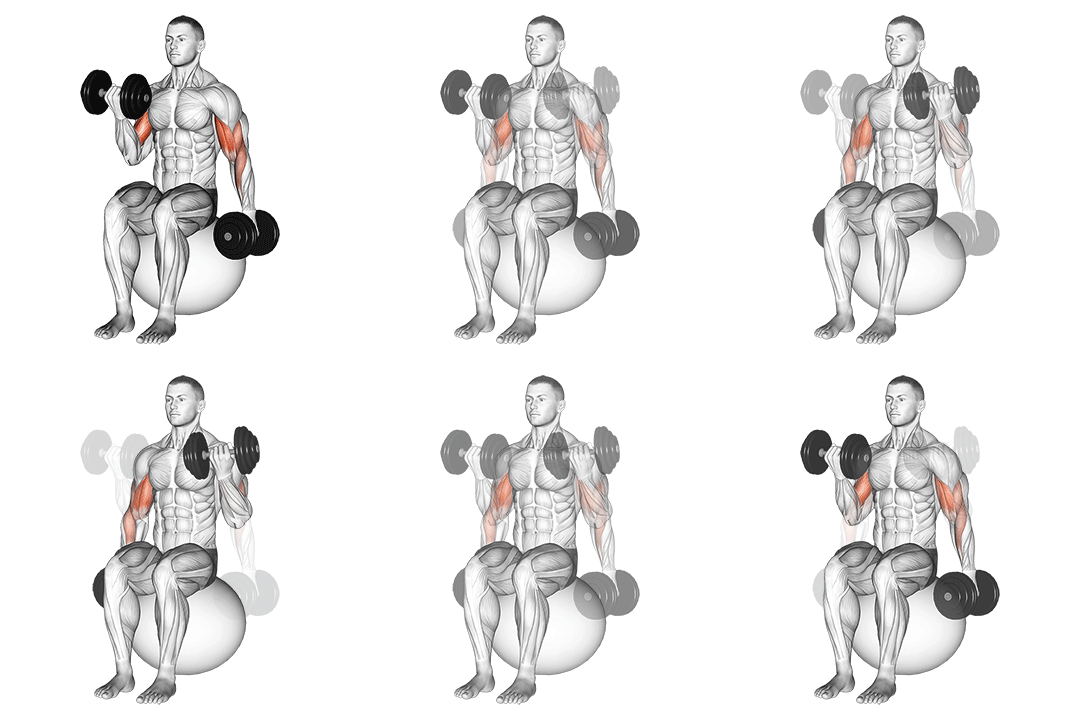
Dumbbell Alternating Seated Bicep Curl On Exercise Ball
Head-to-Head Comparison
Different values are marked. These are catalogue attributes, not performance scores.
Muscles used
Listed target and secondary muscles, shown on the body. Locations, not activation or strength scores.
- Target
- Secondary
- Not highlighted
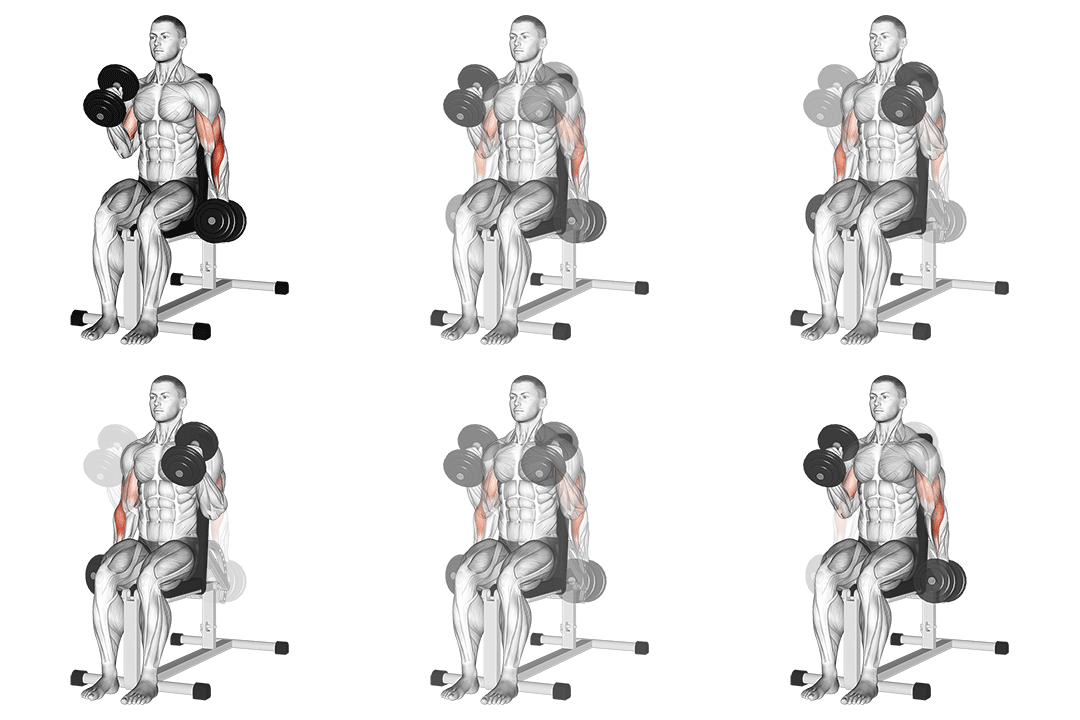
Dumbbell Alternate Biceps Curl
- Target
- Biceps
- Secondary
- Forearms
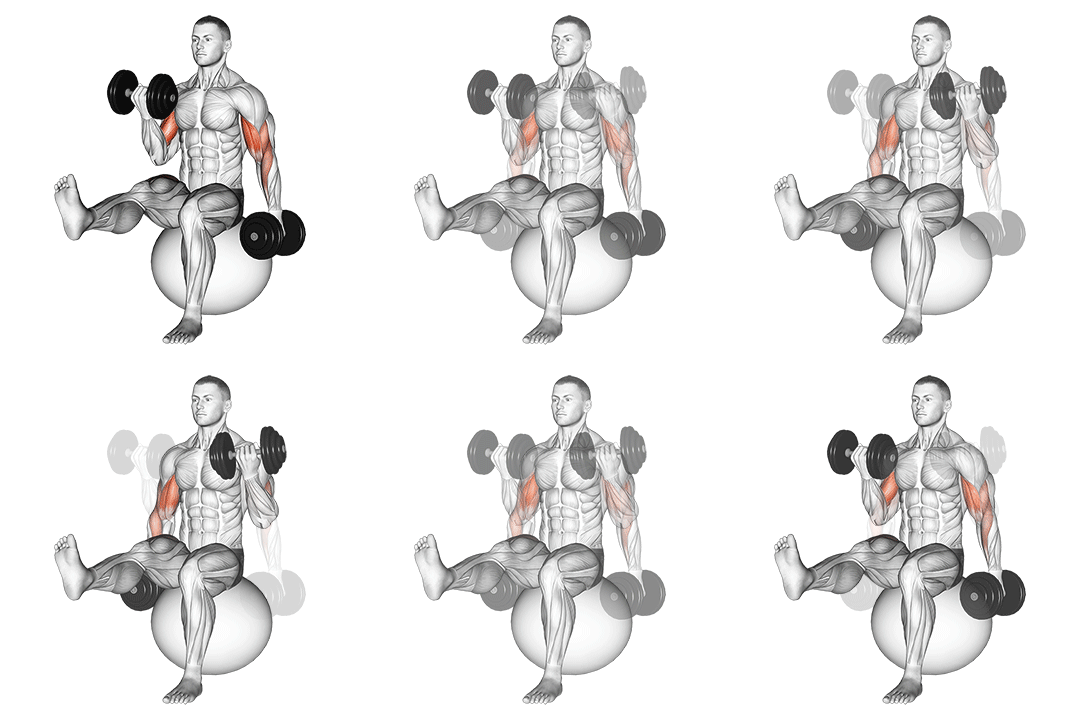
Dumbbell Alternating Seated Bicep Curl On Exercise Ball
- Target
- Biceps
- Secondary
- Forearms
Grey does not mean a muscle is unused. The diagrams show only the mapped catalogue labels.
| Attribute | Dumbbell Alternate Biceps Curl | Dumbbell Alternating Seated Bicep Curl On Exercise Ball |
|---|---|---|
| Target Muscle | Biceps |
Biceps |
| Body Part | Upper-arms |
Upper-arms |
| Equipment | Dumbbell |
Dumbbell |
| Difficulty Different | Beginner |
Intermediate |
| Movement Type | Isolation |
Isolation |
| Secondary Muscles | Forearms |
Forearms |
Visual Comparison
An illustrative 1–10 profile derived from catalog difficulty, equipment, and listed-muscle fields—not measured performance or muscle activation.
Key Differences
- Difficulty levels differ: Dumbbell Alternate Biceps Curl is beginner, while Dumbbell Alternating Seated Bicep Curl On Exercise Ball is intermediate.
- Both exercises target the Biceps using Dumbbell. The catalogue does not establish which exercise is better for an individual goal.
Muscle comparison
Shared target muscles
Secondary muscle differences
Muscle involvement analysis
Equipment and setup
Dumbbell Alternate Biceps Curl: setup
Dumbbell Alternating Seated Bicep Curl On Exercise Ball: setup
Access and practicality
Learning and progression
Learning the movements
Progression considerations
Limitations and precautions
Pros & Cons
Dumbbell Alternate Biceps Curl
+ Pros
- Allows heavier loading for stronger mechanical tension and progressive overload
- Simple technique—quick to teach and easy to scale weights
- Better for strict tempo work: control eccentric (2–4s) and pause at peak
- Requires minimal equipment and space
− Cons
- Less core and scapular stabilizer challenge
- Easier to cheat with body swing if form breaks down
- Can lead to wrist flexion if grip and forearm control are poor
Dumbbell Alternating Seated Bicep Curl On Exercise Ball
+ Pros
- Adds instability that recruits core and scapular stabilizers
- Improves balance and functional control under load
- Forces stricter posture—can reduce lower-back compensation
- Good variation to stimulate muscle coordination and time under tension
− Cons
- Limits how much weight you can use—reduces peak biceps overload
- Requires an exercise ball and proper ball sizing/setup
- Higher technical demand increases the chance of form breakdown
When Each Exercise Wins
Prioritize mechanical tension and progressive overload—standing alternate curls let you lift heavier weights and target the biceps with controlled eccentrics (6–12 rep range). That greater absolute load drives more localized muscle fiber recruitment and growth.
Strength favors heavier loading and low-rep specificity (3–5 reps). The standing variation lets you apply larger external loads and maintain strict joint positions to develop higher maximal force outputs.
Beginners benefit from a simpler movement with clear cues—elbow stays by the ribcage, wrist neutral, full ROM 0–100° elbow flexion—so they learn proper motor patterns before adding instability.
Most home setups have dumbbells but not an exercise ball. The alternate curl needs minimal space and equipment and scales easily to your available load.
Frequently Asked Questions
Can I do both Dumbbell Alternate Biceps Curl and Dumbbell Alternating Seated Bicep Curl On Exercise Ball in the same workout?
Which exercise is better for beginners?
How do the muscle activation patterns differ?
Can Dumbbell Alternating Seated Bicep Curl On Exercise Ball replace Dumbbell Alternate Biceps Curl?
Comparison Summary
Exercise instructions
Steps from the exercise catalogue. Read the full sequence before starting.
Dumbbell Alternate Biceps Curl
- Stand up straight with a dumbbell in each hand, palms facing forward and arms fully extended.
- Keeping your upper arms stationary, exhale and curl the weights while contracting your biceps.
- Continue to raise the dumbbells until your biceps are fully contracted and the dumbbells are at shoulder level.
Read remaining steps for Dumbbell Alternate Biceps Curl
- Hold the contracted position for a brief pause as you squeeze your biceps.
- Inhale and slowly begin to lower the dumbbells back to the starting position.
- Repeat for the desired number of repetitions, alternating arms.
Dumbbell Alternating Seated Bicep Curl On Exercise Ball
- Sit on an exercise ball with your feet flat on the ground and your back straight.
- Hold a dumbbell in each hand with your palms facing forward and your arms fully extended.
- Keeping your upper arms stationary, exhale and curl one dumbbell while rotating your forearm until your palm is facing your shoulder.
Read remaining steps for Dumbbell Alternating Seated Bicep Curl On Exercise Ball
- Inhale and slowly lower the dumbbell back to the starting position.
- Repeat the curl with the other arm.
- Continue alternating curls for the desired number of repetitions.
Also Compare
More comparisons with Dumbbell Alternate Biceps Curl
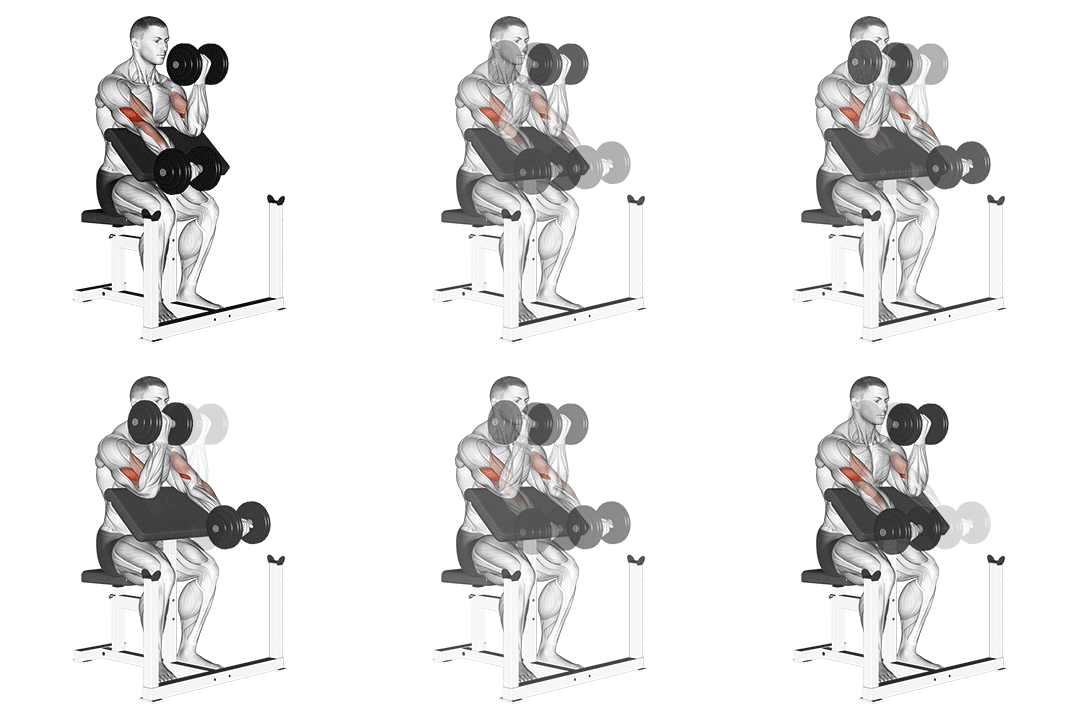
More comparisons with Dumbbell Alternating Seated Bicep Curl On Exercise Ball
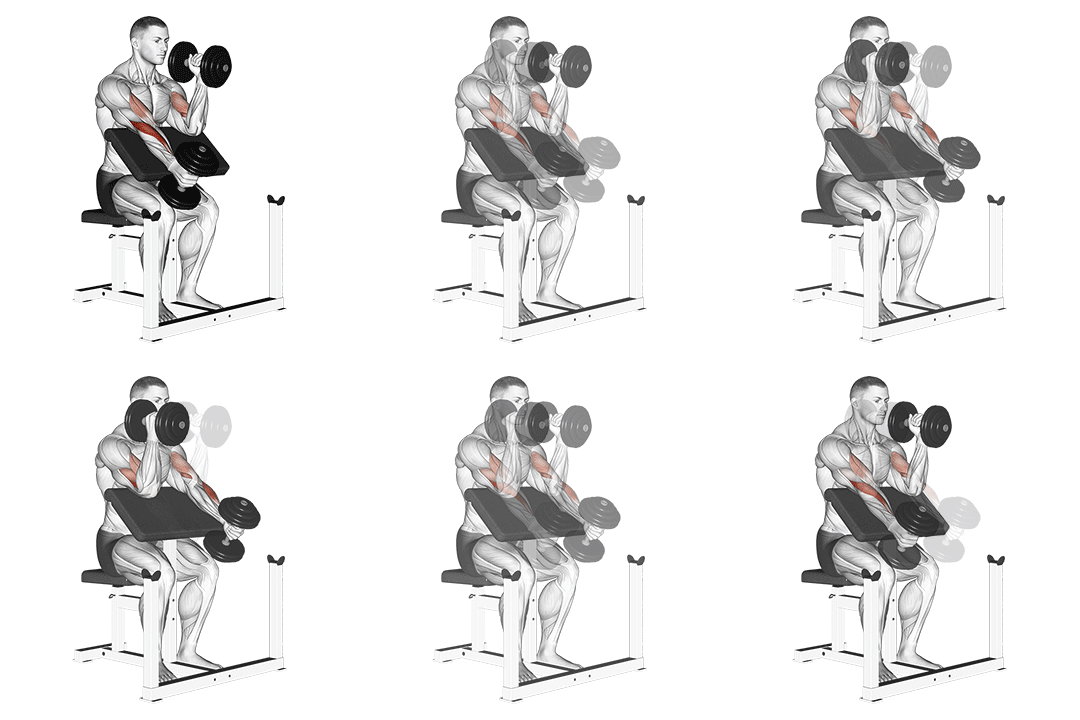
Compare another pair
Choose two exercises to see their differences side by side.