Dumbbell Alternate Biceps Curl (with Arm Blaster) vs Dumbbell Alternating Seated Bicep Curl On Exercise Ball
Compare target muscles, equipment, difficulty, movement type, and secondary muscles for Dumbbell Alternate Biceps Curl (with Arm Blaster) and Dumbbell Alternating Seated Bicep Curl On Exercise Ball.

Change comparison Share

Get comparison link

Select the link and use your device's Copy command.

Comparison overview

AI-generated
Dumbbell Alternate Biceps Curl (with Arm Blaster) vs Dumbbell Alternating Seated Bicep Curl On Exercise Ball — you’re comparing two isolation curl variations that both target the biceps but emphasize different movement qualities. I’ll walk you through muscle activation, equipment needs, technical cues, and when to pick each drill based on your goals: hypertrophy, strength, beginner learning, or home training. Read the cues, rep ranges, and biomechanics so you can choose the variation that gives you cleaner tension, better posture, or more core demand depending on what you want to prioritize.

Exercise Comparison

Exercise A
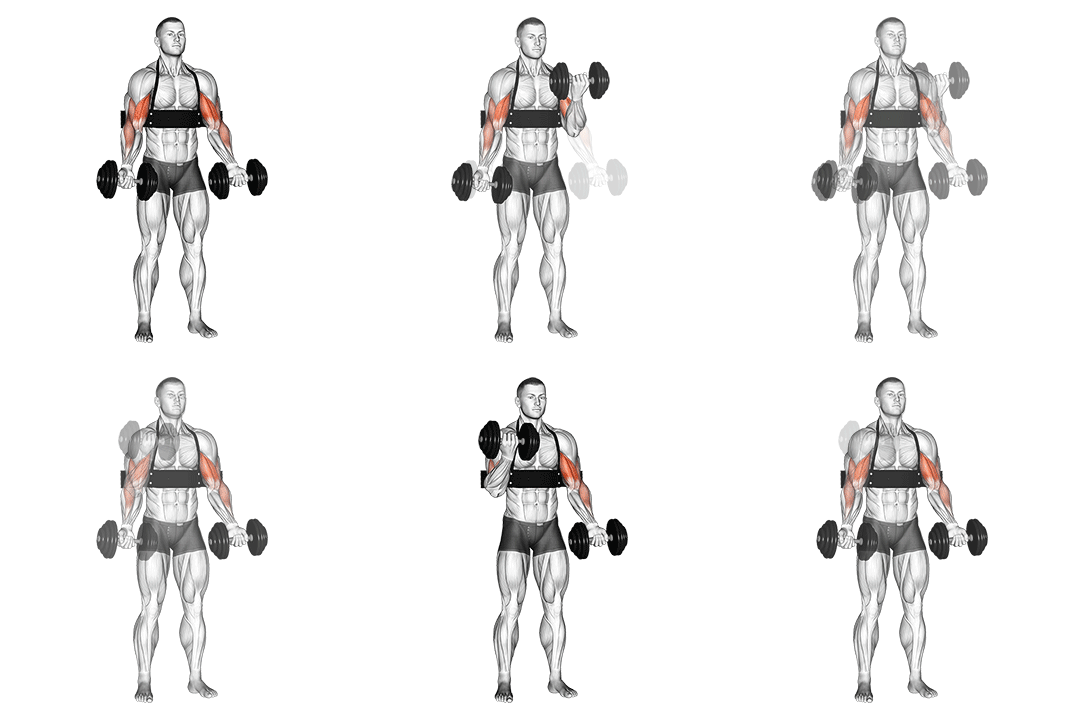
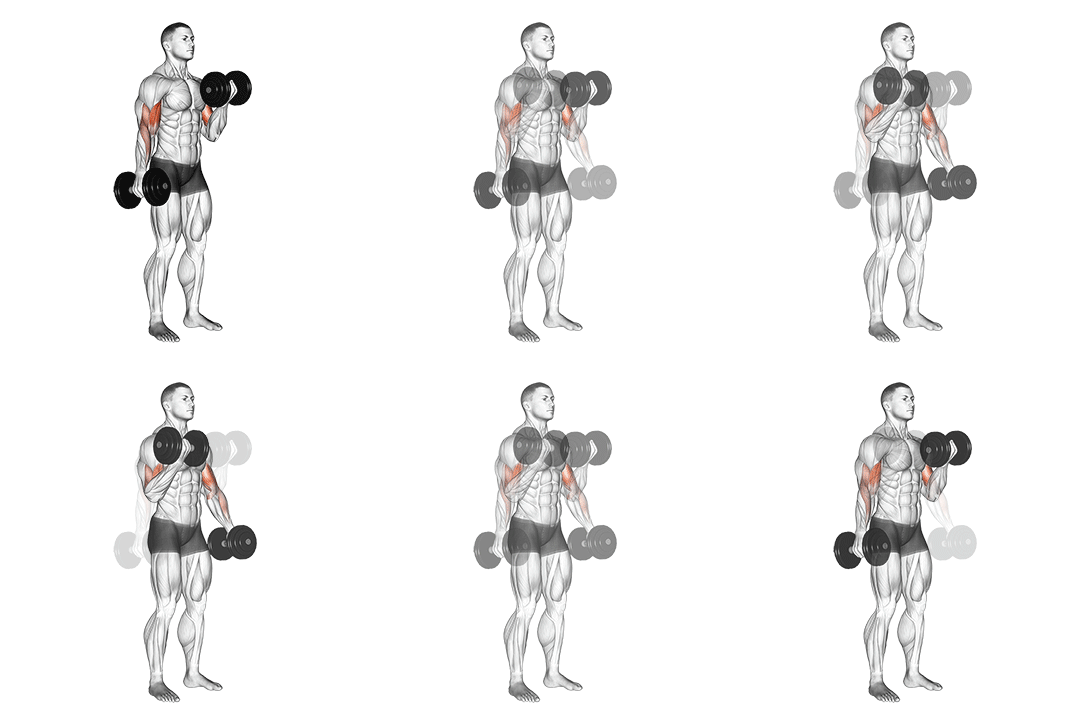
Dumbbell Alternate Biceps Curl (with Arm Blaster) demonstration

Dumbbell Alternate Biceps Curl (with Arm Blaster)

Target Biceps
Equipment Dumbbell
Body Part Upper-arms
Difficulty Beginner
Movement Isolation
Secondary Muscles
Forearms
VS
Exercise B
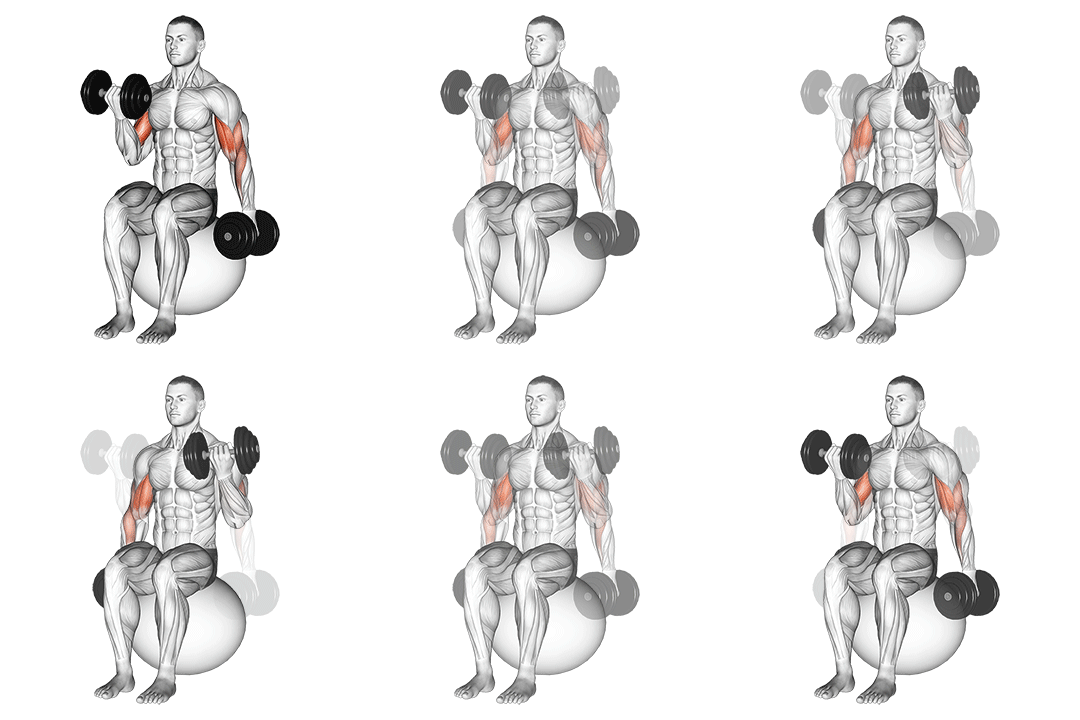
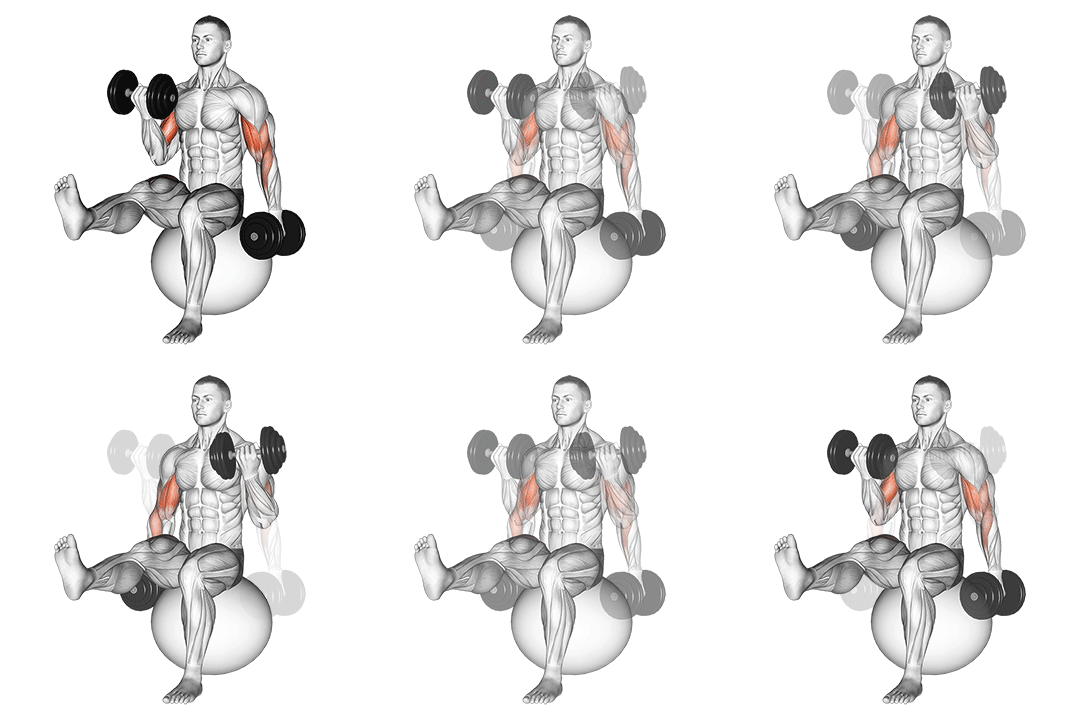
Dumbbell Alternating Seated Bicep Curl On Exercise Ball demonstration

Dumbbell Alternating Seated Bicep Curl On Exercise Ball

Target Biceps
Equipment Dumbbell
Body Part Upper-arms
Difficulty Intermediate
Movement Isolation
Secondary Muscles
Forearms

Head-to-Head Comparison

Different values are marked. These are catalogue attributes, not performance scores.

Muscles used

Listed target and secondary muscles, shown on the body. Locations, not activation or strength scores.

  • Target
  • Secondary
  • Not highlighted

Dumbbell Alternate Biceps Curl (with Arm Blaster)

Front
Dumbbell Alternate Biceps Curl (with Arm Blaster): front muscle locationsSolid: listed target. Striped: listed secondary. Grey: not highlighted. Locations, not activation or strength scores. See the muscle names below.
Back
Dumbbell Alternate Biceps Curl (with Arm Blaster): back muscle locationsSolid: listed target. Striped: listed secondary. Grey: not highlighted. Locations, not activation or strength scores. See the muscle names below.
Target
Biceps
Secondary
Forearms

Dumbbell Alternating Seated Bicep Curl On Exercise Ball

Front
Dumbbell Alternating Seated Bicep Curl On Exercise Ball: front muscle locationsSolid: listed target. Striped: listed secondary. Grey: not highlighted. Locations, not activation or strength scores. See the muscle names below.
Back
Dumbbell Alternating Seated Bicep Curl On Exercise Ball: back muscle locationsSolid: listed target. Striped: listed secondary. Grey: not highlighted. Locations, not activation or strength scores. See the muscle names below.
Target
Biceps
Secondary
Forearms

Grey does not mean a muscle is unused. The diagrams show only the mapped catalogue labels.

Attribute Dumbbell Alternate Biceps Curl (with Arm Blaster) Dumbbell Alternating Seated Bicep Curl On Exercise Ball
Target Muscle
Biceps
Biceps
Body Part
Upper-arms
Upper-arms
Equipment
Dumbbell
Dumbbell
Difficulty Different
Beginner
Intermediate
Movement Type
Isolation
Isolation
Secondary Muscles
Forearms
Forearms

Visual Comparison

An illustrative 1–10 profile derived from catalog difficulty, equipment, and listed-muscle fields—not measured performance or muscle activation.

Key Differences

  • Difficulty levels differ: Dumbbell Alternate Biceps Curl (with Arm Blaster) is beginner, while Dumbbell Alternating Seated Bicep Curl On Exercise Ball is intermediate.
  • Both exercises target the Biceps using Dumbbell. The catalogue does not establish which exercise is better for an individual goal.

Muscle comparison

Shared target muscles

Both exercises primarily load the biceps brachii through elbow flexion and forearm supination. Peak biceps activation occurs in the mid-range of elbow flexion (roughly 60–90°), so both movements stress the muscle where length-tension and moment arm combine for maximal torque. Each variation keeps the load vector across the elbow, so you’ll get strong biceps recruitment when you control the eccentric phase (2–3 seconds) and fully supinate the wrist at the top.

Secondary muscle differences

The arm blaster pins the elbows and reduces shoulder shear, minimizing anterior deltoid contribution and limiting torso cheat, so forearms and the biceps brachii bear most of the load. The exercise-ball seated curl adds a stability demand — the erector spinae, transversus abdominis, and obliques engage to keep your pelvis and thorax stable; the anterior deltoid and scapular stabilizers may also work harder to maintain upright posture.

Muscle involvement analysis

With the arm blaster you get a steeper, cleaner force vector through elbow flexion and a narrower activation curve—high biceps and brachioradialis EMG in mid-range and top range due to fixed elbow position. On the ball, activation spreads: biceps still peak mid-range, but core and scapular stabilizers increase tonic activity throughout the set. Also, slight changes in trunk angle on the ball shift the moment arm and can alter peak torque by ~5–15% compared to strict standing.

Equipment and setup

Dumbbell Alternate Biceps Curl (with Arm Blaster): setup

One pair of dumbbells and an arm blaster (or a DIY elbow-pad/strap to hold elbows in place). You can substitute the arm blaster with a tight belt or wall support, but the device is what enforces elbow positioning and reduces cheat.

Dumbbell Alternating Seated Bicep Curl On Exercise Ball: setup

One pair of dumbbells and a stable exercise ball (or a bench if you want more stability). You need enough clearance and a ball rated for your weight; a standard 55–75 cm ball covers most users.

Access and practicality

Dumbbell Alternating Seated Bicep Curl On Exercise Ball — exercise balls are inexpensive, multipurpose, and more commonly found at home than an arm blaster. A ball doubles for core work and can substitute for a bench, so it’s more accessible for most home setups.

Learning and progression

Learning the movements

Dumbbell Alternate Biceps Curl (with Arm Blaster) is easier to learn because the arm blaster enforces elbow position and reduces torso lean; the movement is a simple hinge at the elbow. The seated ball curl is intermediate because you must manage balance, scapular retraction, and pelvic stability while curling.

Progression considerations

The arm blaster offers clearer progressive overload: increase load, reps (6–12 for hypertrophy), or time under tension. The ball variation provides progression through instability (smaller ball, single-leg support) and motor control improvements, but maximal loading is slightly harder when core demand competes with biceps effort.

Limitations and precautions

Both are low-risk when performed with control. The ball carries a higher fall/balance risk and can induce lumbar compensation if you slump; the arm blaster can increase anterior shoulder tension if you overreach or flare the elbows. Overall, the ball has marginally higher injury risk due to stability demands.

Pros & Cons

Dumbbell Alternate Biceps Curl (with Arm Blaster)

+ Pros

  • Strong isolation of biceps by pinning elbows to reduce momentum and deltoid involvement
  • Easy to overload for muscle growth—supports heavier dumbbells and strict 6–12 rep work
  • Clear technique cues: elbows pinned, full supination, controlled 2–3s eccentric
  • Reduces torso swing, making sets more efficient for progressive overload

Cons

  • Requires an arm blaster or similar device to get full benefit
  • Can feel restrictive and uncomfortable on the chest/neck for some users
  • Less core engagement—fewer stability benefits if that’s a training goal

Dumbbell Alternating Seated Bicep Curl On Exercise Ball

+ Pros

  • Adds core and scapular stability demand, improving posture under load
  • Exercise ball is cheap and multipurpose for other drills
  • Encourages an upright trunk and can reduce lumbar strain when performed correctly
  • Useful for teaching controlled range and reducing momentum through seated position

Cons

  • Harder to use heavy loads because of stability demands—may limit maximal overload
  • Requires good ball setup and balance; poor setup shifts load off the biceps
  • Intermediate technique—easier to cheat with trunk movement if fatigued

When Each Exercise Wins

1
For muscle hypertrophy: Dumbbell Alternate Biceps Curl (with Arm Blaster)

The arm blaster pins the elbows and minimizes shoulder cheat so you can use heavier loads and keep strict form. That allows you to target rep ranges of 6–12 with maximal time under tension for better biceps stimulus.

2
For strength gains: Dumbbell Alternate Biceps Curl (with Arm Blaster)

Strength requires progressive overload and stable mechanics; the arm blaster lets you overload the elbow flexors consistently and reduces momentum, making it easier to track and increase load week-to-week.

3
For beginners: Dumbbell Alternate Biceps Curl (with Arm Blaster)

Beginners benefit from simplified mechanics and elbow position feedback. The arm blaster reduces compensatory movement so you can learn solid elbow flexion and wrist supination before adding instability.

4
For home workouts: Dumbbell Alternating Seated Bicep Curl On Exercise Ball

Exercise balls are inexpensive and versatile, so you’re more likely to have one at home than an arm blaster. The ball also trains core stability, giving you two benefits with one piece of equipment.

Frequently Asked Questions

Can I do both Dumbbell Alternate Biceps Curl (with Arm Blaster) and Dumbbell Alternating Seated Bicep Curl On Exercise Ball in the same workout?

Yes. Use the arm blaster for your heavy work sets (6–12 reps) to maximize tension, then finish with 2–3 lighter stability-focused sets on the ball (10–15 reps) to tax endurance and core control without excessive overlap in mechanical stimulus.

Which exercise is better for beginners?

Dumbbell Alternate Biceps Curl (with Arm Blaster) is better for beginners because it simplifies elbow mechanics and limits cheating. Start with light weight, focus on full supination and a controlled 2–3 second eccentric before progressing.

How do the muscle activation patterns differ?

Both peak biceps activation in the mid-range (about 60–90° elbow flexion), but the arm blaster concentrates activation narrowly on the biceps and brachioradialis. The ball variation spreads activation to core and scapular stabilizers, creating lower maximal biceps load but higher tonic activity in the trunk.

Can Dumbbell Alternating Seated Bicep Curl On Exercise Ball replace Dumbbell Alternate Biceps Curl (with Arm Blaster)?

It can if your goal is general arm development plus stability, but it won’t replace the arm blaster for maximal isolation and overload. For focused hypertrophy or heavy progression, keep the arm blaster in your program; use the ball variation as an accessory or deload option.

Comparison Summary

Choose the Dumbbell Alternate Biceps Curl (with Arm Blaster) when your goal is pure biceps development and precise progressive overload—pin the elbows, keep the torso rigid, supinate fully, and work in 6–12 reps for hypertrophy or heavier sets for strength. Pick the Dumbbell Alternating Seated Bicep Curl On Exercise Ball if you want to add core and scapular stability, improve posture under load, or you need versatile home equipment. If you train for isolated arm hypertrophy, prioritize the arm blaster. If you want a single exercise that trains arms plus stability and fits a minimalist home setup, pick the ball variation.

Exercise instructions

Steps from the exercise catalogue. Read the full sequence before starting.

Dumbbell Alternate Biceps Curl (with Arm Blaster)

  1. Stand up straight with your feet shoulder-width apart and hold a dumbbell in each hand, palms facing forward.
  2. Place the arm blaster on your upper arms, ensuring a secure fit.
  3. Keeping your upper arms stationary, exhale and curl one dumbbell up towards your shoulder while contracting your biceps.
Read remaining steps for Dumbbell Alternate Biceps Curl (with Arm Blaster)
  1. Continue to raise the dumbbell until your biceps are fully contracted and the dumbbell is at shoulder level.
  2. Hold the contracted position for a brief pause as you squeeze your biceps.
  3. Inhale and slowly lower the dumbbell back to the starting position.
  4. Repeat the movement with the opposite arm.
  5. Continue alternating arms for the desired number of repetitions.

Dumbbell Alternating Seated Bicep Curl On Exercise Ball

  1. Sit on an exercise ball with your feet flat on the ground and your back straight.
  2. Hold a dumbbell in each hand with your palms facing forward and your arms fully extended.
  3. Keeping your upper arms stationary, exhale and curl one dumbbell while rotating your forearm until your palm is facing your shoulder.
Read remaining steps for Dumbbell Alternating Seated Bicep Curl On Exercise Ball
  1. Inhale and slowly lower the dumbbell back to the starting position.
  2. Repeat the curl with the other arm.
  3. Continue alternating curls for the desired number of repetitions.

Also Compare

Compare another pair

Choose two exercises to see their differences side by side.

Compare Exercises