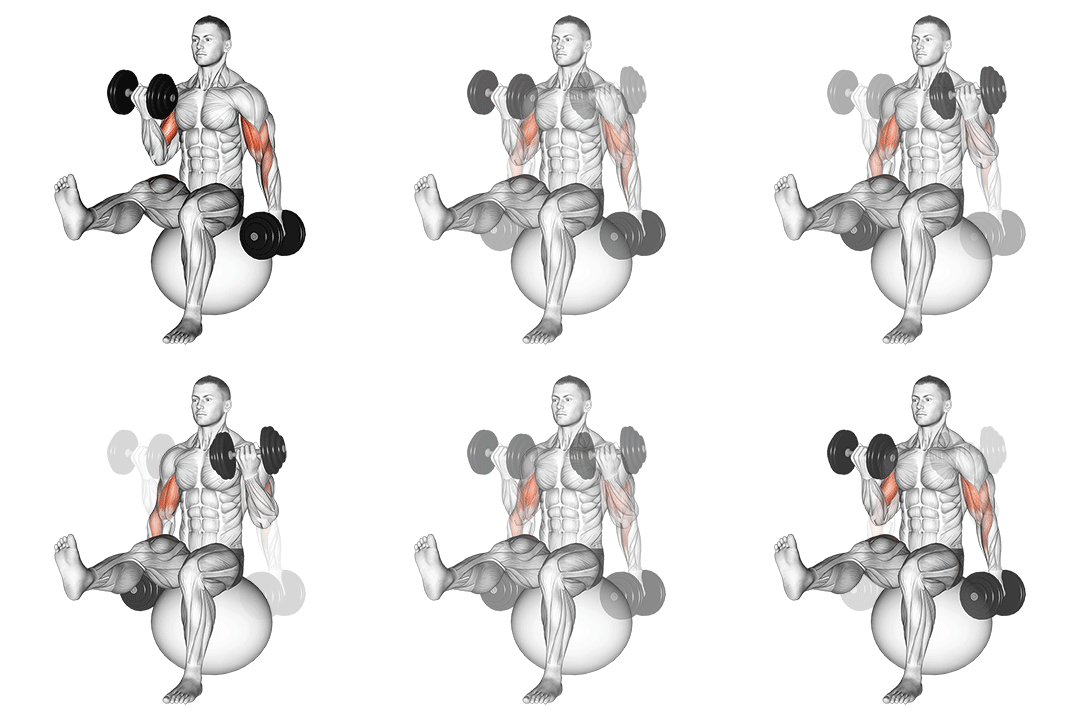
Dumbbell Alternating Bicep Curl With Leg Raised On Exercise Ball vs Dumbbell Alternating Seated Bicep Curl On Exercise Ball
Compare target muscles, equipment, difficulty, movement type, and secondary muscles for Dumbbell Alternating Bicep Curl With Leg Raised On Exercise Ball and Dumbbell Alternating Seated Bicep Curl On Exercise Ball.
Change comparison Share

Get comparison link

Select the link and use your device's Copy command.

Comparison overview

AI-generated
Dumbbell Alternating Bicep Curl With Leg Raised On Exercise Ball vs Dumbbell Alternating Seated Bicep Curl On Exercise Ball — you’re looking at two unilateral, ball-based isolation moves that both target the biceps but stress your body differently. I’ll walk you through muscle activation, stability demands, exact technique cues (pelvis position, elbow tracking, tempo), equipment needs, and which one to pick for hypertrophy, strength, or time-efficient home training. Read on for rep ranges, progression ideas, and clear, biomechanical reasons to choose one over the other.
Exercise Comparison

Exercise A
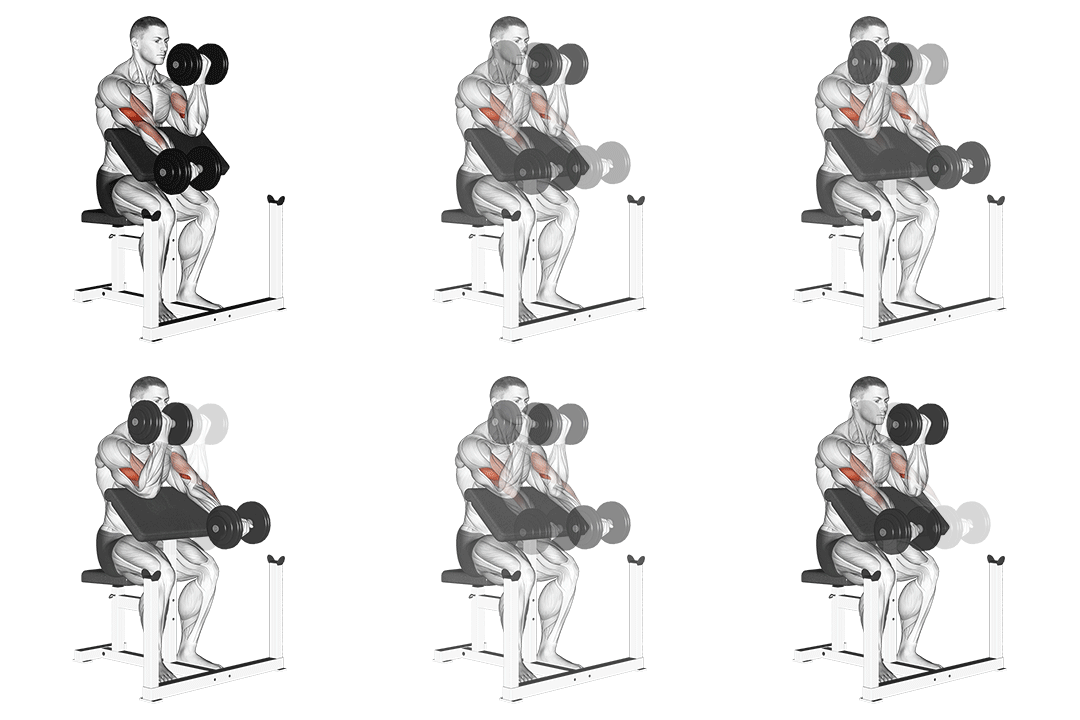
Dumbbell Alternating Bicep Curl With Leg Raised On Exercise Ball demonstration
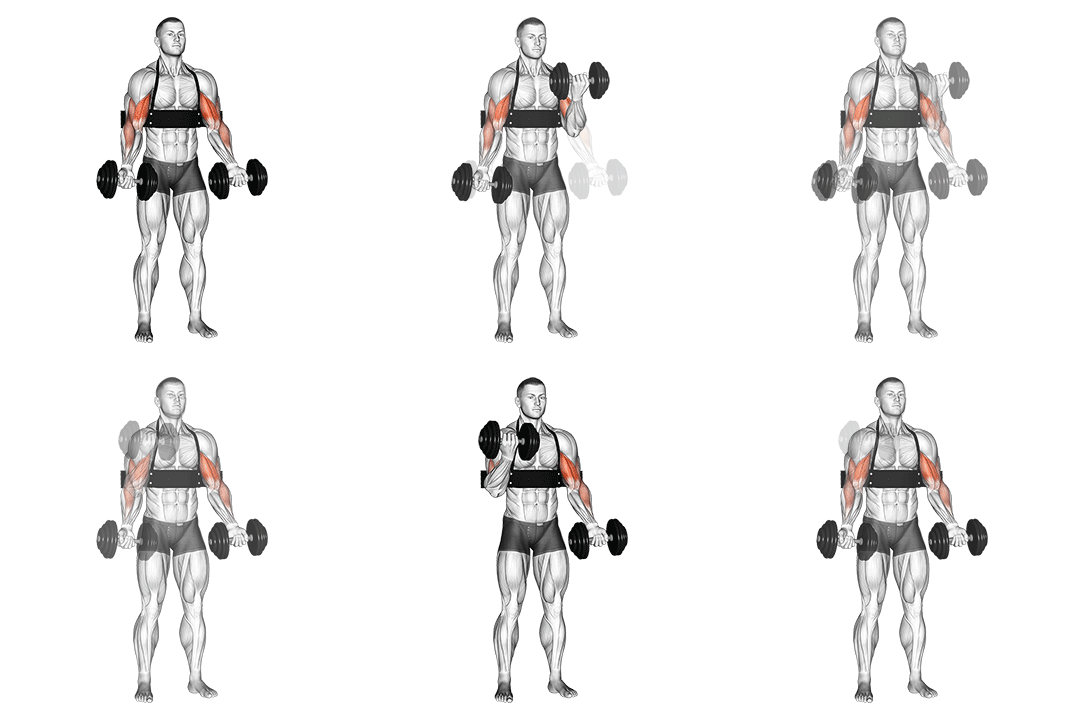
Dumbbell Alternating Bicep Curl With Leg Raised On Exercise Ball
Target Biceps
Equipment Dumbbell
Body Part Upper-arms
Difficulty Intermediate
Movement Isolation
Secondary Muscles
Forearms Shoulders
VS
Exercise B
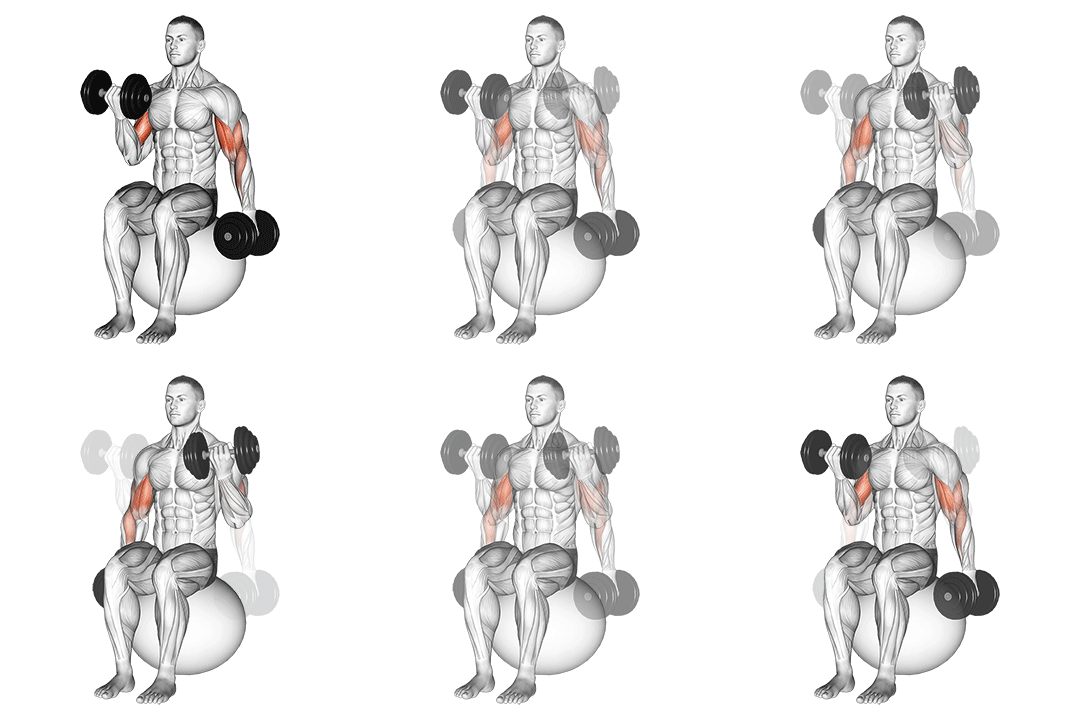
Dumbbell Alternating Seated Bicep Curl On Exercise Ball demonstration
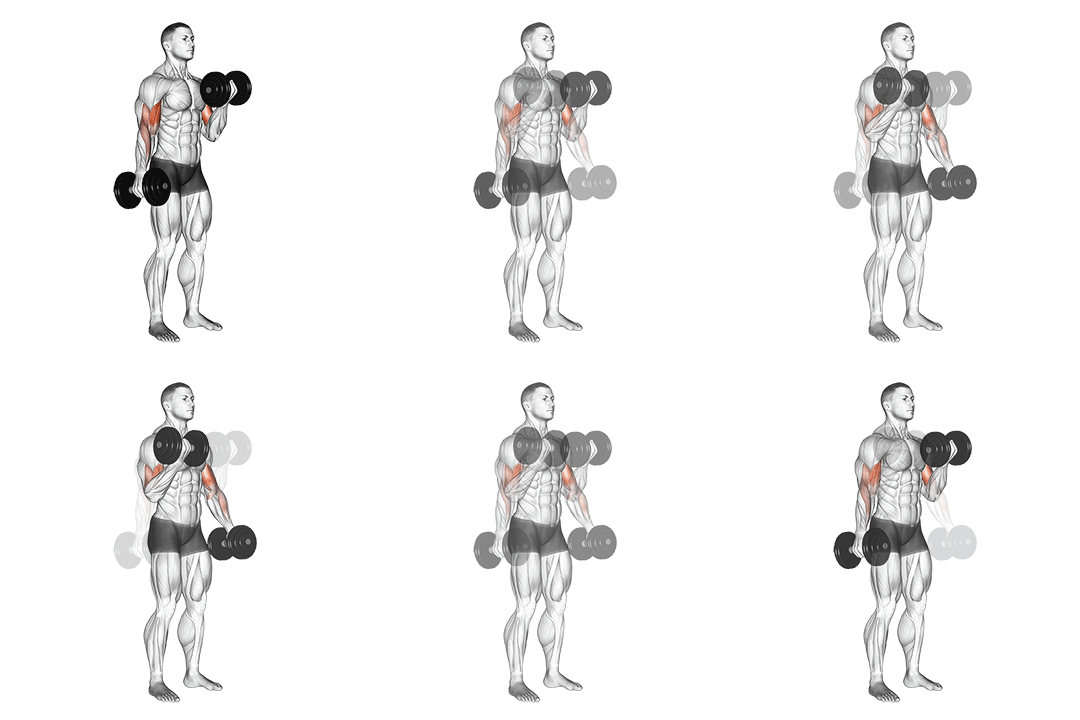
Dumbbell Alternating Seated Bicep Curl On Exercise Ball

Target Biceps
Equipment Dumbbell
Body Part Upper-arms
Difficulty Intermediate
Movement Isolation
Secondary Muscles
Forearms

Head-to-Head Comparison

Different values are marked. These are catalogue attributes, not performance scores.

Muscles used

Listed target and secondary muscles, shown on the body. Locations, not activation or strength scores.

  • Target
  • Secondary
  • Not highlighted

Dumbbell Alternating Bicep Curl With Leg Raised On Exercise Ball

Front
Dumbbell Alternating Bicep Curl With Leg Raised On Exercise Ball: front muscle locationsSolid: listed target. Striped: listed secondary. Grey: not highlighted. Locations, not activation or strength scores. See the muscle names below.
Back
Dumbbell Alternating Bicep Curl With Leg Raised On Exercise Ball: back muscle locationsSolid: listed target. Striped: listed secondary. Grey: not highlighted. Locations, not activation or strength scores. See the muscle names below.
Target
Biceps
Secondary
Forearms, Shoulders

Not shown on diagram: Shoulders. These labels do not identify a precise region on this map.

Dumbbell Alternating Seated Bicep Curl On Exercise Ball

Front
Dumbbell Alternating Seated Bicep Curl On Exercise Ball: front muscle locationsSolid: listed target. Striped: listed secondary. Grey: not highlighted. Locations, not activation or strength scores. See the muscle names below.
Back
Dumbbell Alternating Seated Bicep Curl On Exercise Ball: back muscle locationsSolid: listed target. Striped: listed secondary. Grey: not highlighted. Locations, not activation or strength scores. See the muscle names below.
Target
Biceps
Secondary
Forearms

Grey does not mean a muscle is unused. The diagrams show only the mapped catalogue labels.

Attribute Dumbbell Alternating Bicep Curl With Leg Raised On Exercise Ball Dumbbell Alternating Seated Bicep Curl On Exercise Ball
Target Muscle
Biceps
Biceps
Body Part
Upper-arms
Upper-arms
Equipment
Dumbbell
Dumbbell
Difficulty
Intermediate
Intermediate
Movement Type
Isolation
Isolation
Secondary Muscles Different
Forearms, Shoulders
Forearms

Visual Comparison

An illustrative 1–10 profile derived from catalog difficulty, equipment, and listed-muscle fields—not measured performance or muscle activation.

Key Differences

  • Both exercises target the Biceps using Dumbbell. The catalogue does not establish which exercise is better for an individual goal.

Muscle comparison

Shared target muscles

Both exercises place the biceps brachii under direct elbow-flexion load with similar peak concentric activation when performed with matching loads. The seated variation allows a more vertical upper-arm orientation and typically permits heavier dumbbells — increasing mechanical tension and time under tension for the biceps. The leg-raised variation introduces torso instability, which shifts a small portion of the demand away from maximal biceps force production and toward stabilizers; peak biceps activation remains close to seated levels (within roughly 5–10%) when tempo and load are controlled.

Secondary muscle differences

The leg-raised version recruits core stabilizers (rectus abdominis, obliques) and hip flexors isometrically to keep the pelvis neutral, and it increases shoulder stabilizer activity (rotator cuff and deltoids) to resist unwanted torso rotation. The seated version reduces those stability demands, so secondary recruitment is mostly forearms and minimal shoulder stabilization. In short, leg-raised adds core and shoulder load; seated concentrates work primarily through the elbow flexors and forearms.

Muscle involvement analysis

Both movements follow the same concentric-eccentric pattern, but the leg-raised drill shows increased co-contraction during the eccentric phase to control instability. Keep elbows fixed at the sides and supinate through the concentric to bias long- and short-head biceps recruitment. Seated curls let you maintain a straighter line of pull, keeping the biceps at a more consistent length-tension relationship across the set; leg-raised introduces micro adjustments in trunk angle that slightly alter the muscle length-tension curve during the rep.

Equipment and setup

Dumbbell Alternating Bicep Curl With Leg Raised On Exercise Ball: setup

One exercise ball, one dumbbell per hand (or alternating single dumbbell), a stable surface to place the ball on; minimal space is needed but you must be able to balance with one or both legs raised.

Dumbbell Alternating Seated Bicep Curl On Exercise Ball: setup

One exercise ball and dumbbells. You sit with feet on the floor so you need only a stable floor and no extra balance capacity beyond normal seated stability.

Access and practicality

Dumbbell Alternating Seated Bicep Curl On Exercise Ball is more accessible because it reduces balance and core demands, allows safer loading for progressive overload, and suits trainees with limited proprioception or vestibular tolerance.

Learning and progression

Learning the movements

The seated curl is easier to learn because your feet stay planted and your pelvis is stable, letting you focus on elbow flexion and controlled tempo. The leg-raised curl requires coached pelvic neutralization and balance cues and typically takes longer to perform clean reps.

Progression considerations

Seated curls offer clearer progression: increase weight, shorten rest, or add tempo variations (3–0–1 eccentric-concentric) to drive strength and hypertrophy. Leg-raised curls progress via longer balance holds, decreased base of support, or slower tempo to boost core demand, but they limit maximal loading for pure biceps overload.

Limitations and precautions

Leg-raised variations carry slightly higher risk of compensatory lumbar extension or shoulder torque if pelvic and scapular position aren’t controlled. Seated curls have lower acute injury risk as long as you avoid swinging and keep load appropriate.

Pros & Cons

Dumbbell Alternating Bicep Curl With Leg Raised On Exercise Ball

+ Pros

  • Adds core and shoulder stabilizer activation for more total-body tension
  • Improves unilateral control and balance
  • Can correct asymmetries by forcing single-arm focus
  • Time-efficient: combines biceps work with stability training

Cons

  • Limits the amount of load you can safely handle for maximal biceps tension
  • Higher coordination demand — longer learning curve
  • Greater chance of lumbar or shoulder compensation if form breaks

Dumbbell Alternating Seated Bicep Curl On Exercise Ball

+ Pros

  • Allows heavier, more consistent loading for the biceps
  • Lower balance demand — easier to maintain clean technique
  • Better for strict tempo work and progressive overload
  • Simple to teach and scale for beginners

Cons

  • Less core and shoulder stabilization stimulus
  • May be slightly less time-efficient if you want combined stability work
  • Can encourage elbow travel forward if not cued properly

When Each Exercise Wins

1
For muscle hypertrophy: Dumbbell Alternating Seated Bicep Curl On Exercise Ball

Seated curls let you use heavier loads and maintain a consistent line of pull, increasing mechanical tension and time under tension—key drivers of hypertrophy. Use 8–15 reps, 2–3 second eccentrics, and strict elbow positioning for best results.

2
For strength gains: Dumbbell Alternating Seated Bicep Curl On Exercise Ball

Strength requires progressive overload and heavier weights; seated curls permit safer loading and clearer percentage-based progression (e.g., increase by 5–10% every 2–4 weeks). Maintain a 3–5 rep range or heavier sets of 6–8 with longer rests.

3
For beginners: Dumbbell Alternating Seated Bicep Curl On Exercise Ball

Beginners benefit from the lower coordination demand and stable base of the seated curl so they can learn elbow isolation, supination, and tempo before adding balance challenges.

4
For home workouts: Dumbbell Alternating Seated Bicep Curl On Exercise Ball

Both exercises work at home, but the seated version is more practical: you get superior biceps stimulus with less fall risk and simpler progressions using just a ball and dumbbells.

Frequently Asked Questions

Can I do both Dumbbell Alternating Bicep Curl With Leg Raised On Exercise Ball and Dumbbell Alternating Seated Bicep Curl On Exercise Ball in the same workout?

Yes. Use the seated variation as your primary heavy sets (e.g., 3–4 sets of 8–12) and add 2–3 lighter sets of leg-raised curls for stability and endurance. Keep total volume appropriate and monitor fatigue so form doesn’t break down.

Which exercise is better for beginners?

The seated alternating curl is better for beginners because it reduces balance demands and isolates elbow flexion so you can learn supination and tempo. Once you can perform strict reps, add the leg-raised variation to build stability.

How do the muscle activation patterns differ?

Both hit the biceps concentrically and eccentrically, but the leg-raised version recruits additional core and shoulder stabilizers and shows more co-contraction during the eccentric. Seated curls keep a steadier length-tension relationship in the biceps, supporting higher peak force.

Can Dumbbell Alternating Seated Bicep Curl On Exercise Ball replace Dumbbell Alternating Bicep Curl With Leg Raised On Exercise Ball?

If your goal is pure biceps development or strength, the seated curl can replace the leg-raised version because it permits heavier, more focused loading. If you want combined core and unilateral stability benefits, keep the leg-raised variation in rotation.

Comparison Summary

Choose the seated alternating curl on the exercise ball when your primary goal is biceps size or strength: it lets you load heavier, maintain strict elbow position, and apply progressive overload with minimal balance interference. Pick the leg-raised alternating curl when you want to add core and shoulder stabilization into the same set, improve unilateral control, or correct side-to-side imbalances. For programming, prioritize seated curls for your main biceps work (8–15 reps, controlled tempo), and rotate in leg-raised sets as an accessory to challenge stability, motor control, and time-efficiency once your technique is solid.

Exercise instructions

Steps from the exercise catalogue. Read the full sequence before starting.

Dumbbell Alternating Bicep Curl With Leg Raised On Exercise Ball

  1. Stand with your feet shoulder-width apart and hold a dumbbell in each hand, palms facing forward.
  2. Place an exercise ball behind you and position one foot on top of it, keeping your balance.
  3. With your arms fully extended and elbows close to your sides, curl one dumbbell towards your shoulder while keeping your upper arm stationary.
Read remaining steps for Dumbbell Alternating Bicep Curl With Leg Raised On Exercise Ball
  1. Lower the dumbbell back down to the starting position and repeat with the other arm.
  2. Continue alternating arms for the desired number of repetitions.

Dumbbell Alternating Seated Bicep Curl On Exercise Ball

  1. Sit on an exercise ball with your feet flat on the ground and your back straight.
  2. Hold a dumbbell in each hand with your palms facing forward and your arms fully extended.
  3. Keeping your upper arms stationary, exhale and curl one dumbbell while rotating your forearm until your palm is facing your shoulder.
Read remaining steps for Dumbbell Alternating Seated Bicep Curl On Exercise Ball
  1. Inhale and slowly lower the dumbbell back to the starting position.
  2. Repeat the curl with the other arm.
  3. Continue alternating curls for the desired number of repetitions.

Also Compare

Compare another pair

Choose two exercises to see their differences side by side.

Compare Exercises