EZ Barbell Incline Triceps Extension vs EZ Barbell JM Bench Press

Compare target muscles, equipment, difficulty, movement type, and secondary muscles for EZ Barbell Incline Triceps Extension and EZ Barbell JM Bench Press.

Change comparison Share

Get comparison link

Select the link and use your device's Copy command.

Comparison overview

AI-generated
Ez Barbell Incline Triceps Extension vs Ez Barbell Jm Bench Press — both target the triceps but use different mechanics. You’ll get a clear, practical comparison so you can pick the right move for hypertrophy, strength, or programming. I’ll cover primary and secondary muscle recruitment, equipment and setup, technical cues, progression options, injury risk, and which situations favor each exercise. Read on for rep ranges, joint angles (incline angle and bench position), and actionable technique tips that help you load the triceps efficiently and safely.

Exercise Comparison

Exercise A
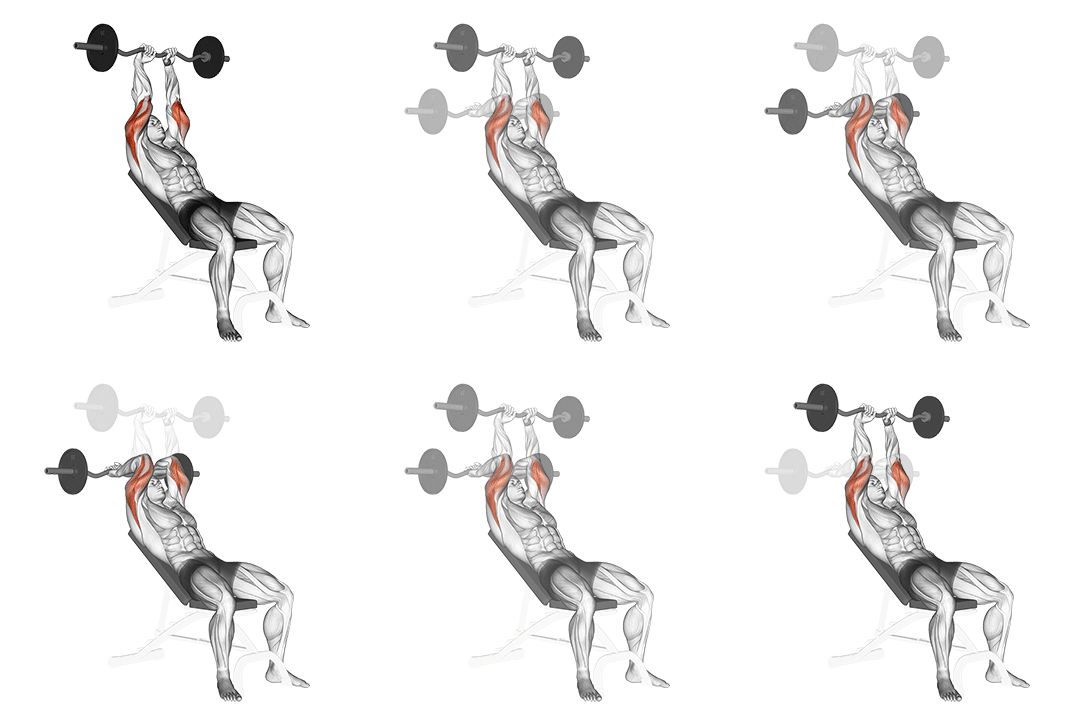
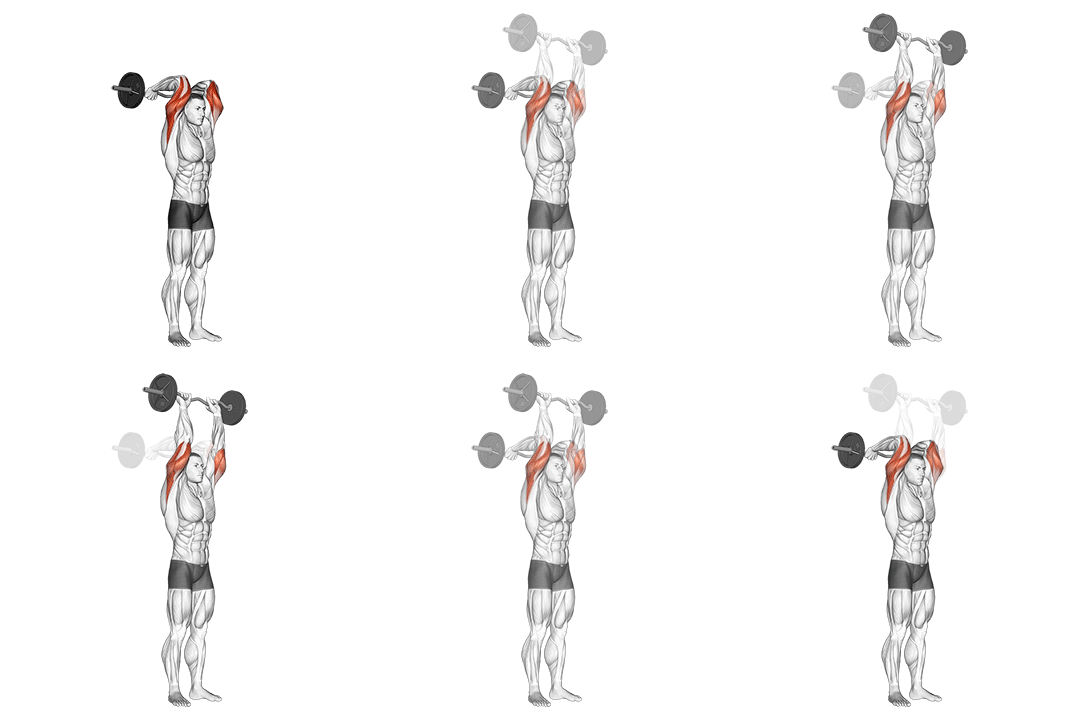
EZ Barbell Incline Triceps Extension demonstration

EZ Barbell Incline Triceps Extension
Target Triceps
Equipment Ez-barbell
Body Part Upper-arms
Difficulty Intermediate
Movement Isolation
Secondary Muscles
Shoulders
VS
Exercise B
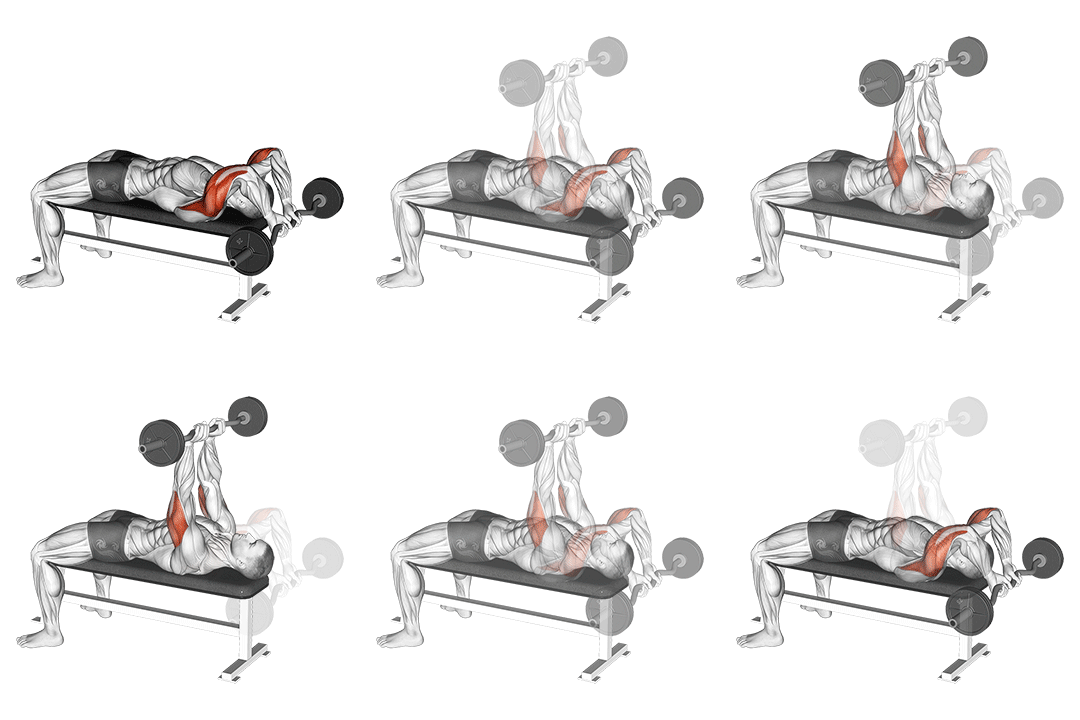
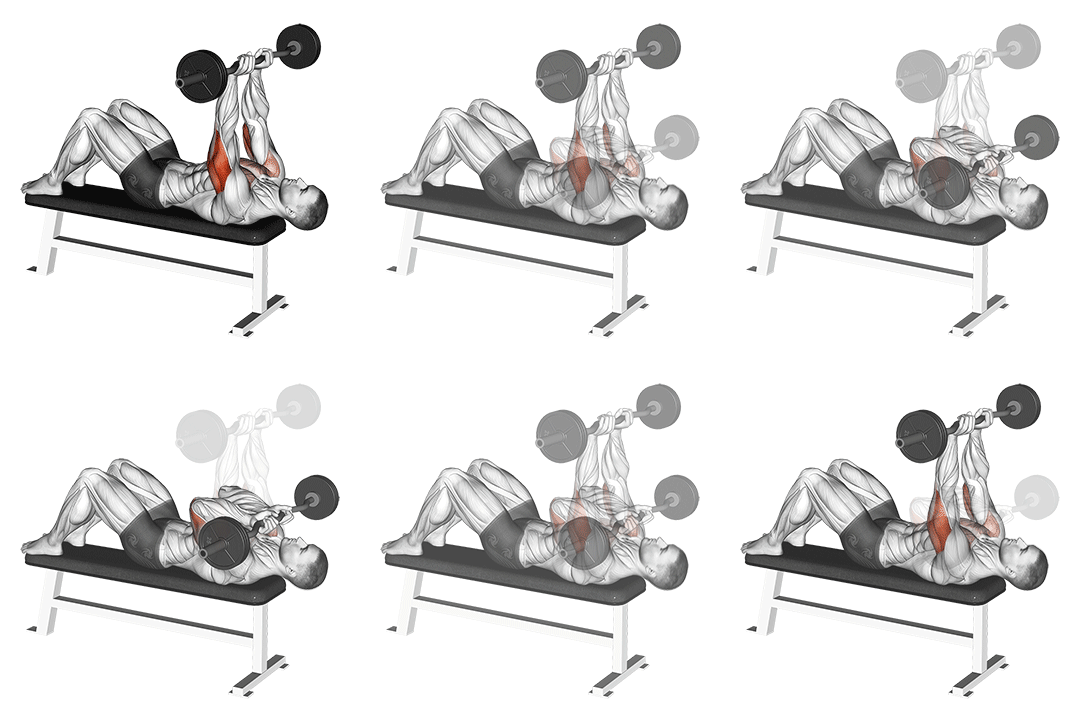
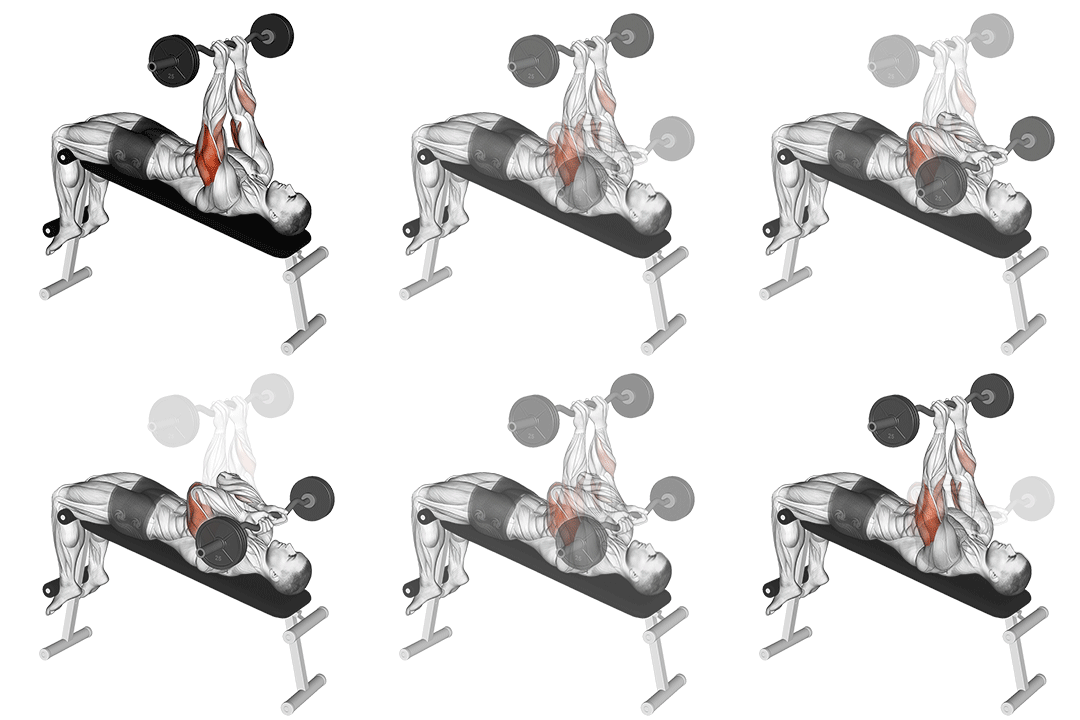
EZ Barbell JM Bench Press demonstration

EZ Barbell JM Bench Press

Target Triceps
Equipment Ez-barbell
Body Part Upper-arms
Difficulty Advanced
Movement Compound
Secondary Muscles
Chest Shoulders

Head-to-Head Comparison

Different values are marked. These are catalogue attributes, not performance scores.

Muscles used

Listed target and secondary muscles, shown on the body. Locations, not activation or strength scores.

  • Target
  • Secondary
  • Not highlighted

EZ Barbell Incline Triceps Extension
Front
EZ Barbell Incline Triceps Extension: front muscle locationsSolid: listed target. Striped: listed secondary. Grey: not highlighted. Locations, not activation or strength scores. See the muscle names below.
Back
EZ Barbell Incline Triceps Extension: back muscle locationsSolid: listed target. Striped: listed secondary. Grey: not highlighted. Locations, not activation or strength scores. See the muscle names below.
Target
Triceps
Secondary
Shoulders

Not shown on diagram: Shoulders. These labels do not identify a precise region on this map.

EZ Barbell JM Bench Press

Front
EZ Barbell JM Bench Press: front muscle locationsSolid: listed target. Striped: listed secondary. Grey: not highlighted. Locations, not activation or strength scores. See the muscle names below.
Back
EZ Barbell JM Bench Press: back muscle locationsSolid: listed target. Striped: listed secondary. Grey: not highlighted. Locations, not activation or strength scores. See the muscle names below.
Target
Triceps
Secondary
Chest, Shoulders

Not shown on diagram: Shoulders. These labels do not identify a precise region on this map.

Grey does not mean a muscle is unused. The diagrams show only the mapped catalogue labels.

Attribute EZ Barbell Incline Triceps Extension EZ Barbell JM Bench Press
Target Muscle
Triceps
Triceps
Body Part
Upper-arms
Upper-arms
Equipment
Ez-barbell
Ez-barbell
Difficulty Different
Intermediate
Advanced
Movement Type Different
Isolation
Compound
Secondary Muscles Different
Shoulders
Chest, Shoulders

Visual Comparison

An illustrative 1–10 profile derived from catalog difficulty, equipment, and listed-muscle fields—not measured performance or muscle activation.

Key Differences

  • EZ Barbell Incline Triceps Extension is an isolation exercise, while EZ Barbell JM Bench Press is a compound movement.
  • Difficulty levels differ: EZ Barbell Incline Triceps Extension is intermediate, while EZ Barbell JM Bench Press is advanced.
  • Both exercises target the Triceps using Ez-barbell. The catalogue does not establish which exercise is better for an individual goal.

Muscle comparison

Shared target muscles

Both exercises target the triceps brachii as the primary mover, especially the lateral and medial heads during elbow extension. The incline triceps extension biases the long head slightly more because the shoulder is placed into greater flexion on a 30–45° incline, lengthening the long head and increasing its contribution via length-tension mechanics. The JM bench press combines elbow extension with a small horizontal pressing vector, so triceps contribute alongside pecs and anterior deltoids; peak triceps torque often occurs around the sticking point at ~30–60° of elbow extension.

Secondary muscle differences

Ez Barbell Jm Bench Press recruits the chest (pectoralis major) and anterior deltoid significantly due to the horizontal push and scapular position, often adding 15–30% more chest activation vs the isolation. The Incline Triceps Extension reduces chest involvement and shifts load to the shoulder stabilizers and rotator cuff to maintain arm path; scapular retraction is minimal, so shoulder involvement is primarily stabilizing rather than prime moving.

Muscle involvement analysis

The incline extension produces a more constant triceps moment arm through the range, emphasizing the long head at stretch on the eccentric and peak activation near full elbow extension on the concentric. The JM bench press mixes vertical elbow force with horizontal force vectors; triceps EMG-like activation spikes around the mid-range when pectoral contribution falls and elbow torque rises. In short: incline = sustained isolation; JM = mixed activation with a mid-range triceps spike.

Equipment and setup

EZ Barbell Incline Triceps Extension: setup

Ez Barbell Incline Triceps Extension needs an EZ bar, an adjustable incline bench set to 30–45°, and space to lie back with the bar tracked over your forehead to upper chest.

EZ Barbell JM Bench Press: setup

Ez Barbell Jm Bench Press requires an EZ bar, a flat bench, a rack or spotter for safe re-racking, and enough room to perform a slight decline-like elbow path toward the upper mid-chest.

Access and practicality

Incline Triceps Extension is more accessible because you only need an adjustable bench and EZ bar and can safely perform it alone; the JM bench press often benefits from a rack or spotter due to heavier loads and its compound nature.

Learning and progression

Learning the movements

Incline Triceps Extension has a gentler learning curve — set the bench, control the arc, and focus on elbow-only movement. JM Bench Press is advanced because it requires coordinated scapular stability, precise bar path (toward the sternum), and timing of shoulder and elbow moments.

Progression considerations

JM Bench Press offers greater absolute progression potential for overall upper-body pressing strength because you can load heavier (use 80–95% 1RM ranges for strength blocks). Incline Triceps Extension offers linear progression for hypertrophy using volume, tempo, and TUT (recommended 8–15 reps, 60–75% of single-set effort).

Limitations and precautions

JM Bench Press carries higher injury risk due to combined shoulder and elbow stresses; improper flare or excessive downward bar path can increase shear at the AC joint and elbow joint compression. Incline Triceps Extension risks come from poor elbow tracking and excessive hyperflexion of the shoulder, but overall presents lower joint loading and safer single-joint stress when performed with strict form.

Pros & Cons

EZ Barbell Incline Triceps Extension

+ Pros

  • Isolates triceps, especially the long head when done at 30–45° incline
  • Lower overall joint shear compared to compound presses
  • Easy to control tempo for eccentric overload and time under tension
  • Requires minimal setup and no spotter

− Cons

  • Limited absolute loading compared to compound lifts
  • Less carryover to horizontal pressing strength
  • Requires strict elbow control to avoid wrist or elbow pain

EZ Barbell JM Bench Press

+ Pros

  • Combines triceps strength work with chest/shoulder involvement for compound transfer
  • Allows heavier loading and straightforward strength progression
  • Improves mid-range lockout strength due to mixed force vectors
  • Efficient for strength-focused sessions—hits multiple muscles in one movement

− Cons

  • Higher technical demand and learning curve
  • Greater stress on shoulder and elbow joints if performed incorrectly
  • Usually requires a rack or spotter for safe heavy sets

When Each Exercise Wins

1
For muscle hypertrophy: Ez Barbell Incline Triceps Extension

The incline variation increases long-head stretch and allows controlled time under tension (8–15 reps). Its isolation focus reduces compensatory chest involvement, letting you overload the triceps volume-wise for better localized muscle growth.

2
For strength gains: Ez Barbell Jm Bench Press

JM bench lets you use heavier loads and trains the triceps through the mid-range lockout under compound stress (4–6 rep strength ranges). The mixed force vectors transfer to bigger pressing numbers and improves closing strength under load.

3
For beginners: Ez Barbell Incline Triceps Extension

It’s easier to learn an elbow-dominant pattern on an incline bench with clear isolation cues. Fewer coordination demands and lower absolute loading reduce risk while teaching elbow extension mechanics.

4
For home workouts: Ez Barbell Incline Triceps Extension

Requires only an adjustable bench and EZ bar, and can be performed safely solo. JM bench usually needs a rack/spotter and is less suited when you lack spotting equipment.

Frequently Asked Questions

Can I do both Ez Barbell Incline Triceps Extension and Ez Barbell Jm Bench Press in the same workout?

Yes — pair them strategically by doing JM Bench Press first as a heavy compound (3–6 reps) then follow with Incline Triceps Extensions for 3 sets of 8–12 reps to pre-exhaust or finish the triceps. Keep total volume in check to avoid elbow overuse and allow adequate rest between heavy and high-volume sets.

Which exercise is better for beginners?

Incline Triceps Extension is better for beginners because it simplifies the movement to elbow extension, limiting coordination and load. It teaches triceps activation without the complex bar path and spotter needs of the JM bench.

How do the muscle activation patterns differ?

Incline extensions create sustained triceps activation with greater long-head stretch due to shoulder flexion, while JM bench presses produce a mixed activation pattern where triceps spike in the mid-range as chest contribution drops. Biomechanically, the JM shifts force vectors to combine horizontal push with elbow torque, altering activation timing.

Can Ez Barbell Jm Bench Press replace Ez Barbell Incline Triceps Extension?

JM Bench Press can replace the incline extension when your goal is to increase pressing strength and overall load capacity, but it won’t isolate the triceps as effectively for hypertrophy. For targeted long-head development and controlled volume, keep the incline extension in your accessory rotation.

Comparison Summary

Use the Ez Barbell Incline Triceps Extension when your priority is focused triceps hypertrophy, rehabilitation-friendly loading, or higher-volume accessory work. Set the bench to 30–45°, keep elbows tucked and use 8–15 reps with controlled 2–3 second eccentrics to maximize long-head tension. Choose the Ez Barbell JM Bench Press when you want to build pressing strength and train the triceps under heavier, compound loads—use it for 3–6 rep strength blocks, focusing on a short, slightly downward bar path to the upper chest. Be decisive: pick the incline for isolation and volume, pick the JM for strength and transfer to pressing. Rotate both across phases for balanced upper-arm development.

Exercise instructions

Steps from the exercise catalogue. Read the full sequence before starting.

EZ Barbell Incline Triceps Extension

  1. Set up an incline bench at a 45-degree angle.
  2. Sit on the bench with your back against the pad and hold the ez barbell with an overhand grip.
  3. Extend your arms fully overhead, keeping your elbows close to your head.
Read remaining steps for EZ Barbell Incline Triceps Extension
  1. Lower the barbell behind your head by bending your elbows, keeping your upper arms stationary.
  2. Pause for a moment, then extend your arms back to the starting position.
  3. Repeat for the desired number of repetitions.

EZ Barbell JM Bench Press

  1. Lie flat on a bench with your feet flat on the ground and your back pressed against the bench.
  2. Grasp the ez barbell with an overhand grip, slightly wider than shoulder-width apart.
  3. Lower the barbell to your chest, keeping your elbows tucked in close to your body.
Read remaining steps for EZ Barbell JM Bench Press
  1. Push the barbell back up to the starting position, fully extending your arms.
  2. Repeat for the desired number of repetitions.

Also Compare

Compare another pair

Choose two exercises to see their differences side by side.

Compare Exercises