

Lever Decline Chest Press vs Lever Incline Chest Press: Complete Comparison Guide
Lever Decline Chest Press vs Lever Incline Chest Press — two leveraged presses that both target the pectorals but load them differently. You’ll get a clear breakdown of primary muscle emphasis, secondary recruitment (triceps and shoulders), setup and technique cues, biomechanics like force vectors and length-tension, and practical programming recommendations (angles, rep ranges, and progression). Read on so you can choose which lever press to prioritize based on whether you want heavier horizontal loading, upper-chest development, or safer shoulder mechanics.
Exercise Comparison
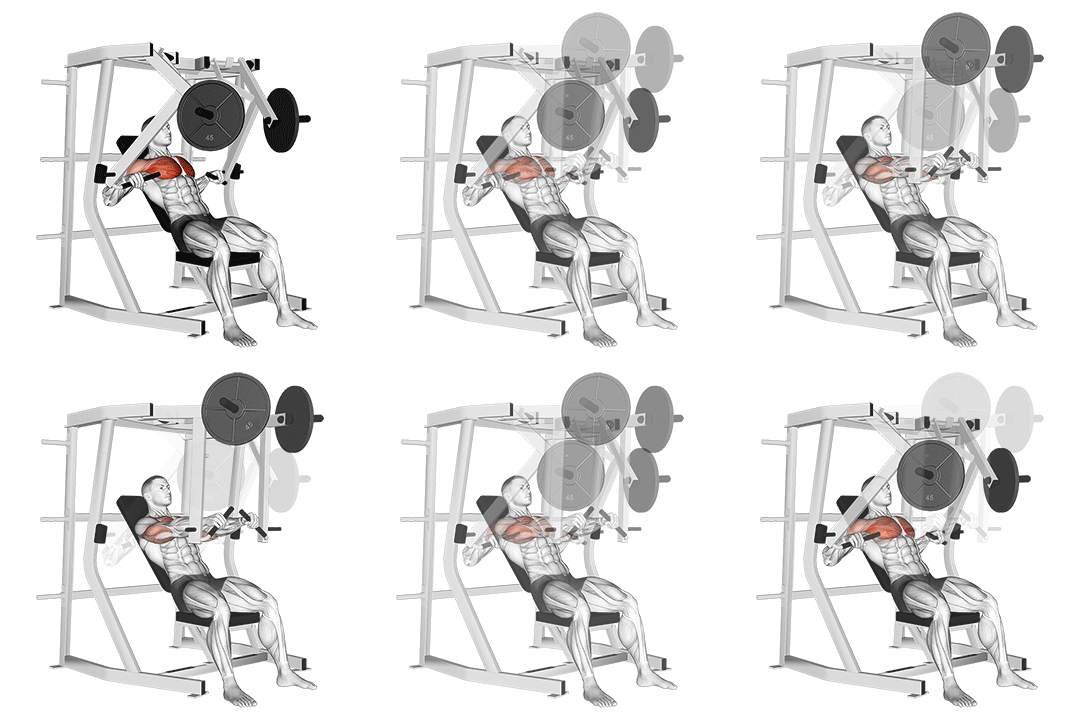
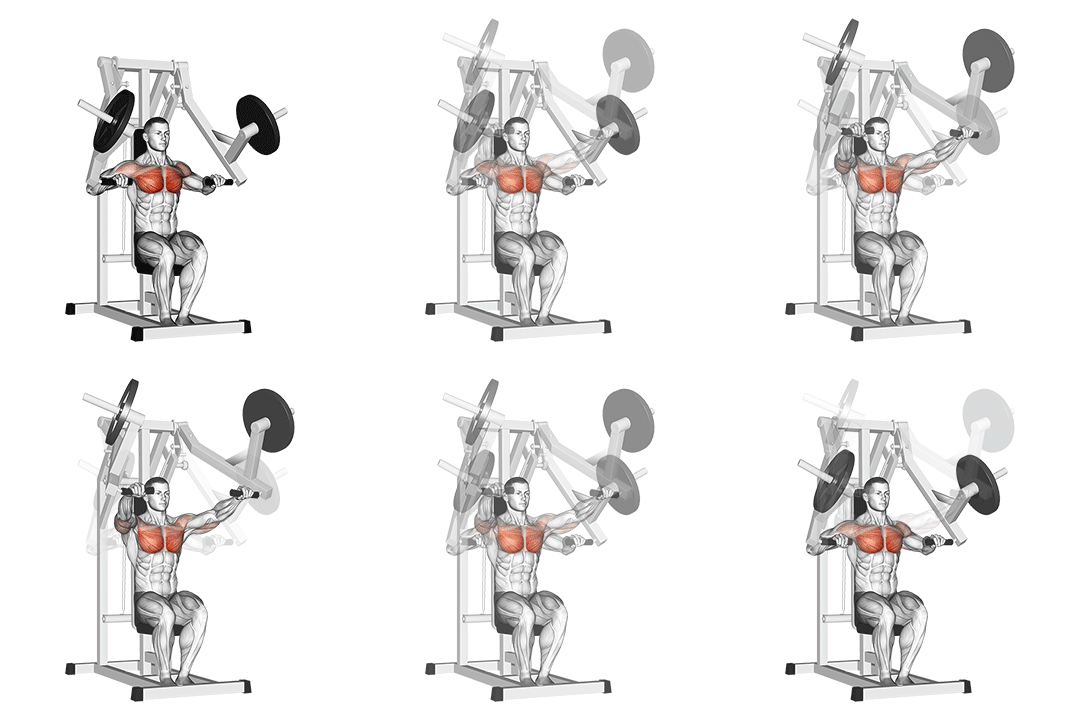
Lever Decline Chest Press
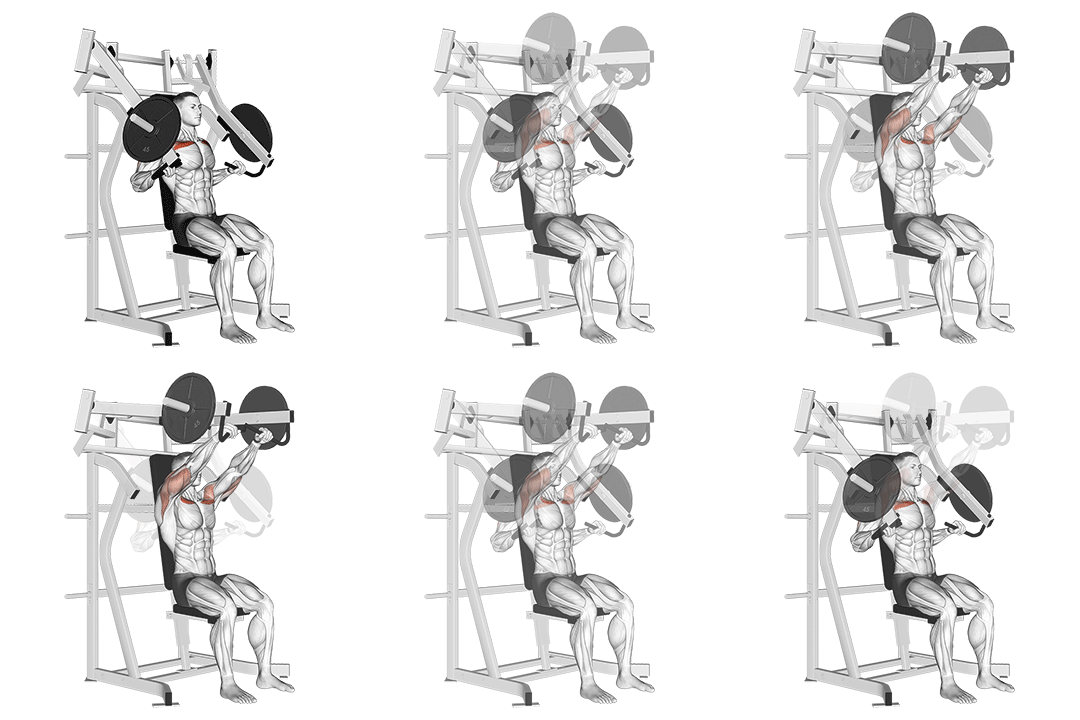
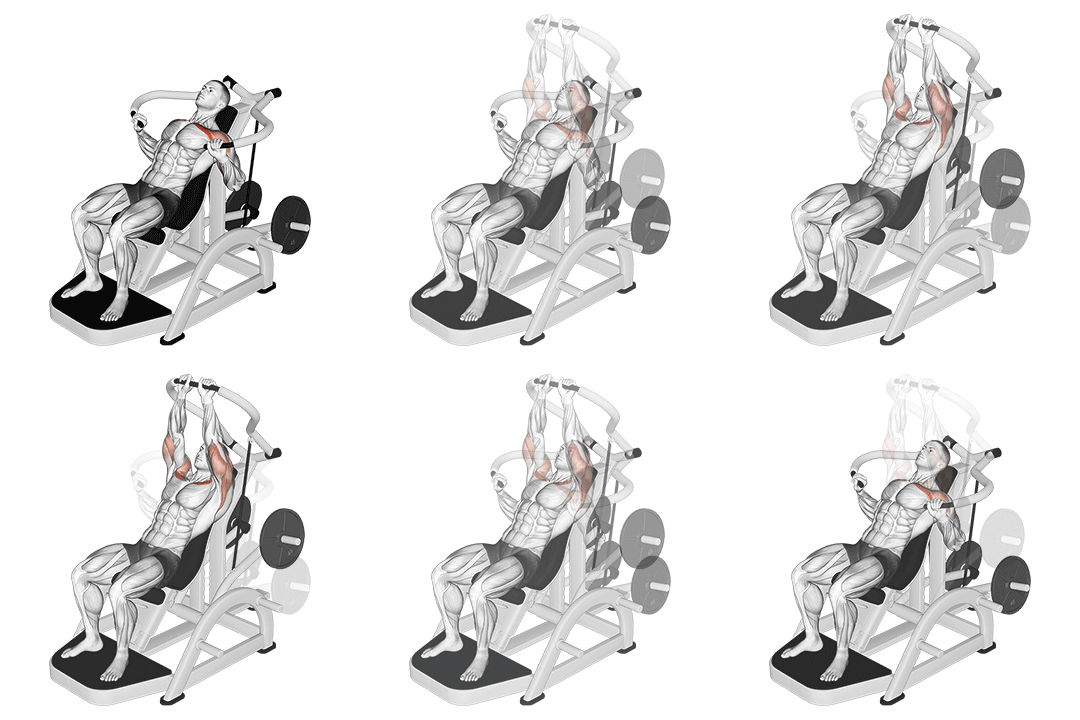
Lever Incline Chest Press
Head-to-Head Comparison
| Attribute | Lever Decline Chest Press | Lever Incline Chest Press |
|---|---|---|
| Target Muscle |
Pectorals
|
Pectorals
|
| Body Part |
Chest
|
Chest
|
| Equipment |
Lever
|
Lever
|
| Difficulty |
Intermediate
|
Intermediate
|
| Movement Type |
Compound
|
Compound
|
| Secondary Muscles |
2
|
2
|
Secondary Muscles Activated
Lever Decline Chest Press
Lever Incline Chest Press
Visual Comparison
Overview
Lever Decline Chest Press vs Lever Incline Chest Press — two leveraged presses that both target the pectorals but load them differently. You’ll get a clear breakdown of primary muscle emphasis, secondary recruitment (triceps and shoulders), setup and technique cues, biomechanics like force vectors and length-tension, and practical programming recommendations (angles, rep ranges, and progression). Read on so you can choose which lever press to prioritize based on whether you want heavier horizontal loading, upper-chest development, or safer shoulder mechanics.
Key Differences
- Both exercises target the Pectorals using Lever. The main differences are in their movement patterns and muscle activation angles.
Pros & Cons
Lever Decline Chest Press
+ Pros
- Stronger mechanical advantage allows heavier loading (often 5–20% more than incline)
- Greater emphasis on lower and mid-sternal pec fibers for chest thickness
- Less anterior deltoid involvement, useful if shoulders limit pressing
- Stable pressing path when feet and pelvis are braced correctly
− Cons
- Decline setups are less common in some gyms
- Requires solid foot lockdown and core bracing to avoid sliding
- May reduce upper-chest stimulation compared with incline variations
Lever Incline Chest Press
+ Pros
- Targets upper/clavicular pec fibers for balanced chest development
- More common on multi-gyms and easy to adjust between lifters
- Greater carryover to incline barbell/dumbbell variations
- Easier setup for most lifters — less need for foot straps
− Cons
- Increases anterior deltoid demand, which can aggravate shoulder issues
- May limit absolute load compared with decline due to less mechanical advantage
- Improper elbow flare can increase impingement risk
When Each Exercise Wins
Decline lets you load the sternal pecs more heavily and maintain tension through the mid-range, which supports high mechanical tension—key for hypertrophy. Use 6–12 reps with controlled 2–1–2 tempo and full scapular retraction to maximize fiber recruitment.
The more horizontal force vector gives a mechanical advantage that often lets you move heavier absolute loads, aiding neural adaptations for strength. Program 3–6 sets of 3–6 reps with heavier loads and long rest (2–4 minutes) to build maximal pressing strength.
Incline is easier to set up and trains pressing mechanics with less need for pelvic bracing, making it friendlier for new trainees. Start with 8–12 reps focusing on scapular control and elbow path before increasing load.
Adjustable incline benches or incline-capable machines are more common in home gyms than dedicated decline levers, so incline offers greater practical access. If you don’t have a lever machine, incline dumbbell presses are a direct substitute.
Frequently Asked Questions
Can I do both Lever Decline Chest Press and Lever Incline Chest Press in the same workout?
Yes — pairing them works well if you want full chest coverage. Start with the movement that matches your priority (e.g., incline for upper chest), then use the other as a secondary heavy or volume set; manage total volume to avoid excessive shoulder fatigue.
Which exercise is better for beginners?
Lever Incline Chest Press is generally better for beginners because it requires simpler bracing and mirrors common pressing mechanics. It also allows you to learn proper scapular position and elbow tracking before progressing to decline variations.
How do the muscle activation patterns differ?
Incline shifts the force vector upward, increasing clavicular (upper) pec and anterior deltoid activation at about a 30–45° angle, while decline shifts the vector more horizontally, increasing sternal (lower/mid) pec activation. Length-tension and joint torque explain why decline often allows heavier absolute loads.
Can Lever Incline Chest Press replace Lever Decline Chest Press?
It can replace decline if your goal is overall chest balance or if you lack decline equipment, but it won’t load the lower sternal fibers in the same way. If lower-pec thickness or maximal horizontal load is your goal, keep decline in the rotation.
Expert Verdict
Use the Lever Incline Chest Press when your priority is upper-chest development, versatility, and easier setup—set the backpad to 30–45° and emphasize controlled reps (8–12) with scapular retraction. Choose the Lever Decline Chest Press when you want to prioritize sternal/ lower-pec thickness and move heavier loads for strength (3–6 reps) or high-tension hypertrophy (6–10 reps). For balanced chest development, cycle both across your program: include an incline movement earlier in the week for upper-clavicular stimulus and a decline press later for heavy horizontal loading and sternal density.
Also Compare
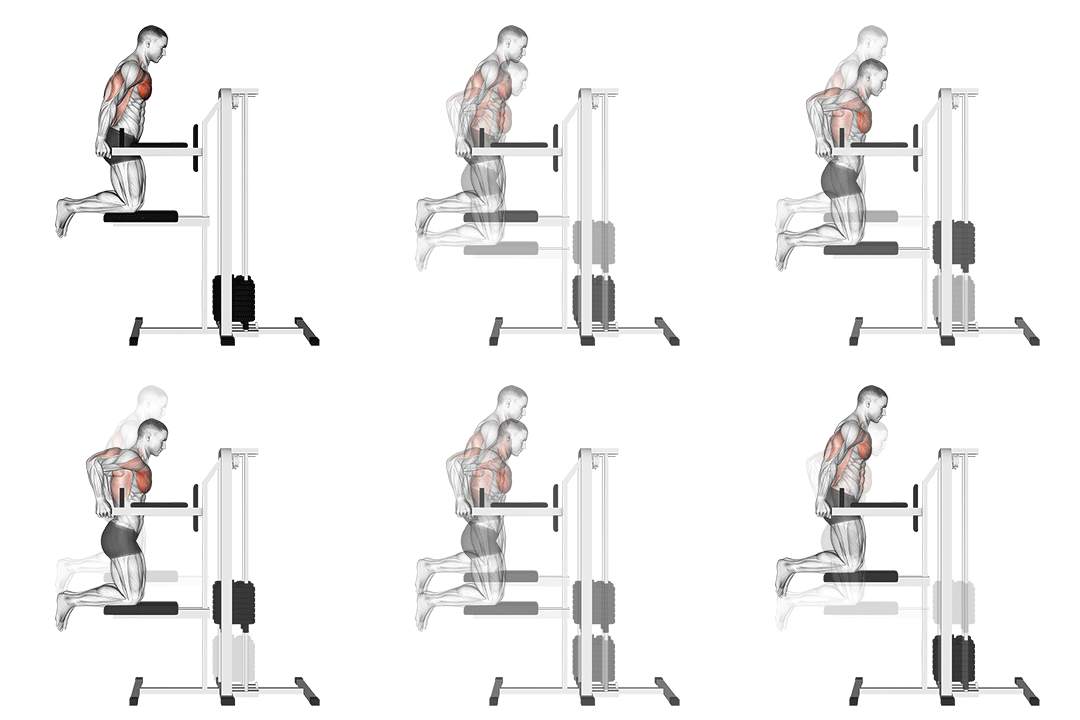
More comparisons with Lever Decline Chest Press
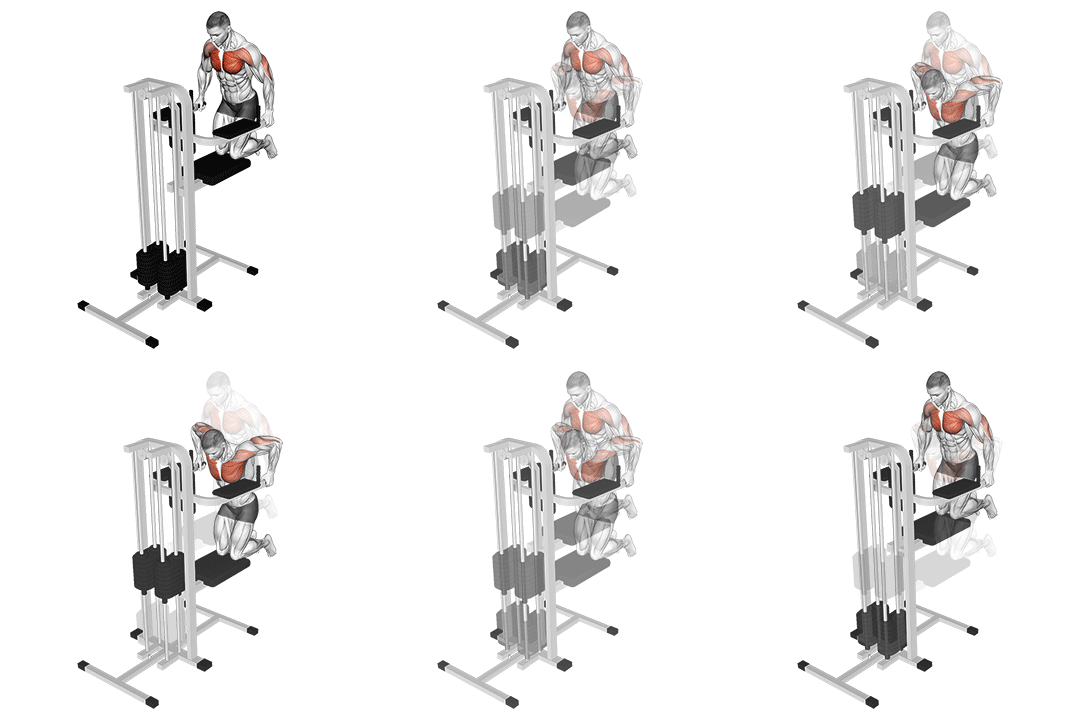
More comparisons with Lever Incline Chest Press
Compare More Exercises
Use our free comparison tool to analyze any two exercises head-to-head.
Compare Exercises