

Lever Incline Chest Press vs Lever Seated Fly: Complete Comparison Guide
Lever Incline Chest Press vs Lever Seated Fly — if you want a stronger, fuller chest you need to pick the right tool. You’ll get a clear breakdown of how each machine hits the pectorals, which secondary muscles fire, and which movement fits your training phase. I’ll cover biomechanics (force vectors, length-tension), setup cues (incline angle 30–45°, elbow path), rep ranges for hypertrophy and strength (6–12, 3–6), and practical programming tips so you can choose the best exercise for your goals.
Exercise Comparison
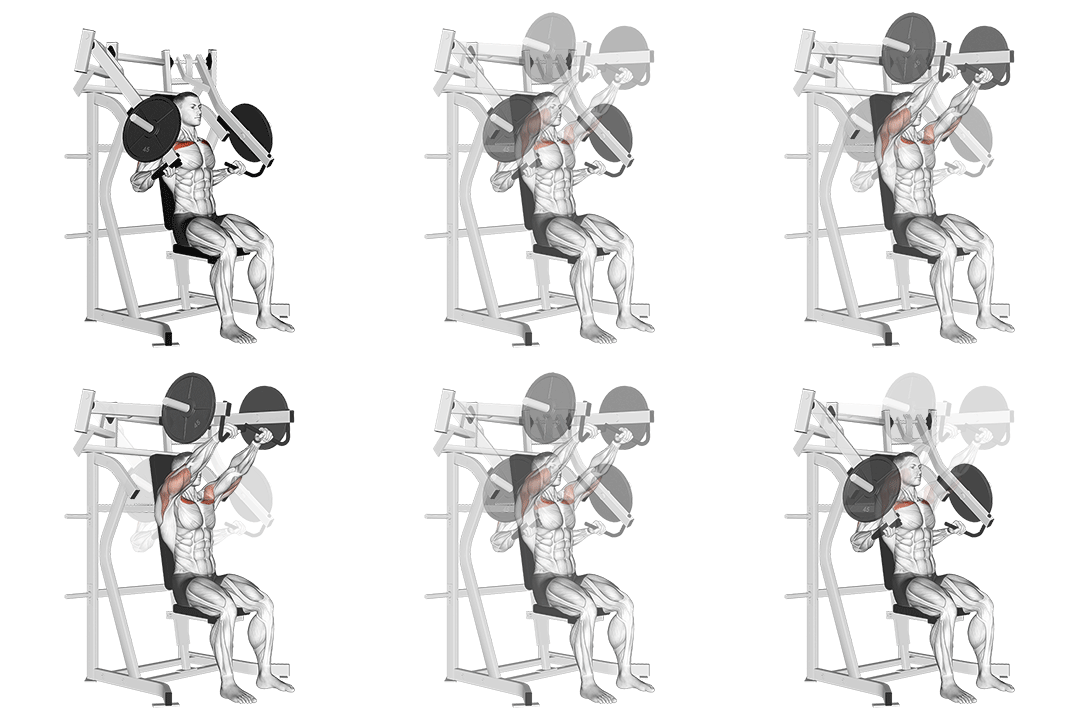
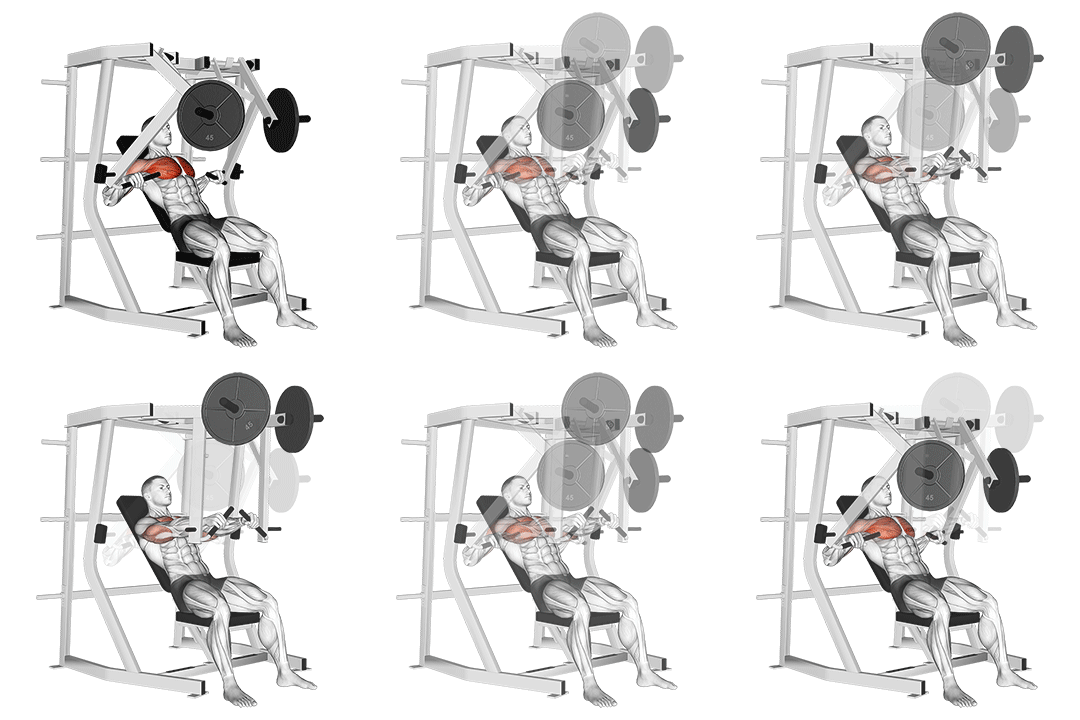
Lever Incline Chest Press
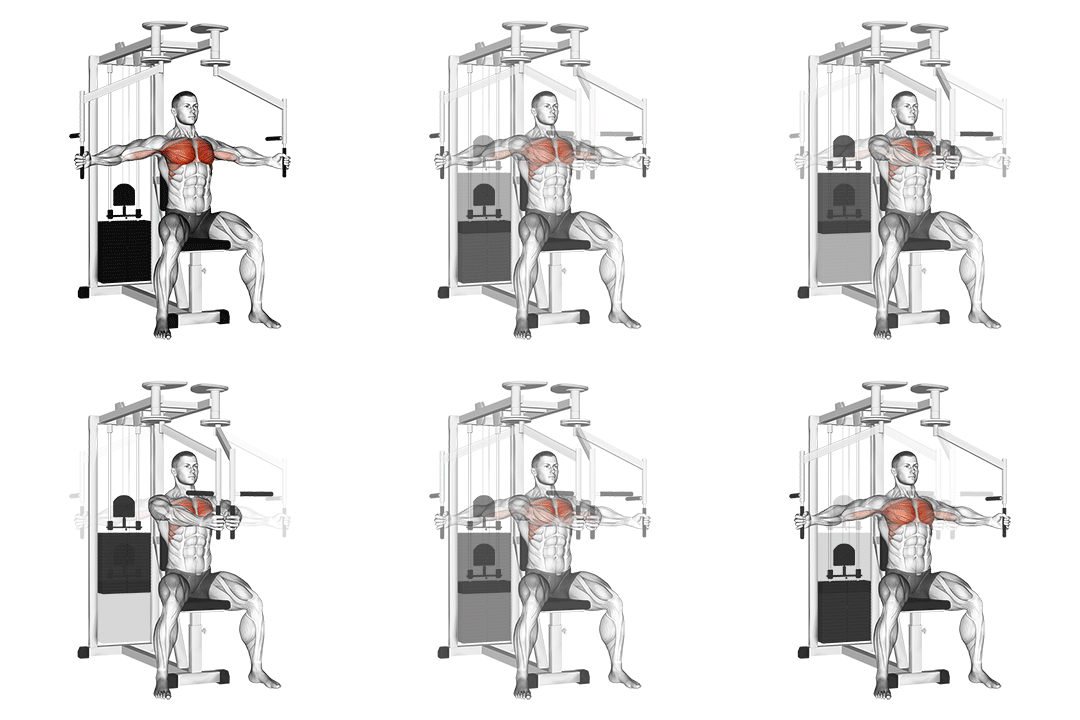
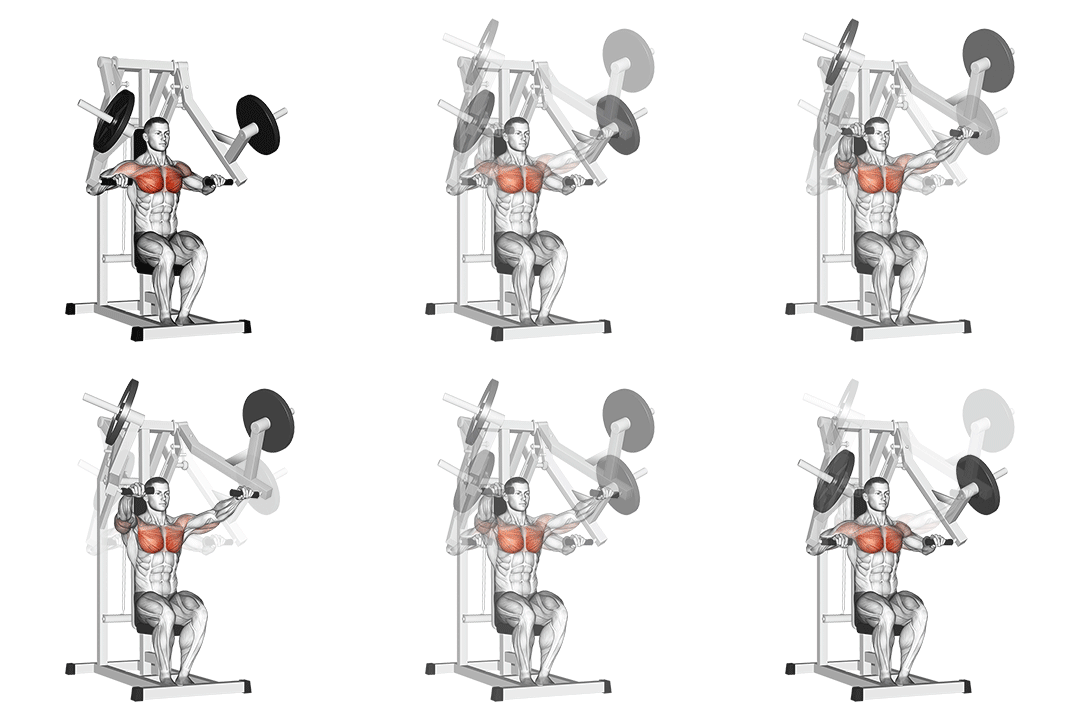
Lever Seated Fly
Head-to-Head Comparison
| Attribute | Lever Incline Chest Press | Lever Seated Fly |
|---|---|---|
| Target Muscle |
Pectorals
|
Pectorals
|
| Body Part |
Chest
|
Chest
|
| Equipment |
Lever
|
Lever
|
| Difficulty |
Intermediate
|
Beginner
|
| Movement Type |
Compound
|
Isolation
|
| Secondary Muscles |
2
|
2
|
Secondary Muscles Activated
Lever Incline Chest Press
Lever Seated Fly
Visual Comparison
Overview
Lever Incline Chest Press vs Lever Seated Fly — if you want a stronger, fuller chest you need to pick the right tool. You’ll get a clear breakdown of how each machine hits the pectorals, which secondary muscles fire, and which movement fits your training phase. I’ll cover biomechanics (force vectors, length-tension), setup cues (incline angle 30–45°, elbow path), rep ranges for hypertrophy and strength (6–12, 3–6), and practical programming tips so you can choose the best exercise for your goals.
Key Differences
- Lever Incline Chest Press is a compound movement, while Lever Seated Fly is an isolation exercise.
- Difficulty levels differ: Lever Incline Chest Press is intermediate, while Lever Seated Fly is beginner.
- Both exercises target the Pectorals using Lever. The main differences are in their movement patterns and muscle activation angles.
Pros & Cons
Lever Incline Chest Press
+ Pros
- Allows heavier loads for greater mechanical tension and strength progression
- Hits upper pecs effectively when set at 30–45° incline
- Engages triceps and anterior deltoids for compound overload
- Multiple progression variables: weight, tempo, pauses, and incline angle
− Cons
- Requires better setup and technique to avoid shoulder strain
- Greater demand on triceps can limit pec-focused overload for some lifters
- Less isolation — harder to target specific pec fibers without recruiting synergists
Lever Seated Fly
+ Pros
- Simple single-joint motion ideal for isolating pectorals
- Lower skill requirement — quick to learn and set up
- Excellent for eccentric control and time under tension
- Safer for light-to-moderate loads and pump-style training
− Cons
- Limited ability to load heavily for raw strength progression
- Can overstretch the anterior shoulder if range isn’t managed
- Less overall muscle recruitment, so slower systemic strength improvements
When Each Exercise Wins
The incline press allows heavier loads and greater mechanical tension across the pecs and supporting muscles, making it ideal for 6–12 rep hypertrophy blocks. Use it as your primary mass-mover and follow with isolation work like 8–15 rep flies for targeted fiber fatigue.
Its compound pattern recruits triceps and deltoids and lets you progressively overload in 3–6 rep ranges. The fixed path of a lever machine also improves force transfer and makes it easier to track strength increases.
The fly’s single-joint motion and fixed ROM reduce coordination demands and setup mistakes. Start with 8–15 reps focusing on controlled eccentrics and scapular stability before adding compound presses.
If you have only limited lever equipment or a compact machine, the seated fly gives targeted chest work with simpler setup and lower injury risk. It’s easier to program as a standalone chest movement in small spaces.
Frequently Asked Questions
Can I do both Lever Incline Chest Press and Lever Seated Fly in the same workout?
Yes. Start with the Lever Incline Chest Press as the heavy compound (3–6 or 6–12 reps), then finish with the Lever Seated Fly for 8–15 reps to increase time under tension and isolate the pecs. Keep total volume and joint fatigue in mind to avoid shoulder overload.
Which exercise is better for beginners?
Lever Seated Fly is better for most beginners because it has a simpler single-joint pattern and a fixed ROM. It builds mind-muscle connection and eccentric control before progressing to compound incline presses.
How do the muscle activation patterns differ?
The incline press produces a diagonal force vector that engages upper pecs, anterior deltoids, and triceps with peak concentric force earlier in the rep. The seated fly emphasizes horizontal adduction and eccentric stretch, increasing pec fiber length-tension demand during the lowering phase.
Can Lever Seated Fly replace Lever Incline Chest Press?
Not fully. The fly isolates the chest but cannot match the mechanical tension and systemic overload the incline press provides for strength and mass. Use flies as a complement or substitute only when you need lower technical demand or are managing heavy load limitations.
Expert Verdict
Use the Lever Incline Chest Press as your go-to compound when you want upper-chest mass and strength: set the bench at 30–45°, press for 3–6 reps for strength or 6–12 for hypertrophy, and prioritize scapular retraction and elbow tracking. Use the Lever Seated Fly as a technical finisher or for rehabilitation and beginner phases — it isolates horizontal adduction, emphasizes eccentric stretch, and is safer for controlled time under tension (8–15 reps). Combine them in phases: prioritize incline pressing during heavy blocks and add seated flies to increase time under tension and fiber-specific fatigue.
Also Compare
More comparisons with Lever Incline Chest Press
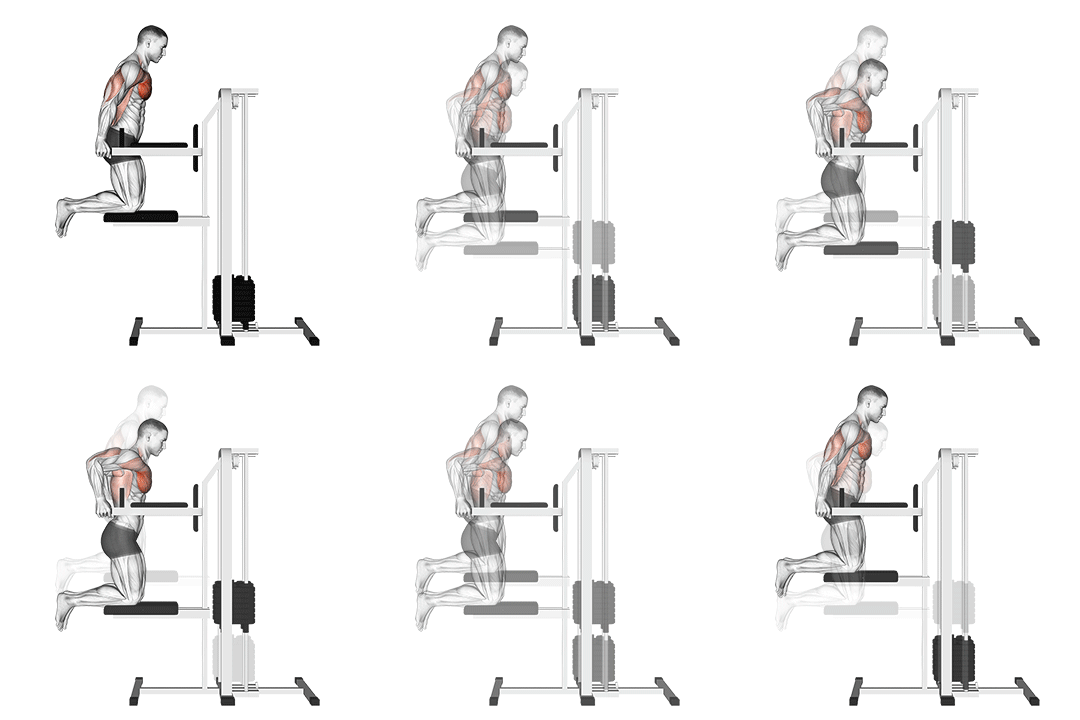
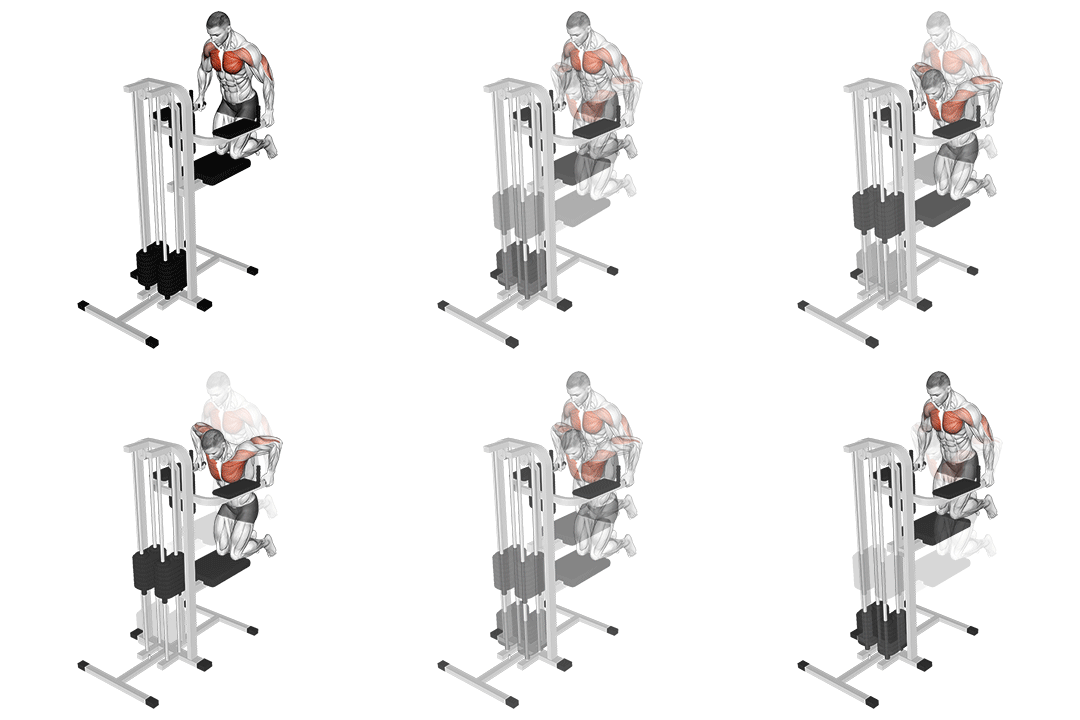
More comparisons with Lever Seated Fly
Compare More Exercises
Use our free comparison tool to analyze any two exercises head-to-head.
Compare Exercises