How to Do Barbell Reverse Grip Incline Bench Row
Enhance Posture and Promote Scapular Mobility

Ash, ACE, MSc
By
Ash, ACE, MSc
Ash is a highly respected fitness expert and certified personal trainer through the American Council on Exercise (ACE). With a B.A. in biology from Rutgers and...
6 Min Read
How to do Barbell Reverse Grip Incline Bench Row

Building upper back strength is essential for aesthetics, posture, and functional fitness. Barbell Reverse Grip Rows effectively target the often-neglected muscles in your upper back, contributing not only to muscle growth but also to enhanced shoulder stability, injury prevention, and improved performance in daily activities. A strong upper back supports your spine and plays a key role in tasks like lifting, sports, and maintaining good posture, ultimately reducing back pain over time.

When executing Barbell Reverse Grip Rows, you primarily engage the latissimus dorsi, rhomboids, and trapezius muscles. Incorporate this exercise into your routine 1-3 times a week for optimum results while ensuring a balanced schedule that allows for recovery. Focus on proper form to avoid injury; common mistakes include rounding the shoulders and using excessive weight. Utilize a barbell and an adjustable incline bench, and if you’re new to the exercise, start with lighter weights or resistance bands for mastery. Remember, every rep contributes to enhanced upper body strength and overall functionality. Commit to your fitness goals and let’s get started!

Barbell Reverse Grip Incline Bench Row Details
Basic Information
Body Part
Back
Primary Muscles
Secondary Muscles
Equipment
Barbell
Exercise Characteristics
Exercise Type
Strength
Movement Pattern
Pull
Force Type
Concentric
Unilateral/Bilateral
Bilateral
Compound/Isolation
Compound
Bodyweight Exercise
Yes
Training Parameters
Difficulty Level
Intermediate
Target Training Goals
Hypertrophy
Suitable Workout Phases
Main workout
Risk Level
Moderate
Weight Category
Bodyweight
Recommended Rep Ranges
GoalRep Range
Strength6-8
Hypertrophy8-12
Endurance12-15
Power3-6
Muscular endurance12-15
Stability core8-12
Flexibility mobility8-12

How to Do a Barbell Reverse Grip Incline Bench Row

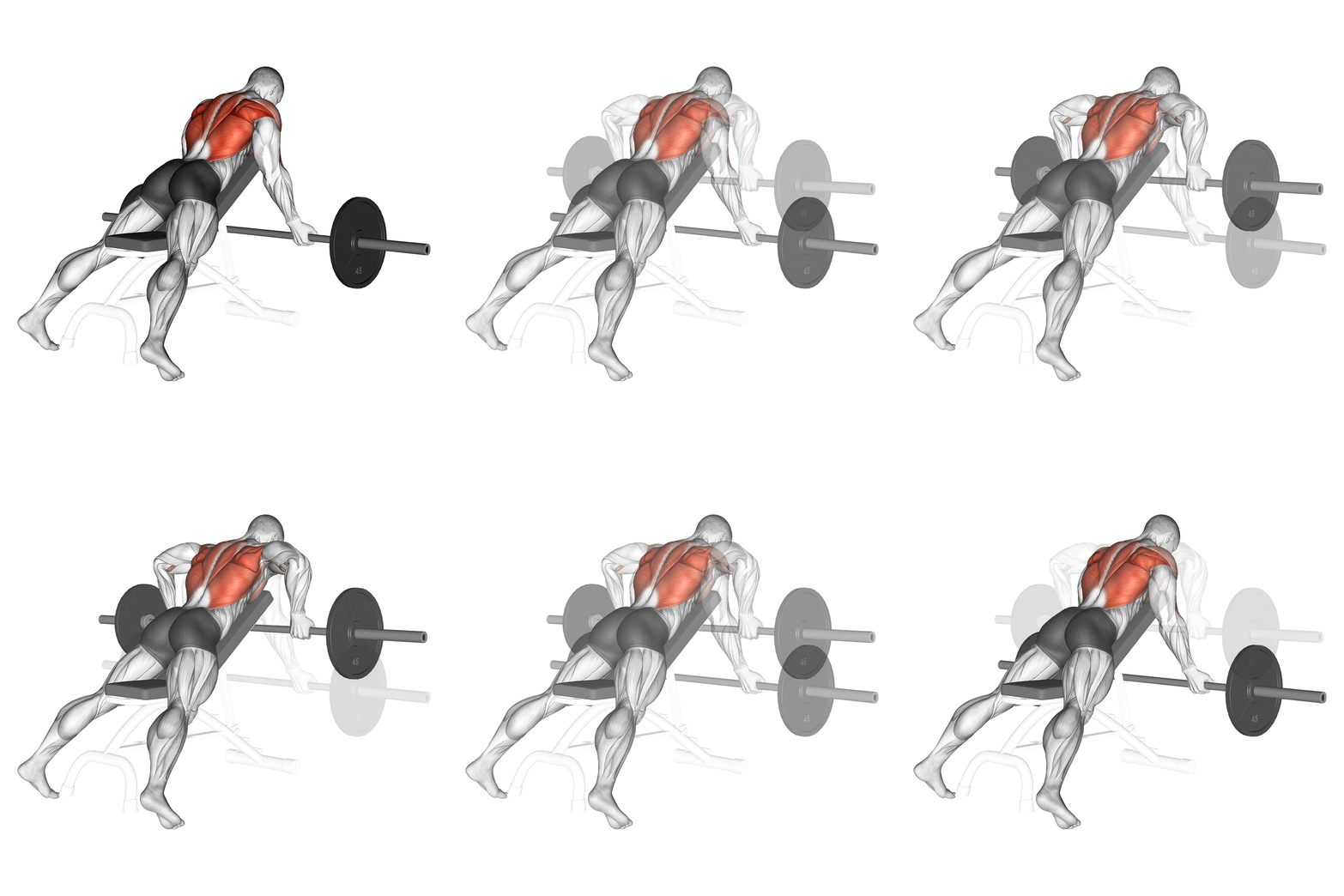
How to do a Barbell Reverse Grip Incline Bench Row - Step by step Strength exercise demonstration targeting Upper Back, Biceps, Forearms

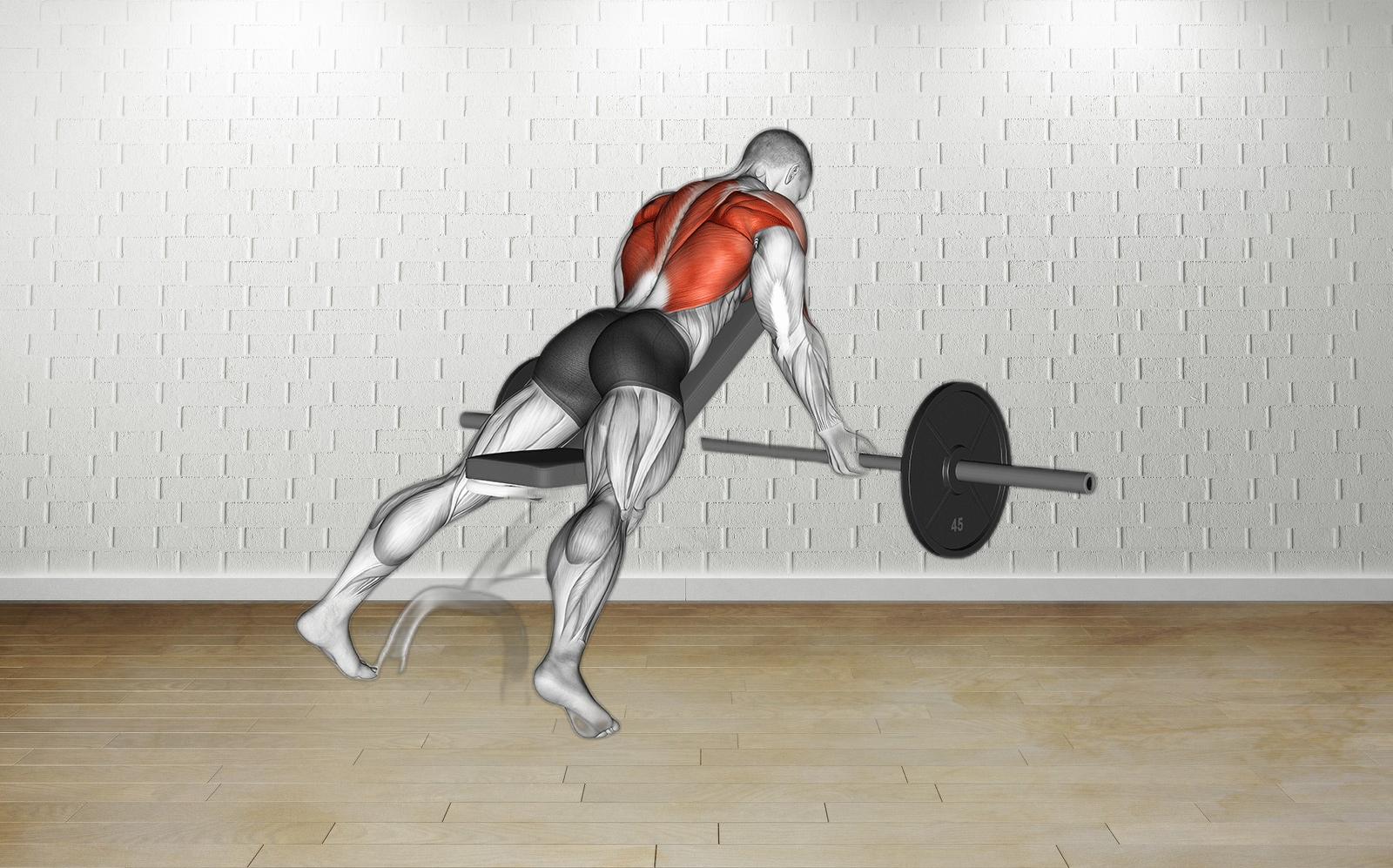
Begin by setting an incline bench at a 30-45 degree angle. Lie face down on the bench, with your feet flat on the ground, and grasp a barbell with an underhand grip (palms facing you) shoulder-width apart.

  1. Engage your core and keep your chest against the bench.
  2. Start with the barbell hanging straight down, arms fully extended.
  3. Pull the barbell towards your lower ribcage, squeezing your shoulder blades together at the top of the movement.
  4. Control the weight as you lower it back to the starting position, fully extending your arms.

Inhale as you lower the barbell and exhale as you pull it towards you.

Get Fitter, Faster

Level Up Your Fitness: Join our 💪 strong community in Fitness Volt Newsletter. Get daily inspiration, expert-backed workouts, nutrition tips, the latest in strength sports, and the support you need to reach your goals. Subscribe for free!

Common Mistakes

  • Incorrect Grip Width: Using a grip that is too wide or too narrow can limit your range of motion and effectiveness. Ensure your hands are shoulder-width apart to maximize engagement of the upper back muscles.
  • Rounding Back Posture: Allowing your back to round while performing the row can lead to injury and reduced strength gains. Maintain a neutral spine by engaging your core and keeping your chest against the bench.
  • Lowering the Barbell too Quickly: Rapidly lowering the barbell can lead to loss of control and impact muscle engagement. Focus on slow and controlled movements to enhance muscle growth and strength.
  • Lifting with the Arms Instead of the Back: Relying predominantly on the arms to pull the weight can diminish the effectiveness of the exercise. Concentrate on utilizing your back muscles by initiating the pull with your shoulder blades.
  • Failing to Fully Extend Arms: Not fully extending your arms at the bottom of the movement limits muscle activation. Always return the barbell to a fully extended position before starting the next repetition.

Benefits

  • Strengthens Upper Back: This exercise targets key muscles in the upper back, including the rhomboids and traps, promoting a strong and stable posture.
  • Improves Grip Strength: Using a reverse grip engages the forearm muscles, enhancing grip strength critical for various compound lifts.
  • Enhances Spinal Stability: The bent-over position helps strengthen the muscles surrounding the spine, contributing to better overall stability during physical activities.
  • Promotes Muscle Hypertrophy: By effectively targeting back muscles through resistance, this exercise supports muscle growth and aesthetics.
  • Reduces Risk of Injury: Stronger upper back muscles can alleviate strain on the lower back during daily activities and other lifts, reducing the risk of injury.

Exercise Variations

  • Sled Pull
    Level: Intermediate
    Targets: Calves, Core, Glutes, Hamstrings, Hip Flexors, Quadriceps, Shoulders, Traps, Upper Back, Forearms
    Equipment: Sled, Weight Plates, Harness Or Straps, Gloves, Turf Or Flat Surface | Movement: Pull | Type: Strength | Force Type: Isotonic | Compound
  • Kettlebell Alternating Hang Clean
    Level: Intermediate
    Targets: Biceps, Calves, Forearms, Glutes, Hamstrings, Lower Back, Quadriceps, Shoulders, Upper Back, Abdominals, Biceps brachii, Deltoids, Erector Spinae, Forearm muscles, Gluteus Maximus, Trapezius
    Equipment: Kettlebell | Movement: Pull | Type: Power | Force Type: Concentric | Compound
  • Underhand Yates Row
    Level: Intermediate
    Targets: Latissimus Dorsi, Posterior deltoids, Teres Major, Forearm muscles, Rear deltoids
    Equipment: Barbell, Weight Plates, Weightlifting Belt, Lifting Straps, Gym Mat | Movement: Pull | Type: Strength | Force Type: Concentric | Compound
  • Reverse-Grip Lat Pull-Down
    Level: Intermediate
    Targets: Infraspinatus, Latissimus Dorsi, Pectoralis major
    Equipment: Lat Pull-Down Machine, V-Bar Attachment Or EZ Curl Bar, Weight Plates | Movement: Pull | Type: Strength | Force Type: Concentric | Compound
  • Svend Press
    Level: Intermediate
    Targets: Deltoids, Pectorals, Serratus Anterior, Triceps, Upper Back, Core Muscles
    Equipment: Weight Plates, Barbell, Weightlifting Belt, Mat | Movement: Push | Type: Strength | Force Type: Isotonic | Compound
  • Close Neutral-Grip Pull-Up
    Level: Intermediate
    Targets: Biceps brachii, Brachialis, Infraspinatus, Latissimus Dorsi, Pectoralis major, Rhomboids, Teres Major, Trapezius, Brachioradialis, Core Muscles
    Equipment: Pull-Up Bar Or Gymnastic Rings, Weight Belt (Optional For Added Resistance) | Movement: Pull | Type: Strength | Force Type: Concentric | Compound
  • Wide-Grip Cable Row
    Level: Intermediate
    Targets: Biceps brachii, Latissimus Dorsi, Rear deltoids, Rhomboids, Teres Major, Trapezius, Forearm muscles, Infraspinatus
    Equipment: Cable Machine, Wide-Grip Handle Attachment | Movement: Pull | Type: Strength | Force Type: Isotonic | Compound
  • Seated Twisting Cable Row
    Level: Intermediate
    Targets: Biceps brachii, External Obliques, Internal Obliques, Latissimus Dorsi, Rhomboids, Teres Major, Trapezius, Erector Spinae, Obliques
    Equipment: Cable Machine, Cable Attachment, Seated Bench Or Platform | Movement: Pull | Type: Strength | Force Type: Isotonic | Compound
  • Smith Machine Underhand Yates Row
    Level: Intermediate
    Targets: Biceps brachii, Erector Spinae, Latissimus Dorsi, Posterior deltoids, Rhomboids, Trapezius, Brachialis, Rear deltoids, Teres Major
    Equipment: Smith Machine, Barbell, Weight Plates, Weight Collar, Lifting Straps, Bench | Movement: Pull | Type: Strength | Force Type: Concentric | Compound
  • Inverted Row
    Level: Intermediate
    Targets: Biceps brachii, Latissimus Dorsi, Posterior deltoids, Rhomboids, Teres Major, Trapezius, Forearm muscles, Rear deltoids
    Equipment: Pull-Up Bar, Suspension Trainer, Gymnastic Rings, Smith Machine, Low Bar, TRX Straps | Movement: Pull | Type: Strength | Force Type: Concentric | Compound

Alternative Exercises

  • Svend Press
    Level: Intermediate
    Targets: Deltoids, Pectorals, Serratus Anterior, Triceps, Upper Back, Core Muscles
    Equipment: Weight Plates, Barbell, Weightlifting Belt, Mat | Movement: Push | Type: Strength | Force Type: Isotonic | Compound
  • The Jefferson Deadlift
    Level: Intermediate
    Targets: Core, Forearms, Glutes, Hamstrings, Lower Back, Quadriceps, Upper Back, Adductors, Traps
    Equipment: Barbell, Weight Plates, Lifting Platform Or Floor Mat, Weightlifting Shoes, Chalk. | Movement: Hinge | Type: Strength | Force Type: Isotonic | Compound
  • Zercher Squat
    Level: Intermediate
    Targets: Core, Erector Spinae, Glutes, Hamstrings, Quadriceps, Shoulders, Upper Back, Adductors, Calves, Lats, Spinal Erectors, Traps
    Equipment: Barbell, Squat Rack, Weight Plates, Lifting Belt, Lifting Shoes, Foam Pad Or Towel | Movement: Squat | Type: Strength | Force Type: Concentric | Compound
  • Kettlebell Seesaw Press
    Level: Intermediate
    Targets: Core, Deltoids, Pectorals, Stabilizer Muscles, Triceps, Upper Back, Core Muscles, Latissimus Dorsi, Rhomboids, Serratus Anterior, Trapezius
    Equipment: Kettlebell | Movement: Push | Type: Strength | Force Type: Concentric | Compound
  • Dumbbell Around the World Exercise
    Level: Intermediate
    Targets: Chest, Core, Deltoids, Shoulders, Triceps, Upper Back, Core Muscles, Pectorals, Rhomboids, Serratus Anterior, Trapezius
    Equipment: Dumbbells | Movement: Rotation | Type: Strength | Force Type: Isotonic | Compound
  • Split Jerk
    Level: Advanced
    Targets: Calves, Core, Glutes, Hamstrings, Quadriceps, Shoulders, Trapezius, Triceps, Upper Back, Abdominals, Deltoids, Erector Spinae, Gluteus Maximus, Pectoralis major, Rhomboids, Triceps brachii
    Equipment: Barbell, Bumper Plates, Weightlifting Platform, Lifting Shoes, Chalk, Wrist Wraps, Belt | Movement: Push | Type: Power | Force Type: Concentric | Compound
  • Rope Climbs
    Level: Intermediate
    Targets: Biceps brachii, Core Muscles, Deltoids, Forearm muscles, Latissimus Dorsi, Pectoralis major, Rhomboids, Trapezius, Abdominal Muscles, Gluteus Maximus, Obliques, Teres Major
    Equipment: Climbing Rope, Climbing Harness, Climbing Carabiner, Gymnastic Chalk, Pull-Up Bar | Movement: Climb | Type: Strength | Force Type: Concentric | Compound
  • Standing Dumbbell One-Leg Calf Raise
    Level: Intermediate
    Targets: Tibialis posterior, Flexor digitorum longus, Flexor hallucis longus, Peroneus brevis, Peroneus longus, Tibialis anterior
    Equipment: Dumbbells, Exercise Mat | Movement: Push | Type: Strength | Force Type: Concentric | Isolation
  • Tricep Dip
    Level: Intermediate
    Targets: Anterior Deltoid, Triceps brachii, Erector Spinae, Latissimus Dorsi
    Equipment: Bench, Dip Bars, Sturdy Chair, Parallel Bars | Movement: Push | Type: Strength | Force Type: Concentric | Compound
  • One-leg Hyperextension
    Level: Intermediate
    Targets: Gluteus Maximus, Multifidus
    Equipment: Bench, Ankle Weights Or Resistance Bands | Movement: Hinge | Type: Strength | Force Type: Concentric | Isolation

Safety Precautions

When performing the Barbell Reverse Grip Incline Bench Row, it’s crucial to prioritize safety to prevent injury and ensure effective workouts. First, always start with a weight that you can comfortably control. Overloading the barbell can compromise your form, leading to strain in your back and shoulders. Gradually increase the weight as you become more proficient in the exercise to build strength without risking injury.

Ensure that your incline bench is stable and securely positioned. This provides a reliable base that helps maintain proper body alignment throughout the movement. Also, pay attention to your body and its signals; if you experience any discomfort or pain during the exercise, stop immediately and reassess your form and weight. Never push through pain, as this can lead to more serious injuries.

Lastly, maintain a neutral spine and engage your core throughout the exercise. This helps protect your lower back from undue stress. Keep your head aligned with your spine and avoid looking up or down excessively. Instead, focus your gaze down towards the floor. This way, you can concentrate on the movements without compromising your posture or risking injury.

Interested in measuring your progress? Check out our strength standards for barbell reverse grip incline bench row, Z Press, Superman, and more exercises.


If you have any questions or need further clarification about this article, please leave a comment below, and Ash will get back to you as soon as possible.

Share This Article
Ash is a highly respected fitness expert and certified personal trainer through the American Council on Exercise (ACE). With a B.A. in biology from Rutgers and an M.S. in Exercise Science (Kinesiology) from CBU, she brings a wealth of knowledge and expertise to her work. Ash is dedicated to helping people achieve their fitness and health goals through personalized training and nutrition plans. With a passion for fitness and a deep understanding of the science behind healthy living, she is able to create effective and sustainable programs that deliver real results. Whether you're looking to lose weight, build muscle, or just feel better in your own skin, Ash is the expert you can trust to guide you on your journey to a healthier and happier life.
Leave a Comment