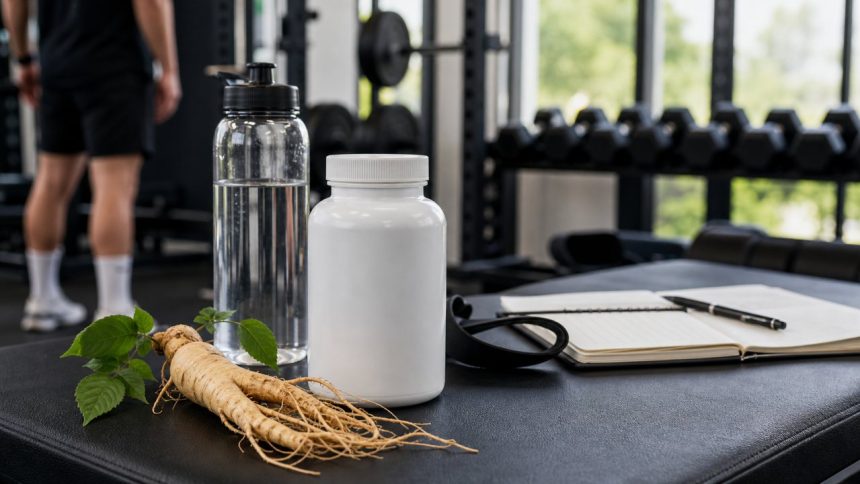
Ginseng has a better reputation than most herbal supplements because it has history, plausible biology, and human research behind it. That does not make it a muscle-growth supplement. For lifters, the honest question is narrower: can ginseng help energy, fatigue, training output, or recovery enough to justify using it?
The old article treated ginseng as a broad stimulant and muscle-building aid. The 2026 answer needs more precision. Ginseng may help fatigue or some performance markers in certain studies, but results are mixed, products vary, and safety depends on the person. If you use it, treat it like a measured supplement trial, not a shortcut around sleep, calories, training, and recovery.
What is ginseng?
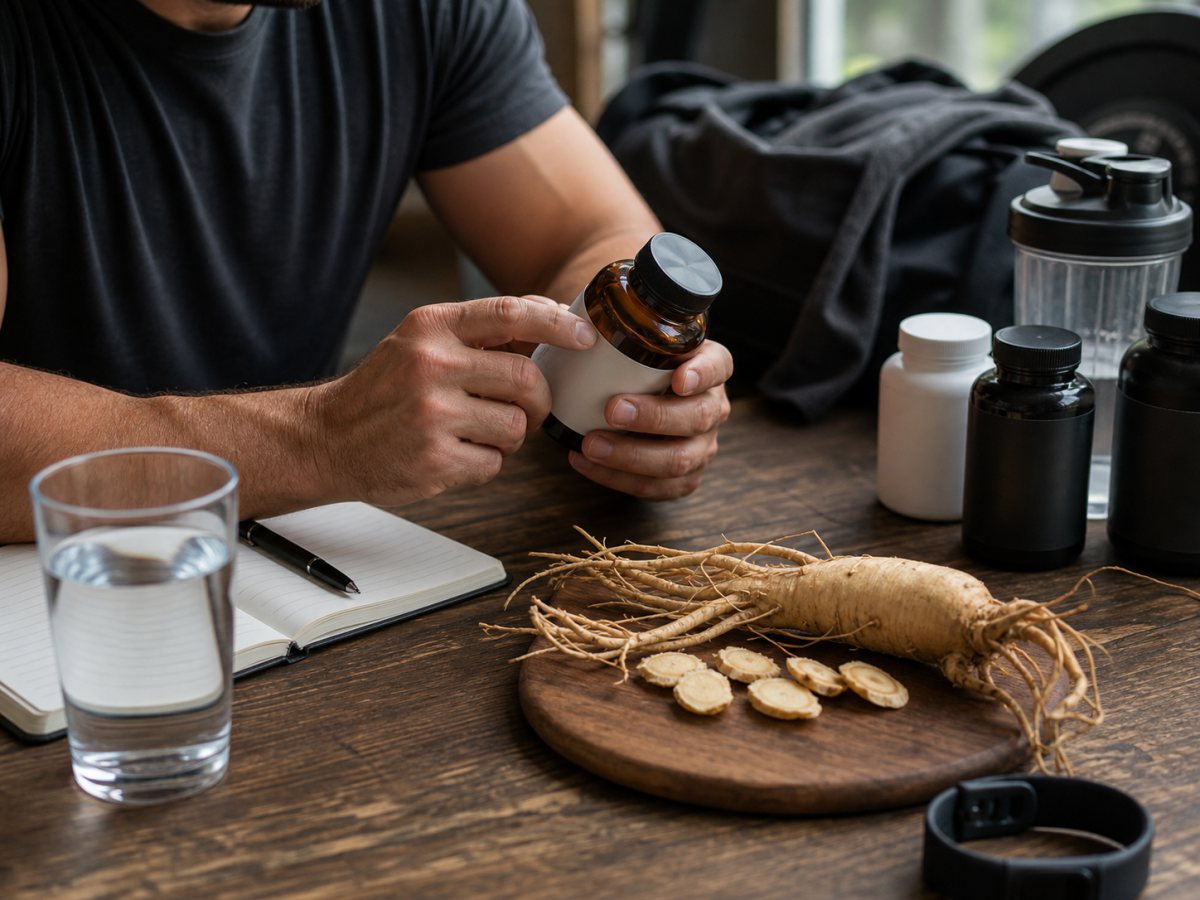
Ginseng usually refers to Panax ginseng, often called Asian or Korean ginseng, or Panax quinquefolius, often called American ginseng. These are not the same as every product that uses the word ginseng. Active compounds called ginsenosides are part of the research interest, but products vary widely in species, extract, dose, and standardization.
The National Center for Complementary and Integrative Health notes that Asian ginseng has been used for many purposes, including stamina and immune support, but also warns that evidence varies by use and that interactions are possible. That is the right tone for lifters: interesting, not automatic.
Does ginseng increase workout energy?
Ginseng may help perceived energy or fatigue in some people, but it should not be expected to feel like caffeine. A 2022 systematic review and meta-analysis in active participants found possible ergogenic effects across some outcomes, but the authors still called for stronger research. Translation: there is enough signal to study, not enough certainty to promise a better workout.
If your “low energy” is really five hours of sleep, low calories, dehydration, or too much training volume, ginseng is the wrong first fix. Start with sleep, food, hydration, and program structure. Supplements come after the foundation.
Does ginseng build muscle?
Ginseng should not be marketed as a direct muscle-building supplement. Muscle growth still depends on progressive resistance training, enough calories, adequate protein, recovery, and time. If ginseng helps a lifter train a little more consistently because fatigue is better managed, that is an indirect possibility. It is not the same as ginseng stimulating hypertrophy on its own.
For supplement priorities, most lifters should consider evidence-backed basics first, such as creatine, protein when food intake is low, caffeine when tolerated, and targeted nutrients when a gap exists. Our guide to supplements worth taking is a better starting point than buying every adaptogen with a good label.
How does ginseng compare with other supplements?
Ginseng sits behind better-proven performance basics for most lifters. Creatine has stronger evidence for strength and power. Caffeine has a more immediate and predictable stimulant effect for many people. Magnesium matters when intake is low. Taurine may be interesting for training and recovery, but also deserves context.
If you are building a supplement stack, compare ginseng with realistic alternatives like creatine capsules, taurine supplements, and our guide to magnesium for muscle and recovery. Do not stack everything at once. You will never know what helped.
FitnessVolt verdict
Ginseng is a cautious maybe for energy and fatigue, not a core muscle-building supplement. Use it only after the basics are handled, choose a clearly labeled product, track outcomes, and respect medication and health context. If it helps you train more consistently without side effects, it may be worth keeping. If it does nothing, let it go.
Ginseng should earn its place in your routine the same way any supplement should: measurable benefit, tolerable side effects, clear product quality, and no fantasy claims.
What dose and timing make sense?
Ginseng studies use different extracts, species, doses, and durations, which is one reason results are hard to translate. For normal supplement use, the label should identify the species, extract amount, and standardization. If it only says “proprietary energy blend,” you do not really know what you are testing.
Many lifters who try ginseng take it earlier in the day because sleep disruption is one of the most common complaints with stimulating herbs. Avoid starting it before a max-effort session, competition, or important sleep week. Start on a normal training block so you can tell whether it changes anything without adding extra chaos.
How do you judge product quality?
Product quality matters because herbal supplements can vary widely. Look for transparent labeling, third-party testing when possible, clear serving size, species identification, and no hidden stimulant stack. A cheap capsule with vague labeling is not a clean experiment.
Also check whether the product combines ginseng with caffeine, green tea extract, yohimbine, synephrine, or other stimulant-like ingredients. If it does, any energy effect may not come from ginseng. A single-ingredient product is easier to evaluate and easier to stop if side effects appear.
What should you expect in the gym?
Expect subtle changes if anything changes at all. A useful response might be lower perceived fatigue, better focus late in a session, or less afternoon energy dip. Do not expect overnight strength gains, new muscle in a week, or a stimulant punch like a strong pre-workout.
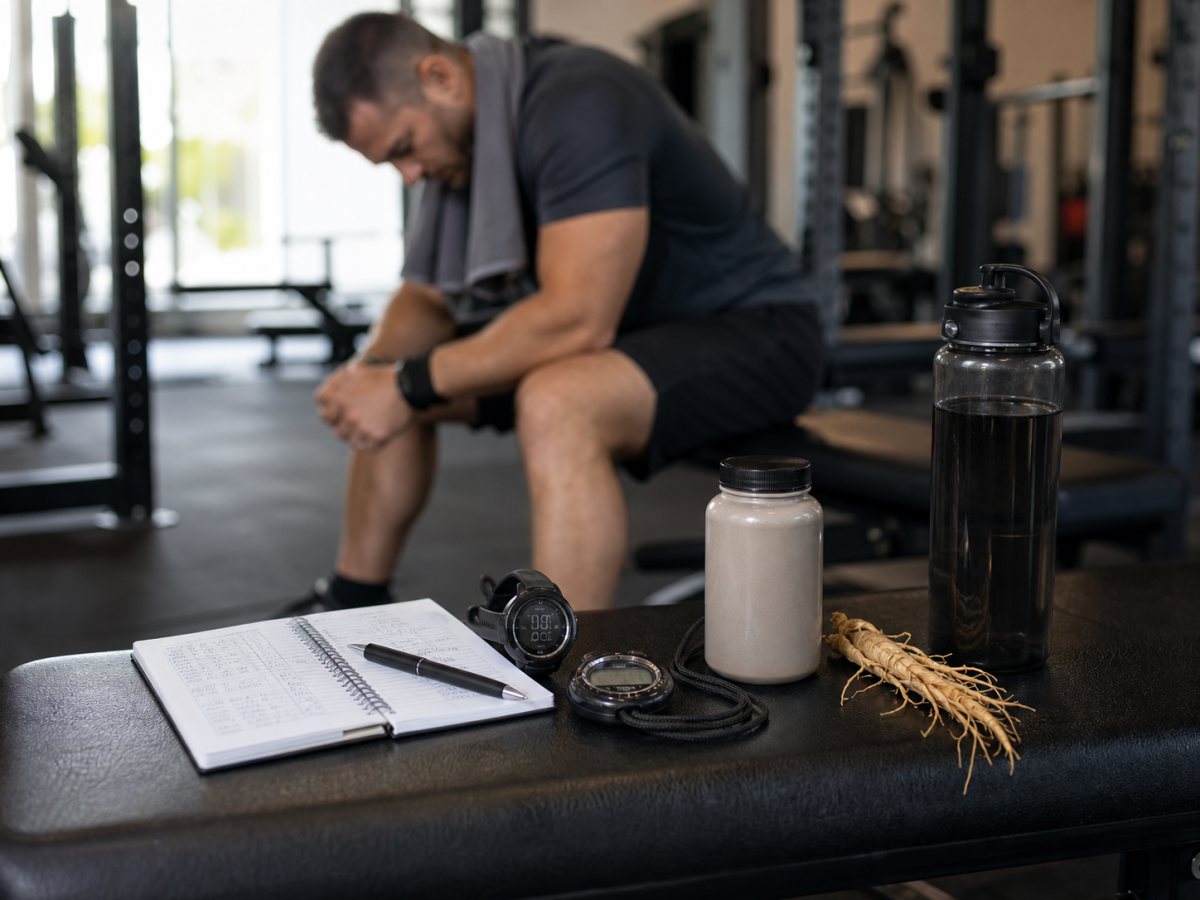
The fairest test is boring: keep training, calories, caffeine, and sleep stable; then compare similar sessions. If your reps, RPE, and recovery are unchanged after a full trial, the supplement did not earn its keep. That is not failure. That is good decision-making.
What should you avoid combining with ginseng?
Avoid combining ginseng with a complicated stimulant stack unless a clinician has cleared it and you have a specific reason. High caffeine intake, pre-workouts, fat burners, yohimbine, synephrine, and multiple energy herbs can make it impossible to identify the cause of sleep problems, jitters, blood pressure changes, or digestive issues.
Also be cautious with blood sugar management, anticoagulant medication, immune-related conditions, and surgery timelines. Herbal supplements can have real biological effects. That is exactly why they deserve the same respect you would give any other active compound.
What is a fair ginseng trial?
A fair trial has a beginning, an end, and a decision rule. Pick one product, write down the dose, start date, and timing, and keep the rest of your routine stable. Run the trial long enough to observe a pattern, but not so long that it becomes a habit you never evaluate. Four weeks is a reasonable practical window for many lifters unless side effects show up sooner.
At the end, ask three questions. Did training output improve? Did fatigue or focus improve? Did sleep, digestion, mood, or medication context get worse? Keep the supplement only if the answer is clearly favorable. If the result is “maybe,” spend the money on food, coaching, or sleep instead.
How should you talk about ginseng claims?
Be careful with language. “May help fatigue in some contexts” is different from “boosts testosterone” or “builds muscle.” A responsible article should separate traditional use, cell or animal data, human fatigue studies, and direct training performance evidence. Those are not equal forms of proof.
For lifters, that distinction protects both money and health. Supplement labels often turn weak signals into confident promises. Your training log should be the judge. If the claim does not show up in your sleep, energy, output, or recovery data, it is marketing, not progress.
Sources
- National Center for Complementary and Integrative Health. (2023). Asian ginseng. Accessed June 1, 2026.
- Khan, N., et al. (2022). Dose-response and temporal ergogenic effects of ginseng supplementation in athletes and active participants: A systematic review and meta-analysis. Journal of Sports Sciences. doi:10.1080/02640414.2022.2162753.
- Lee, E. S., et al. (2018). Effect of high-dose ginsenoside complex supplementation on physical performance of healthy adults during a 12-week supervised exercise program. Journal of Ginseng Research. doi:10.1016/j.jgr.2017.03.001.
- Zhu, J., et al. (2022). Efficacy of ginseng supplements on disease-related fatigue: A systematic review and meta-analysis. Medicine. doi:10.1097/MD.0000000000029767.