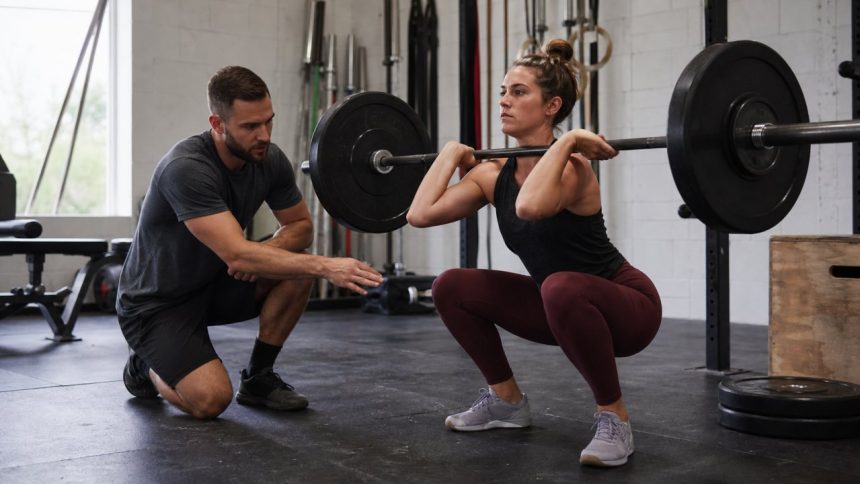
Squats are good for many lifters and bad for some situations. That is the honest answer. The squat can build strength, muscle, coordination, and confidence. It can also irritate knees, hips, or backs when the variation, depth, load, and recovery do not match the lifter. The exercise is not the villain. Poor matching is.
The old article framed the debate as if squats were either the greatest exercise ever or an injury waiting to happen. That argument still shows up online, and it still misses the point. Squats are a tool. A barbell back squat, goblet squat, box squat, front squat, split squat, and safety-bar squat all change the demand. The right version is the one that trains what you need while respecting what your body can control.
Are squats good for you?
Squats are good for you when they are loaded, progressed, and modified intelligently. They train the quadriceps, glutes, adductors, trunk, balance, and lower-body coordination. For athletes and general lifters, that makes squats one of the most useful lower-body patterns in the gym.
Squats are also scalable. A beginner can start with a box squat or goblet squat. A bodybuilder can use higher-rep controlled squats. A powerlifter can specialize in the back squat. A field athlete can use squats as one part of a broader strength plan. The exercise has range because the pattern has range.
Are squats bad for your knees?
Squats are not automatically bad for your knees. Escamilla’s review of dynamic squat knee biomechanics concluded that correctly performed squats can be effective for knee musculature and do not inherently compromise knee stability. But knee forces change with depth, load, stance, fatigue, and technique, so the details matter.
For a healthy lifter, parallel or deep squats may be fine when the movement is controlled. For someone with knee pain, recent injury, or poor tolerance, a shallower range, box target, slower tempo, lighter load, or different variation may be smarter. The answer is not never squat. The answer is adjust the dose.
What makes squats risky?
Squats become risky when load outruns control, fatigue changes the pattern, pain is ignored, or a lifter forces a depth or stance that does not fit. The common danger signs are collapsing arches, uncontrolled knee cave, sharp joint pain, uncontrolled spinal position changes, and repeated grinding reps that no longer resemble training.
| Risk Factor | Why It Matters | Smarter Move |
|---|---|---|
| Too much load | Technique changes under stress | Reduce load and own the pattern |
| Painful depth | Range is exceeding current tolerance | Use a box or change variation |
| Poor recovery | Fatigue hides as bad form | Adjust volume and frequency |
| Wrong variation | Build and goal do not match the lift | Try front, goblet, safety-bar, or split squats |
What should your knees do?
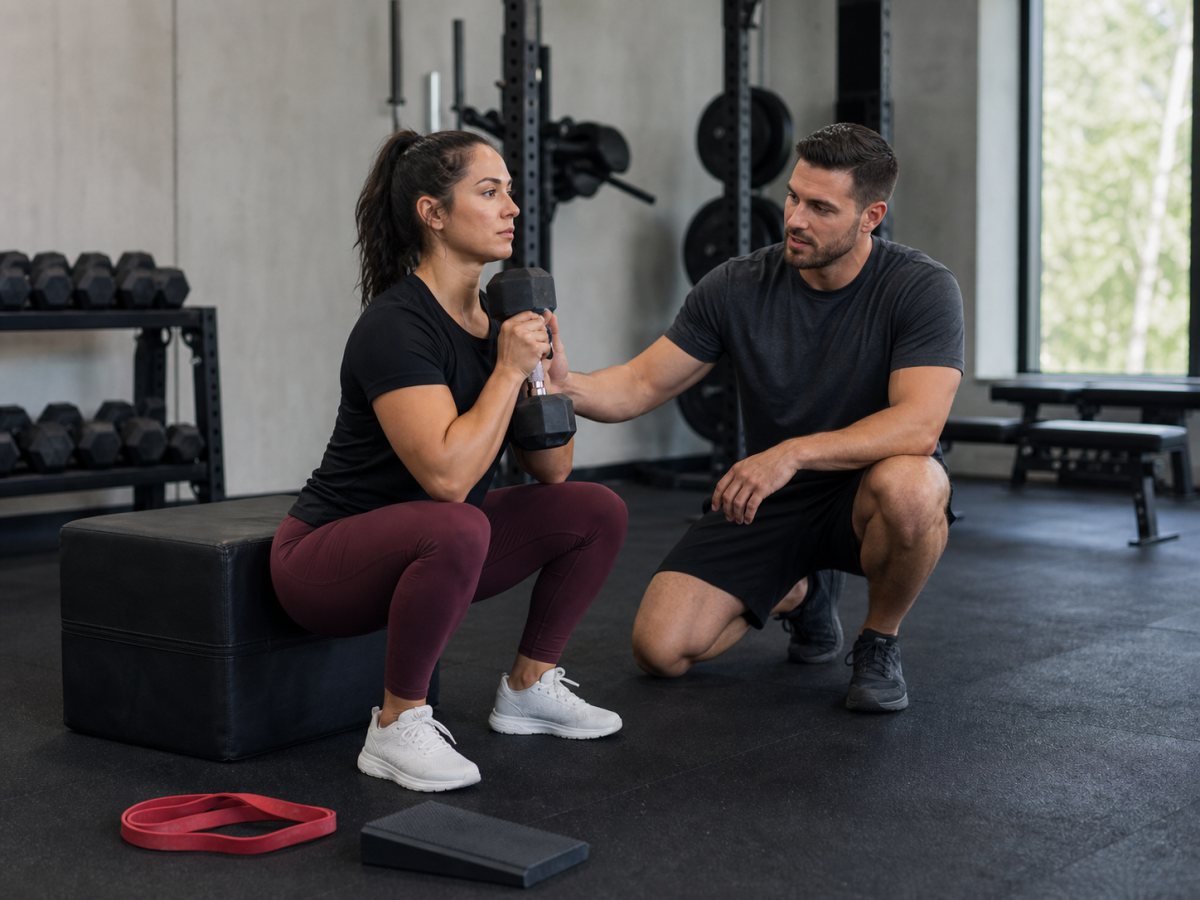
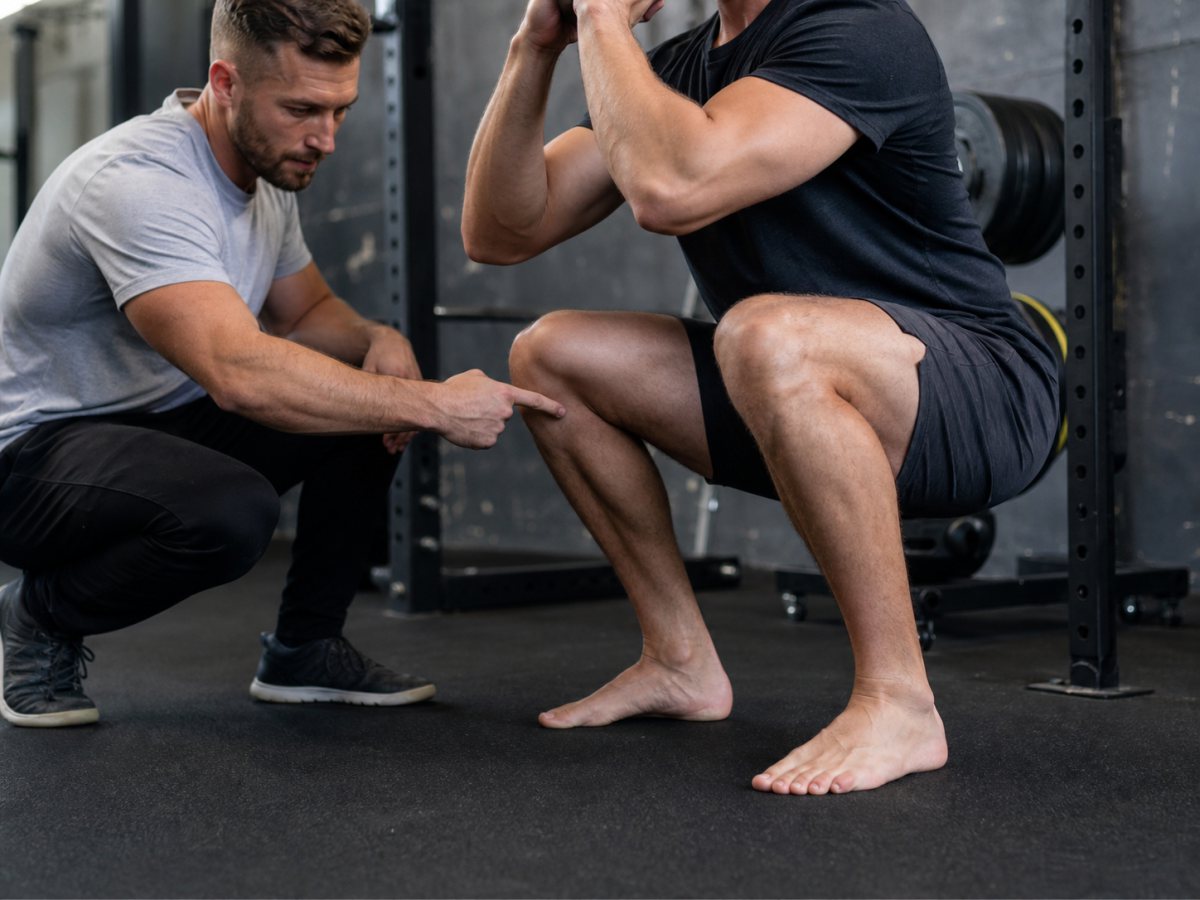
Your knees should generally track in the same direction as your toes and move with control. Some forward knee travel is normal, especially in upright squats. Some lifters need more of it because of limb lengths or bar position. The red flag is not “knees forward.” The red flag is painful, uncontrolled, or collapsing movement.
Escamilla’s work on technique variations shows that stance and foot position can affect knee biomechanics. That does not mean every lifter needs an extreme stance. It means you should choose the stance where feet stay grounded, knees track cleanly, hips feel comfortable, and the bar path stays balanced.
How do you make squats safer?
Make squats safer by earning the setup before adding load. Use a stable shoe, set the feet, brace before descent, descend with control, keep pressure through the whole foot, and stop the set when reps change. Warm-up sets are not just a ritual. They tell you whether the pattern is ready for load today.
| Goal | Best First Squat Choice | Progression |
|---|---|---|
| Learn control | Goblet squat | Add range and tempo |
| Manage knee irritation | Box squat or split squat | Increase range gradually |
| Build quads | Front squat or high-bar squat | Add volume slowly |
| Max strength | Back squat variation that fits | Use planned heavy work |
Who should be careful with squats?
Be careful if you have sharp pain, recent injury, dizziness under load, uncontrolled back position, or a medical restriction. That does not always mean no squats. It may mean a healthcare professional, physical therapist, qualified coach, or different variation should guide the return.
If you are building a home setup, a stable rack, safeties, and enough space matter. Our squat rack guide can help with equipment choices, but equipment only helps when the training plan is sensible.
FitnessVolt verdict
Squats are good when they are matched to the lifter and progressed with patience. Squats are bad when they become a loyalty test that ignores pain, anatomy, recovery, and goal. Use the right variation, track your reps, and build slowly. For more options, see our squat variations guide and progressive overload primer.
The squat debate is not good versus bad. It is good match versus bad match. Choose the version your body can repeat, then progress it like a professional.
What if squats hurt?
If squats hurt, first identify the pattern. Front-of-knee discomfort, hip pinching, low-back pain, and ankle restriction usually need different fixes. Do not throw random mobility drills at every problem. Change one variable at a time: stance width, toe angle, depth, tempo, load, shoe, or variation.
Use a pain scale honestly. Mild discomfort that warms up and fades may be managed with a careful plan. Sharp pain, worsening pain, swelling, or pain that changes how you walk deserves a pause and professional input. The goal is to keep training, not to win an argument with your joints.
Are machine squats and leg presses useful?
Machine squats, hack squats, leg presses, and pendulum squats can be very useful. They reduce the balance and bracing demands of free-weight squats and let many lifters train the legs hard with less skill cost. That can be valuable for hypertrophy, rehab transitions, or high-volume phases.
The mistake is treating machines as either inferior or magical. They are tools. A leg press can build big quads, but it does not train trunk stiffness and free-weight balance the same way. A barbell squat builds coordination, but it may not be the best high-volume quad builder for every lifter. Use the tool for the job.
How should older lifters approach squats?
Older lifters should keep squatting if they can do it comfortably, but the plan may need more warm-up, slower progression, and variation. Goblet squats, box squats, split squats, leg presses, and safety-bar squats can all preserve the pattern while reducing unnecessary barriers.
The priority is long-term lower-body strength. That means training a squat pattern, loading it progressively, and recovering from it. A 55-year-old lifter does not need to prove loyalty to a low-bar back squat if a front-loaded or machine variation gives better stimulus with less joint irritation.
Can squats help prevent injuries?
Squats may help reduce injury risk when they build strength, control, and tolerance in the ranges an athlete or lifter actually uses. Stronger legs, better trunk control, and improved confidence under load can all support performance. But squats are not a vaccine against injury. They are one part of a larger strength and movement plan.
The injury-prevention value comes from progressive exposure. A knee that gradually learns to tolerate controlled flexion under load is usually better prepared than a knee that avoids all loading until sport or life demands it suddenly. The dose matters. The right squat dose builds capacity. The wrong dose creates irritation.
How should you return to squats after a layoff?
After a layoff, start below your old numbers even if your ego objects. Strength comes back faster than connective tissue tolerance for many lifters. Use easier variations, slower tempos, and submaximal sets for two to four weeks before pushing hard. Your first goal is to rebuild the habit and the pattern.
A simple return plan is three sets of 6 to 8 with a variation that feels good, stopping two to three reps before failure. Add load only if soreness, joint feedback, and performance are all trending well. If the first week leaves your knees angry for four days, the comeback plan was not conservative. It was impatient.
Sources
- Escamilla, R. F. (2001). Knee biomechanics of the dynamic squat exercise. Medicine and Science in Sports and Exercise. doi:10.1097/00005768-200101000-00020.
- Schoenfeld, B. J. (2010). Squatting kinematics and kinetics and their application to exercise performance. Journal of Strength and Conditioning Research. doi:10.1519/JSC.0b013e3181bac2d7.
- Cotter, J. A., Chaudhari, A. M., Jamison, S. T., & Devor, S. T. (2013). Knee joint kinetics in relation to commonly prescribed squat loads and depths. Journal of Strength and Conditioning Research. doi:10.1519/JSC.0b013e3182773319.
- Escamilla, R. F., et al. (2001). Effects of technique variations on knee biomechanics during the squat and leg press. Medicine and Science in Sports and Exercise. doi:10.1097/00005768-200109000-00020.