
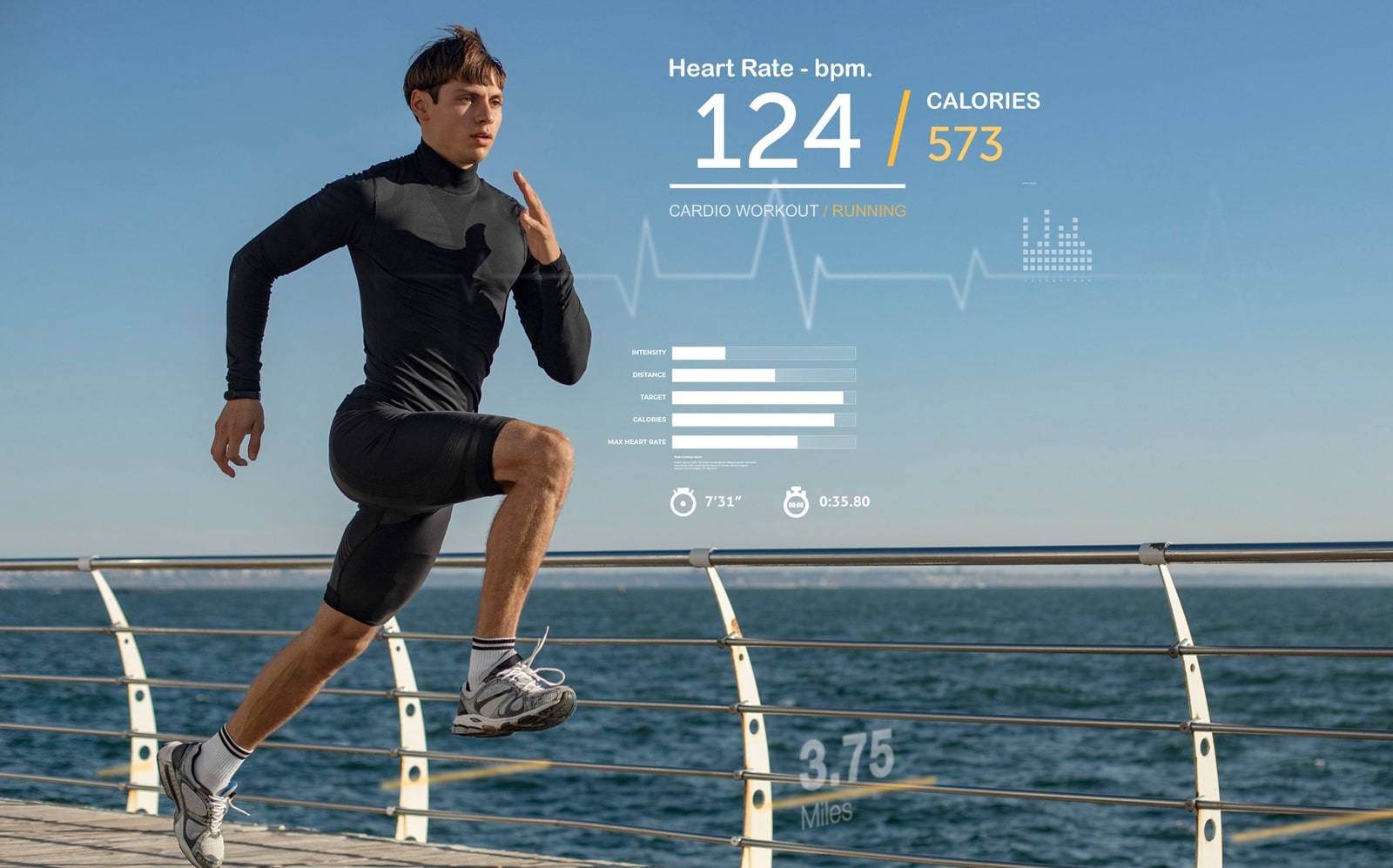
Running stands out as an exceptional sport and form of physical activity. Its minimal barriers to entry make it immensely popular around the world.
Running is among the most demanding sports; I realized this the hard way.
I added running into my training regime after 12 years of consistent weight training. I did do the odd couple of weekly runs for my cardio on my conventional strength training program but it usually involved alternating between sprinting for 60 seconds and walking for the other 60.
I realized the intricacies involved in running when I ran my first 5K. I completed the distance in 39:23.
Although my performance was underwhelming, it got me hooked on running, and I started exploring what is considered a good mile time.
A good mile time depends on your age and sex. Fitness Volt’s benchmark for a runner who trains regularly is 6:18 for a man and 7:02 for a woman in their 20s, and it gets slower with age. For any adult under 45, a nine to 10 minute mile is slower than the easiest level in our tables below, so aim for that level first.
Your mile time depends on multiple factors, including step length, age, sex, height, weight, fitness level, gait, and genetics.
In this article, we delve into everything you need to know about what is considered a good mile time, mile time benchmarks for your age and sex, current world records, and tips on improving your running performance.
What is Considered a Good Mile Time?

Understanding respectable mile times provides a framework for setting realistic and motivational goals.
Before we get into the nitty gritty of a ‘good mile time,’ remember that this differs significantly from the average mile time.
An average mile time tells you how long a typical person takes to cover a mile. We measure a good mile time against the fastest runners of your age and sex instead.
Runners call that comparison age grading, and our benchmark tables below use it.
Mile Time Benchmarks by Age and Sex
An age grade compares your time with the age standard, a benchmark built from the best road times on record for your age and sex. A 100% age grade equals the standard, and 50% means you took twice as long. We worked out mile times at 50%, 60%, 70% and 80%, so you can find the column nearest your own time and see what each 10-point step takes. The 60% column is our benchmark for a good mile time. If your mile is slower than the 50% column, your age grade is below 50%. Rows are five years apart; for an age in between, your time falls between the two rows.
The numbers come from the 2025 USATF MLDR road age-grading factors (Alan Jones): the Masters Long Distance Running (MLDR) Council of USA Track & Field (USATF) approved them in January 2025, and Tom Bernhard supplied the single-age bests behind them. (1) These are road standards and do not match the track world records further down. At the tables’ peak ages, 19 to 29 for men and 19 to 34 for women, the road mile standard is 3:47 for men and 4:13 for women.
Mile Time Benchmarks for Males
Mile times for males aged 10 to 80 at each age grade, in minutes and seconds:
| Age | 50% | 60% | 70% | 80% |
| 10 | 9:14 | 7:42 | 6:36 | 5:46 |
| 15 | 7:58 | 6:39 | 5:42 | 4:59 |
| 20 | 7:34 | 6:18 | 5:24 | 4:44 |
| 25 | 7:34 | 6:18 | 5:24 | 4:44 |
| 30 | 7:35 | 6:19 | 5:25 | 4:44 |
| 35 | 7:51 | 6:33 | 5:37 | 4:54 |
| 40 | 8:09 | 6:47 | 5:49 | 5:05 |
| 45 | 8:28 | 7:03 | 6:03 | 5:17 |
| 50 | 8:48 | 7:20 | 6:17 | 5:30 |
| 55 | 9:10 | 7:39 | 6:33 | 5:44 |
| 60 | 9:35 | 7:59 | 6:50 | 5:59 |
| 65 | 10:01 | 8:21 | 7:09 | 6:16 |
| 70 | 10:31 | 8:46 | 7:31 | 6:34 |
| 75 | 11:18 | 9:25 | 8:04 | 7:03 |
| 80 | 12:33 | 10:27 | 8:58 | 7:50 |
Mile Time Benchmarks for Females
Mile times for females aged 10 to 80 at each age grade, in minutes and seconds:
| Age | 50% | 60% | 70% | 80% |
| 10 | 9:52 | 8:13 | 7:03 | 6:10 |
| 15 | 8:52 | 7:23 | 6:20 | 5:32 |
| 20 | 8:26 | 7:02 | 6:01 | 5:16 |
| 25 | 8:26 | 7:02 | 6:01 | 5:16 |
| 30 | 8:26 | 7:02 | 6:01 | 5:16 |
| 35 | 8:29 | 7:04 | 6:04 | 5:18 |
| 40 | 8:39 | 7:13 | 6:11 | 5:24 |
| 45 | 8:57 | 7:27 | 6:23 | 5:35 |
| 50 | 9:23 | 7:49 | 6:42 | 5:52 |
| 55 | 9:55 | 8:16 | 7:05 | 6:12 |
| 60 | 10:31 | 8:46 | 7:31 | 6:35 |
| 65 | 11:12 | 9:20 | 8:00 | 7:00 |
| 70 | 11:58 | 9:59 | 8:33 | 7:29 |
| 75 | 12:52 | 10:43 | 9:11 | 8:02 |
| 80 | 13:55 | 11:36 | 9:56 | 8:42 |
A Good Mile Time for Your Age
At Fitness Volt, we count a 60% age grade as a good mile time for a runner who trains regularly. That is 6:18 for a man and 7:02 for a woman in their 20s, or 7:20 and 7:49 at age 50.
If you are a beginner, aim for the 50% column first instead of gunning for the ‘good’ numbers.
Whether you are a seasoned runner looking to shave seconds off your best time or a newcomer aiming to complete your first uninterrupted mile, the journey toward improving your mile time is personal. You must aim for a mile time that fits your training and fitness objective.
1 Mile World Record
Moroccan middle-distance runner Hicham El Guerrouj holds the ratified world record for one mile, 3:43.13, which he set in Rome on July 7, 1999. Britain’s Josh Kerr ran 3:42.66 in London on July 18, 2026; World Athletics lists that time as pending ratification.
On the women’s side, Faith Kipyegon of Kenya set the women’s world record on July 21, 2023, completing the mile in 4:07.64.
El Guerrouj’s and Kipyegon’s records exemplify the peak of speed and endurance and are the goal to beat for thousands of runners.
Next Read: Average Human Sprint Speed (Guide to Understanding and Enhancing Your Running Pace)
Historical Context of a Mile
The mile run, a staple in athletics, has a storied history that dates back centuries. It originated in England and was used as a distance for gambling races. However, it is now among one of the most celebrated events in track and field athletics.
In the 1950s, athletes were obsessed with breaking the 4-minute barrier on the mile run. This quest was popularly known as the “miracle mile.”
English neurologist and middle-distance athlete Roger Bannister became the first athlete to run the first sub-4-minute mile in 1954, with a final time of 3:59.4. This achievement paved the way for other athletes to strive to break this record.
Trivia: A mile is approximately 1,609 meters, so it takes a little over four laps to complete a mile. To be precise, you’d need to run an extra 20 meters after the fourth lap to complete a full mile.
Understanding Mile Times
“What is considered a good mile time” is more complex to answer than it appears. A good mile time will vary for each individual. For some, breaking a six-minute mile might be a remarkable achievement, whereas a sub-five-minute mile could be the target for others. A sub-four minute mile should be left up for the pro athletes.
Several factors come into play in determining what constitutes a ‘good’ mile for an individual, including:
Age
Our benchmark times are fastest from age 19 to 29 for men and 19 to 34 for women, and the age standards behind them get slower every year after that. Your own peak can come earlier or later, depending on your genetics and how much you train.

Sex
On average, men tend to have faster mile times due to physiological differences. The benchmark tables above show that gap at every age, and the world records show it at the very top.
Fitness Level
Your fitness level is one of the most crucial factors that dictate your mile time. It is also one of the few factors that you can control. A well-conditioned athlete is more likely to set new 1-mile PRs in the sub-five-minute range than a hobbyist exerciser.
Training
Your fitness level is a byproduct of your training, diet, and nutrition. You must practice consistently using the right techniques to improve your mile time.
Your running workouts should comprise a balance of HIIT and endurance workouts to ensure you tick all the right boxes. Beginners should work with a running coach to ensure they cover all their training bases. Hiring a personal trainer might cost some money upfront but will pay dividends in the long term.
Check Out: Average Human Running Speed: How Fast Should You Be Running?
Training Tips for a Better Mile Time
Here is how you can train for a better mile time:
1. Importance of Training and Consistency
After you’re over your beginner’s curve, you cannot improve your mile time beyond a certain point without consistent training. Here is what you need to know about both:
Consistency is Key
You must find a training program that you can stick to for the long term. Starting an ambitious training program but dropping off midway is a big waste of time, effort, money, and energy. Find a workout regimen that fits your lifestyle to ensure you can see it through.
In a 1984 Journal of Applied Physiology study, Coyle and colleagues found that trained endurance athletes who stopped training lost 7% of their VO2 max within 21 days and 16% by day 56. VO2 max is your aerobic capacity, a critical factor for a good mile time. (2)
Progressive Overload
Progressive overload is the name of the game while trying to improve your physical performance. It involves increasing your training intensity, volume, or frequency to add extra demand to your muscles, promoting muscle and strength growth.
Contrary to what most people think, using weight training can help boost your running performance. A 2018 study by Colquhoun et al. published in the Journal of Strength and Conditioning Research found that trained men gained the same maximal strength and fat-free mass over six weeks whether they lifted three or six times a week with the same total volume, so three sessions a week around your runs will do. (3)
2. Types of Training Beneficial for Improving Mile Time
Here are the three types of training that can help improve your mile time:
Interval Training:
High-intensity interval training (HIIT) has been shown to be particularly effective for improving your mile time. It involves placing significant stress on your muscles in a relatively short period, similar to what is needed in a fast and intense mile run.
A landmark study by Gibala et al. (2006), published in the Journal of Physiology, found that six sessions of 30-second all-out cycling sprints over two weeks improved time-trial performance and muscle oxidative capacity as much as endurance training that took about four times as long. Those are the qualities you need to run a quick mile and set a new personal best. (4)

Must Read: What Does PR Mean in Gym?
Endurance Training:
You must balance quick, fast-paced, longer runs to improve your performance in a middle-distance run like the 1-mile. Long, steady-state runs are fundamental for building endurance.
A Sports Med study found that endurance training enhances peak oxygen uptake (VO2peak), increases capillary density in working muscles, and raises blood volume, contributing to improved performance in endurance sports. (5)
Strength Training:
Strength training, especially a workout program that biases leg strength can contribute to a faster mile time. A 2014 review published in Sports Med supports the inclusion of strength training in an endurance athlete’s program for enhanced performance. This indirectly suggests that such training can also improve mile time, as it enhances overall endurance capabilities. (6)
3. Role of Diet and Rest in Improving Performance
Overlooking your diet and recovery can significantly hamper your mile time. Here are the things you must consider:
Diet:
You must eat a balanced diet rich in carbohydrates, proteins, and healthy fats to obtain the necessary energy and ensure your body has all the fuel to repair itself and grow bigger and stronger.
A research published in the International Journal of Sport Nutrition and Exercise Metabolism concluded that pre-marathon carbohydrate intake was associated with faster marathon times, suggesting that novice and recreational marathoners should consider consuming a moderate to high amount of carbohydrates in the 24-36 hours before a marathon to boost performance. (7)

Hydration:
Optimal hydration is vital for runners. Grueling running workouts can lead to excessive sweating, leading to an electrolyte imbalance. Consume coconut water, energy drinks, sports nutrition supplements, or electrolyte solutions to ensure you function optimally.
A Journal of Strength and Conditioning Research randomized, controlled trial revealed that the runners who were hydrated (HYR) completed a 12 km run faster than those who were dehydrated (DHR). (8)
Rest and Recovery:
Improper rest can hamper your recovery and performance. Remember, it doesn’t matter how hard you train; you cannot out-train a bad recovery program. Sleep for seven to eight hours each night to give your body enough time between sets to rest and recuperate.
Psychological Aspects of Running a Good Mile Time
Mental strategies like visualization and positive self-talk can significantly enhance running performance. Visualization involves mentally rehearsing a run, picturing each stride and breath, which prepares the mind for the actual performance.
Be as detailed in your visualizations as possible. Think about the clothes you’ll be wearing, the music you will be listening to and the amount of time it will take you to complete the run. Once you have all of this visualized, all you need to do is get on the field and execute.
On the other hand, positive self-talk involves reinforcing one’s capabilities and overcoming self-doubt, which is often a barrier to achieving better times. A strong mental side is key to setting a faster mile time goal and crushing it.
Technology and Equipment
In my experience as a personal trainer and a training shoe aficionado, advanced running gear, particularly shoes designed for optimal support and efficiency, can significantly improve performance and your mile time.
Furthermore, the use of technology, like specialized running apps and fitness trackers, is invaluable for training. The data these apps provide can help monitor your progress and improve your mile time.
Conclusion
Understanding good mile times is more than just about the numbers. It’s about personal growth, overcoming physical limits, and the sheer joy of running. Setting and working toward a challenging mile time will test your grit and determination.
However, avoid comparing yourself to others while training for a new mile time personal best. Biting off more than you can chew can increase injury risk and derail your fitness journey. If you have any questions about what is considered a good mile time, drop them in the comments below, and I’ll be happy to help.
References
Fitness Volt is committed to providing our readers with science-based information. We use only credible and peer-reviewed sources to support the information we share in our articles.
- Jones A (compiler), Bernhard T (single-age bests). 2025 USATF MLDR road age-grading factors: Male Road Running Age Standard factors 2025 (version 2025-07-27) and Female Road Running Age Standard factors 2025. Approved 2025-01-10 by the Masters Long Distance Running Council of USA Track & Field. https://github.com/AlanLyttonJones/Age-Grade-Tables
- Coyle EF, Martin WH 3rd, Sinacore DR, Joyner MJ, Hagberg JM, Holloszy JO. Time course of loss of adaptations after stopping prolonged intense endurance training. J Appl Physiol Respir Environ Exerc Physiol. 1984 Dec;57(6):1857-64. doi: 10.1152/jappl.1984.57.6.1857. PMID: 6511559.
- Colquhoun RJ, Gai CM, Aguilar D, Bove D, Dolan J, Vargas A, Couvillion K, Jenkins NDM, Campbell BI. Training Volume, Not Frequency, Indicative of Maximal Strength Adaptations to Resistance Training. J Strength Cond Res. 2018 May;32(5):1207-1213. doi: 10.1519/JSC.0000000000002414. PMID: 29324578.
- Gibala MJ, Little JP, van Essen M, Wilkin GP, Burgomaster KA, Safdar A, Raha S, Tarnopolsky MA. Short-term sprint interval versus traditional endurance training: similar initial adaptations in human skeletal muscle and exercise performance. J Physiol. 2006 Sep 15;575(Pt 3):901-11. doi: 10.1113/jphysiol.2006.112094. PMID: 16825308.
- Kubukeli ZN, Noakes TD, Dennis SC. Training techniques to improve endurance exercise performances. Sports Med. 2002;32(8):489-509. doi: 10.2165/00007256-200232080-00002. PMID: 12076176.
- Beattie K, Kenny IC, Lyons M, Carson BP. The effect of strength training on performance in endurance athletes. Sports Med. 2014 Jun;44(6):845-65. doi: 10.1007/s40279-014-0157-y. PMID: 24532151.
- Wilson PB, Ingraham SJ, Lundstrom C, Rhodes G. Dietary tendencies as predictors of marathon time in novice marathoners. Int J Sport Nutr Exerc Metab. 2013 Apr;23(2):170-7. doi: 10.1123/ijsnem.23.2.170. Epub 2012 Oct 11. PMID: 23070826.
- Stearns RL, Casa DJ, Lopez RM, McDermott BP, Ganio MS, Decher NR, Scruggs IC, West AE, Armstrong LE, Maresh CM. Influence of hydration status on pacing during trail running in the heat. J Strength Cond Res. 2009 Dec;23(9):2533-41. doi: 10.1519/JSC.0b013e3181b73c3f. PMID: 19675477.