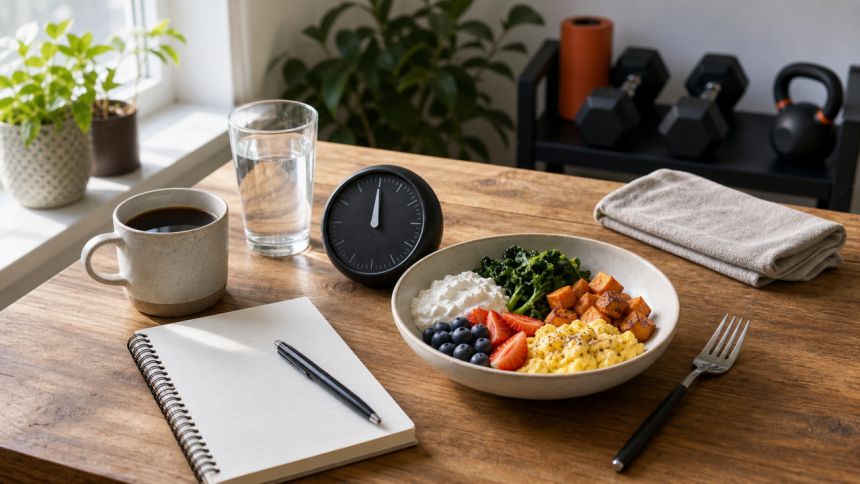
Intermittent fasting is not magic, but it can be useful. For lifters, the best version is not the one with the longest fast. It is the one that helps you control calories while still eating enough protein, fueling hard sessions, drinking enough fluid, and recovering like training matters.
The old advice around fasting often made two mistakes at once. One side claimed frequent meals were required to stay anabolic. The other acted like fasting windows solved everything. The better answer sits in the middle: meal timing is a tool. Use it if it makes the diet easier, but do not let it shrink your protein, calories, or performance.
Does intermittent fasting work for lifters?
Intermittent fasting can work for lifters when it helps them manage total calories without lowering protein or training quality. It does not automatically cause fat loss, and it does not automatically cause muscle loss. Outcomes depend on total intake, resistance training, protein distribution, sleep, and how well the eating window fits the person’s schedule.
The NEJM review on intermittent fasting describes potential metabolic effects, but human results vary by protocol and population. The TREAT randomized clinical trial found that a 16:8 schedule without specific calorie or protein targets did not produce superior weight loss compared with a consistent meal timing control. Translation: the window alone is not the program.
What fasting schedule should a beginner use?
Most lifters should start with a 12- to 14-hour overnight fast before trying 16:8. That usually means finishing dinner, skipping late snacks, and eating again the next morning or late morning. If that feels easy and training stays strong, a 16:8 schedule can be tested.
Do not start with extreme fasting if you already struggle to eat enough protein or calories. A hardgainer trying to bulk, a lifter in a high-volume block, or anyone with a history of disordered eating should be cautious and should get professional guidance when needed.
How should lifters handle protein during intermittent fasting?
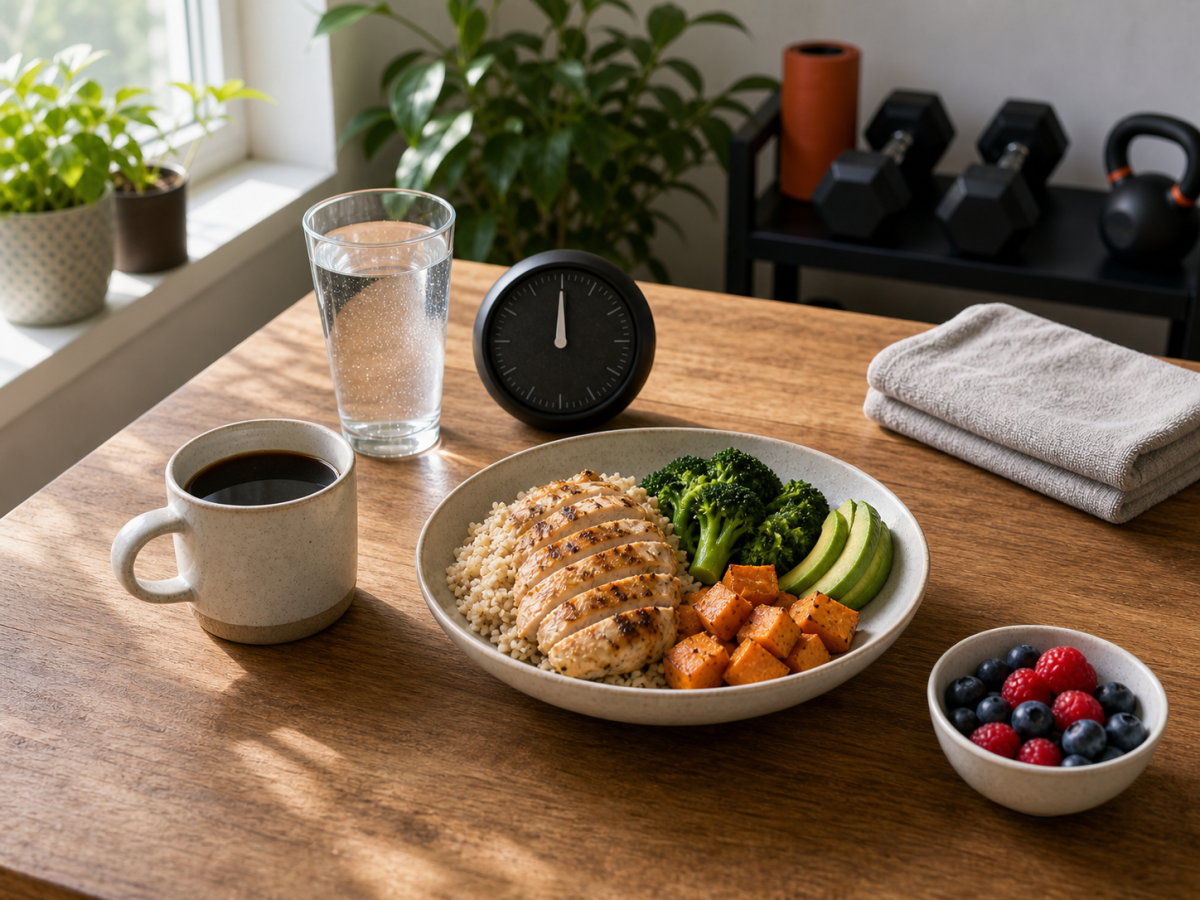
Protein is the non-negotiable. The ISSN protein position stand supports higher protein intakes for active people, and fasting does not remove that need. If your eating window is shorter, each meal has to carry more responsibility. Three protein feedings can work; two may work for some people, but it leaves less room for error.
A simple setup is two full meals plus one protein-rich snack or shake. If your target is high, use our guide to protein pacing across four meals and adapt it to your window. The principle is the same: give the body enough amino acids often enough to support training.
Should you train fasted?
You can train fasted, but you do not have to. If fasted training feels strong, keep it. If strength drops, pumps disappear, or you spend the workout thinking about food, move the session closer to a meal. Meal timing should serve performance, not punish it.
For morning lifters, a protein-and-carb meal after training is usually the practical anchor. Afternoon lifters can eat a meal before training and another after. For more detail, see our comparison of fasting versus small meals and our breakdown of meal timing and metabolism.
What are the biggest intermittent fasting mistakes?
The biggest mistakes are under-eating protein, cramming calories into low-quality foods, ignoring hydration, training hard with no plan, and making the window so strict that life becomes harder. Beginners also confuse “not eating” with “having a nutrition plan.” They are not the same thing.
For lifters, intermittent fasting is successful when the eating window still covers the basics: enough calories for the goal, enough protein, enough carbs to train, and enough fluid and sodium to feel normal.
If you are new, read our guide to intermittent fasting mistakes beginners make before changing the schedule.
How do you start this week?
Pick a 12-hour eating window for seven days. Track protein, water, training performance, hunger, and sleep. If everything is stable, narrow the window by one or two hours. Use the macro calculator to keep the diet anchored. The goal is not to win fasting. The goal is to build a schedule that makes your fitness goal easier.
Sources
- de Cabo, R., & Mattson, M. P. (2019). Effects of Intermittent Fasting on Health, Aging, and Disease. New England Journal of Medicine. doi:10.1056/NEJMra1905136.
- Lowe, D. A., et al. (2020). Effects of Time-Restricted Eating on Weight Loss and Other Metabolic Parameters in Women and Men With Overweight and Obesity. JAMA Internal Medicine. doi:10.1001/jamainternmed.2020.4153.
- Arciero, P. J., et al. (2023). Intermittent fasting and protein pacing are superior to caloric restriction for weight and visceral fat loss. Obesity. Accessed May 22, 2026.
- Jager, R., et al. (2017). International Society of Sports Nutrition Position Stand: protein and exercise. Journal of the International Society of Sports Nutrition. doi:10.1186/s12970-017-0177-8.
- Kerksick, C. M., et al. (2017). International society of sports nutrition position stand: nutrient timing. Journal of the International Society of Sports Nutrition. doi:10.1186/s12970-017-0189-4.