Most nutrition rules sound confident until they hit a real week. Then work runs late, training moves, sleep is bad, and the perfect meal plan collapses because it was built for a spreadsheet instead of a person. Good rules do the opposite. They reduce decisions, protect the important numbers, and leave enough flexibility that you can keep going.
The old bodybuilding advice in this article had a few useful instincts, but it also leaned too hard on meal frequency, fixed macro ranges, and blanket rules about carbs and fats. Here is the updated FitnessVolt version: five rules that still work when the goal is muscle, fat loss, performance, or simply eating like an adult who trains.
What are the five nutrition rules that matter most?
The five rules are: set calories for the goal, hit protein, eat enough fiber-rich plants and carbs, place more carbs around hard training when useful, and make the plan repeatable. These rules cover the majority of results without forcing everyone into the same meal schedule, food list, or macro split.
Rule 1: Set calories before chasing details
Calories do not explain everything about nutrition quality, but they decide the direction of body weight. If you want to lose fat, you need a sustainable deficit. If you want to gain muscle, you need enough energy to train hard and recover. If you want to maintain, you need a target you can actually repeat. Use the FitnessVolt macro calculator to set a starting point, then adjust from the scale trend and training performance.
A common mistake is treating food quality as a substitute for calorie awareness. Olive oil, nuts, avocado, granola, and rice can belong in a great diet, but they still add up. On the other side, eating too little can flatten your training and make muscle gain unrealistic.
Rule 2: Hit protein without turning it into a personality
Protein supports muscle repair, muscle retention, and satiety. The ISSN position stand supports higher protein intakes for active people than the basic adult minimum, especially for people training with weights. In normal language: get a meaningful serving of protein three to five times per day and stop making every meal a gamble.
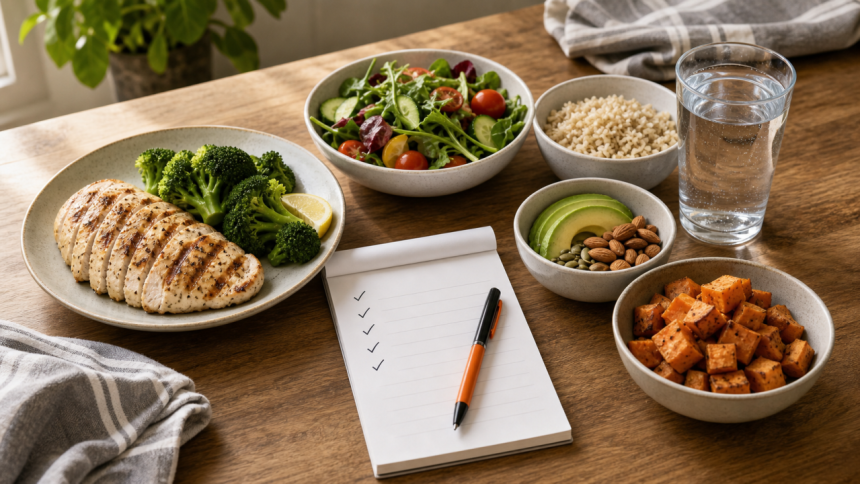
Good anchors include eggs, Greek yogurt, cottage cheese, chicken, turkey, fish, lean beef, beans, lentils, tofu, tempeh, and protein powder when convenience matters. Our high-protein foods guide can help you build that rotation.
Rule 3: Eat fiber-rich foods every day
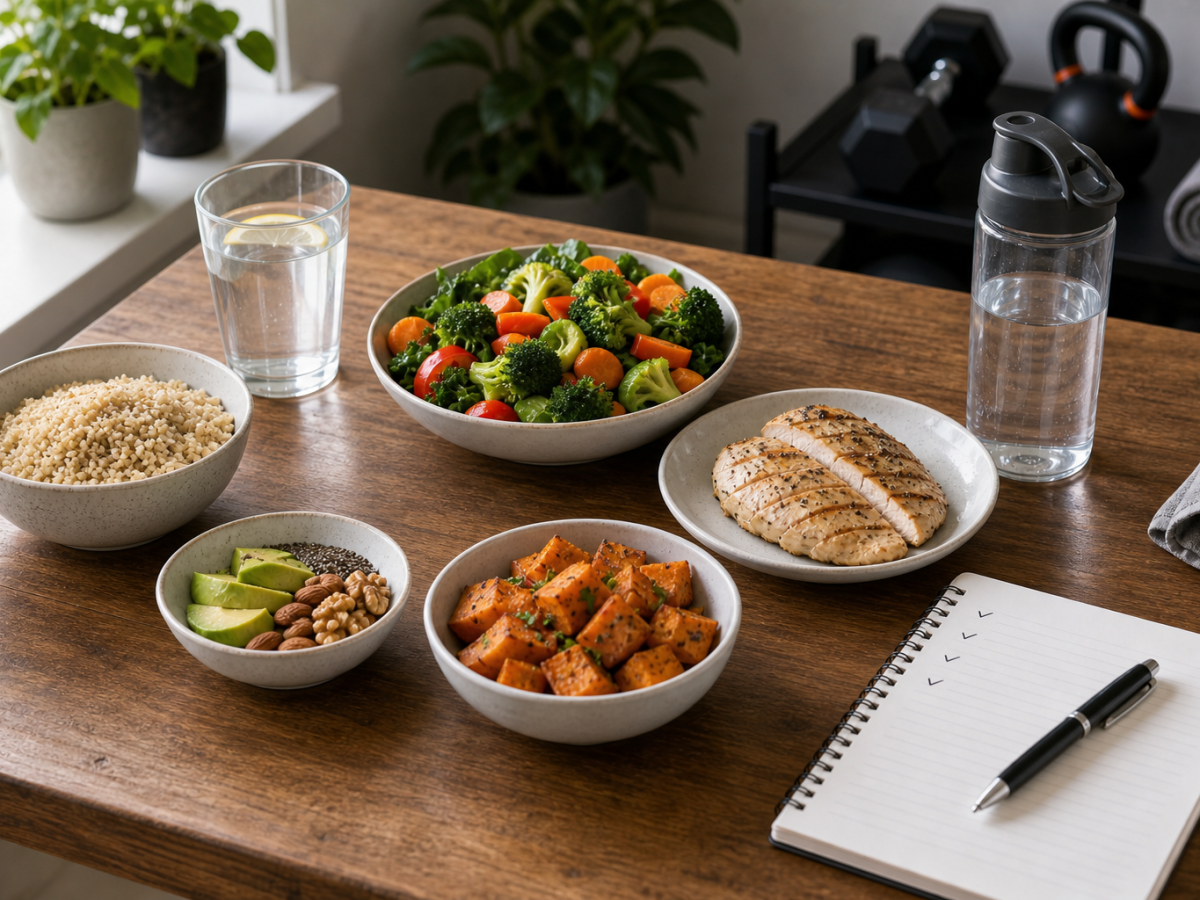
Fiber is not glamorous, but it is one of the most reliable nutrition upgrades. Vegetables, fruit, beans, lentils, oats, potatoes, and whole grains help with fullness and diet quality. The Dietary Guidelines for Americans emphasize nutrient-dense patterns built around vegetables, fruits, grains, dairy or fortified alternatives, protein foods, and oils while limiting added sugars, saturated fat, and sodium.
If digestion is sensitive, increase fiber gradually. A heroic bean-and-broccoli day after months of low fiber is not discipline; it is poor planning.
Rule 4: Time carbs around training when it helps
Meal timing is not magic, but it can matter for performance and recovery. The ISSN nutrient timing position stand is practical here: timing strategies are useful when they fit the athlete’s schedule and improve compliance or performance. A hard leg day after eight hours of no food is not a moral victory if the session falls apart.
For most lifters, the simplest rule is this: place a protein-and-carb meal before or after training, and put more of your daily carbs near the sessions that need them. You can estimate training fuel with our nutrient timing calculator, but the real test is whether your workouts improve.
Rule 5: Make the plan repeatable
The best diet is not the strictest diet; it is the one that survives normal life. That means having backup meals, portable protein, a grocery rotation, and a few default breakfasts or lunches. Our protein pacing guide explains why spreading protein across the day can be useful, but you do not need to eat every two hours to be serious. See protein pacing across four meals for a simple version.
A useful nutrition rule should answer this question: “What do I do on a busy Tuesday?” If it only works on a perfect Sunday meal-prep day, it is not a rule yet.
Do you need six meals per day?
No. Six meals can work if you like them, but they are not required for muscle gain or fat loss. Total daily intake, protein distribution, food quality, and consistency matter more. Some people feel better on three larger meals; others prefer four or five smaller feedings.
Are carbs or fats more important?
Both matter, but the target depends on your goal and preferences. Carbs support hard training and restore glycogen. Fats support essential nutrition and make food satisfying. Do not slash either one blindly. Set protein first, set calories for the goal, then divide carbs and fats in a way that you can sustain.
Sources
- Jager, R., et al. (2017). International Society of Sports Nutrition Position Stand: protein and exercise. Journal of the International Society of Sports Nutrition. doi:10.1186/s12970-017-0177-8.
- Kerksick, C. M., et al. (2017). International society of sports nutrition position stand: nutrient timing. Journal of the International Society of Sports Nutrition. doi:10.1186/s12970-017-0189-4.
- U.S. Department of Agriculture and U.S. Department of Health and Human Services. (2020). Dietary Guidelines for Americans, 2020-2025. Accessed May 22, 2026.
- U.S. Department of Agriculture. (n.d.). FoodData Central. Accessed May 22, 2026.