
Small home gyms do not usually fail because the workout is bad. They fail because the room becomes a pile of dumbbells, bands, mats, collars, shoes, and half-folded benches. Once setup takes 15 minutes and cleanup feels annoying, the gym stops being a gym and starts being a storage problem.
The fix is not buying more organizers. The fix is giving every piece of gear a job, a parking spot, and a rule for how it returns after training. This guide is for spare rooms, apartments, garages, basements, and shared spaces where every square foot matters.
What is the best way to organize a small home gym?
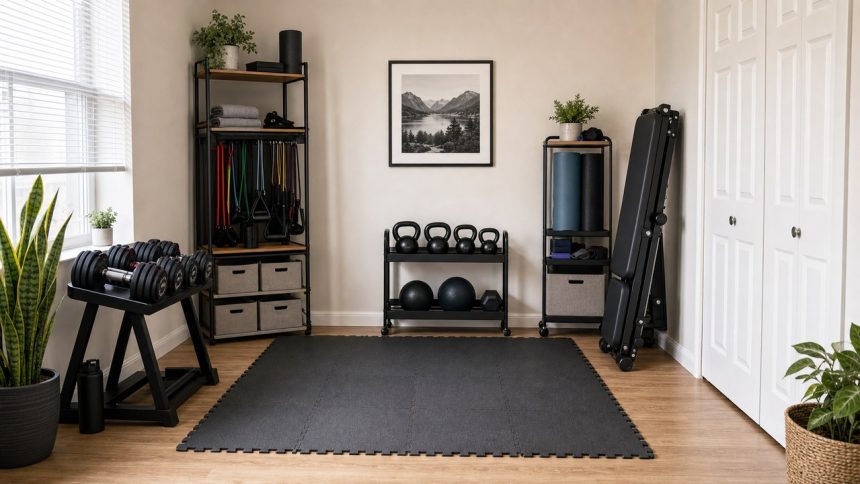
The best way to organize a small home gym is to keep heavy gear low, daily gear visible, and occasional gear stored vertically or under furniture. Start by clearing a 6-by-6-foot training zone, then build storage around that zone instead of letting storage invade it.
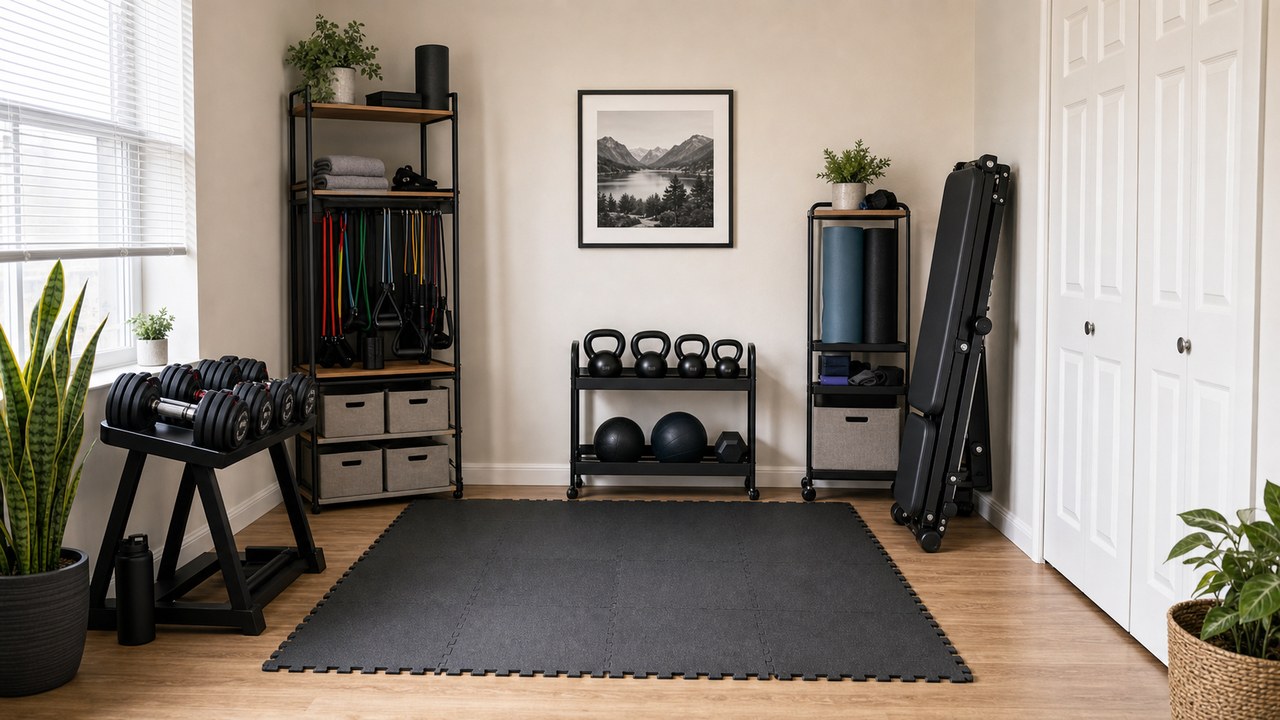
Use three zones: training, storage, and overflow. Training is the empty floor. Storage is what you touch every week. Overflow is seasonal or rarely used gear. If all three zones are mixed together, every workout begins with cleaning.
How much floor space should stay open?
Keep at least 36 square feet open for strength work. A 6-by-6-foot space covers dumbbell presses, split squats, Romanian deadlifts, band rows, push-ups, and core work. If you only have 6 by 4 feet, prioritize bands, sliders, kettlebells, and bodyweight training.
Do not store equipment in the middle of the training zone. A kettlebell that looks harmless during setup becomes a trip hazard when you are tired. Open space is a piece of equipment. Protect it like one.
What should go on the floor?
Only the heaviest items should live on the floor: dumbbells, kettlebells, sandbags, plates, and loaded storage stands. Heavy gear belongs low because low storage reduces tipping risk and makes the room easier to reset.
| Gear | Best storage spot | Why |
|---|---|---|
| Dumbbells | Low rack or dedicated stand | Prevents rolling and toe injuries |
| Kettlebells | Bottom shelf or floor strip | Heavy, compact, easy to grab |
| Plates | Plate tree or low pegs | Keeps load balanced |
| Sandbag | Mat corner or bin | Soft but bulky |
| Bench | Vertical wall-adjacent parking | Saves the most floor space |
Are wall hooks worth it?
Wall hooks are useful for bands, belts, jump ropes, and handles, but they are not the right answer for heavy equipment unless they are anchored properly. In a rental, skip wall hardware and use freestanding carts or shelves. In an owned garage, anchor into studs or masonry and stay under the hook rating.
Never hang plates, heavy chains, or loaded bars from decorative hooks. That kind of storage looks clean right up until it tears out of the wall. For barbells, use a dedicated holder and read our DIY barbell holder guide if you want a simple build.
How do you store plates in a small room?
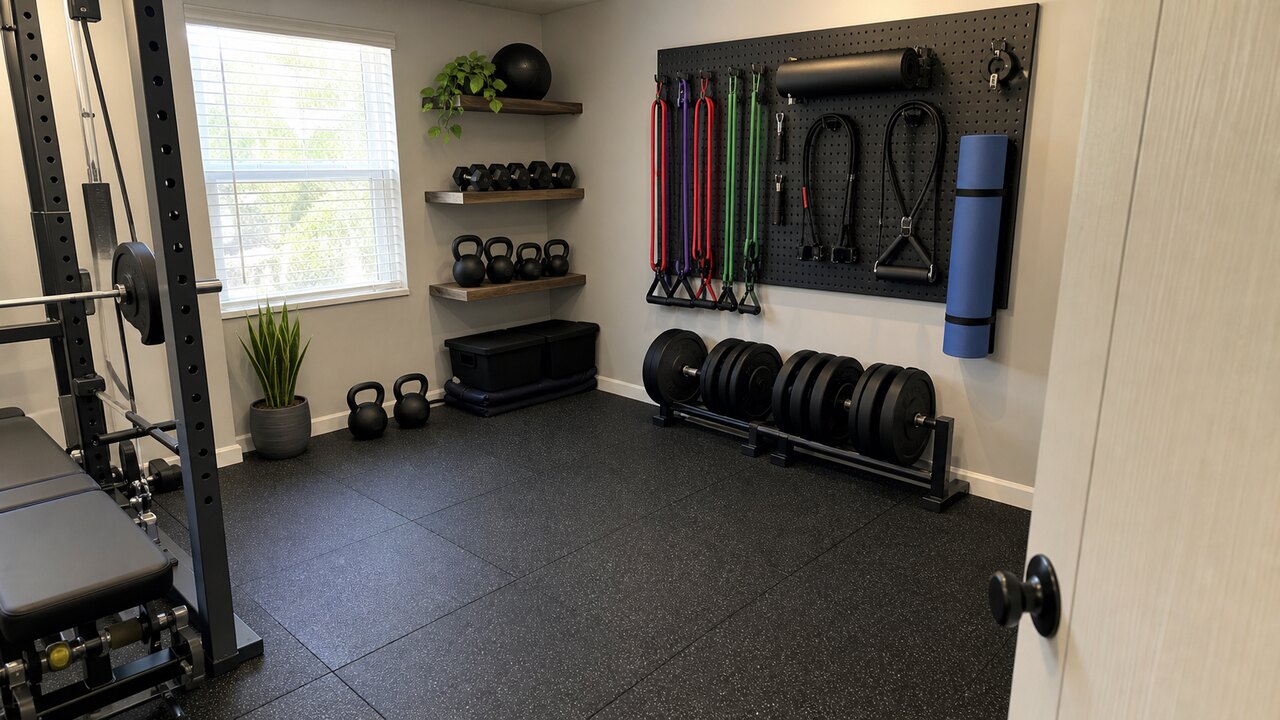
Store plates vertically on a compact tree or horizontally on a low rack. The goal is to keep weight balanced and keep plates off the walkway. If you use bumper plates, measure diameter and depth before buying a stand because bumpers eat more room than iron plates.
Put the heaviest plates closest to the floor. If a stand has pegs on both sides, load it evenly. A plate tree that leans every time you pull a 45-pound plate is not saving space. It is borrowing risk. For build options, use our DIY weight plate storage ideas as a starting point.
What is the best bench storage trick?
The best bench storage trick is vertical parking. A folding bench can live beside a closet, behind a door, or next to a rack as long as it cannot fall. If the bench has transport wheels, point the wheels outward so you can pull it out without dragging the frame across the floor.
Skip vertical bench storage if the bench is top-heavy or if kids can pull it over. In that case, store it flat under a bed, behind a sofa, or under a rack. If you are buying new, consider a bench that stores upright by design. Our DIY weight bench guide is useful for build ideas, but a storage-friendly commercial bench is often better in tiny rooms.
How do you store bands and cables?
Store bands by length and resistance, not by color alone. Put light mini bands in a small bin, long loop bands on a peg or hanger, and handles or ankle cuffs in a pouch. A tangled band pile wastes time and hides cracks or damage.
For cable pulley parts, use a single bin: pulley, cable, loading pin, straps, carabiners, and handles. If one part goes missing, the whole setup becomes annoying. If you use a homemade system, check our DIY cable pulley guide and inspect the cable path every month.
What about cardio equipment?
Cardio equipment should fold, roll, or live against a wall without blocking the training zone. Walking pads, folding bikes, compact rowers, and step platforms are easier to store than full treadmills. If the cardio machine cannot move, build the room around it.
Leave rear clearance behind treadmills and walking pads. Do not store dumbbells behind the belt, and do not wedge a machine where you cannot safely step off. If space is tight, a step platform or outdoor walking plan may beat a machine you hate storing.
What should you throw out or move?
Remove gear you have not used in 90 days unless it supports a clear training goal. Old resistance bands, broken collars, random handles, worn mats, and duplicate jump ropes are not a home gym. They are friction.
Use the one-bin rule for accessories. If bands, handles, wraps, cuffs, sliders, and straps do not fit in one bin or cart, you probably own too much small gear. Keep what you use weekly and move the rest to overflow storage.
What is the best small-gym layout?
The best small-gym layout places storage on one wall, heavy gear low, and the main training zone in the center. The equipment should face the open space, not the wall. This keeps setup fast and prevents every workout from becoming a furniture shuffle.
For most people, the winning layout is simple: mat in the center, dumbbells on one side, bench parked vertically, bands on a cart, and plates near the rack. If you want gear recommendations, our home workout equipment guide covers compact options that fit this setup.
Bottom line
Small home gym storage is about protecting open floor space. Keep heavy gear low, store the bench vertically, group accessories by use, and make cleanup take less than 5 minutes. If a storage idea looks clever but steals your training zone, it is not clever. It is clutter with better lighting.
Sources
- Nationwide Children’s Hospital. (n.d.). Home Exercise Equipment. Center for Injury Research and Policy. Accessed May 30, 2026.
- Centers for Disease Control and Prevention. (2024). Adult Activity: An Overview. CDC. Accessed May 30, 2026.