

The deadlift is often described as the simplest big lift because the bar starts on the floor. That is also why people underestimate it. There is no bounce, no stretch reflex to save a sloppy start, and very little time to fix a bad position once the plates leave the ground. A good deadlift is built before the pull.
The old Body Mechanics version had the right instinct: the deadlift is a primary lift, not a gym trick. The 2026 version needs a stronger framework. The deadlift is a hip hinge, brace, lat-tension, and leg-drive pattern that loads the posterior chain while demanding enough trunk stiffness to move force through the body instead of leaking it through the spine or shoulders.
What is deadlift biomechanics?
Deadlift biomechanics describes how your feet, hips, knees, spine, shoulders, arms, and barbell interact during the lift. The bar wants to travel vertically. Your body has to arrange itself so the bar can move from the floor to lockout with the least wasted motion and the most controllable joint positions.
That arrangement changes by body type. Long arms, short arms, long femurs, hip structure, ankle mobility, and training goal all affect the setup. This is why one lifter’s conventional pull looks smooth with high hips, while another needs a slightly lower hip position or a sumo stance to create better leverage.
Which muscles does the deadlift train?
The deadlift trains the glutes, hamstrings, quadriceps, adductors, spinal erectors, lats, traps, grip, and trunk. The glutes and hamstrings extend the hips, the quads help break the floor, the erectors and trunk resist unwanted spinal motion, and the lats keep the bar close enough that the pull stays efficient.
A systematic review of deadlift EMG research found that activation patterns vary by deadlift variation and measurement method. That matters. Conventional, sumo, Romanian, stiff-leg, trap-bar, and deficit deadlifts are related, but they are not identical stressors.
How should you set up for a conventional deadlift?
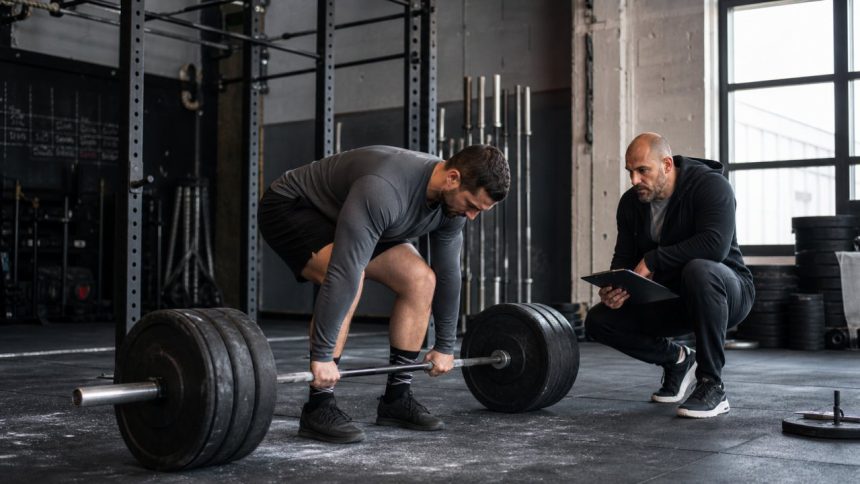
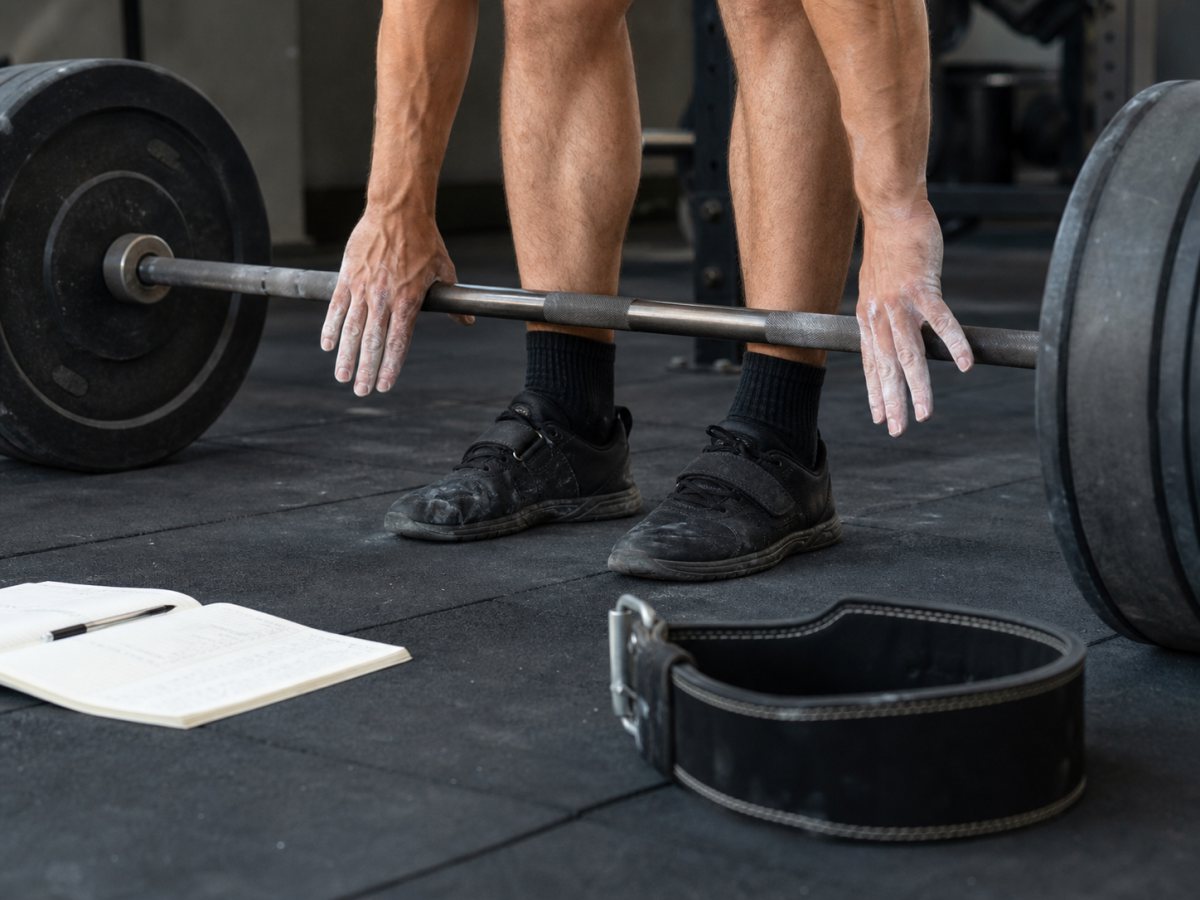
Start with the bar over the midfoot, not drifting out over the toes. Hinge down, grip the bar, bring the shins close without rolling the bar away, brace hard, pull the slack out, and push the floor away. The bar should rise close to the body. If it swings forward, the lift becomes harder and usually uglier.
| Setup Step | What It Does | Common Error |
|---|---|---|
| Bar over midfoot | Shortens the bar path | Starting with the bar too far forward |
| Hinge to grip | Loads hips and hamstrings | Squatting down with loose hips |
| Brace first | Creates trunk stiffness | Breathing after the pull starts |
| Lats tight | Keeps bar close | Letting shoulders drift forward |
| Push the floor | Uses legs and hips together | Yanking with the arms |
What are the biggest deadlift mistakes?
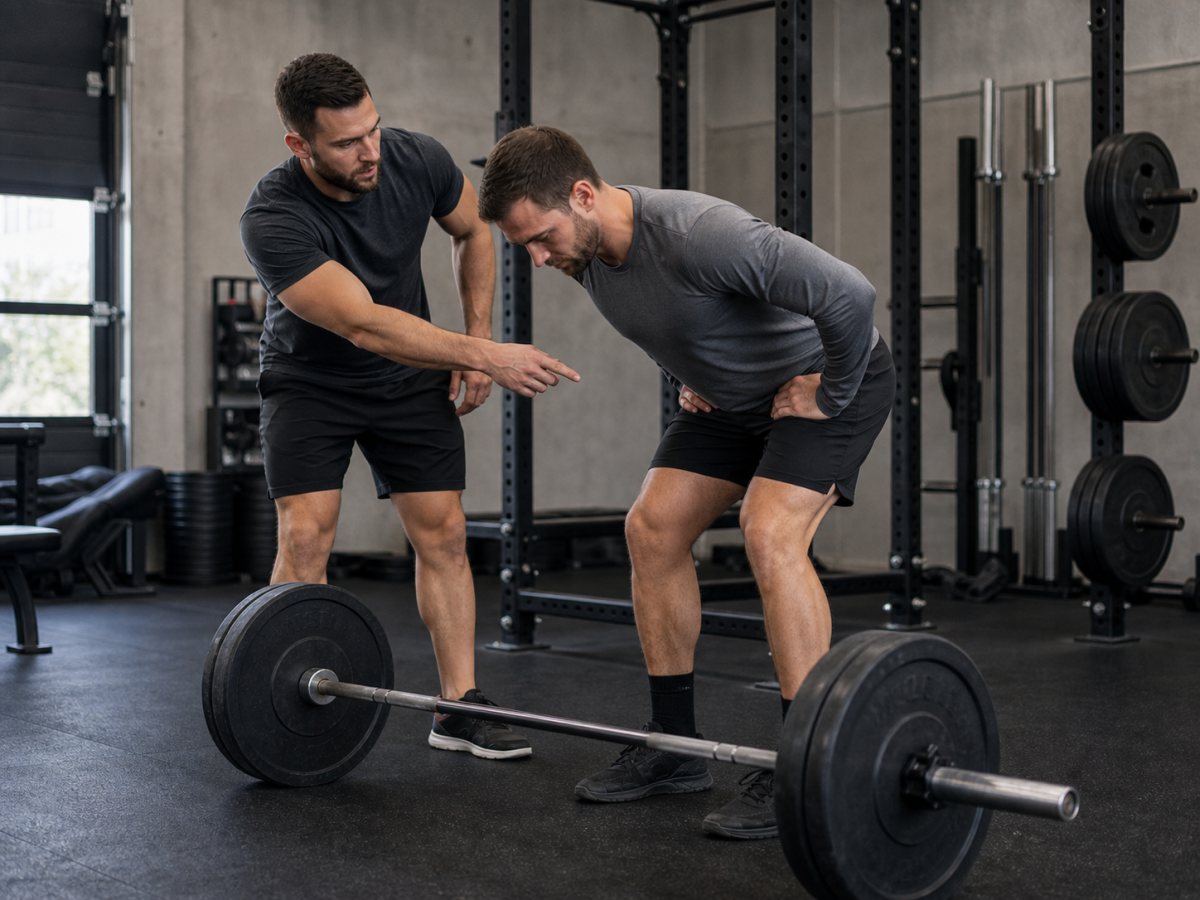
The biggest deadlift mistakes are starting too far from the bar, pulling the slack out with a jerky arm yank, letting the hips shoot up, turning every rep into a max attempt, and treating soreness as proof that the plan works. The deadlift is expensive. Bad deadlifts are more expensive.
| Mistake | What It Usually Causes | Better First Fix |
|---|---|---|
| Bar drifts forward | More back strain and slower lockout | Set bar over midfoot and tighten lats |
| Hips shoot up | Stiff-leg pull from the floor | Brace and push through the floor |
| Over-pulling volume | Recovery debt | Use fewer hard sets and better progression |
| No hinge control | Inconsistent start position | Practice RDLs, block pulls, or dowel hinges |
How should you program deadlifts?
Program deadlifts with more restraint than enthusiasm. Heavy deadlifts create a lot of fatigue, so most lifters do well with one heavy pull day per week, a lighter hinge accessory, and enough pulling volume to practice without burying recovery. Beginners may use lower loads more often. Advanced lifters often need less heavy exposure, not more.
Use progressive overload, but avoid adding load just because the spreadsheet says so. A clean set of three that moves well is better than a sloppy personal record that ruins the next two weeks. For broader planning, use our guides to building a training program and periodization.
FitnessVolt deadlift rule of thumb
Deadlift from the position you can own, not the position someone with different levers uses online. Keep the bar close, brace before you pull, let your legs and hips share the start, and stop sets before technique collapses. If your deadlift numbers rise while your setup gets cleaner, you are doing it right.
The deadlift rewards patience. The best pull is not the fastest yank from the floor. It is the cleanest transfer of force from feet, through hips and trunk, into the bar.
How do you choose deadlift height?
The bar height should let you create a strong start position. Standard plates put the bar around mid-shin for many lifters, but that does not mean every lifter is ready to pull from the floor. If you cannot reach the bar without losing spinal position, use blocks, mats, or a rack pull height that lets you train the hinge honestly.
Reducing range of motion is not cheating when it solves the right problem. Block pulls can help lifters learn lat tension, bracing, and lockout strength. Deficit pulls can help advanced lifters build starting strength, but they are a poor choice if the normal floor pull already looks unstable. Range is a progression variable. Earn it.
Should you touch-and-go or reset every rep?
Both styles can work, but they train slightly different skills. Reset deadlifts force you to rebuild the setup every rep. That is useful for strength, beginners, and anyone whose start position needs practice. Touch-and-go reps create more continuous tension, but they can turn into bounced reps that hide weak starts.
If your first rep is clean and the next four are all faster because the plates bounce, you are not training five starts. You are training one start and four rebounds. Use touch-and-go only when you can keep the same brace, bar path, and hip position without using the floor as a trampoline.
How do you manage deadlift fatigue?
Deadlift fatigue is sneaky because one heavy set can feel fine in the moment and still cost several days of recovery. Watch for slower warm-ups, grip fading early, low-back stiffness that changes your hinge, and a sudden need to hype up moderate loads. Those are signs the plan may need less pulling, not more motivation.
A practical weekly setup is one main deadlift exposure, one lighter hinge or posterior-chain accessory, and enough rows, pulldowns, and trunk work to support the lift. If you compete, heavier phases can come and go. If you train for general strength, clean repeatable work beats weekly max testing.
How should you breathe and brace?
Breathing and bracing decide whether the deadlift feels connected or scattered. Take air before the pull, expand around the trunk, lock the ribs and pelvis into a strong position, and keep that pressure as the bar leaves the floor. The brace should feel like the body is turning into one solid lever, not like you are merely holding your breath in the chest.
Belts can help advanced lifters create pressure, but they do not replace skill. If you cannot brace without a belt, the belt will only hide the problem for a while. Practice bracing on warm-up sets, Romanian deadlifts, carries, and paused pulls so the skill is automatic when the load gets heavy.
What accessories carry over best?
The best deadlift accessories fix the bottleneck. Romanian deadlifts and good mornings build hinge strength. Paused deadlifts teach position off the floor. Block pulls train lockout and lat tension. Hamstring curls add knee-flexion hamstring work without more spinal loading. Rows and pulldowns help the upper back keep the bar close.
Choose one or two accessories per phase. Too many hinge variations can create the same recovery problem as too much deadlifting. If the main deadlift is stalling because your back is tired all the time, adding three more posterior-chain movements is not a fix. It is more of the same problem.
Sources
- Escamilla, R. F., et al. (2000). A three-dimensional biomechanical analysis of sumo and conventional style deadlifts. Medicine and Science in Sports and Exercise.
- Swinton, P. A., et al. (2011). A biomechanical analysis of straight and hexagonal barbell deadlifts using submaximal loads. Journal of Strength and Conditioning Research. doi:10.1519/JSC.0b013e3181e73f87.
- Camara, K. D., et al. (2016). An examination of muscle activation and power characteristics while performing the deadlift exercise with straight and hexagonal barbells. Journal of Strength and Conditioning Research.
- Martin-Fuentes, I., et al. (2020). Electromyographic activity in deadlift exercise and its variants: A systematic review. PLOS ONE.





Good article. The point about matching technique to your leverages is something a lot of lifters overlook. Two people can have the same deadlift strength and still look completely different off the floor.
I spend a lot of time looking at relative strength metrics through https://dotscalculator.com, and it’s interesting how often people chase someone else’s setup instead of improving their own mechanics. Better positioning usually adds more to a lift than another random accessory exercise.