

5 Alternating Cable Shoulder Press Alternatives for Strength
If you can't do the alternating cable shoulder press, choose exercises that replicate its vertical press and unilateral control: single-arm dumbbell shoulder press, landmine press, seated barbell press, or pike/handstand push-up progressions. Keep your core braced, lead with the elbow, and press on a vertical plane to target the anterior and medial deltoids and stabilize the scapula.
Original Exercise: Alternating Cable Shoulder Press
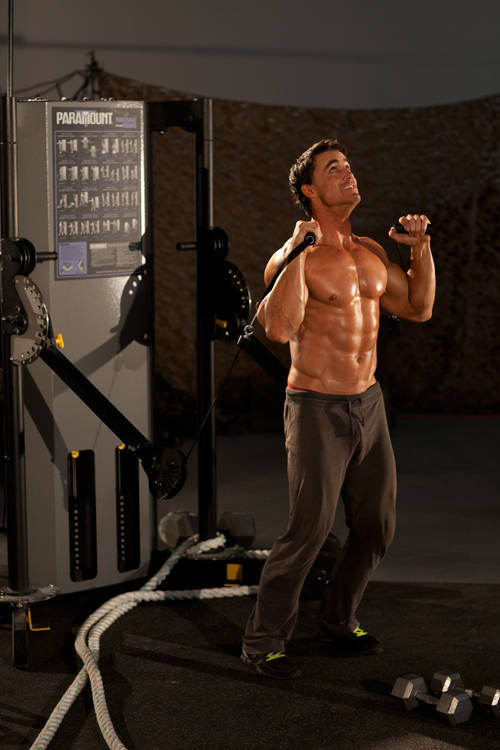
How to Perform Alternating Cable Shoulder Press
- Move the cables to the bottom of the tower and select an appropriate weight.
- Grasp the cables and hold them at shoulder height, palms facing forward. This will be your starting position.
- Keeping your head and chest up, extend through the elbow to press one side directly over head.
- After pausing at the top, return to the starting position and repeat on the opposite side.
Pro Tips
- Category: Strength
- Force: Push
- Movement type: Compound
Ranked Alternating Cable Shoulder Press Alternatives
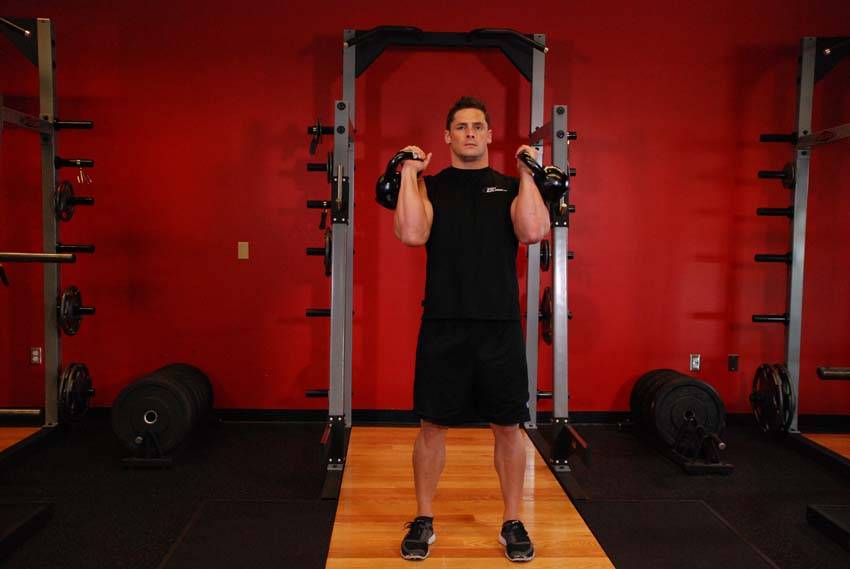
1. Alternating Kettlebell Press
86.6% MatchHow to perform this exercise
- Clean two kettlebells to your shoulders. Clean the kettlebells to your shoulders by extending through the legs and hips as you pull the kettlebells towards your shoulders. Rotate your wrists as you do so.
- Press one directly overhead by extending through the elbow, turning it so the palm faces forward while holding the other kettlebell stationary .
- Lower the pressed kettlebell to the starting position and immediately press with your other arm.
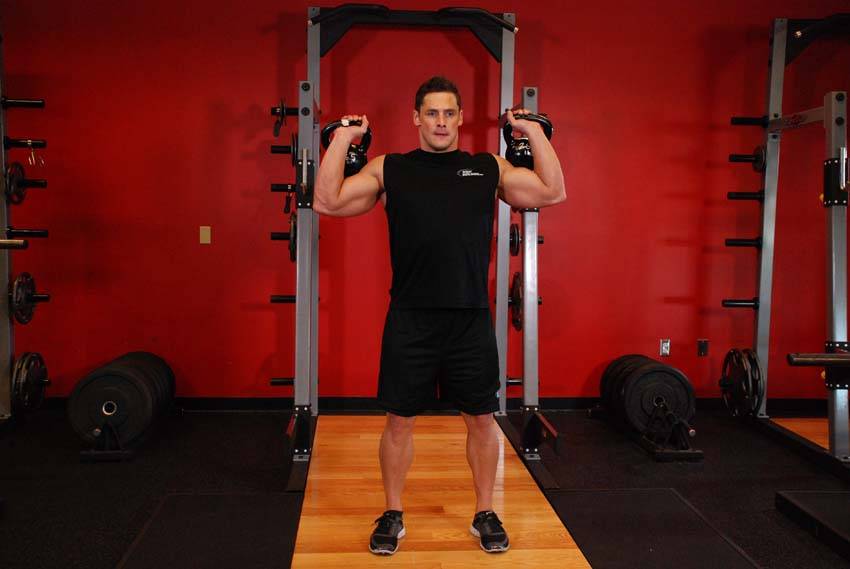
2. Two-Arm Kettlebell Military Press
80.3% MatchHow to perform this exercise
- Clean two kettlebells to your shoulders. Clean the kettlebells to your shoulders by extending through the legs and hips as you swing the kettlebells towards your shoulders. Rotate your wrists as you do so, so that the palms face forward.
- Press the kettlebells up and out. As the kettlebells pass your head, lean into the weights so that the kettlebells are racked behind your head. Make sure to contract your lats, butt, and stomach for added stability.
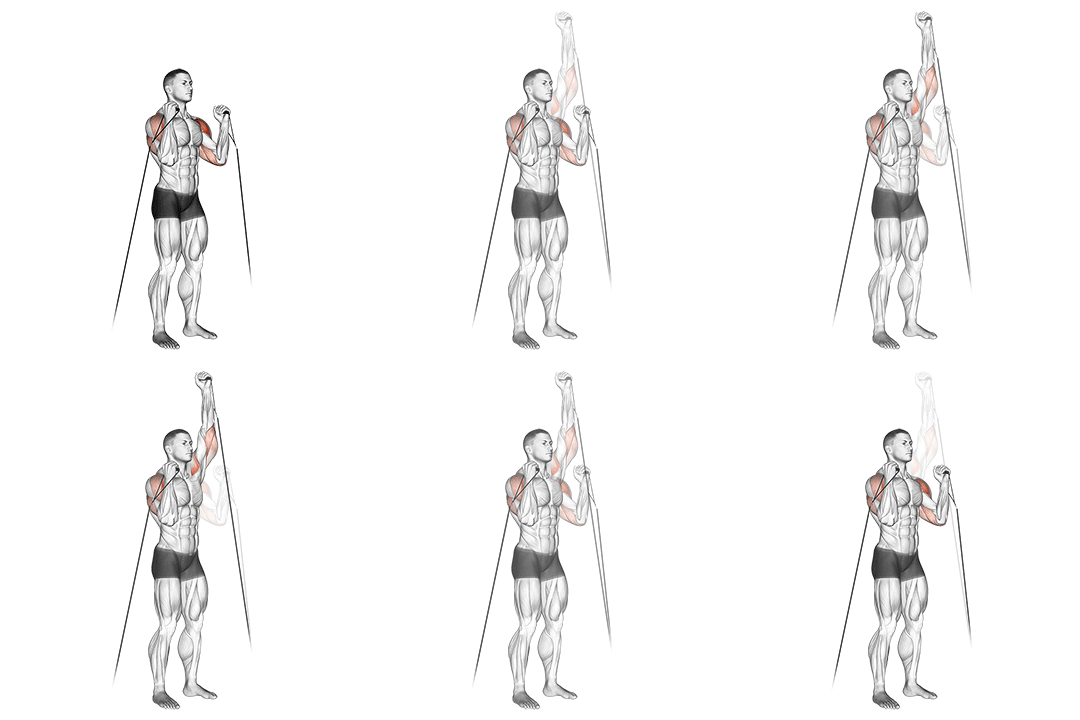
3. Cable Alternate Shoulder Press
77.1% MatchHow to perform this exercise
- Stand with your feet shoulder-width apart and grasp the handles of the cable machine with an overhand grip.
- Position your hands at shoulder height, with your palms facing forward.
- Keep your core engaged and your back straight.
- Press one handle up and forward until your arm is fully extended.
- Pause for a moment at the top, then slowly lower the handle back to the starting position.
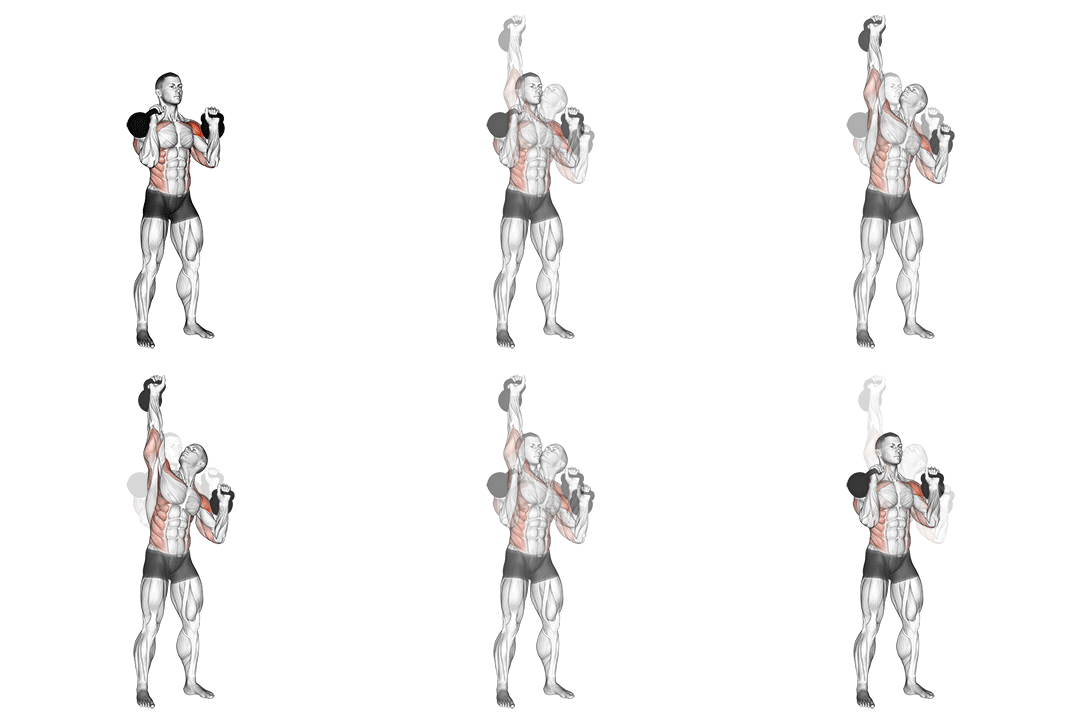
4. Kettlebell Seesaw Press
71.6% MatchHow to perform this exercise
- Stand with your feet shoulder-width apart, holding a kettlebell in each hand at shoulder height.
- Press one kettlebell overhead while keeping the other kettlebell at shoulder height.
- Lower the pressed kettlebell back to shoulder height while simultaneously pressing the other kettlebell overhead.
- Continue alternating the pressing motion, creating a seesaw-like movement.
- Repeat for the desired number of repetitions.
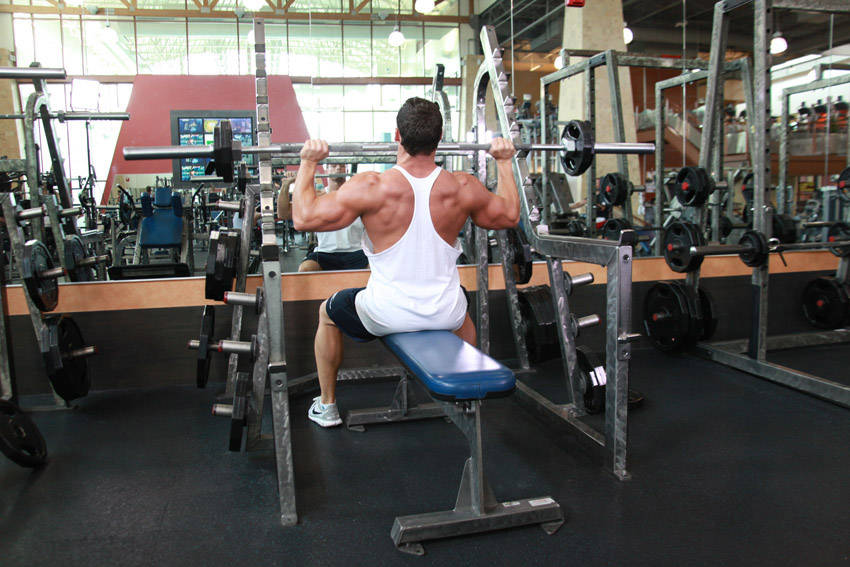
5. Seated Barbell Military Press
70.4% MatchHow to perform this exercise
- Sit on a Military Press Bench with a bar behind your head and either have a spotter give you the bar (better on the rotator cuff this way) or pick it up yourself carefully with a pronated grip (palms facing forward). Tip: Your grip should be wider than shoulder width and it should create a 90-degree angle between the forearm and the upper arm as the barbell goes down.
- Once you pick up the barbell with the correct grip length, lift the bar up over your head by locking your arms. Hold at about shoulder level and slightly in front of your head. This is your starting position.
- Lower the bar down to the collarbone slowly as you inhale.
- Lift the bar back up to the starting position as you exhale.
- Repeat for the recommended amount of repetitions.
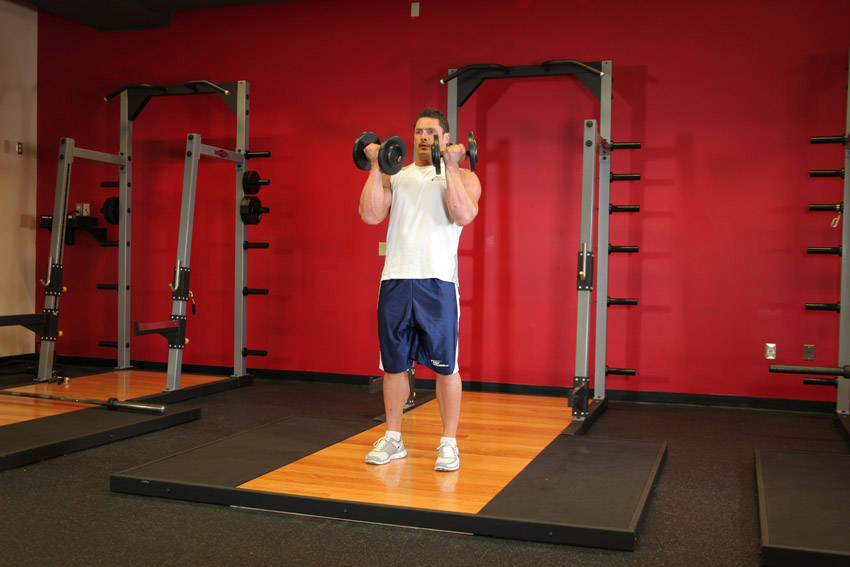
6. See-Saw Press (Alternating Side Press)
68.7% MatchHow to perform this exercise
- Grab a dumbbell with each hand and stand up erect.
- Clean (lift) the dumbbells to the chest/shoulder level and then rotate your wrists so that your palms are facing towards you as if you were getting ready to perform an Arnold Press. This will be your starting position.
- Now start extending your left arm overhead as you rotate the wrist so that the palm of your hand faces forward as you go up. Your elbows should come out also as you lift the weight. Simultaneously, you will also be bending from your hip to your opposite side. Tip: If you perform the exercise correctly, is should look as if you are trying to reach for something overhead on the right hand side of your body, but with your left arm. Breathe out as you perform this movement.
- Once you reach the top position breathe in. Then, with the weight fully extended overhead and you bent over to your right hand side, begin the movement to the left side.
- Repeat for the recommended amount of repetitions.
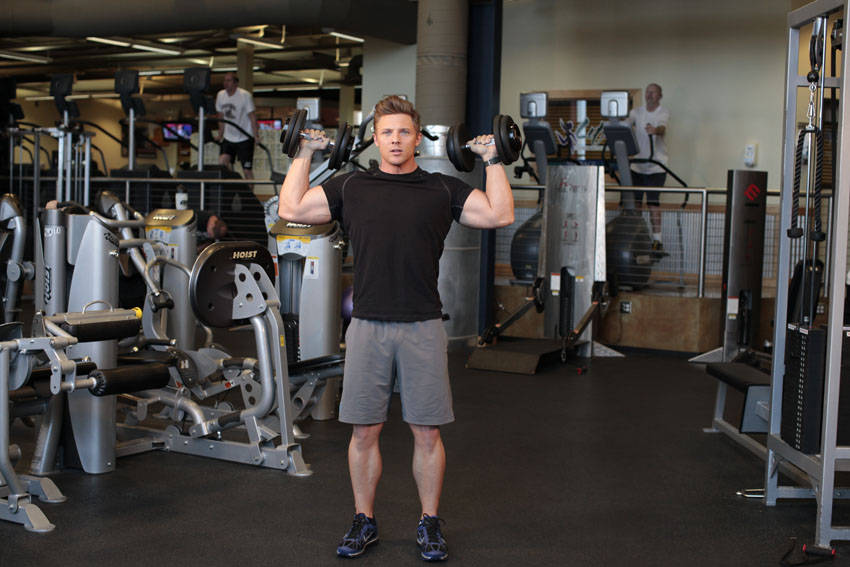
7. Standing Alternating Dumbbell Press
68% MatchHow to perform this exercise
- Stand with a dumbbell in each hand. Raise the dumbbells to your shoulders with your palms facing forward and your elbows pointed out. This will be your starting position.
- Extend one arm to press the dumbbell straight up, keeping your off hand in place. Do not lean or jerk the weight during the movement.
- After a brief pause, return the weight to the starting position.
- Repeat for the opposite side, continuing to alternate between arms.
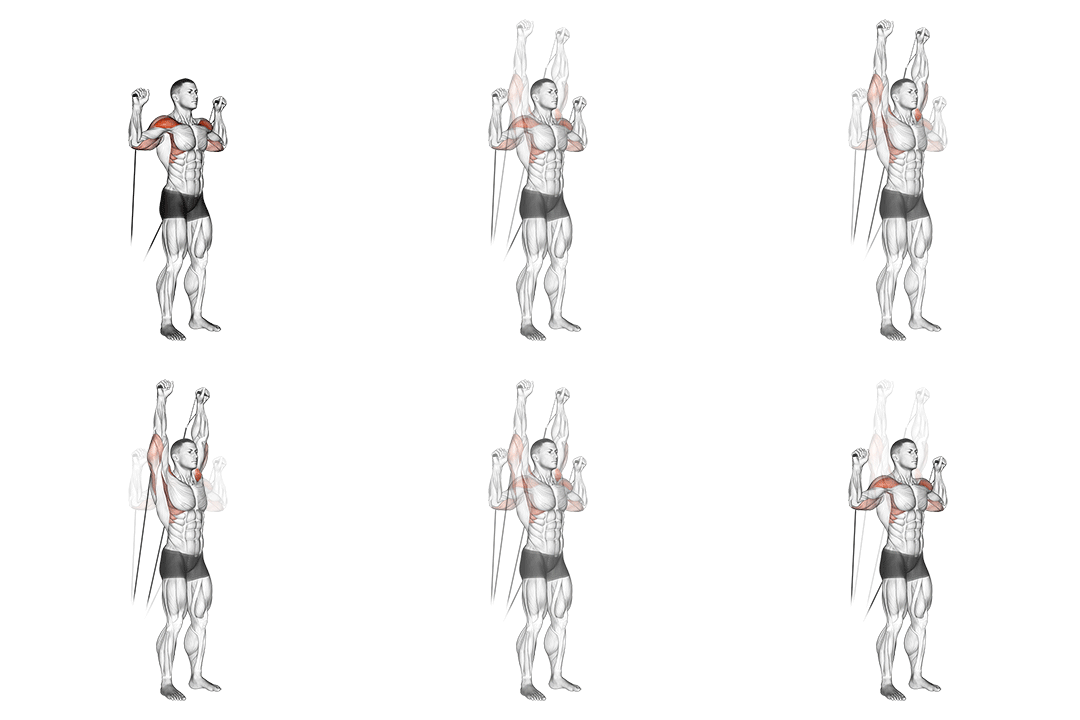
8. Cable Shoulder Press
67.7% MatchHow to perform this exercise
- Adjust the cable machine so that the handles are at shoulder height.
- Stand facing away from the machine with your feet shoulder-width apart.
- Grasp the handles with an overhand grip and bring them up to shoulder level, with your elbows bent and pointing outwards.
- Press the handles upwards until your arms are fully extended overhead.
- Pause for a moment at the top, then slowly lower the handles back down to shoulder level.
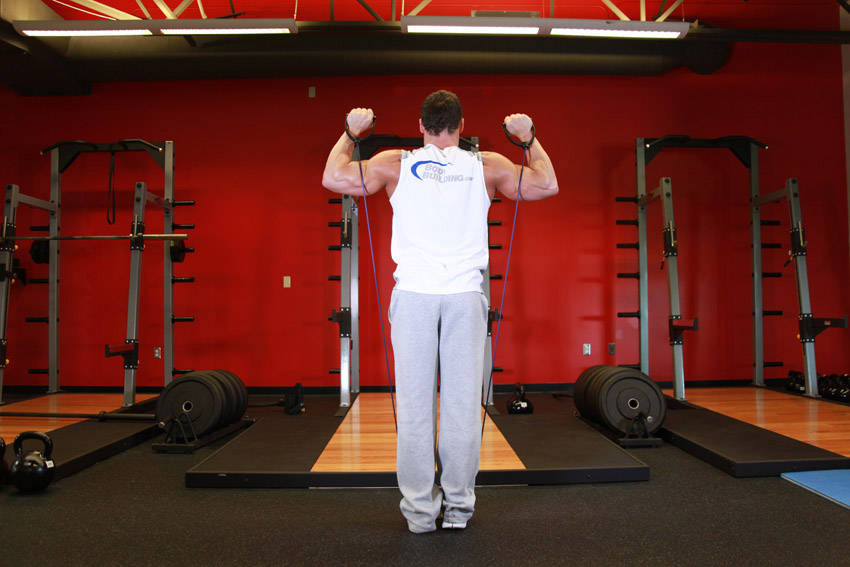
9. Shoulder Press - With Bands
66.4% MatchHow to perform this exercise
- To begin, stand on an exercise band so that tension begins at arm's length. Grasp the handles and lift them so that the hands are at shoulder height at each side.
- Rotate the wrists so that the palms of your hands are facing forward. Your elbows should be bent, with the upper arms and forearms in line to the torso. This is your starting position.
- As you exhale, lift the handles up until your arms are fully extended overhead.
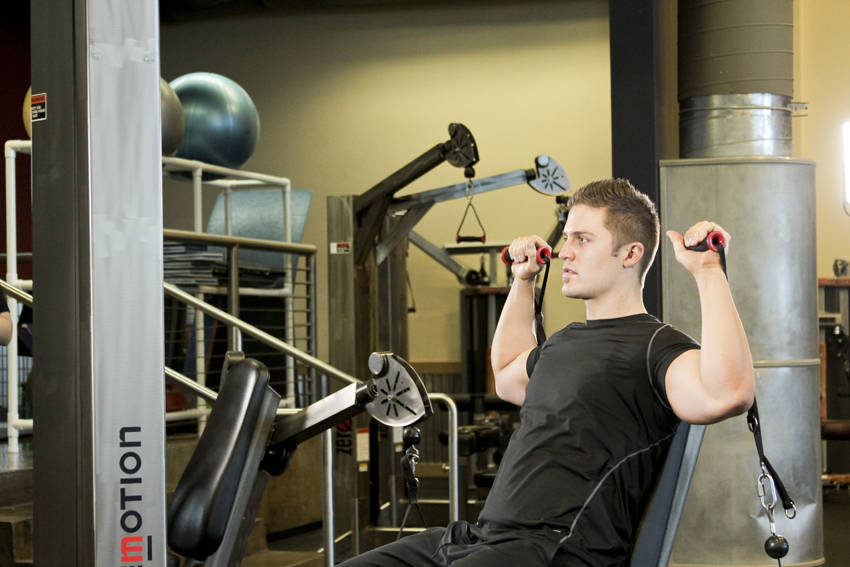
10. Seated Cable Shoulder Press
66% MatchHow to perform this exercise
- Adjust the weight to an appropriate amount and be seated, grasping the handles. Your upper arms should be about 90 degrees to the body, with your head and chest up. The elbows should also be bent to about 90 degrees. This will be your starting position.
- Begin by extending through the elbow, pressing the handles together above your head.
- After pausing at the top, return the handles to the starting position. Ensure that you maintain tension on the cables.
- You can also execute this movement with your back off the pad and alternate hands.
Why You Might Need a Alternating Cable Shoulder Press Alternative
You may need substitutes because of gym access, shoulder pain, equipment failure, or training goals that demand different loading patterns. Unilateral cable presses emphasize transverse stability and constant tension; a substitute can preserve deltoid loading while reducing shear or compressive forces at the glenohumeral joint. For example, a landmine press reduces horizontal shear and lets you press with a more natural upward and outward elbow path, decreasing impingement risk. Use cues like keeping the scapula retracted, maintaining a 45-degree elbow path to the torso, and breathing to brace the trunk so you retain deltoid activation while minimizing joint stress.
How to Choose the Right Substitute
Match the substitute to the movement pattern, stability demands, and loading progression you need. If you want constant tension and unilateral control, pick a single-arm cable or dumbbell press and cue a slow eccentric and full lockout to emphasize the medial deltoid. If shoulder pain limits overhead range, use a landmine press with a slightly forward torso to reduce impingement and load the anterior deltoid while preserving rotator cuff activation. For bodyweight progressions, use pike or partial handstand presses to overload vertical pressing without external load, drive through the palms and keep scapulae protracted at lockout to engage serratus anterior.
Frequently Asked Questions
What muscles does Alternating Cable Shoulder Press work?
The exercise primarily targets the anterior and medial deltoids while involving the triceps for lockout and the upper trapezius for elevation. It also recruits the rotator cuff and scapular stabilizers to control humeral head position; keep the scapula slightly retracted during the press to optimize deltoid recruitment.
What is the best bodyweight alternative to Alternating Cable Shoulder Press?
A pike push-up or progressive handstand push-up is the best bodyweight alternative because it preserves the vertical pressing pattern and shoulder loading. Cue a tucked chin and drive the head between the hands on the concentric phase to emphasize anterior deltoid activation and scapular control.
Can I build muscle without doing Alternating Cable Shoulder Press?
Yes. You can build deltoid mass with other vertical presses, dumbbell, barbell, landmine, or bodyweight progressions, by matching volume, intensity, and range of motion. Focus on progressive overload, control the eccentric phase, and maintain proper elbow path (about 30–45 degrees from the torso) to maximize deltoid tension.
More Exercise Alternatives
Find Alternatives for Any Exercise
Use the exercise substitution finder to compare ranked alternatives for your available equipment and training preference.
Try the Exercise Substitution Finder →