

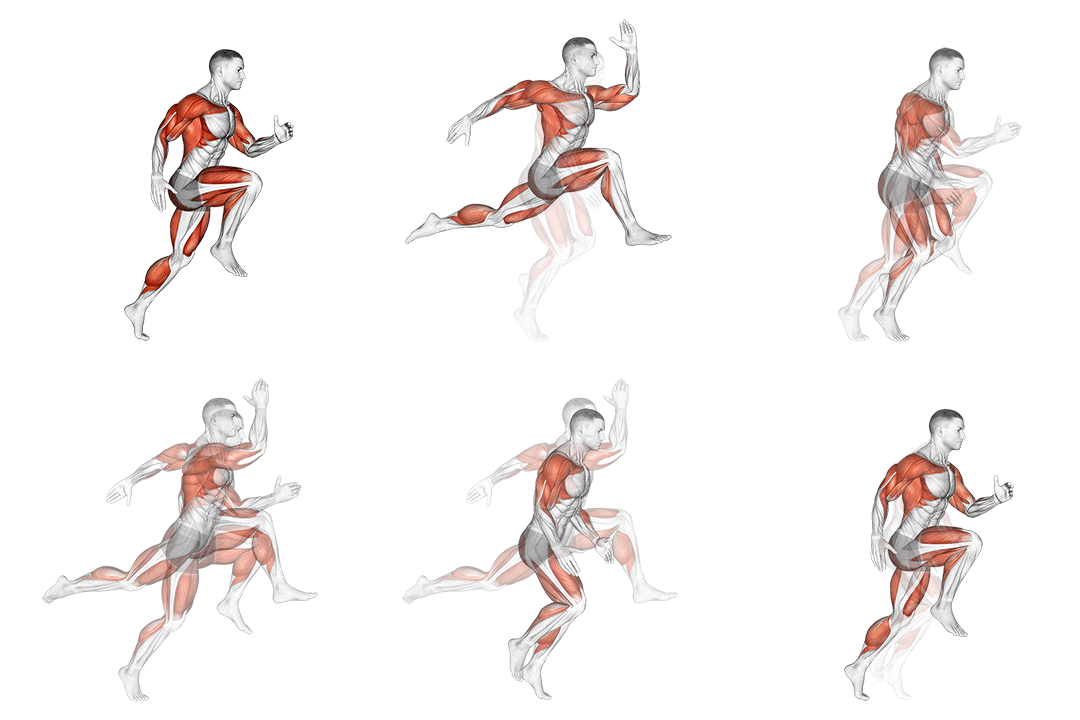
10 Best Push To Run Alternatives for Home Cardio
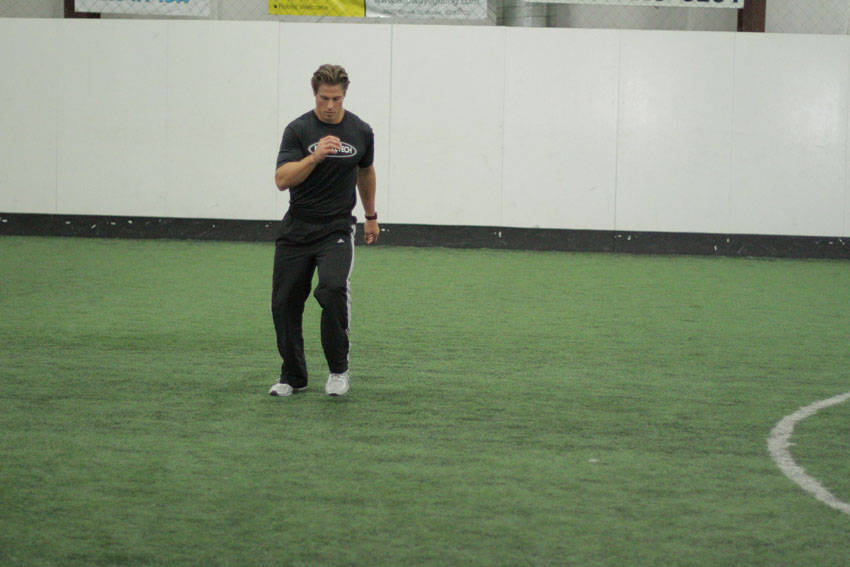
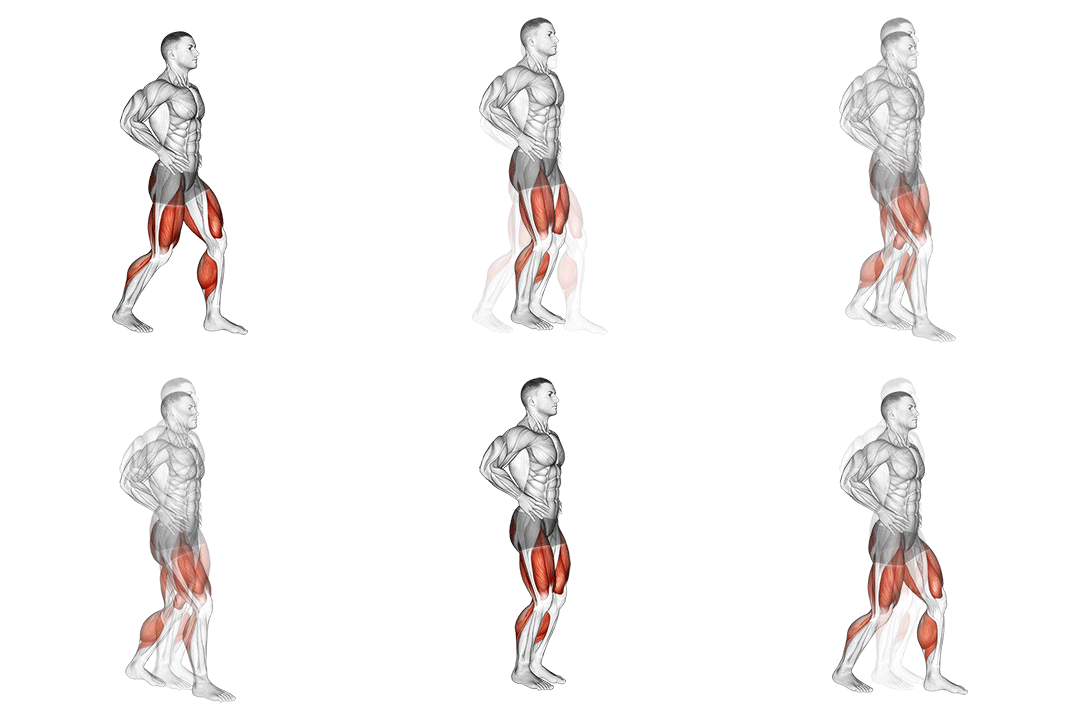
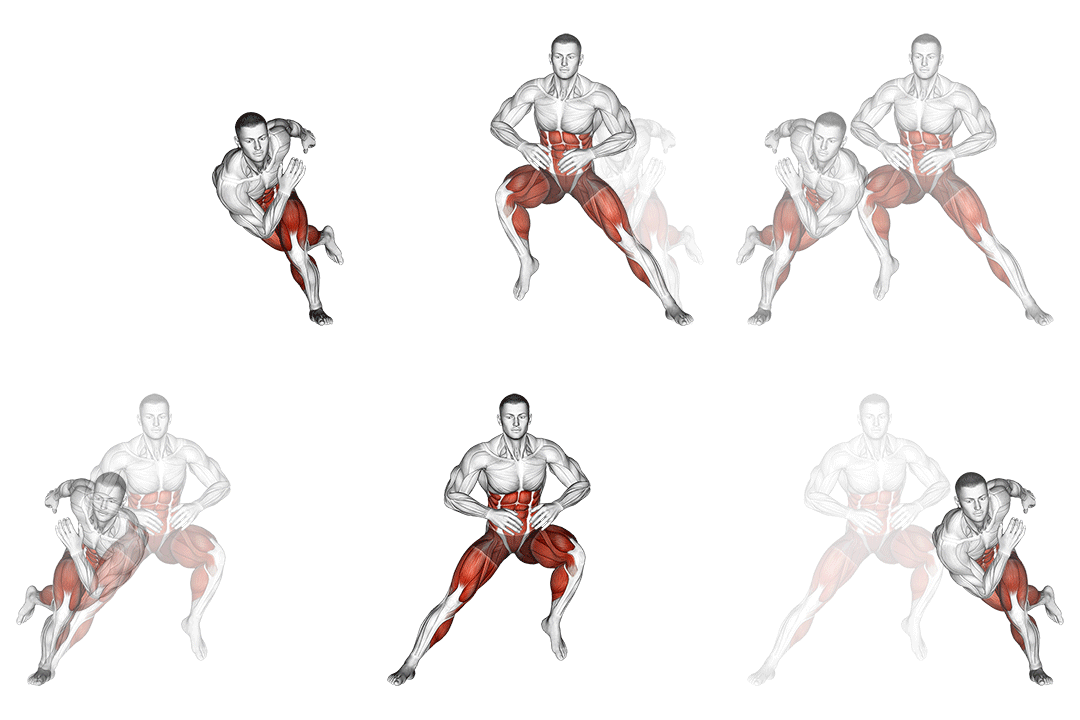
The Push To Run is done standing. Ranked closest by our scoring: the Wheel Run, the High Knee Against Wall and the Back And Forth Step. A harder version, Skater Hops, is listed below as a progression rather than a swap.
Updated Ranked by our 12-factor similarity model How it works
Original Exercise: Push To Run
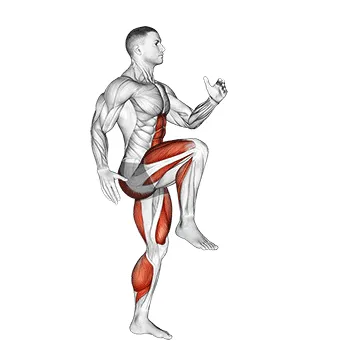
- Primary muscle
- Cardio
- Equipment
- Bodyweight
- Difficulty
- Intermediate
- Type
- Compound
Secondary muscles: Quadriceps, Hamstrings, Calves
How to perform Push To Run
- Start in a push-up position with your hands shoulder-width apart and your body in a straight line.
- Lower your chest towards the ground by bending your elbows, keeping your body straight.
- Push through your hands to extend your arms and return to the starting position.
- Quickly bring one knee towards your chest, then quickly switch and bring the other knee towards your chest.
- Continue alternating knees as fast as you can while maintaining good form.
- Continue for the desired duration or number of repetitions.
Ranked Push To Run Alternatives
10 substitutes, ranked by how closely each one matches the Push To Run on movement pattern, muscles worked, equipment and body position. The higher the score, the less you change. Open "How to perform this exercise" on a card for the steps; every card title links to that exercise's own alternatives page. Harder versions are tagged as progressions and kept out of the top spot even when they score higher.
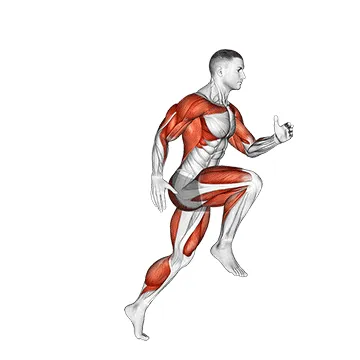
Best match 1. Wheel Run
90% match- Cardio
- Bodyweight
- Intermediate
- Compound
Pick this when you want an easier version that still works the heart and lungs.
How to perform this exercise
- Start in a plank position with your hands on the wheel and your body straight.
- Engage your core and start rolling the wheel forward by extending your arms.
- Continue rolling until your body is fully extended and your arms are overhead.
- Reverse the movement by pulling the wheel back towards your body, using your core and arms.
- Repeat for the desired number of repetitions.
Sets and reps: Work for 30 to 60 seconds, rest as long as you worked, and repeat 6 to 10 times.
Why this matches
- Movement: running, the same as the Push To Run
- Primary muscle: your heart and lungs, the same as the Push To Run
- Equipment: bodyweight only, the same as the Push To Run
- Body position: standing, the same as the Push To Run
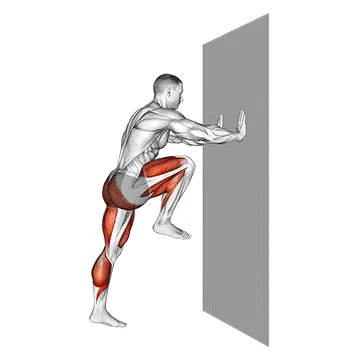
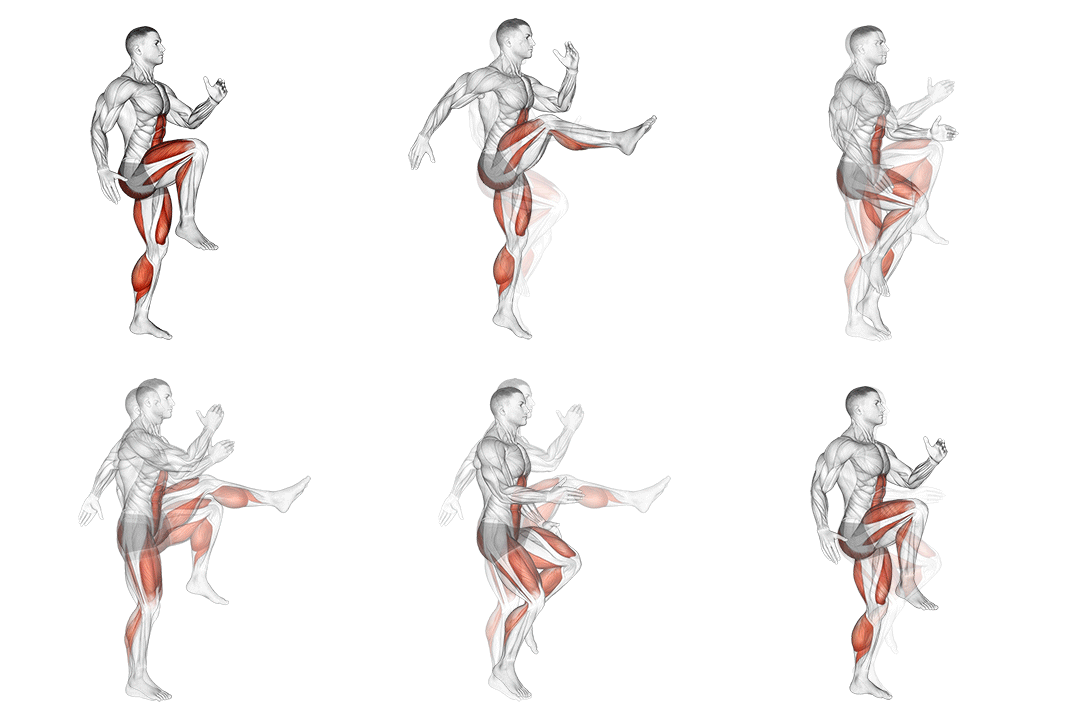
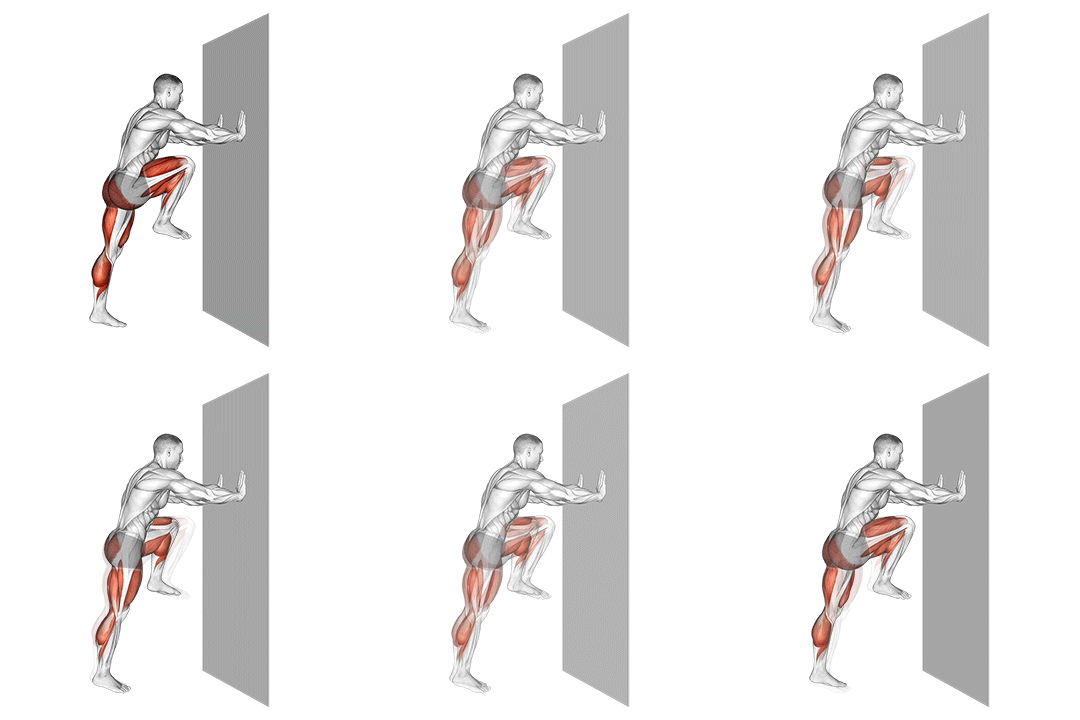
2. High Knee Against Wall
89% match- Cardio
- Bodyweight
- Beginner
- Compound
How to perform this exercise
- Stand facing a wall with your feet hip-width apart.
- Place your hands on the wall for support.
- Engage your core and lift your right knee up towards your chest, while keeping your left foot on the ground.
- Quickly switch legs, bringing your left knee up towards your chest and lowering your right foot back down.
- Continue alternating legs in a running motion, bringing your knees up as high as possible.
- Maintain a fast pace and keep your upper body stable throughout the exercise.
- Repeat for the desired duration or number of repetitions.
Sets and reps: Work for 30 to 60 seconds, rest as long as you worked, and repeat 6 to 10 times.
Why this matches
- Primary muscle: your heart and lungs, the same as the Push To Run
- Equipment: bodyweight only, the same as the Push To Run
- Body position: standing, the same as the Push To Run
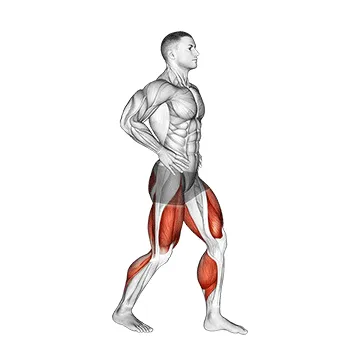
3. Back And Forth Step
89% match- Cardio
- Bodyweight
- Beginner
- Compound
How to perform this exercise
- Stand with your feet shoulder-width apart.
- Step forward with your right foot, bending your knee and lowering your body into a lunge position.
- Push off with your right foot and step back to the starting position.
- Repeat the movement with your left foot, alternating legs with each step.
- Continue stepping back and forth, maintaining a steady pace.
- Repeat for the desired duration or number of repetitions.
Sets and reps: Work for 30 to 60 seconds, rest as long as you worked, and repeat 6 to 10 times.
Why this matches
- Primary muscle: your heart and lungs, the same as the Push To Run
- Equipment: bodyweight only, the same as the Push To Run
- Body position: standing, the same as the Push To Run
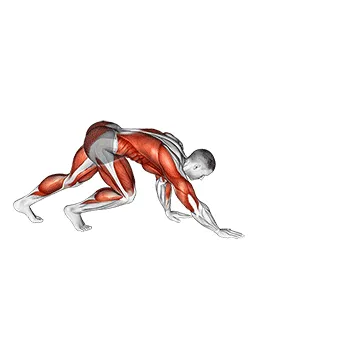
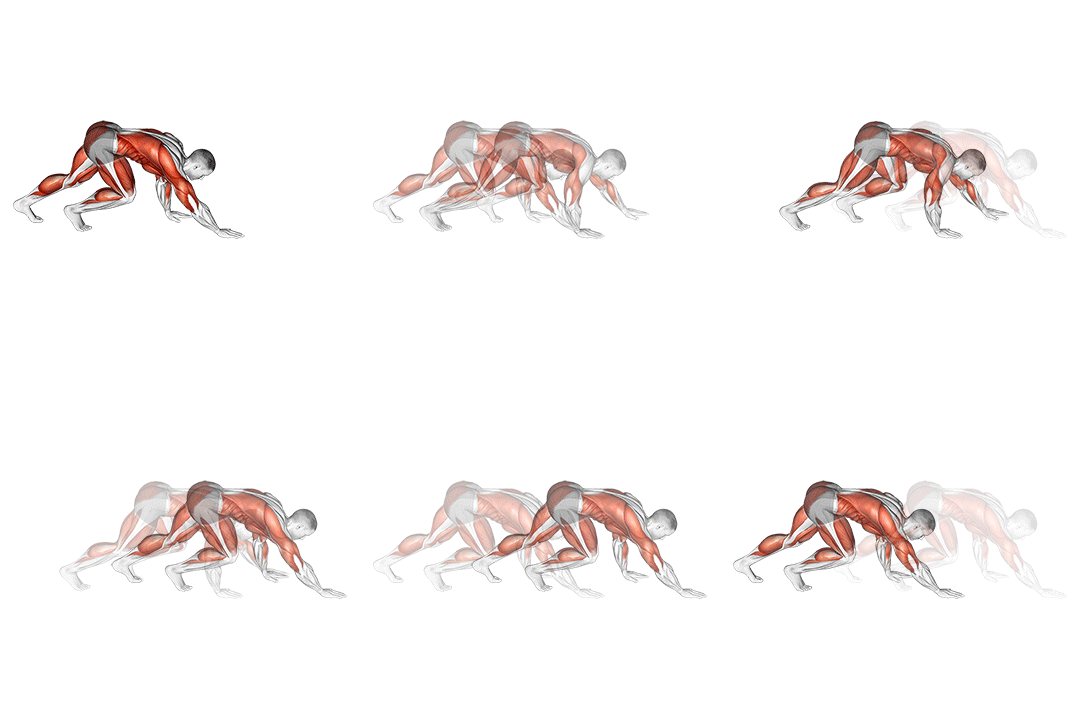
4. Bear Crawl
85% match- Cardio
- Bodyweight
- Intermediate
- Compound
How to perform this exercise
- Start on all fours with your hands directly under your shoulders and your knees directly under your hips.
- Lift your knees slightly off the ground, keeping your back flat and your core engaged.
- Move your right hand and left foot forward simultaneously, followed by your left hand and right foot.
- Continue crawling forward, alternating your hand and foot movements.
- Maintain a steady pace and keep your core tight throughout the exercise.
- Continue for the desired distance or time.
Sets and reps: Work for 30 to 60 seconds, rest as long as you worked, and repeat 6 to 10 times.
Why this matches
- Primary muscle: your heart and lungs, the same as the Push To Run
- Equipment: bodyweight only, the same as the Push To Run
- Body position: kneeling, not standing
- Balance: harder to stay steady on than the Push To Run
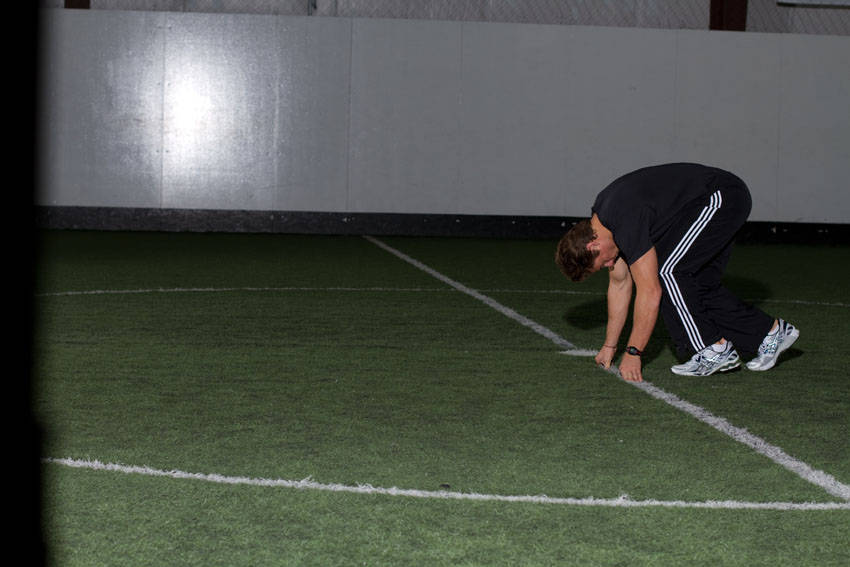
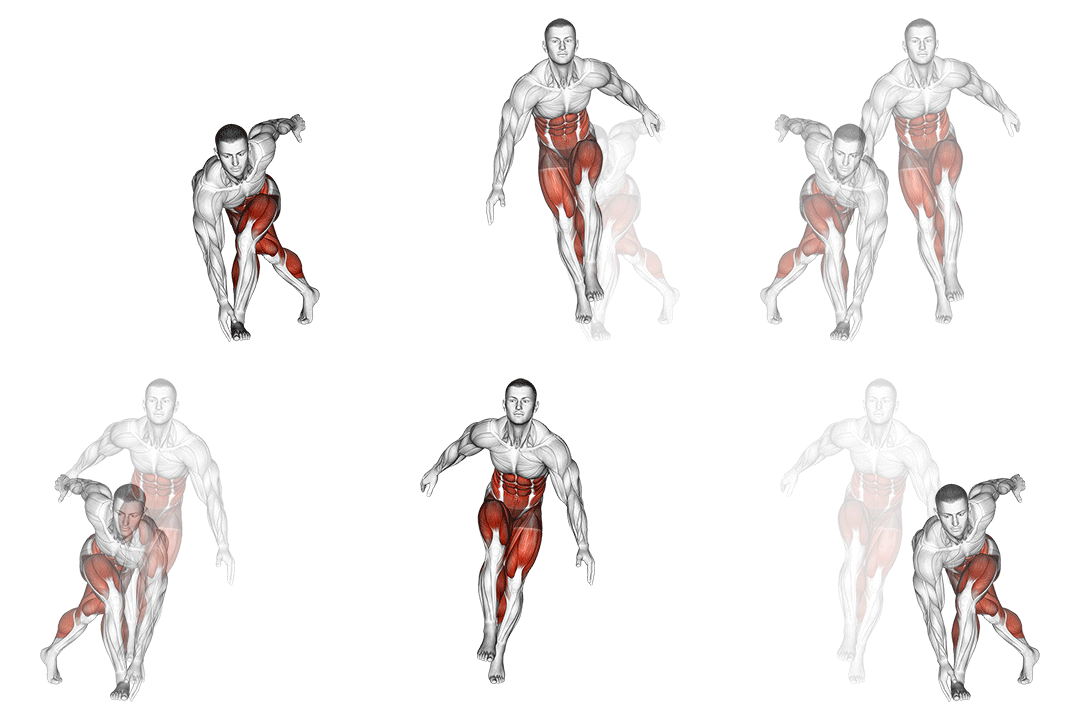
5. Linear 3-part Start Technique
84% match- Hamstrings
- Bodyweight
- Intermediate
- Compound
A looser match: it uses the same equipment, but it works the hamstrings rather than the heart and lungs.
How to perform this exercise
- This drill helps you accelerate as quickly as possible into a sprint from a dead stop. It helps to use a line to start from. Begin with two feet on the line. Place your left foot with the toe next to your right ankle. Place your right foot 4-6 inches behind the left.
- Place your right hand onto the line, and thing bring your nose close to your left knee.
- Squat down as you lean foward, your head being lower than your hips and your weight loaded onto the left leg. This will be your starting position.
- Take your left hand up so that it is parallel to the ground, pointing behind you, and explode out when ready.
Sets and reps: Work for 30 to 60 seconds, rest as long as you worked, and repeat 6 to 10 times.
Why this matches
- Primary muscle: hamstrings, not your heart and lungs
- Equipment: bodyweight only, the same as the Push To Run
- Body position: standing, the same as the Push To Run
6. Ski Step
83% match- Cardio
- Bodyweight
- Beginner
- Compound
How to perform this exercise
- Stand with your feet shoulder-width apart.
- Bend your knees slightly and keep your back straight.
- Jump to the right, landing on your right foot while swinging your left leg behind your right leg.
- Immediately jump to the left, landing on your left foot while swinging your right leg behind your left leg.
- Continue alternating jumps from side to side, mimicking a skiing motion.
- Repeat for the desired number of repetitions.
Sets and reps: Work for 30 to 60 seconds, rest as long as you worked, and repeat 6 to 10 times.
Why this matches
- Primary muscle: your heart and lungs, the same as the Push To Run
- Equipment: bodyweight only, the same as the Push To Run
- Body position: standing, the same as the Push To Run
- Balance: harder to stay steady on than the Push To Run
Progression
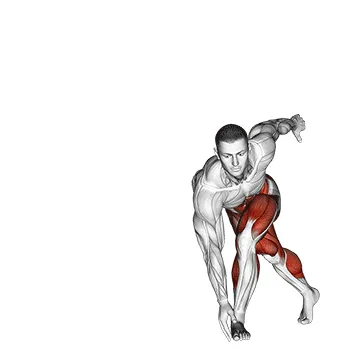
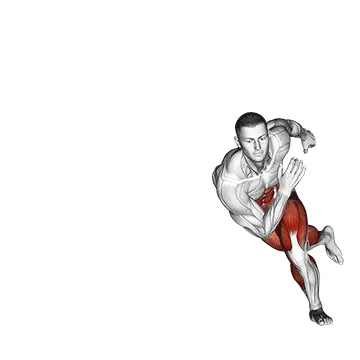
7. Skater Hops
82% match- Cardio
- Bodyweight
- Advanced
- Compound
Pick this when you want a harder version that still works the heart and lungs.
How to perform this exercise
- Stand with your feet shoulder-width apart.
- Bend your knees slightly and jump to the right, landing on your right foot.
- As you land, swing your left leg behind your right leg and tap the ground with your left toes.
- Immediately jump to the left, landing on your left foot.
- As you land, swing your right leg behind your left leg and tap the ground with your right toes.
- Continue alternating sides, jumping and tapping the ground with each leg.
- Repeat for the desired number of repetitions.
Sets and reps: Work for 30 to 60 seconds, rest as long as you worked, and repeat 6 to 10 times.
Why this matches
- Primary muscle: your heart and lungs, the same as the Push To Run
- Equipment: bodyweight only, the same as the Push To Run
- Body position: standing, the same as the Push To Run
- Balance: harder to stay steady on than the Push To Run
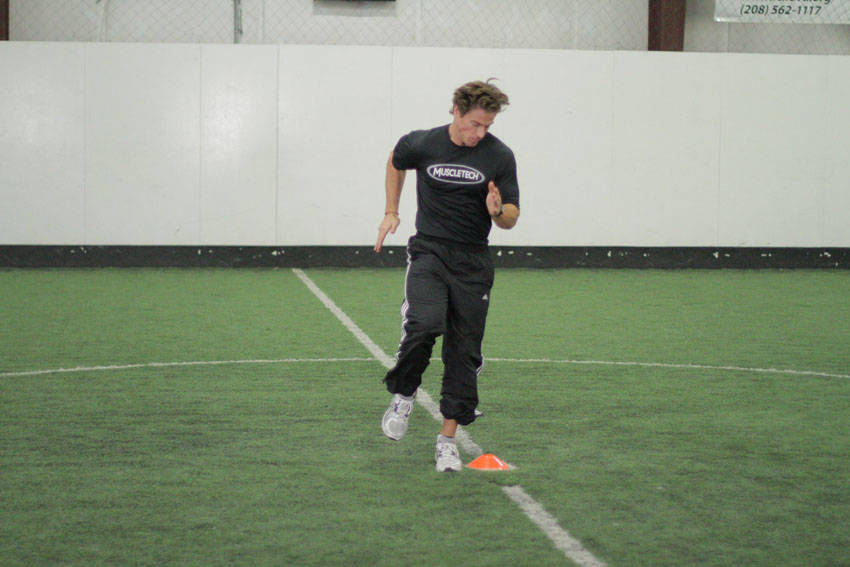
8. Single-cone Sprint Drill
80% match- Quadriceps
- Other
- Intermediate
- Compound
How to perform this exercise
- This drill teaches quick foot action. You need a single cone. Begin standing next to the cone with one arm back and one arm forward.
- Chop the feet as quickly as possible, blocking with the arms. Circle the cone, keep your knees up, with violent foot action.
- Rest after three trips around the cone.
Sets and reps: Work for 30 to 60 seconds, rest as long as you worked, and repeat 6 to 10 times.
Why this matches
- Movement: running, the same as the Push To Run
- Primary muscle: quadriceps, not your heart and lungs
- Equipment: bodyweight only, the same as the Push To Run
- Body position: standing, the same as the Push To Run
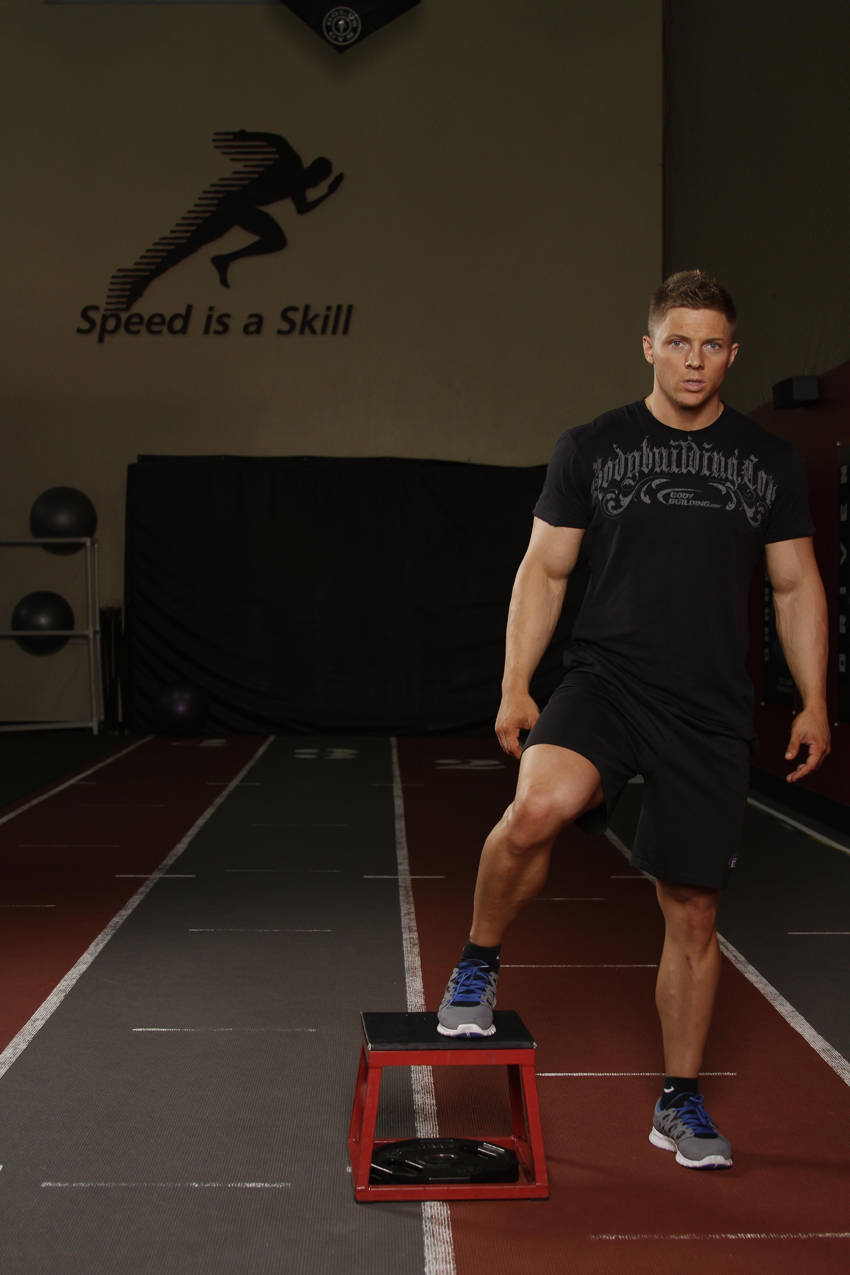
9. Side To Side Box Shuffle
79% match- Quadriceps
- Other
- Intermediate
- Compound
How to perform this exercise
- Stand to one side of the box with your left foot resting on the middle of it.
- To begin, jump up and over to the other side of the box, landing with your right foot on top of the box and your left foot on the floor. Swing your arms to aid your movement.
- Continue shuffling back and forth across the box.
Sets and reps: Work for 30 to 60 seconds, rest as long as you worked, and repeat 6 to 10 times.
Why this matches
- Primary muscle: quadriceps, not your heart and lungs
- Equipment: bodyweight only, the same as the Push To Run
10. Carioca Quick Step
79% match- Adductors
- Bodyweight
- Intermediate
- Compound
How to perform this exercise
- Begin with your feet a few inches apart and your left arm up in a relaxed, athletic position.
- With your right foot, quick step behind and pull the knee up.
- Fire your arms back up when you pull the right knee, being sure that your knee goes straight up and down. Avoid turning your feet as you move and continue to look forward as you move to the side.
Sets and reps: Work for 30 to 60 seconds, rest as long as you worked, and repeat 6 to 10 times.
Why this matches
- Primary muscle: adductors, not your heart and lungs
- Equipment: bodyweight only, the same as the Push To Run
- Body position: standing, the same as the Push To Run
Push To Run FAQ
What muscles does Push To Run work?
Push To Run primarily stresses the cardiovascular system while recruiting quads, glutes, calves, hip flexors, and core for repeated propulsion. Biomechanically it cycles hip extension and ankle plantarflexion to generate forward force, and the core stabilizes the pelvis under high metabolic load.
Find Alternatives for Any Exercise
Search the exercise database and filter the ranked substitutes by the equipment you own.
Similarity scores compare exercise metadata such as movement pattern, muscles, equipment and body position. They are not a safety rating or a check that you own the equipment. Learn about our methodology