

10 Best Band Front Lateral Raise Alternatives for Limited Equipment
If you can't perform the Band Front Lateral Raise, use dumbbell front raises, cable front raises, plate raises, kettlebell front raises, or single-arm band-to-dumbbell progressions to hit the anterior deltoid. Cue: lead with the elbow, keep the wrist neutral and avoid shoulder shrugging so the delt, not traps, drives shoulder flexion.
Original Exercise: Band Front Lateral Raise
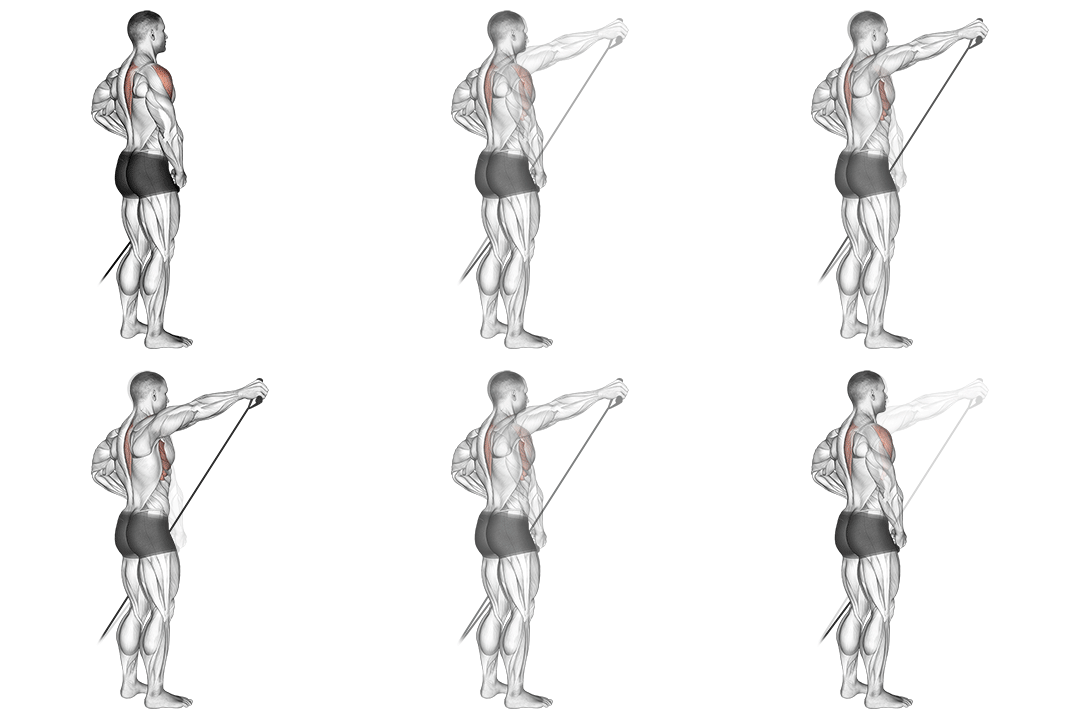
How to Perform Band Front Lateral Raise
- Stand with your feet shoulder-width apart and hold the band in front of your thighs with your palms facing down.
- Keep your arms straight and lift the band up in front of you until your arms are parallel to the ground.
- Pause for a moment at the top, then slowly lower the band back down to the starting position.
- Repeat for the desired number of repetitions.
Ranked Band Front Lateral Raise Alternatives
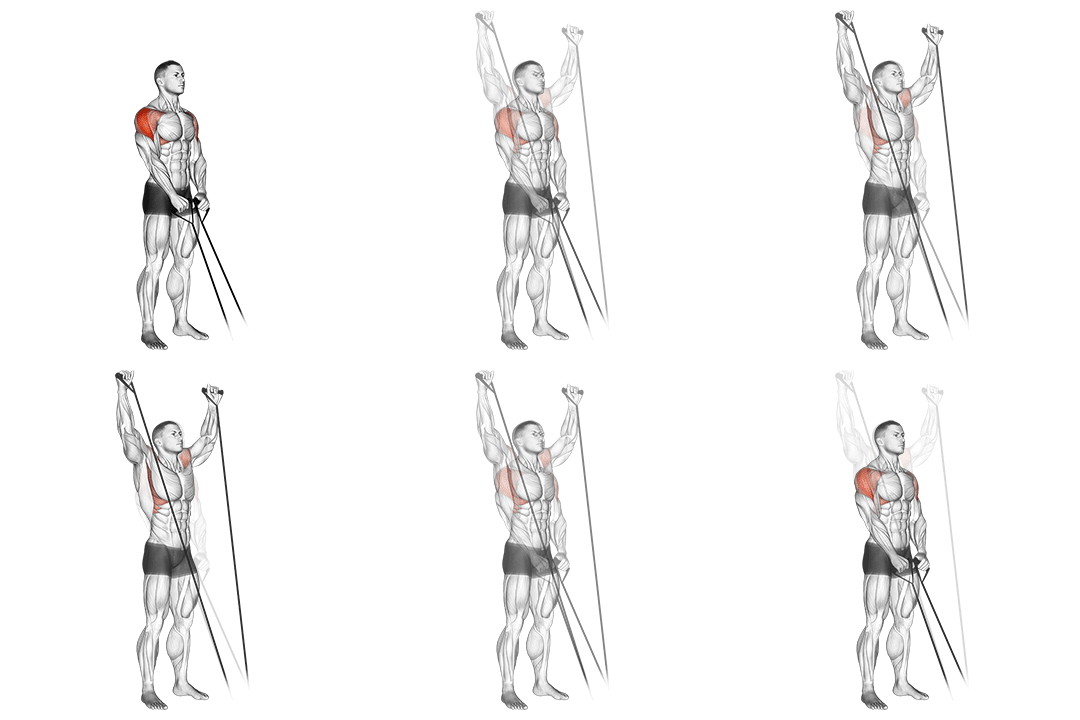
1. Band Y-raise
99.2% MatchHow to perform this exercise
- Stand with your feet shoulder-width apart and hold the band in front of your thighs with your palms facing inwards.
- Keep your arms straight and lift them up and out to the sides, forming a 'Y' shape with your body.
- Squeeze your shoulder blades together at the top of the movement.
- Slowly lower your arms back down to the starting position.
- Repeat for the desired number of repetitions.
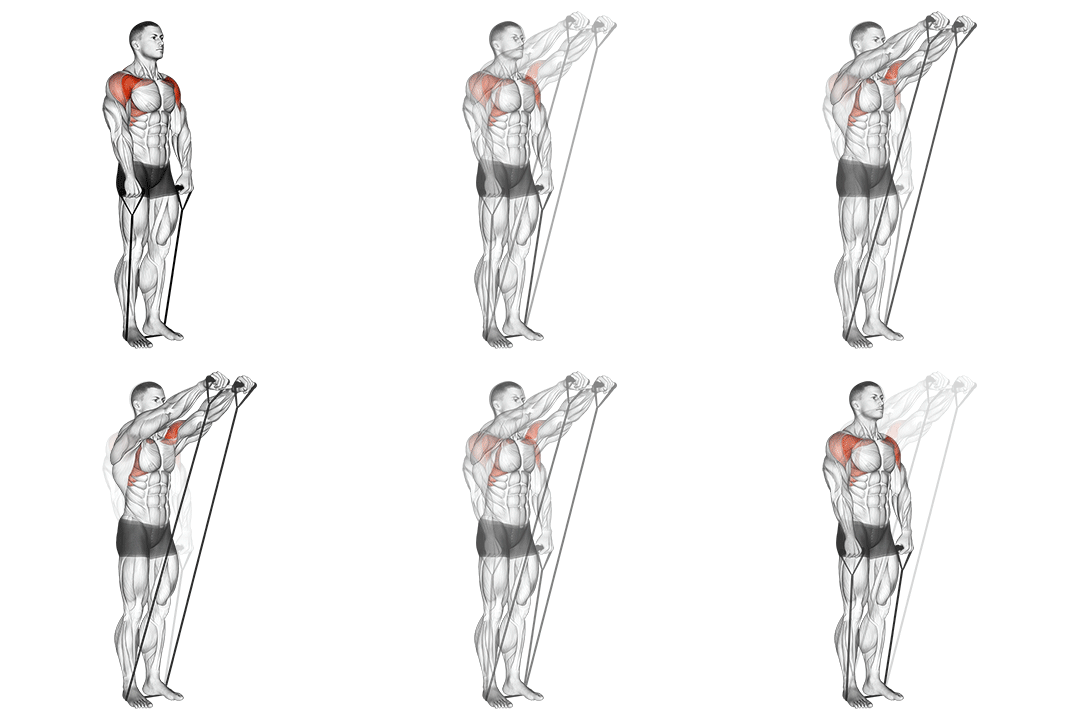
2. Band Front Raise
96% MatchHow to perform this exercise
- Stand with your feet shoulder-width apart and hold the band in front of your thighs with your palms facing down.
- Keep your arms straight and slowly raise them forward until they are parallel to the ground.
- Pause for a moment at the top, then slowly lower your arms back down to the starting position.
- Repeat for the desired number of repetitions.
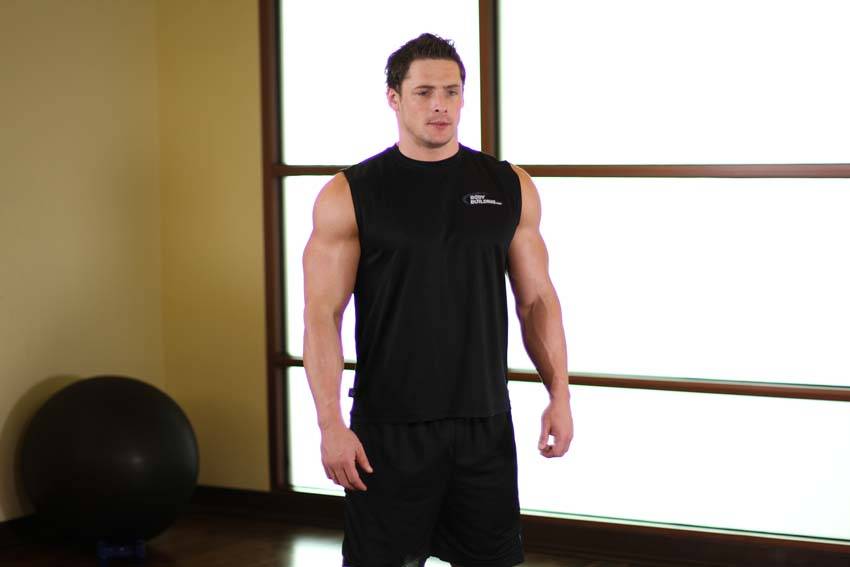
3. Shoulder Raise
86% MatchHow to perform this exercise
- Relax your arms to your sides and raise your shoulders up toward your ears, then back down.
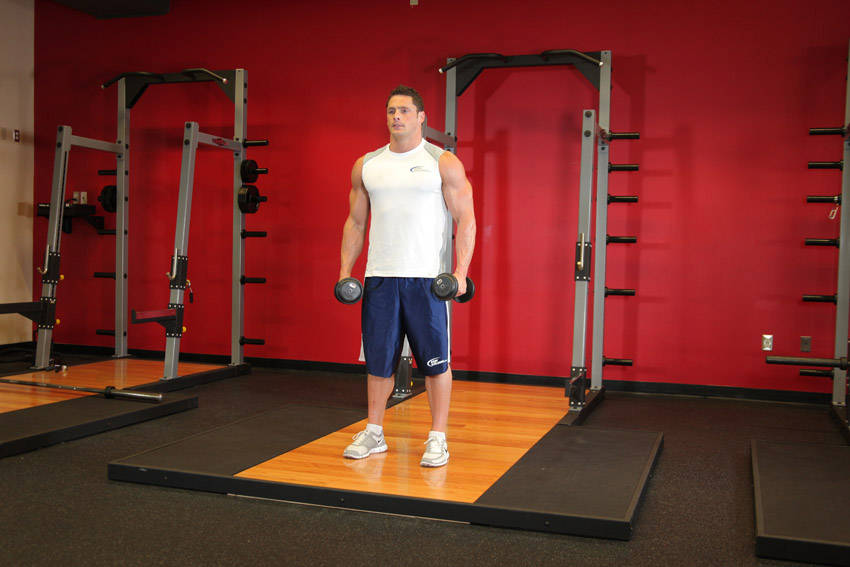
4. Side Lateral Raise
86% MatchHow to perform this exercise
- Pick a couple of dumbbells and stand with a straight torso and the dumbbells by your side at arms length with the palms of the hand facing you. This will be your starting position.
- While maintaining the torso in a stationary position (no swinging), lift the dumbbells to your side with a slight bend on the elbow and the hands slightly tilted forward as if pouring water in a glass. Continue to go up until you arms are parallel to the floor. Exhale as you execute this movement and pause for a second at the top.
- Lower the dumbbells back down slowly to the starting position as you inhale.
- Repeat for the recommended amount of repetitions.
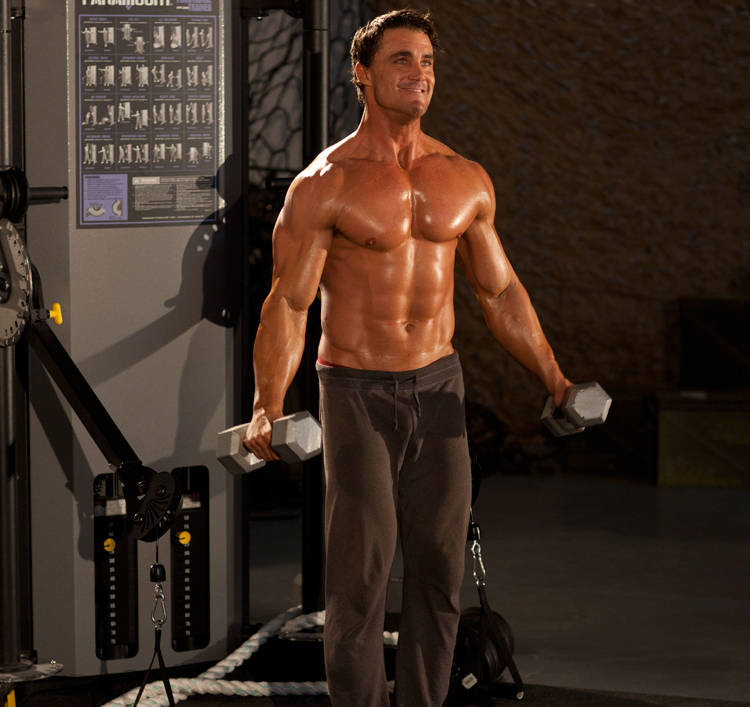
5. Side Laterals To Front Raise
85.4% MatchHow to perform this exercise
- In a standing position, hold a pair of dumbbells at your side. This will be your starting position.
- Keeping your elbows slightly bent, raise the weights directly in front of you to shoulder height, avoiding any swinging or cheating.
- At the top of the exercise move the weights out in front of you, keeping your arms extended.
- Lower the weights with a controlled motion.
- On the next repetition, raise the weights in front of you to shoulder height before moving the weights laterally to your sides.
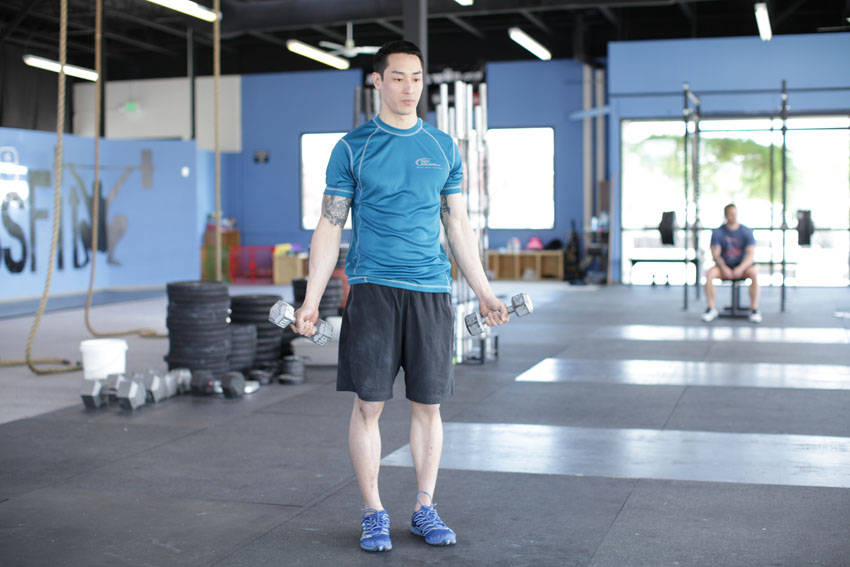
6. Dumbbell Scaption
84.7% MatchHow to perform this exercise
- This corrective exercise strengthens the muscles that stabilize your shoulder blade. Hold a light weight in each hand, hanging at your sides. Your thumbs should pointing up.
- Begin the movement raising your arms out in front of you, about 30 degrees off center. Your arms should be fully extended as you perform the movement.
- Continue until your arms are parallel to the ground, and then return to the starting position.
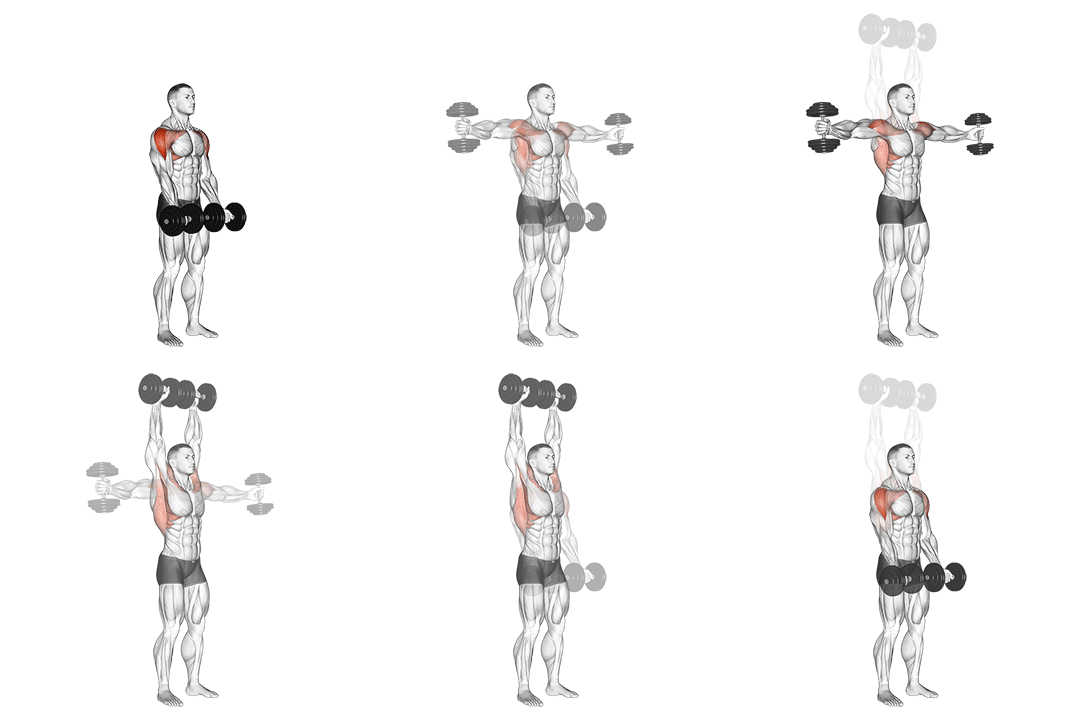
7. Dumbbell Standing Around World
84.1% MatchHow to perform this exercise
- Stand with your feet shoulder-width apart and hold a dumbbell in each hand.
- Extend your arms straight out to the sides at shoulder height, palms facing down.
- Keeping your arms straight, slowly rotate your arms in a circular motion, bringing the dumbbells in front of your body and then overhead.
- Continue the circular motion, bringing the dumbbells back down to the starting position.
- Repeat for the desired number of repetitions.
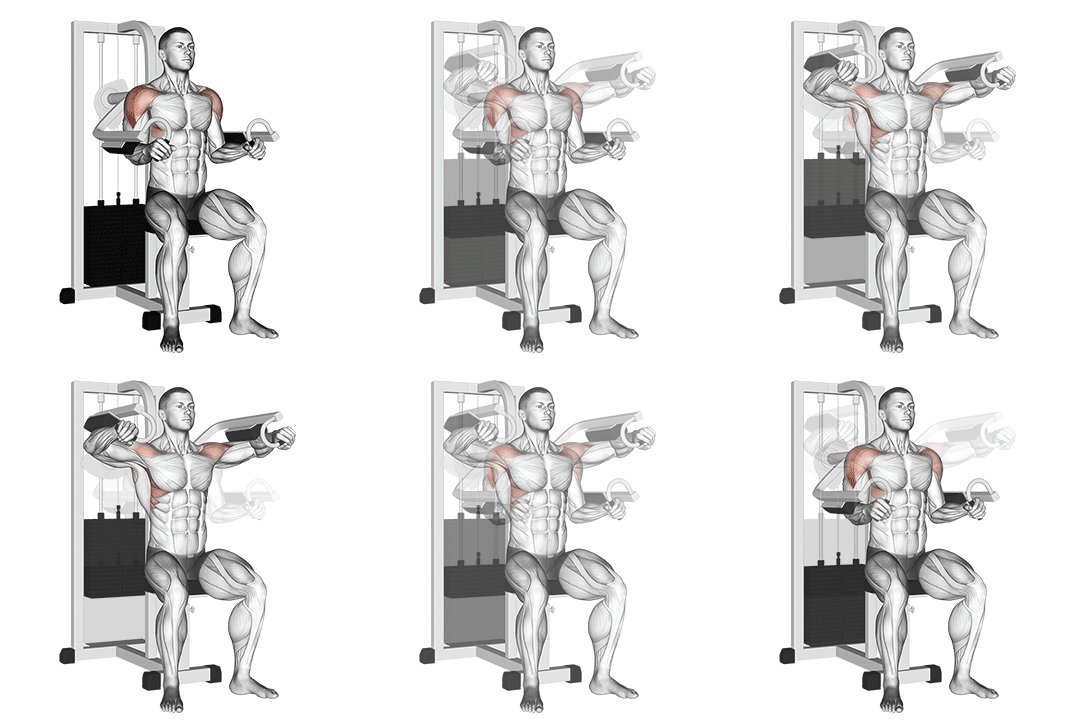
8. Lever Lateral Raise
83.9% MatchHow to perform this exercise
- Adjust the seat height and position yourself on the machine with your back against the pad.
- Grasp the handles with an overhand grip and keep your arms straight.
- Exhale and raise your arms out to the sides until they are parallel to the floor.
- Pause for a moment at the top, then inhale and slowly lower your arms back to the starting position.
- Repeat for the desired number of repetitions.
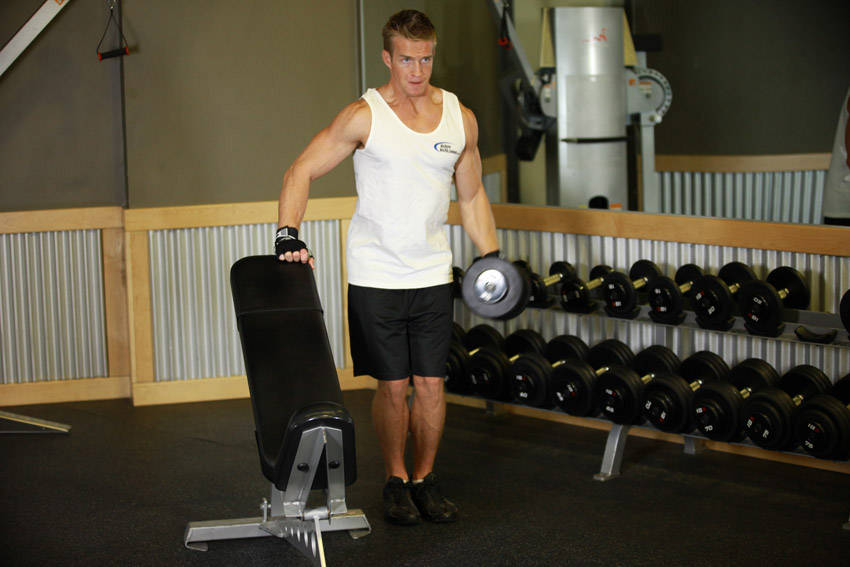
9. One-Arm Side Laterals
82.2% MatchHow to perform this exercise
- Pick a dumbbell and place it in one of your hands. Your non lifting hand should be used to grab something steady such as an incline bench press. Lean towards your lifting arm and away from the hand that is gripping the incline bench as this will allow you to keep your balance.
- Stand with a straight torso and have the dumbbell by your side at arm's length with the palm of the hand facing you. This will be your starting position.
- While maintaining the torso stationary (no swinging), lift the dumbbell to your side with a slight bend on the elbow and your hand slightly tilted forward as if pouring water in a glass. Continue to go up until you arm is parallel to the floor. Exhale as you execute this movement and pause for a second at the top.
- Lower the dumbbell back down slowly to the starting position as you inhale.
- Repeat for the recommended amount of repetitions.
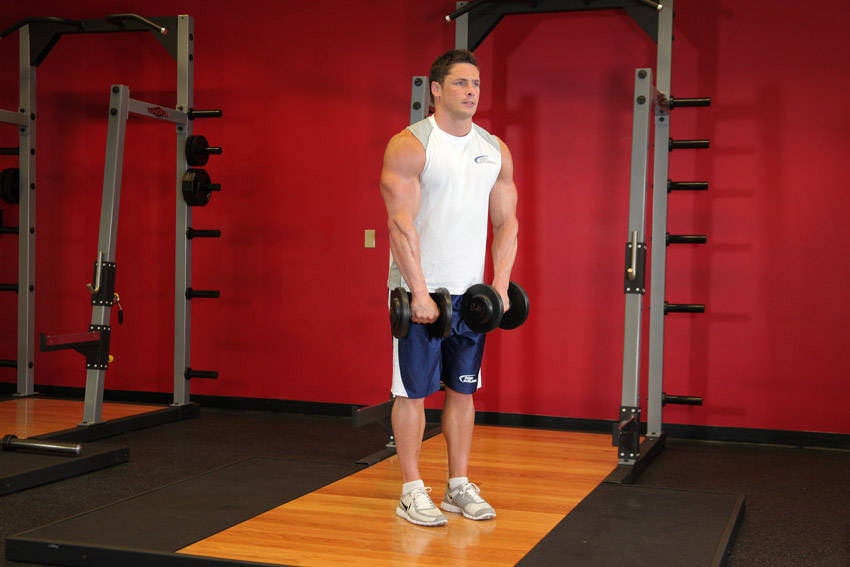
10. Front Dumbbell Raise
82% MatchHow to perform this exercise
- Pick a couple of dumbbells and stand with a straight torso and the dumbbells on front of your thighs at arms length with the palms of the hand facing your thighs. This will be your starting position.
- While maintaining the torso stationary (no swinging), lift the left dumbbell to the front with a slight bend on the elbow and the palms of the hands always facing down. Continue to go up until you arm is slightly above parallel to the floor. Exhale as you execute this portion of the movement and pause for a second at the top. Inhale after the second pause.
- Now lower the dumbbell back down slowly to the starting position as you simultaneously lift the right dumbbell.
- Continue alternating in this fashion until all of the recommended amount of repetitions have been performed for each arm.
Why You Might Need a Band Front Lateral Raise Alternative
You may substitute the Band Front Lateral Raise for several reasons: lack of bands, shoulder pain, need for greater progressive overload, or preference for constant tension vs. gravity-based loading. Bands create elastic resistance that ramps tension at end-range; switching to dumbbells or cables changes the torque profile and may reduce anterior shoulder irritation. For rehab, choose a light plate raise with a slow 2-second eccentric to control range and limit impingement. If you need strength progression, use a cable or loaded dumbbell to incrementally increase mass while maintaining strict elbow-first form to emphasize anterior deltoid activation.
How to Choose the Right Substitute
Pick a substitute by matching the movement pattern (shoulder flexion) and desired loading style. If you want constant tension, choose cable front raises; cue: pull from the shoulder joint, not the wrist. For simple load increases, use dumbbells and progress weight while avoiding momentum, perform 2-second concentric and 2-second eccentric phases. If you have rotator cuff issues, prefer plate or light kettlebell front raises with hands close to the body to reduce impingement. Also consider unilateral options to fix asymmetries and always brace your core to prevent torso flexion that shifts load off the delts.
Frequently Asked Questions
What muscles does Band Front Lateral Raise work?
The Band Front Lateral Raise primarily targets the anterior deltoid through shoulder flexion and horizontal flexion. It also recruits clavicular pec fibers and the upper trapezius for stabilization; use a controlled tempo to keep emphasis on the deltoid rather than the traps.
What is the best bodyweight alternative to Band Front Lateral Raise?
A good bodyweight option is the pike push-up with a shoulder-focused setup, hips elevated and torso vertical to shift load to the delts. Cue: keep elbows tracking slightly forward and lower slowly to train shoulder flexion/press mechanics when no external load is available.
Can I build muscle without doing Band Front Lateral Raise?
Yes. You can build the anterior delts with other movements that produce shoulder flexion and progressive overload, such as dumbbell/cable front raises, overhead presses, and plate raises. Ensure you use progressive load, strict elbow-first technique, and adequate volume to stimulate hypertrophy.
More Exercise Alternatives
Find Alternatives for Any Exercise
Use the exercise substitution finder to compare ranked alternatives for your available equipment and training preference.
Try the Exercise Substitution Finder →