

10 Best Barbell Decline Bench Press Alternatives
The Barbell Decline Bench Press is done lying on your back with a barbell. Ranked closest by our scoring: the Barbell Reverse Grip Decline Bench Press, the Barbell Bench Press and the Dumbbell Decline Bench Press. A harder version, the Barbell Guillotine Bench Press, is listed below as a progression rather than a swap.
Updated Ranked by our 12-factor similarity model How it works
Original Exercise: Barbell Decline Bench Press
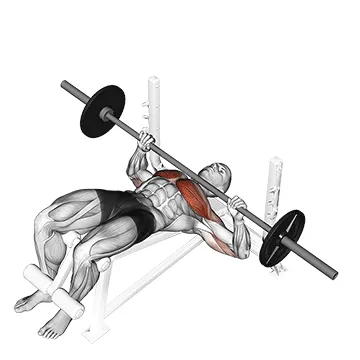
- Primary muscle
- Pectorals
- Equipment
- Barbell
- Difficulty
- Intermediate
- Type
- Compound
Secondary muscles: Triceps, Shoulders
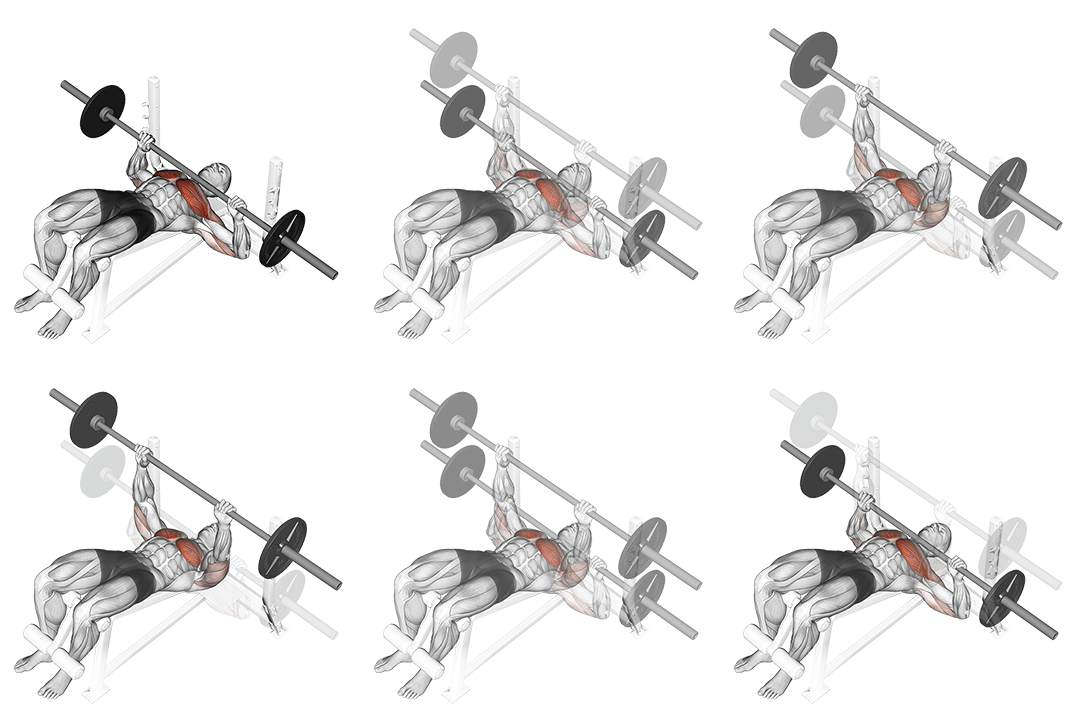
How to perform Barbell Decline Bench Press
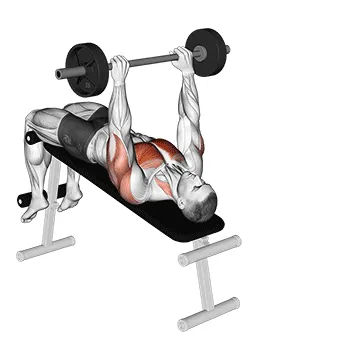
- Lie on a decline bench with your feet secured and your head lower than your hips.
- Grasp the barbell with an overhand grip slightly wider than shoulder-width apart.
- Unrack the barbell and lower it slowly towards your chest, keeping your elbows tucked in.
- Pause for a moment at the bottom, then push the barbell back up to the starting position.
- Repeat for the desired number of repetitions.
Ranked Barbell Decline Bench Press Alternatives
10 substitutes, ranked by how closely each one matches the Barbell Decline Bench Press on movement pattern, muscles worked, equipment and body position. The higher the score, the less you change. Open "How to perform this exercise" on a card for the steps; every card title links to that exercise's own alternatives page. Harder versions are tagged as progressions and kept out of the top spot even when they score higher.
Best match - Pectorals
- Barbell
- Intermediate
- Compound
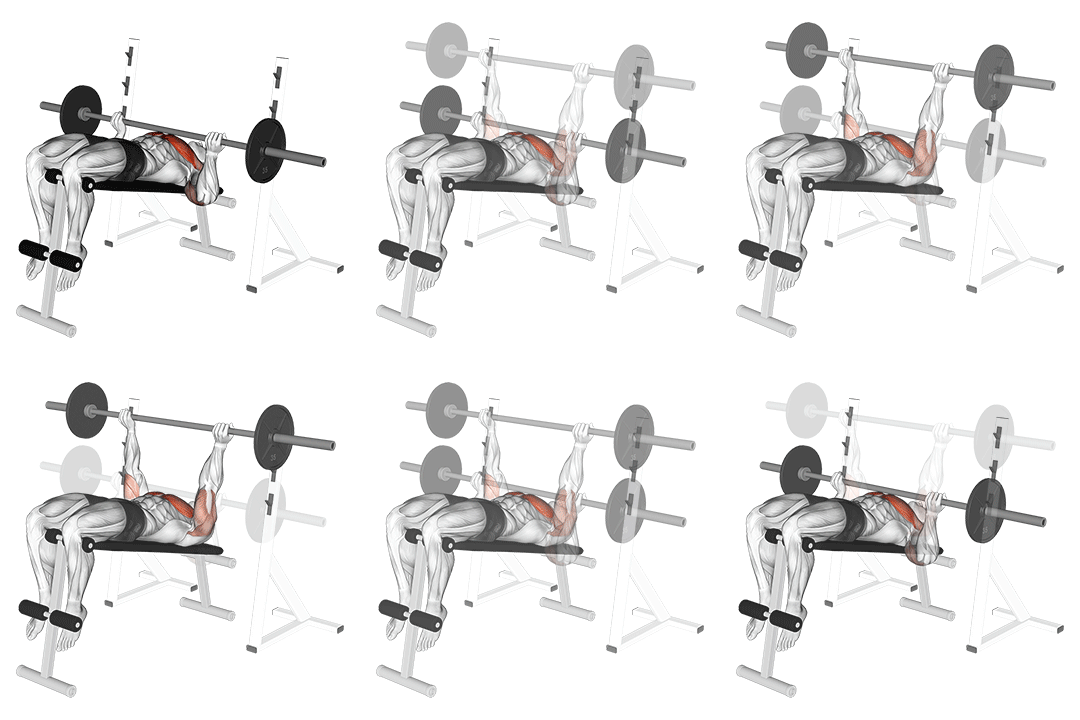
The same equipment, taken with an underhand grip.
How to perform this exercise
- Lie on a decline bench with your feet secured and your head lower than your hips.
- Grasp the barbell with a reverse grip, slightly wider than shoulder-width apart.
- Unrack the barbell and lower it slowly towards your chest, keeping your elbows tucked in.
- Pause for a moment at the bottom, then push the barbell back up to the starting position.
- Repeat for the desired number of repetitions.
Sets and reps: 3 or 4 sets of 6 to 10 reps.
Why this matches
- Movement: decline press, the same as the Barbell Decline Bench Press
- Primary muscle: pectorals, the same as the Barbell Decline Bench Press
- Equipment: free weights, the same as the Barbell Decline Bench Press
- Body position: lying on your back, the same as the Barbell Decline Bench Press
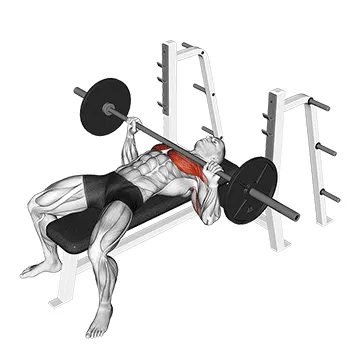
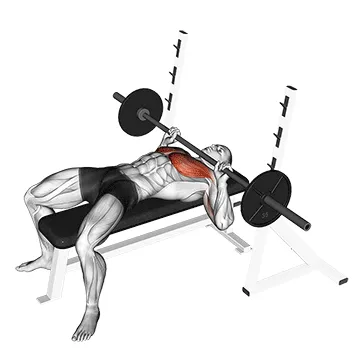
2. Barbell Bench Press
90% match- Pectorals
- Barbell
- Intermediate
- Compound
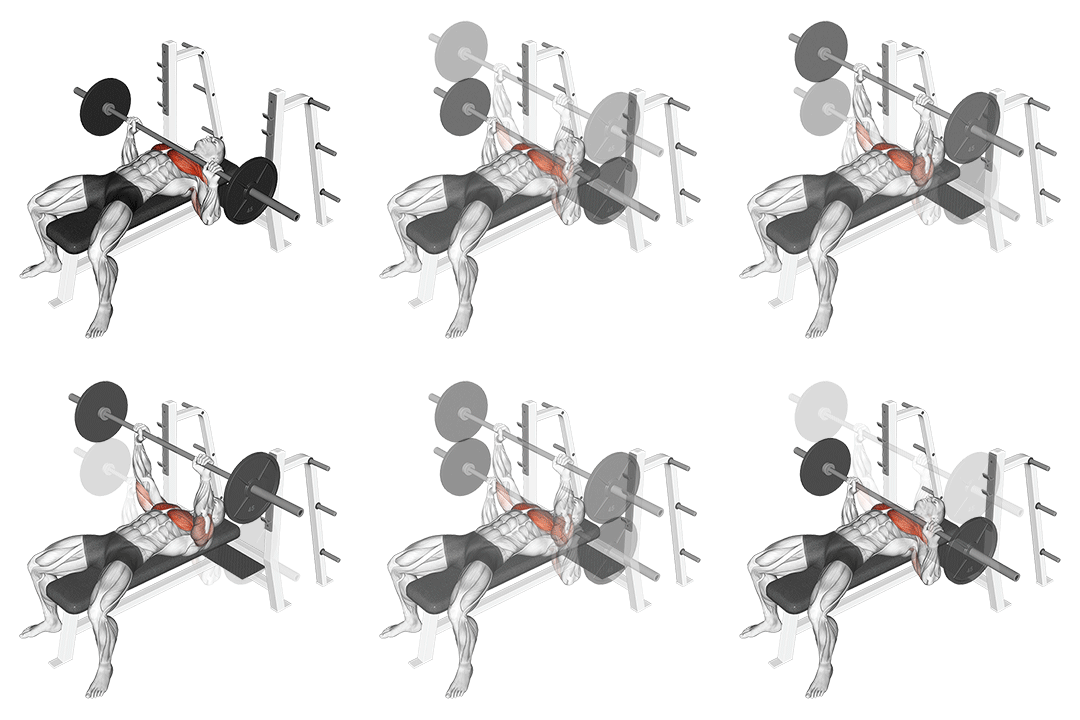
It uses the same equipment and still works the pectorals.
How to perform this exercise
- Lie flat on a bench with your feet flat on the ground and your back pressed against the bench.
- Grasp the barbell with an overhand grip slightly wider than shoulder-width apart.
- Lift the barbell off the rack and hold it directly above your chest with your arms fully extended.
- Lower the barbell slowly towards your chest, keeping your elbows tucked in.
- Pause for a moment when the barbell touches your chest.
- Push the barbell back up to the starting position by extending your arms.
- Repeat for the desired number of repetitions.
Sets and reps: 3 or 4 sets of 6 to 10 reps.
Why this matches
- Primary muscle: pectorals, the same as the Barbell Decline Bench Press
- Equipment: free weights, the same as the Barbell Decline Bench Press
- Body position: lying on your back, the same as the Barbell Decline Bench Press
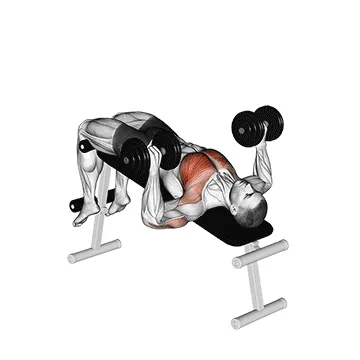
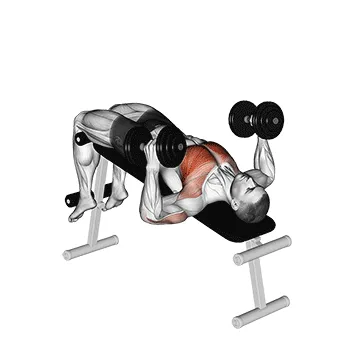
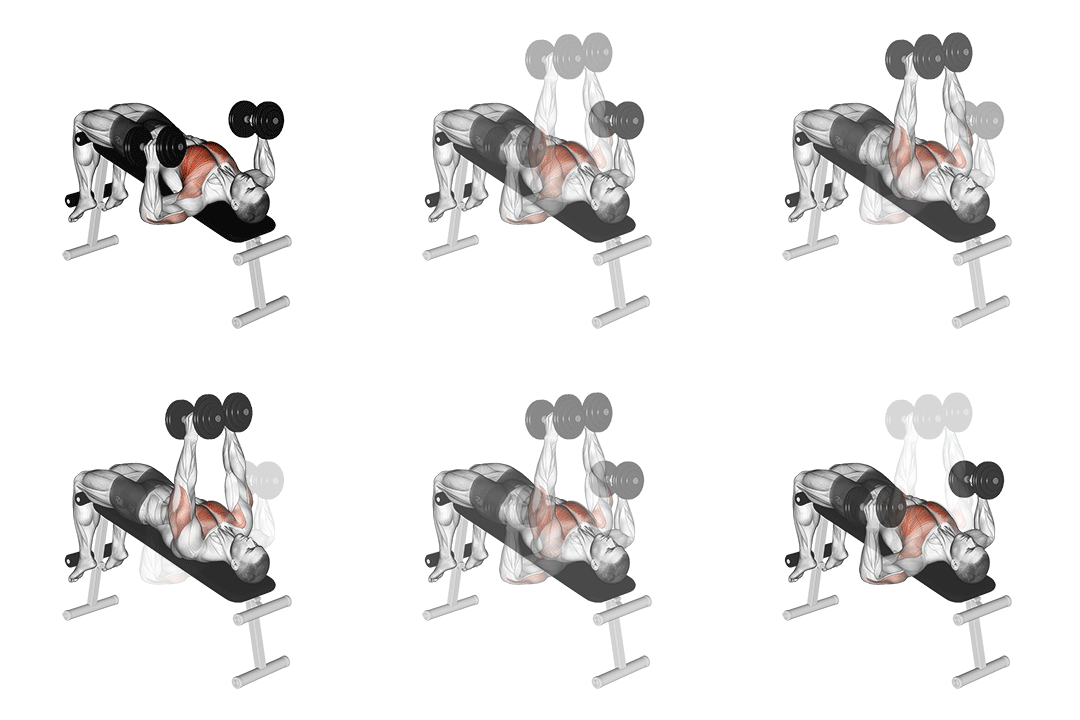
3. Dumbbell Decline Bench Press
88% match- Pectorals
- Dumbbell
- Intermediate
- Compound
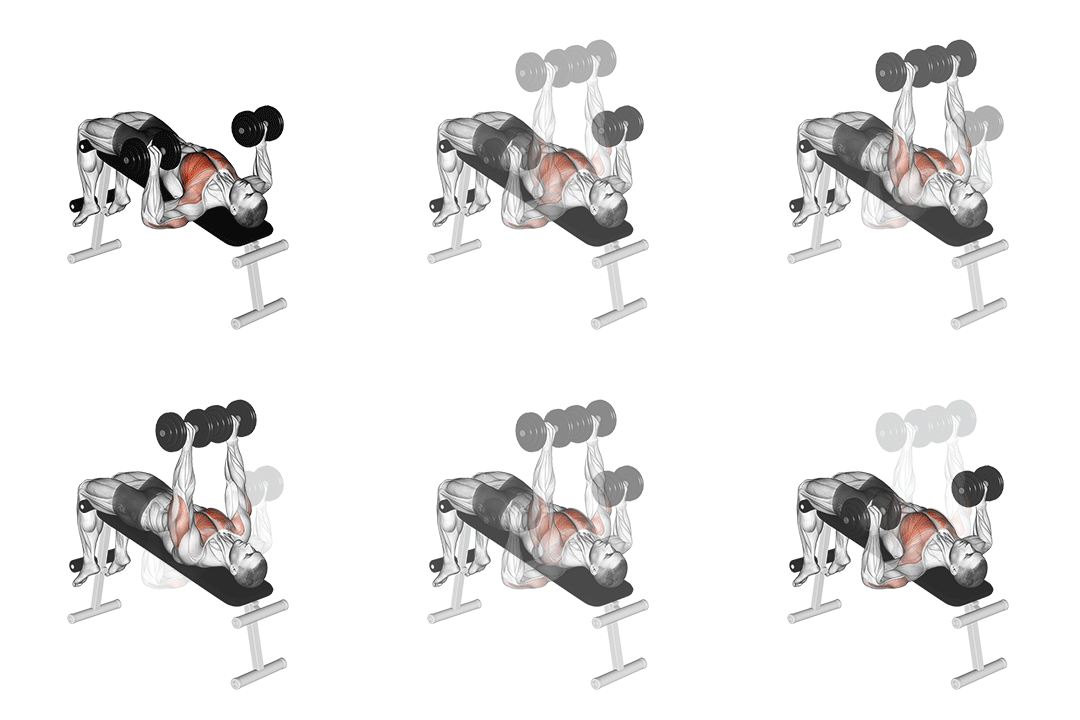
A good swap when you have dumbbells to work with, and it still works the pectorals.
How to perform this exercise
- Lie down on a decline bench with your feet secured and your head lower than your hips.
- Hold a dumbbell in each hand and extend your arms straight up above your chest, palms facing forward.
- Lower the dumbbells slowly to the sides of your chest, keeping your elbows at a 90-degree angle.
- Push the dumbbells back up to the starting position, fully extending your arms.
- Repeat for the desired number of repetitions.
Sets and reps: 3 or 4 sets of 6 to 10 reps.
Why this matches
- Movement: decline press, the same as the Barbell Decline Bench Press
- Primary muscle: pectorals, the same as the Barbell Decline Bench Press
- Equipment: free weights, the same as the Barbell Decline Bench Press
- Body position: lying on your back, the same as the Barbell Decline Bench Press
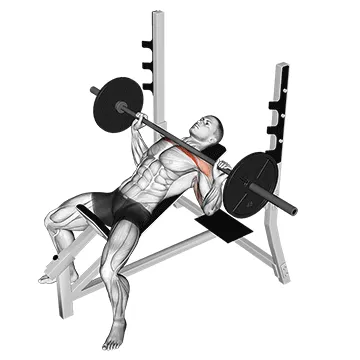
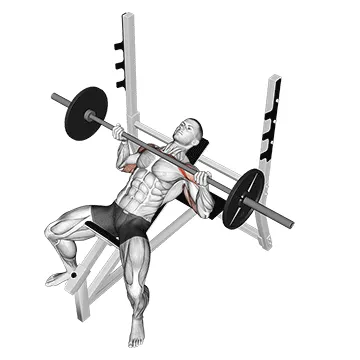
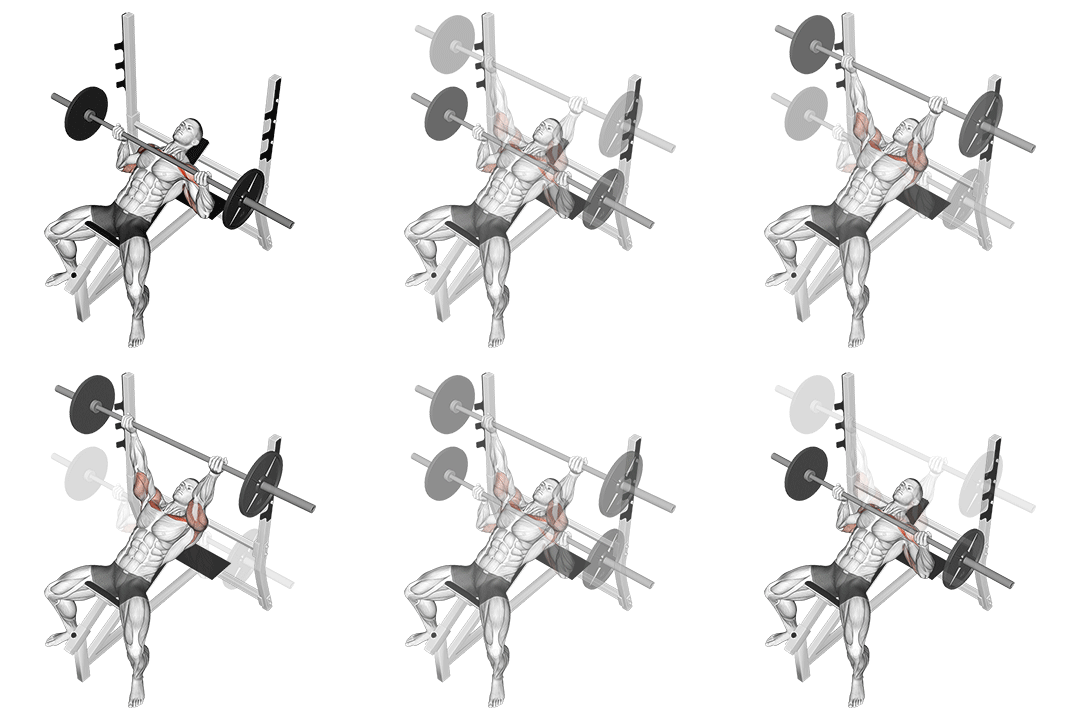
4. Barbell Incline Bench Press
87% match- Pectorals
- Barbell
- Intermediate
- Compound
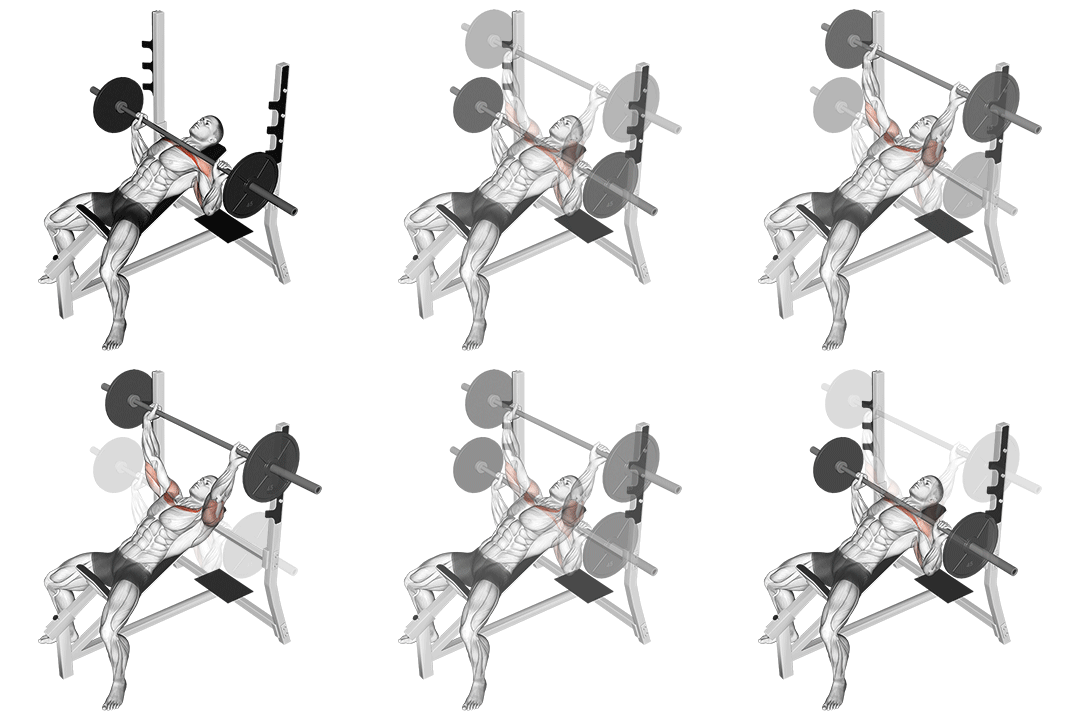
How to perform this exercise
- Set up an incline bench at a 45-degree angle.
- Lie down on the bench with your feet flat on the ground.
- Grasp the barbell with an overhand grip, slightly wider than shoulder-width apart.
- Unrack the barbell and lower it slowly towards your chest, keeping your elbows at a 45-degree angle.
- Pause for a moment at the bottom, then push the barbell back up to the starting position.
- Repeat for the desired number of repetitions.
Sets and reps: 3 or 4 sets of 6 to 10 reps.
Why this matches
- Primary muscle: pectorals, the same as the Barbell Decline Bench Press
- Equipment: free weights, the same as the Barbell Decline Bench Press
- Body position: lying on your back, the same as the Barbell Decline Bench Press
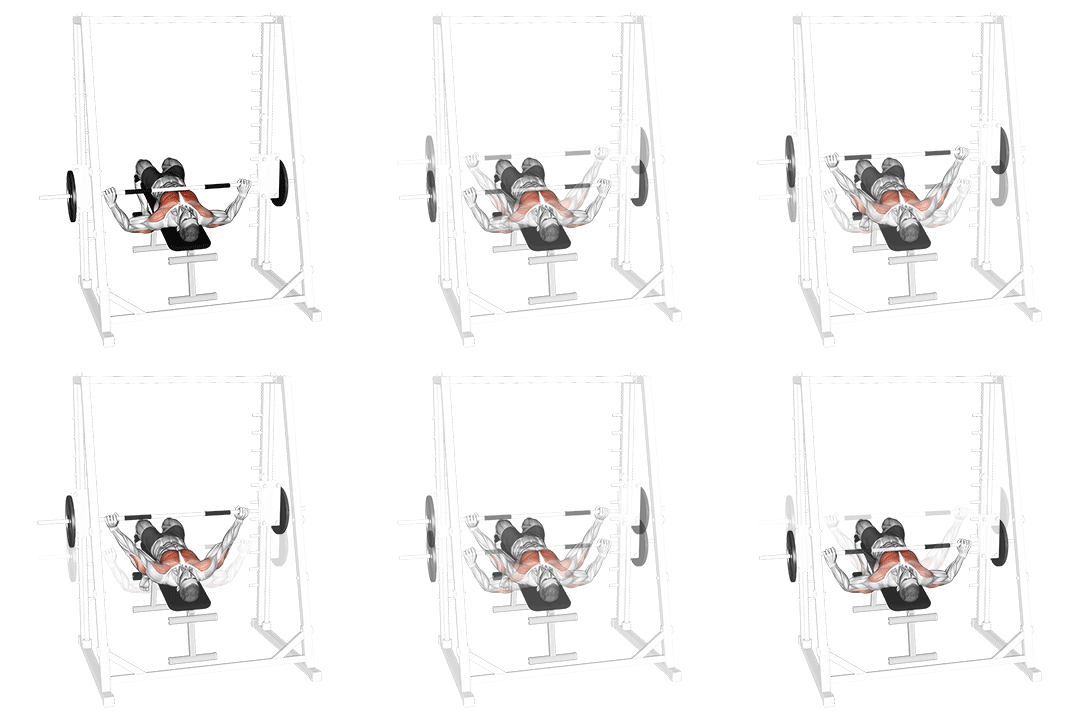
- Pectorals
- Smith-machine
- Intermediate
- Compound
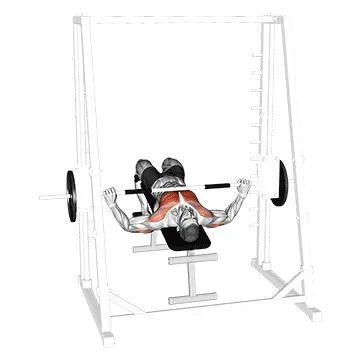
A good swap when you have a Smith machine to work with, and it still works the pectorals.
How to perform this exercise
- Adjust the decline bench to the desired angle.
- Lie down on the bench with your feet secured under the foot pads.
- Grasp the barbell with a wide grip, slightly wider than shoulder-width apart.
- Unrack the barbell and lower it slowly towards your chest, keeping your elbows pointed outwards.
- Pause for a moment when the barbell touches your chest.
- Push the barbell back up to the starting position, fully extending your arms.
- Repeat for the desired number of repetitions.
Sets and reps: 3 or 4 sets of 6 to 10 reps.
Why this matches
- Movement: decline press, the same as the Barbell Decline Bench Press
- Primary muscle: pectorals, the same as the Barbell Decline Bench Press
- Equipment: a machine, not free weights
- Body position: lying on your back, the same as the Barbell Decline Bench Press
- Balance: easier to stay steady on than the Barbell Decline Bench Press
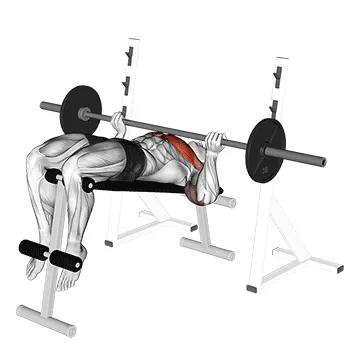
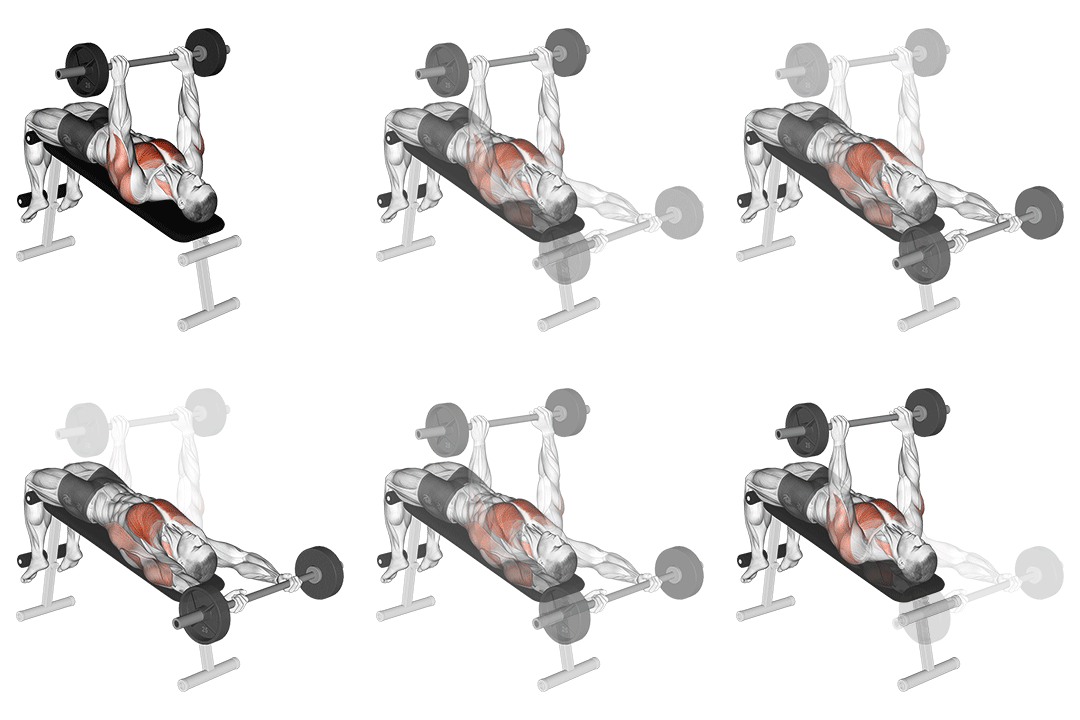
6. Barbell Decline Pullover
87% match- Pectorals
- Barbell
- Intermediate
- Compound
How to perform this exercise
- Lie down on a decline bench with your head lower than your hips and your feet secured.
- Hold the barbell with a pronated grip (palms facing away from you) and your hands slightly wider than shoulder-width apart.
- Extend your arms above your chest, keeping a slight bend in your elbows.
- Lower the barbell in an arc motion behind your head, feeling a stretch in your chest and shoulders.
- Pause for a moment, then return the barbell to the starting position by reversing the motion.
- Repeat for the desired number of repetitions.
Sets and reps: 3 or 4 sets of 6 to 10 reps.
Why this matches
- Primary muscle: pectorals, the same as the Barbell Decline Bench Press
- Equipment: free weights, the same as the Barbell Decline Bench Press
- Body position: lying on your back, the same as the Barbell Decline Bench Press
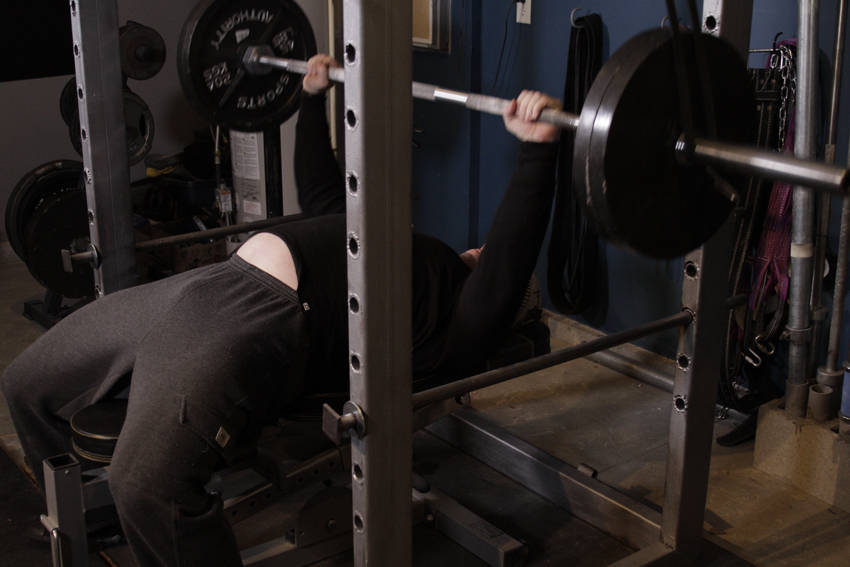
7. Reverse Band Bench Press
87% match- Pectorals
- Barbell
- Intermediate
- Compound
How to perform this exercise
- Position a bench inside a power rack, with the bar set to the correct height. Begin by anchoring bands either to band pegs or to the top of the rack. Ensure that you will be position properly under the bands. Attach the other end to the barbell.
- Lie on the bench, tuck your feet underneath you and arch your back. Using the bar to help support your weight, lift your shoulder off the bench and retract them, squeezing the shoulder blades together. Use your feet to drive your traps into the bench. Maintain this tight body position throughout the movement. However wide your grip, it should cover the ring on the bar.
- Pull the bar out of the rack without protracting your shoulders. Focus on squeezing the bar and trying to pull it apart. Lower the bar to your lower chest or upper stomach. The bar, wrist, and elbow should stay in line at all times.
- Pause when the barbell touches your torso, and then drive the bar up with as much force as possible. The elbows should be tucked in until lockout.
Sets and reps: 3 or 4 sets of 6 to 10 reps.
Why this matches
- Primary muscle: pectorals, the same as the Barbell Decline Bench Press
- Equipment: free weights, the same as the Barbell Decline Bench Press
- Body position: lying on your back, the same as the Barbell Decline Bench Press
8. Dumbbell Decline Hammer Press
86% match- Pectorals
- Dumbbell
- Intermediate
- Compound
How to perform this exercise
- Lie on a decline bench with your feet secured and your head lower than your hips.
- Hold a dumbbell in each hand with your palms facing each other and your arms extended above your chest.
- Lower the dumbbells to the sides of your chest, keeping your elbows slightly bent.
- Press the dumbbells back up to the starting position, fully extending your arms.
- Repeat for the desired number of repetitions.
Sets and reps: 3 or 4 sets of 6 to 10 reps.
Why this matches
- Movement: decline press, the same as the Barbell Decline Bench Press
- Primary muscle: pectorals, the same as the Barbell Decline Bench Press
- Equipment: free weights, the same as the Barbell Decline Bench Press
- Body position: lying on your back, the same as the Barbell Decline Bench Press
Progression
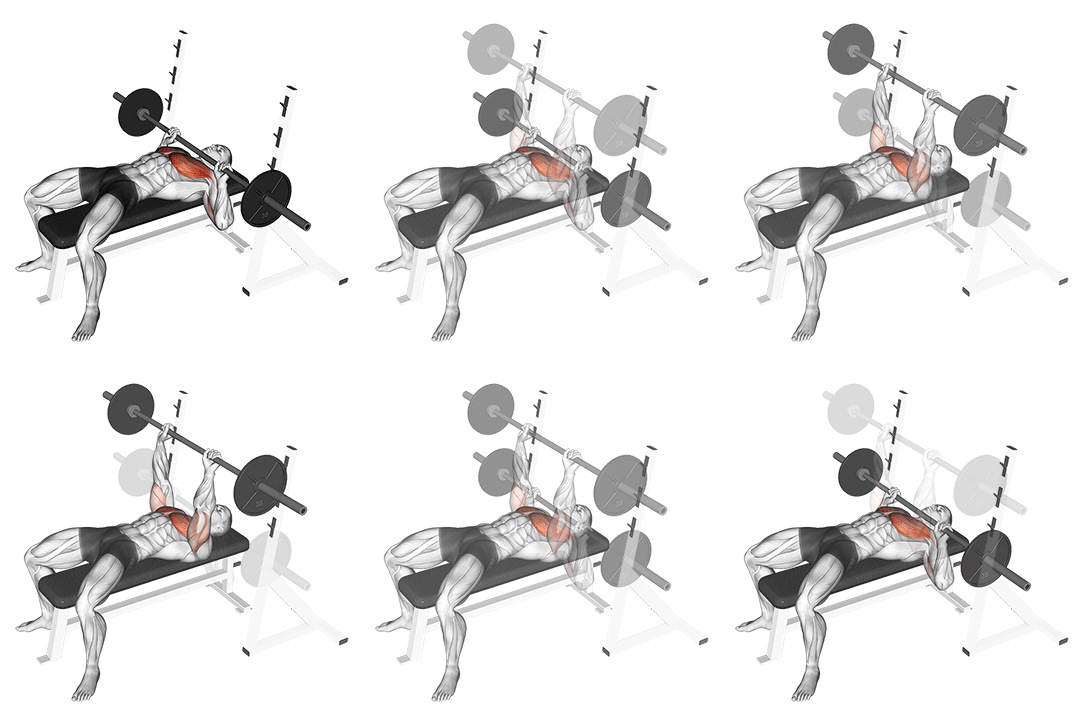
9. Barbell Guillotine Bench Press
85% match- Pectorals
- Barbell
- Advanced
- Compound
How to perform this exercise
- Lie flat on a bench with your feet flat on the ground and your back pressed against the bench.
- Grasp the barbell with an overhand grip, slightly wider than shoulder-width apart.
- Lower the barbell slowly towards your neck, keeping your elbows pointed outwards.
- Pause for a moment when the barbell is just above your neck.
- Push the barbell back up to the starting position, fully extending your arms.
- Repeat for the desired number of repetitions.
Sets and reps: 3 to 5 sets of 5 to 8 reps.
Why this matches
- Primary muscle: pectorals, the same as the Barbell Decline Bench Press
- Equipment: free weights, the same as the Barbell Decline Bench Press
- Body position: lying on your back, the same as the Barbell Decline Bench Press
- Pectorals
- Barbell
- Intermediate
- Compound
How to perform this exercise
- Set up an incline bench at a 45-degree angle.
- Lie down on the bench with your feet flat on the ground.
- Grasp the barbell with a reverse grip, hands slightly wider than shoulder-width apart.
- Unrack the barbell and lower it slowly towards your chest, keeping your elbows tucked in.
- Pause for a moment when the barbell touches your chest.
- Push the barbell back up to the starting position, fully extending your arms.
- Repeat for the desired number of repetitions.
Sets and reps: 3 or 4 sets of 6 to 10 reps.
Why this matches
- Primary muscle: pectorals, the same as the Barbell Decline Bench Press
- Equipment: free weights, the same as the Barbell Decline Bench Press
- Body position: lying on your back, the same as the Barbell Decline Bench Press
Why You Might Need a Barbell Decline Bench Press Alternative
You may need substitutes because of shoulder pain, lack of decline benches, or training variety. Decline barbell places specific load and spine angle demands that aggravate impingement for some lifters; using alternatives can reduce shear at the AC joint and shift load to the sternal pec fibers. For rehab or equipment-limited settings, exercises like weighted dips or decline dumbbell presses let you preserve horizontal adduction and pressing torque while reducing bar path constraints. Technique cue: keep a slight scapular retraction and a 30–45° elbow tuck to maximize pec activation and protect the anterior shoulder.
Barbell Decline Bench Press FAQ
What muscles does Barbell Decline Bench Press work?
The decline barbell press primarily targets the sternal head of the pectoralis major (lower chest) and engages the anterior deltoids and triceps as synergists. It emphasizes horizontal adduction and downward pressing, increasing activation of lower pec fibers versus flat or incline presses.
What is the best bodyweight alternative to Barbell Decline Bench Press?
Weighted dips are the best bodyweight alternative for lower-pec emphasis because they combine shoulder extension and horizontal adduction under load. Cue for dips: lean slightly forward, keep elbows at a 30–45° tuck, and descend until your shoulders reach roughly elbow level to maximize pectoral activation while protecting the joint.
Find Alternatives for Any Exercise
Search the exercise database and filter the ranked substitutes by the equipment you own.
Similarity scores compare exercise metadata such as movement pattern, muscles, equipment and body position. They are not a safety rating or a check that you own the equipment. Learn about our methodology